Saree styling for wedding receptions works best when your drape, blouse and accessories match the venue and the hours you will spend moving around. This guide is for wedding guests, family members and hosts who want a polished look without constant pleat-checking. Choose a fluid pre-pleated or georgette saree for ease, a structured silk or organza look for formality, and let one element—jewellery, blouse or colour—carry the statement.
Start with the reception, not just the saree
A wedding reception usually involves photographs, greetings, dinner and more standing or walking than a short ceremony. Before choosing a fabric, consider the venue, weather, seating, lighting and how long you will wear the outfit. A hotel ballroom allows for a more structured look, while an outdoor lawn or crowded cocktail-style venue calls for lighter fabric and a secure drape.
For a reliable wedding guest saree checklist, decide these four details first:
- Movement: If you expect to walk, dance or climb stairs, choose a manageable pallu and a hem that clears your footwear.
- Formality: Silk, tissue and embellished organza read dressier; georgette, chiffon and satin can look elegant with less visual weight.
- Weather: Breathable fabrics are more comfortable in warm or humid conditions. Heavy layers may be better suited to air-conditioned venues.
- Time: A pre-stitched saree or carefully pinned drape is useful when you need dependable structure for several hours.
Do a complete trial at least once before the event. Wear the blouse, jewellery and footwear together, sit down, walk briskly and test whether the pallu stays on your shoulder. This small routine is more useful than judging the saree while it is still on a hanger.
Saree styling for wedding receptions: five polished directions
1. Elegant minimalism: soft silk with restrained accessories
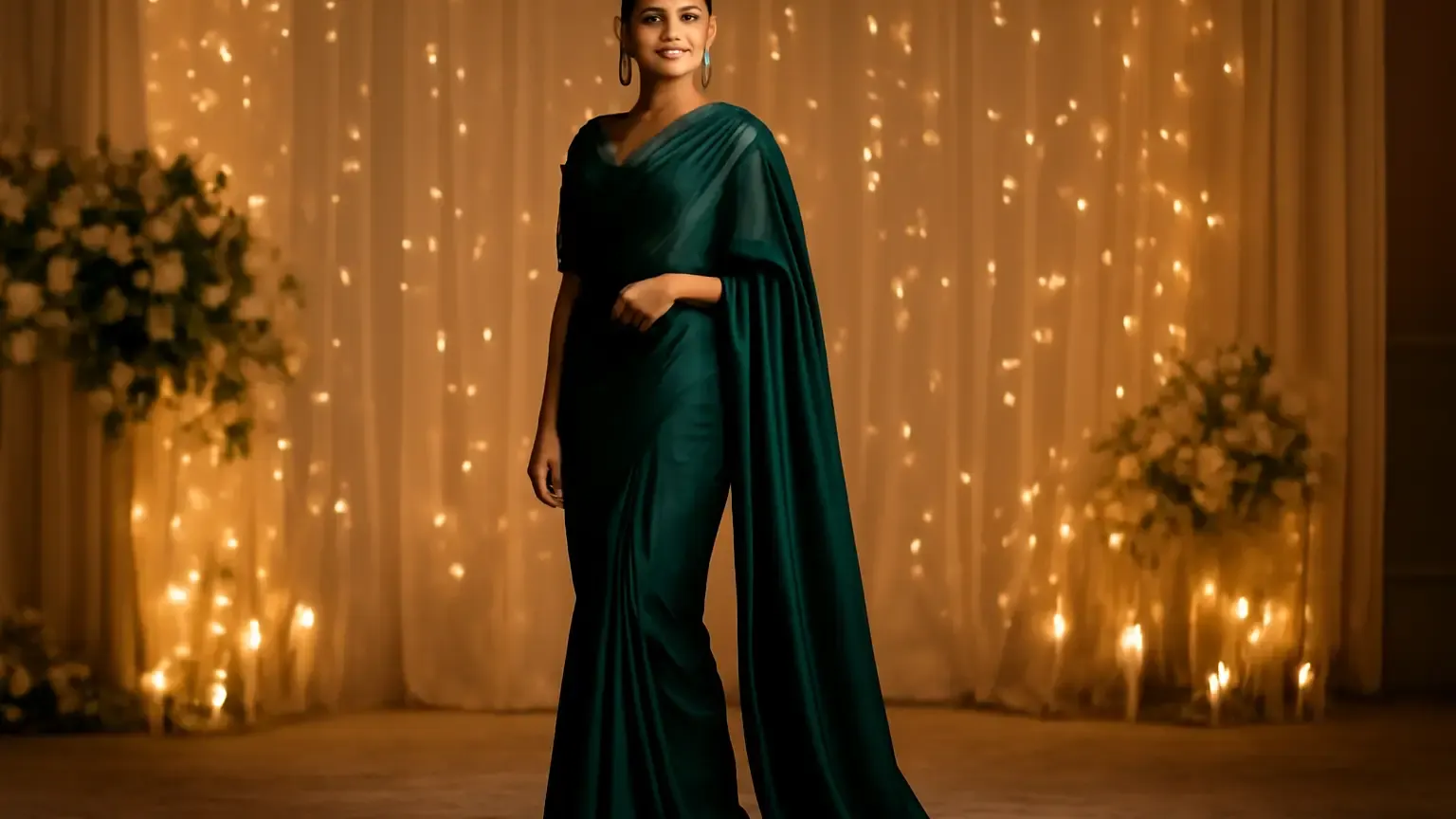
For a refined, family-friendly look, begin with a solid or lightly woven silk saree in navy, wine, emerald, rosewood or muted gold. This is an easy approach to silk saree styling because the fabric supplies richness without requiring heavy embellishment. Pair it with a well-fitted blouse in the same colour or a quiet contrast such as ivory, deep brown or antique gold.
Keep the jewellery edited: medium jhumkas, a slim bangle stack and one ring are enough. If the blouse has a high neckline or interesting sleeve, skip a necklace. Choose minimal saree accessories that echo the saree border rather than competing with it. A low bun, smooth braid or softly pinned hair keeps the result composed.
Best for: traditional receptions, close-family celebrations and anyone who prefers a timeless outfit over a trend-led one.
2. Light and graceful: chiffon or georgette with a fluid pallu
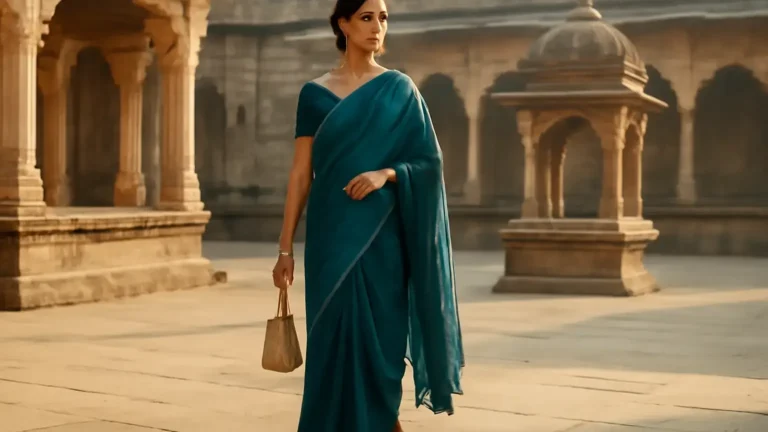
A chiffon saree for wedding celebrations can be especially comfortable when the event is warm or you want a lighter silhouette. Georgette offers a similar fluid effect with slightly more grip, making it easier to manage than very slippery fabrics. Select an evening shade such as plum, cobalt, teal, charcoal, blush or bronze, and allow the fabric to create movement.
For this look, use a softly structured blouse: a sleeveless jewel-neck style, a modest square neck or a short-sleeved blouse with subtle embroidery. Avoid overloading a delicate saree with a very ornate blouse and large necklace. Instead, try long earrings, a narrow bracelet and a compact potli bag.
Pin the pallu near the shoulder and once discreetly inside the blouse if the fabric shifts. The goal is not a rigid drape; it is a controlled one that still looks relaxed in photographs.
3. Contemporary ease: a pre-pleated or pre-stitched saree
A pre-pleated saree is a practical choice if you rarely wear sarees, have limited time to dress or want consistent pleats through a long reception. It gives the familiar saree silhouette with less adjustment around the waist. Look for an adjustable fastening and check that the length works with your chosen footwear before the event.
Balance the convenience of the drape with a more considered blouse. Modern saree blouse designs for reception wear include a clean corset-inspired shape, a long-sleeved satin blouse, a sculpted boat neck or a blouse with a restrained sequin panel. Choose only one strong detail; a dramatic blouse and highly embellished saree can make the outfit feel busy.
Finish with geometric earrings, a sleek clutch and block heels. This direction suits city receptions, cocktail-style celebrations and guests who want a polished outfit without spending the evening resetting pleats.
4. Statement glamour: sequins, satin or a dramatic border
For a night reception with strong lighting, a sequin saree, satin saree or bold metallic border creates instant impact. The key is to control the shine. If the saree is highly reflective, choose a matte blouse in a related shade. If the blouse is covered in sequins, let the saree remain relatively plain.
Statement jewellery with saree styling works best when the neckline and pallu leave enough visual space. A choker can work with a low or open neckline, while long earrings are better with a high-neck blouse. Avoid wearing a choker, large earrings, stacked bangles and a prominent maang tikka unless the event and your personal style genuinely call for maximal dressing.
Use a firm pleat structure and secure the pallu with hidden pins. A compact metallic or satin clutch completes the look more cleanly than a large everyday bag.
Best for: evening receptions, cocktail dress codes and guests who want one memorable focal point.
5. Colour-led polish: a simple saree with a contrasting blouse
If you prefer uncomplicated draping, make colour do the work. Start with a plain saree in a rich tone and add a contrasting blouse in a shade that photographs well under the venue’s lighting. Useful evening saree colour combinations include bottle green with antique gold, rust with pink, midnight blue with silver, lavender with deep purple and burgundy with soft blush.
Keep the fabric easy to manage—crepe, georgette or a light silk blend—and use a neat front pleat arrangement. A contrasting blouse can be the statement, so jewellery may remain to earrings and one bracelet. This is also a good option when you want to reuse each piece separately after the wedding.
Best for: guests who want a versatile wardrobe, daytime-to-evening flexibility or a modern look without heavy decoration.
Build a drape that stays comfortable
Good reception saree draping is a balance between visual neatness and movement. Wear the petticoat or underskirt firmly but not so tightly that sitting becomes uncomfortable. Tuck the saree at a height that works with your shoes, then walk before finalising the hem. If you change footwear later, the saree may become too long or too short.
For reliable saree pleat setting, make evenly sized pleats, align the lower edges and secure them with a small safety pin on the inside. Add a second concealed pin at the waistband if the fabric is slippery. A properly fitted blouse also prevents the pallu from pulling the saree out of place.
Saree shapewear can create a smooth base under lightweight or clingy fabrics, but it should allow comfortable breathing, sitting and walking. Choose a size based on comfort rather than compression. If you are new to it, test the garment for a few hours at home instead of wearing it for the first time at the reception.
Choose footwear and jewellery as part of the outfit
Comfortable saree footwear does not have to look casual. Block heels, low wedges, embellished flats and dressy pointed shoes can all work, depending on the saree length and venue. Wear the exact pair during your trial so the hem can be adjusted correctly. For lawns, uneven pavements or venues with long queues, a stable block heel is usually safer than a narrow stiletto.
Match the scale of jewellery to the blouse neckline and saree finish. A heavily embroidered blouse may need only earrings; a plain saree can support a necklace or a pair of sculptural earrings. Gold-toned pieces complement warm colours and zari, while silver or crystal accents suit cool blues, lilacs and greys. This is a guideline, not a rule—overall balance matters more than strict matching.
Keep a few useful extras in your bag: two safety pins, a small fashion tape strip, blotting paper and a compact comb. These are practical fixes, not signs that the outfit has failed.
Common mistakes that reduce polish
- Choosing the saree before considering the venue: A heavy fabric can feel excessive outdoors, while a fragile chiffon may be difficult in a crowded space.
- Ignoring the blouse fit: Gaping armholes, straps that slip or a tight underbust can distract you throughout the event.
- Trying a new drape at the last minute: Test it with the complete outfit and sit, walk and raise your arms before deciding.
- Over-accessorising: Pick one focal point—border, blouse, jewellery or colour—and let the remaining details support it.
- Wearing untested footwear: New shoes can affect your posture and hemline as much as the saree itself.
Final takeaway
The most successful saree styling for wedding receptions combines occasion-appropriate polish with choices you can comfortably maintain. Select the fabric according to the venue, use the blouse to set the mood, secure the drape before leaving home and keep jewellery focused. Whether you choose minimal silk, fluid chiffon, a pre-stitched silhouette, statement glamour or a colour-led contrast, ease is what allows the outfit to look confident all evening.
Products that may help with this routine
Choose only what fits your skin, hair or personal needs. Use the links below to view current options on Amazon India.
Frequently Asked Questions
How do you style a saree for a wedding reception?
Choose the fabric and silhouette according to the venue and duration. Pair a well-fitted blouse with a secure pallu, comfortable footwear and one clear jewellery focal point. Trial the full outfit by walking, sitting and taking photographs before the event.
Which saree is best for a wedding reception?
Silk and organza suit formal receptions, while georgette, chiffon and satin offer a lighter, fluid finish. A pre-stitched saree is useful when ease and dependable pleats matter most.
What are comfortable saree draping ideas for wedding guests?
Use a manageable pallu, secure the front pleats with hidden pins and choose footwear before setting the hem. Pre-pleated sarees and georgette drapes are particularly practical for long events.
What jewellery should you wear with a reception saree?
Match jewellery to the blouse neckline and saree detail. Choose long earrings with a high neckline, a choker with an open neckline, or restrained earrings and bangles when the saree is heavily embellished.
How do you keep saree pleats in place all evening?
Make evenly aligned pleats, pin them discreetly from the inside and secure the waistband if the fabric slips. A correctly fitted underskirt and a complete trial also improve hold.
What is the best footwear to wear with a saree at a wedding?
Stable block heels, low wedges, dressy flats and pointed shoes can work. Choose the pair based on the venue, practise walking in them and set the saree hem to that exact height.