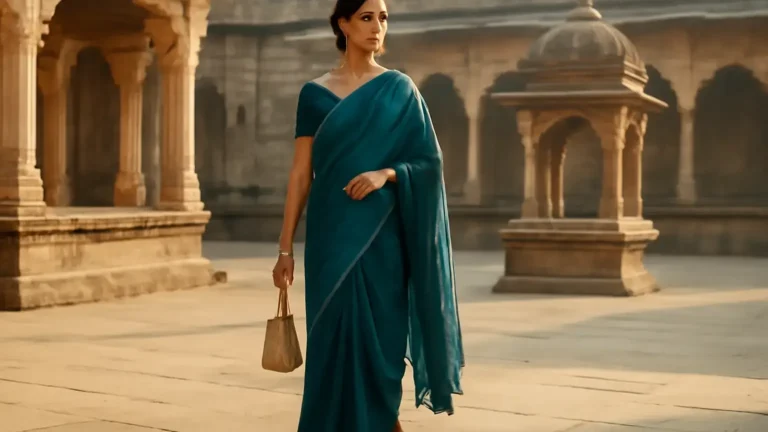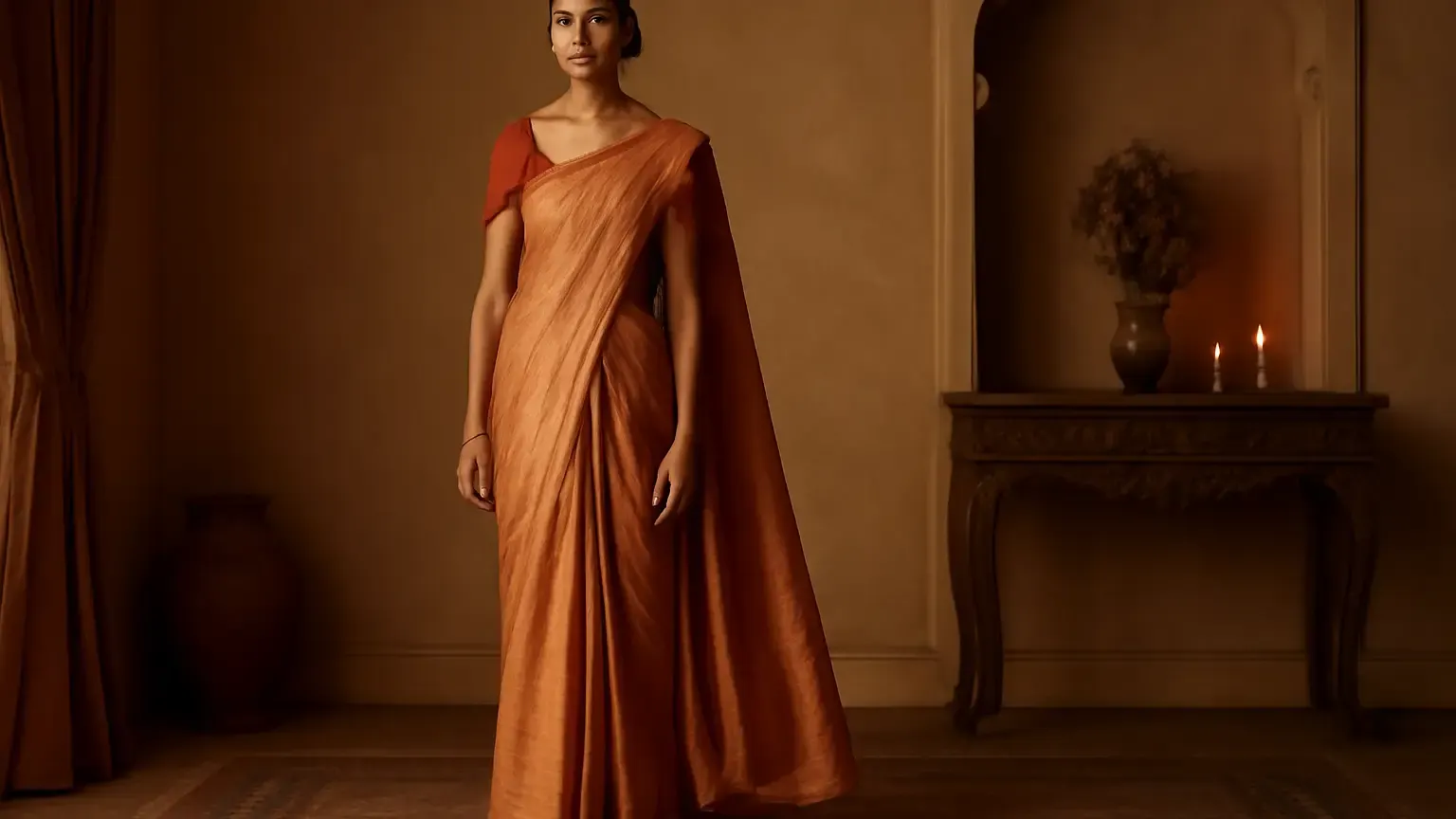
saree styling for petite women works best when the drape creates clean vertical movement without hiding your frame. This guide is for shorter women and petite body proportions who want a polished look for festivals, receptions and weddings. The quickest wins are a high-waisted drape, controlled narrow pleats, a proportionate border, a neatly placed pallu and footwear that adds height without making the saree difficult to walk in.
A petite frame does not need a smaller or less dramatic saree. It needs deliberate proportion. The same silk, chiffon or georgette saree can look elongated and elegant on one person, but visually heavy on another, depending on where the waist sits, how much fabric gathers at the front and where the pallu ends.
Start with the right saree drape height
The most important adjustment is the height of the saree at the waist. A high-waisted saree drape places the waistband slightly above the natural waist, usually close to the narrowest part of the torso. This makes the lower half look longer and prevents excess fabric from cutting the body into short horizontal sections.
Wear the petticoat or shapewear securely before draping. If the base slips, the saree will gradually fall lower and change the entire silhouette. The lower edge should skim the floor when you are wearing your final footwear, not when you are barefoot. A hem that sits too high can make the legs look shorter; one that pools heavily can overwhelm a petite frame.
- For a streamlined festive look, keep the saree waist firm and even all around.
- For a wedding, allow enough ease to sit, climb steps and move comfortably.
- Check the front, side and back views before fixing the final pins.
Use front pleats to create length
Front pleats should be tidy, balanced and narrow enough to avoid a bulky block at the centre. Narrow saree pleats do not mean extremely thin folds that lose their shape; they mean controlled folds with a consistent width. For most petite frames, around 5 to 7 pleats is a useful starting point, although the number depends on the saree fabric and the wearer’s comfort.
Press or pre-pleat a heavier saree before dressing if the fabric allows it. Keep the pleats facing in one clean direction and pin them just below the waist, rather than across the widest part of the hips. This supports a longer central line and keeps the saree from spreading sideways.
How pleat width changes the look
- Very wide pleats: dramatic and traditional, but more likely to shorten the visual line.
- Medium pleats: versatile for cotton, silk blends and most festive sarees.
- Narrow pleats: neat and elongating, especially with lightweight fabrics.
If the saree has a broad, ornate border, do not make the pleats so narrow that the border twists or disappears. The aim is order, not restriction.
Choose fabrics and borders with visual balance
Lightweight sarees such as chiffon, georgette, crepe and soft silk blends usually fall close to the body, making them easy choices for a petite silhouette. They are particularly useful for receptions or festive evenings when you want movement without excessive volume. Crisp cottons, organza and heavier silks can also work, but they need more careful pleating and pinning.
Saree border width affects proportion immediately. A narrow or medium border often leaves more uninterrupted length visible. A very wide contrast border can create a strong horizontal break at the hem and may dominate a petite frame. If you love a broad zari border for a wedding, balance it with a plain or lightly detailed body, a clean pallu and a blouse that does not add too many competing lines.
Small or medium-scale motifs are generally easier to balance than oversized floral arrangements spread across the entire saree. However, this is a styling guide rather than a rule: a large motif can look refined when the rest of the outfit is simple and the saree is draped close to the body.
Place the pallu for a longer vertical line
Pallu placement changes the apparent width and length of the upper body. For a classic open pallu, keep the shoulder pleats slim and let the pallu fall in a controlled column rather than spreading it too widely across the torso. The lower edge should finish around the upper thigh or slightly below it, depending on your height and blouse length. A pallu that ends near the widest point of the hips can add a distracting horizontal line.
For a more structured wedding look, pleat the pallu neatly over the shoulder and secure it with hidden pins. This keeps the embroidered section visible without creating a large fabric fan. If you prefer an open pallu, use one discreet shoulder pin and one waist pin so the fabric remains graceful but does not repeatedly slide.
Monochrome or closely related saree-and-blouse colours can create vertical lines in sarees more easily than sharp colour blocks. A contrast blouse is still possible: repeat one accent colour in the jewellery or footwear so the outfit feels intentional rather than divided.
Select blouse necklines and sleeves carefully
The best blouse necklines for petite frames depend on your proportions and personal comfort, but the goal is usually to keep the upper body defined without making it look crowded. A modest V-neck, sweetheart neckline, square neck or gently curved scoop can open the chest area and complement a clean saree drape.
- A V-neck can create a subtle downward line and suit a fuller pallu or embellished saree.
- A square neckline gives structure and works well with silk and brocade.
- A sweetheart or curved neckline softens a formal bridal or festive blouse.
- A high neckline can look elegant, but keep embroidery and sleeve detail restrained if the saree is already ornate.
Blouse length matters as much as the neckline. A blouse that ends close to the natural waist generally supports a high drape. Very long blouses can shorten the visible saree area, while an excessively cropped blouse may make the outfit feel disconnected. Three-quarter sleeves can add polish for weddings; shorter sleeves or sleeveless cuts may feel lighter for festive daytime dressing.
Compare festive and wedding saree styling
For festivals and daytime celebrations
Choose a light or medium-weight saree, a medium border and a blouse with one clear design feature. Keep the pallu relatively slim and use small earrings, a compact potli or a practical shoulder bag. This approach gives festive saree styling enough colour and texture without making the frame look busy.
For weddings and receptions
Heavier silk, satin, tissue or embellished sarees can look beautiful when the base drape is precise. Prioritise a firm waistband, secure pleats and a pallu that stays in place through photographs and movement. For wedding saree styling, let one element lead: the border, the blouse embroidery, the pallu or the jewellery. If every element is large, the person can disappear inside the outfit.
For a bridal or close-family wedding look, a slightly richer border is fine if the saree body remains visually clean. For a guest look, a lighter drape with controlled embellishment may be more comfortable and easier to repeat for other occasions.
Match footwear to the final hem
Saree footwear for weddings should be selected before the final fall and hemming. Block heels, wedges and low platforms offer more stability than narrow stilettos, especially on grass, uneven floors or long event days. A heel of roughly 1.5 to 3 inches can create lift without forcing the saree to sit unnaturally high.
For daytime festivities, embellished flats or low wedges may be practical. If you choose flats, ensure the saree does not drag and that the pallu remains comfortable when walking. For receptions, a coordinated metallic, neutral or blouse-toned heel can extend the look without introducing another strong colour break.
A simple dressing routine before you leave
- Put on the blouse, petticoat or base layer and final footwear first.
- Set the waistband at a comfortable high position and test sitting before pinning.
- Make even front pleats, keeping the border aligned from waist to hem.
- Secure the pleats at the waist and check that the lower edge lightly skims the floor.
- Place the pallu so its widest section does not end at the broadest part of the hips.
- Add only the jewellery and accessories needed to balance the saree’s main feature.
- Walk, sit and lift one arm before leaving; adjust any pulling, dragging or slipping.
Common mistakes to avoid
Pulling the saree too low is one of the most common errors because it reduces waist definition and makes the legs look shorter. Another is choosing a border solely for its grandeur without considering its width against the wearer’s height. Excessive fabric at the front, an unpinned pallu and a blouse with too many horizontal details can also interrupt the silhouette.
Do not copy a celebrity or bridal drape without adapting it to your fabric, body proportions and event. A very tight drape may photograph neatly but become uncomfortable after a few hours. Comfort is part of proportion: when you can move naturally, the saree falls better and looks more polished.
Concise takeaway
For saree styling for petite women, begin with the base rather than the jewellery: set the saree slightly high, keep front pleats controlled, select a border that does not overpower the frame, place the pallu in a clean vertical fall and wear stable footwear chosen before hemming. Then adapt the fabric and embellishment to the occasion. The result is not about appearing smaller; it is about making every element of the saree work in proportion to you.
Products that may help with this routine
Choose only what fits your skin, hair or personal needs. Use the links below to view current options on Amazon India.
Frequently Asked Questions
How do you drape a saree for a short height?
Set the saree slightly above the natural waist, wear the final footwear before fixing the hem, use controlled front pleats and keep the pallu in a clean, narrow fall. Avoid excess fabric pooling at the floor or spreading across the hips.
Which saree is best for petite women?
Lightweight or medium-weight sarees such as georgette, chiffon, crepe and soft silk blends are often easy to balance on a petite frame. A narrow or medium border and moderate-sized motifs usually create a cleaner proportion, though well-draped heavier silk can also work for weddings.
How wide should saree pleats be for petite women?
Medium-to-narrow, consistent pleats are usually flattering because they reduce bulk at the centre and support a vertical line. The exact width should still allow the border to remain aligned and the pleats to hold their shape.
What is the best blouse neckline for a petite frame?
V-neck, square, sweetheart and gently curved scoop necklines can all work well. Choose based on the saree and your comfort, keeping embellishment and sleeve detail balanced so the upper body does not look crowded.
How should the pallu be placed on a petite frame?
Keep shoulder pleats slim and let the pallu fall in a controlled column. Secure it at the shoulder and, if needed, the waist so it does not spread too widely or end at the broadest point of the hips.
Which footwear looks best with a saree for short women?
Stable block heels, wedges and low platforms usually provide lift and comfort. Choose the footwear before adjusting the saree hem, and select a neutral, metallic or outfit-coordinated shade to avoid adding a strong horizontal break.