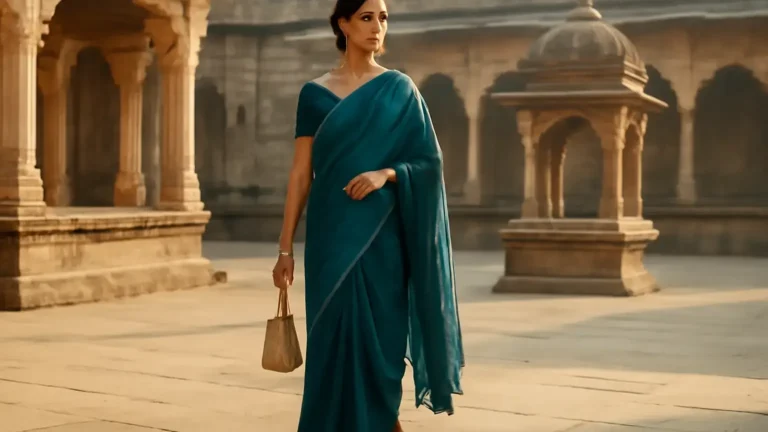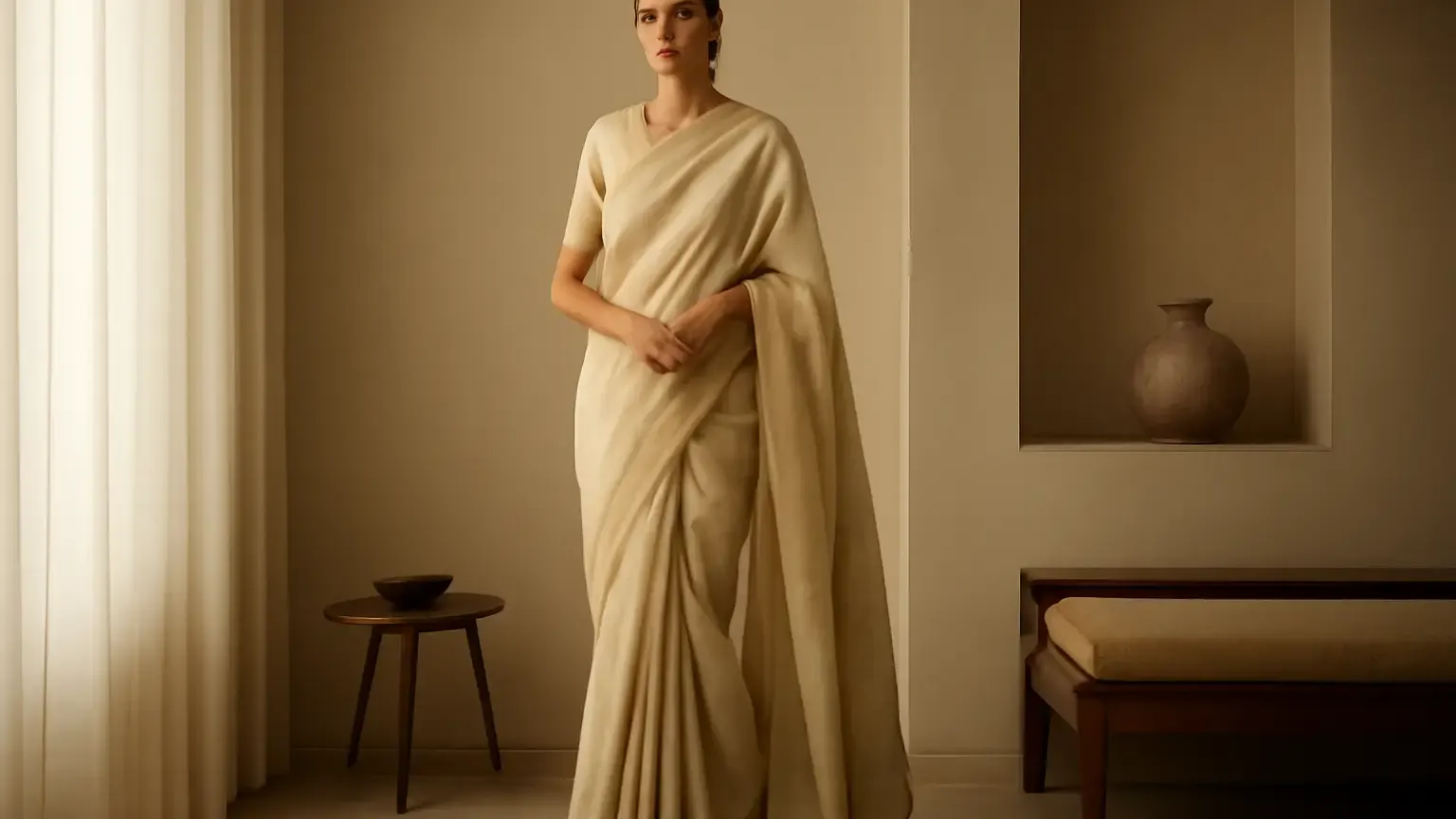
Saree styling for tall women is about distributing visual weight, not hiding height. Choose a border that anchors the hem, a pallu with enough length to sit comfortably, and blouse proportions that add structure without cutting the body awkwardly. This guide is for tall women dressing for casual days, festive gatherings and weddings, with practical ways to balance the long line through fabric, drape placement and jewellery scale.
Height gives a saree a naturally elegant canvas, but proportion matters. A very narrow border, an extremely long pallu or a tiny blouse can make the outfit look visually stretched. On the other hand, adding width everywhere can make a graceful silhouette feel heavy. The most flattering approach is to create deliberate points of balance while allowing your height to remain part of the look.
Start with the saree border width
The border is one of the clearest ways to control how a saree reads on a tall frame. A narrow border can look refined, especially with a crisp cotton or office saree, but it may not provide enough visual weight at the hem when the outfit has a long, clean line. A medium or broad border gives the eye a horizontal reference and can make the look feel grounded.
- For everyday wear: Try a slim-to-medium border in cotton, linen, handloom or soft synthetic blends. A contrasting edge adds definition without making the saree feel formal.
- For festive dressing: A noticeable zari, woven or printed border can balance a taller frame, particularly when the body of the saree is plain.
- For weddings: Broad borders work well with silk, brocade and heavier drapes. Keep the rest of the styling considered so the hem remains the main anchor rather than competing with the blouse and jewellery.
Broad borders are not compulsory. If you prefer a delicate saree, use contrast at the pallu or blouse instead. The decision should depend on the textile, colour contrast and occasion, not height alone. A very wide, stiff border on a lightweight fabric can also pull the saree down visually and make the lower half look blocky.
Use pallu length and spread to break the vertical line
Pallu length affects both comfort and proportion. A pallu that ends too high on the shoulder can make the torso and legs appear even longer, while one that trails excessively may look untidy and become difficult to manage. For most tall women, the practical aim is a pallu that reaches around the hip or slightly below it when worn over the shoulder.
For an open pallu, allow enough fabric to create a visible fall from the shoulder to the lower hip. A moderate spread across the front adds width and softens a narrow vertical impression. For a pleated pallu, keep the pleats even and avoid making them so thin that the fabric resembles a narrow strip.
Adjust the pallu by occasion
A casual saree usually benefits from a shorter, controlled pallu that stays clear of bags and daily movement. For a festive look, a wider open pallu or a neatly pleated shoulder arrangement gives more presence. With a wedding saree, the pallu can be longer and more ornate, but secure it at the shoulder and waist if the fabric is heavy. The ideal pallu length for tall women is the one that creates a balanced fall while allowing easy walking, sitting and greeting guests.
Choose blouse proportions that support the saree
Blouse proportions can change the entire silhouette. A very short blouse paired with a high saree drape may create a long lower-body line, while a slightly longer blouse or a more generous sleeve can add structure around the upper body. This does not mean covering up height; it means giving the eye more than one proportion to read.
- Blouse length: A classic waist-length blouse is versatile. A slightly longer cut can work especially well with low-contrast sarees, longer torsos or broad borders.
- Sleeves: Elbow-length, three-quarter or structured short sleeves add visual weight around the shoulder and arm. Sleeveless styles can look equally polished when the neckline and fabric have enough presence.
- Blouse neckline: A square, boat, sweetheart or high neckline can provide shape. Choose according to your shoulder line, comfort and jewellery rather than following a fixed rule.
- Colour: A contrasting blouse creates a horizontal break and is useful when the saree is a single uninterrupted colour. A tonal blouse creates a longer, more streamlined effect.
Think of blouse proportions as a styling lever. If the saree has a bold border and a dramatic pallu, a clean, moderately detailed blouse often looks more balanced. If the saree is simple and fluid, textured sleeves, embroidery or a contrasting neckline can supply the needed focus.
Place the drape where your frame feels most balanced
Drape placement is often more important than the saree label or fabric name. Begin by deciding where the waist and pleats should sit. A very high drape lengthens the lower body; a slightly lower placement can create a more even division between the torso and legs. The correct position is also the one that allows you to walk comfortably without repeatedly lifting the hem.
Keep the front pleats broad enough to be visible. Narrow, numerous pleats can disappear on a tall frame, particularly in fluid fabrics. Around five to seven neat pleats are a useful starting point, but the final number depends on the saree width and fabric. Press or pin them securely so they fall in one clean column.
For a traditional Nivi drape, set the pleats close to the centre and let the pallu create width across the shoulder. If you prefer a more contemporary look, a slightly off-centre pleat arrangement or a belt at the waist can create a clear visual anchor. A belt is especially useful with lightweight sarees, although it should sit comfortably and not compress the fabric.
Match fabric weight to the amount of structure you want
Fabric changes how proportion behaves. Lightweight sarees such as chiffon, georgette, crepe and some soft cottons create a fluid, elongated effect. They are excellent for a simple daytime look, but may need a defined border, blouse structure or neat pleats to prevent the outfit from looking too uninterrupted.
Silk, handloom cotton, linen and brocade usually provide more body. Their fall can make the outfit feel grounded without adding excessive decoration. If you choose a heavily woven saree, simplify the blouse and jewellery. If you choose a lightweight saree, use a contrasting border, a textured blouse or a wider pallu spread to add balance.
Scale jewellery instead of simply adding more
Jewellery scale should relate to the saree’s visual weight and your features. Tall women can carry statement jewellery beautifully, but several oversized pieces at once may compete with the saree. A balanced combination often includes one main focal point and quieter supporting pieces.
- With a plain festive saree, try statement earrings or a strong necklace, not necessarily both.
- With a broad-border silk or embellished wedding saree, choose jewellery with enough presence to match the fabric, while keeping the blouse neckline visible.
- With a casual cotton or linen saree, medium-sized hoops, studs, a short chain or stacked bangles can look intentional without overwhelming the relaxed texture.
- If the pallu is heavily embroidered, keep necklaces shorter or lighter so the shoulder area does not become crowded.
Long earrings and layered necklaces can emphasise verticality. That effect may be elegant, but if you want more balance, use rounded earrings, a choker-style necklace, bangles or a brooch to distribute attention horizontally.
Build three proportion-friendly looks
Casual saree
Choose a breathable cotton, linen or easy-care blend with a slim or medium border. Wear the waist drape securely, make the front pleats broad and tidy, and keep the pallu at hip level. Pair it with a structured blouse, practical flats or low heels, and medium-scale earrings. This combination feels polished without making the outfit appear over-designed.
Festive saree
Choose a saree with a visible woven, printed or zari border and a blouse that introduces contrast through colour, sleeves or texture. A wider pallu spread works well for photographs and movement. Add one statement element, such as earrings, bangles or a necklace, then let the saree retain some visual space.
Wedding saree
Silk, tissue, brocade and embellished sarees can suit a tall frame particularly well when their weight is supported by a firm blouse and secure pleats. A broad border or ornate pallu creates balance, while a slightly longer blouse, elbow-length sleeves or a defined neckline can keep the upper body connected to the rest of the outfit. Pin the pallu at the shoulder and waist if the textile is heavy, and select jewellery that matches the saree’s level of formality.
Common mistakes to avoid
- Using every balancing trick together: A broad border, contrasting blouse, waist belt, heavy necklace and wide pallu may create too many competing breaks. Select two or three anchors.
- Choosing length without checking movement: A dramatic pallu or low hem is not useful if it catches on footwear or makes stairs difficult.
- Making the pleats too narrow: On a taller frame, tiny pleats can look lost. Test the front fall in a mirror before pinning.
- Ignoring fabric behaviour: A stiff border on a fluid saree and a delicate blouse with a heavy silk may feel disconnected.
- Following height rules too literally: Tall women can wear narrow borders, monochrome looks and minimal jewellery. Balance is a styling choice, not a restriction.
A quick fitting routine before leaving home
Wear the footwear you plan to use, then tuck and pleat the saree while standing naturally. Check that the hem lightly skims the top of the foot without dragging. Pin the first pleat, walk, sit and turn once. Next, adjust the pallu so it reaches the intended hip area and does not pull at the shoulder. Finally, look at the outfit from a distance: if the eye travels from head to toe without a pause, add a border contrast, blouse detail, belt or jewellery focal point rather than adding all four.
Takeaway
Effective saree styling for tall women does not disguise height; it gives the long silhouette structure. Start with border width and fabric weight, set a comfortable waist drape, choose a pallu with a balanced fall, and use blouse proportions and jewellery scale to distribute attention. The best final look is the one that feels easy to move in and lets your height look intentional.
Products that may help with this routine
Choose only what fits your skin, hair or personal needs. Use the links below to view current options on Amazon India.
Frequently Asked Questions
How do you style sarees for tall women?
Use a visible border or contrasting pallu to anchor the look, keep the front pleats broad and neat, choose a blouse with balanced length and sleeves, and place the pallu around the hip rather than letting it end too high. Add one jewellery focal point instead of several oversized pieces.
What saree border suits tall women?
A medium or broad border often balances a tall frame, especially for festive and wedding sarees. Slim borders also work for casual or minimalist outfits when the blouse, pallu or colour contrast provides another visual anchor.
What is the ideal pallu length for tall women?
A pallu that reaches around the hip or slightly below it is a practical starting point. It should create a visible fall from the shoulder without dragging, pulling at the blouse or interfering with walking.
What is the best blouse length with a saree for tall women?
A classic waist-length blouse is versatile, while a slightly longer blouse can add structure to a long torso or a saree with a low-contrast body. Choose the length alongside the saree’s border, waist placement and neckline.
What should you consider for saree draping for tall women for weddings?
Use a secure, well-pressed pleat arrangement, a pallu with enough length to spread elegantly, and a border that can hold its own against wedding jewellery. A structured blouse and pins at the shoulder and waist help heavier fabrics stay in place.
What jewellery suits tall women in sarees?
Jewellery with moderate to substantial scale can suit a tall frame, but balance matters more than size. Choose one focal piece—such as statement earrings or a necklace—and use bangles, a brooch or rounded shapes to add width when desired.