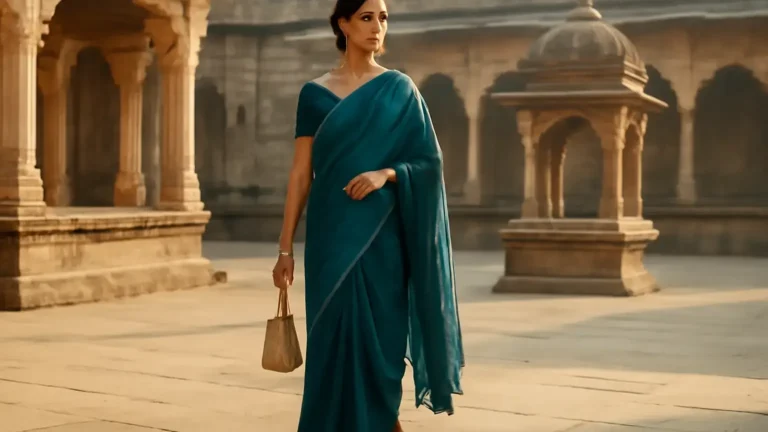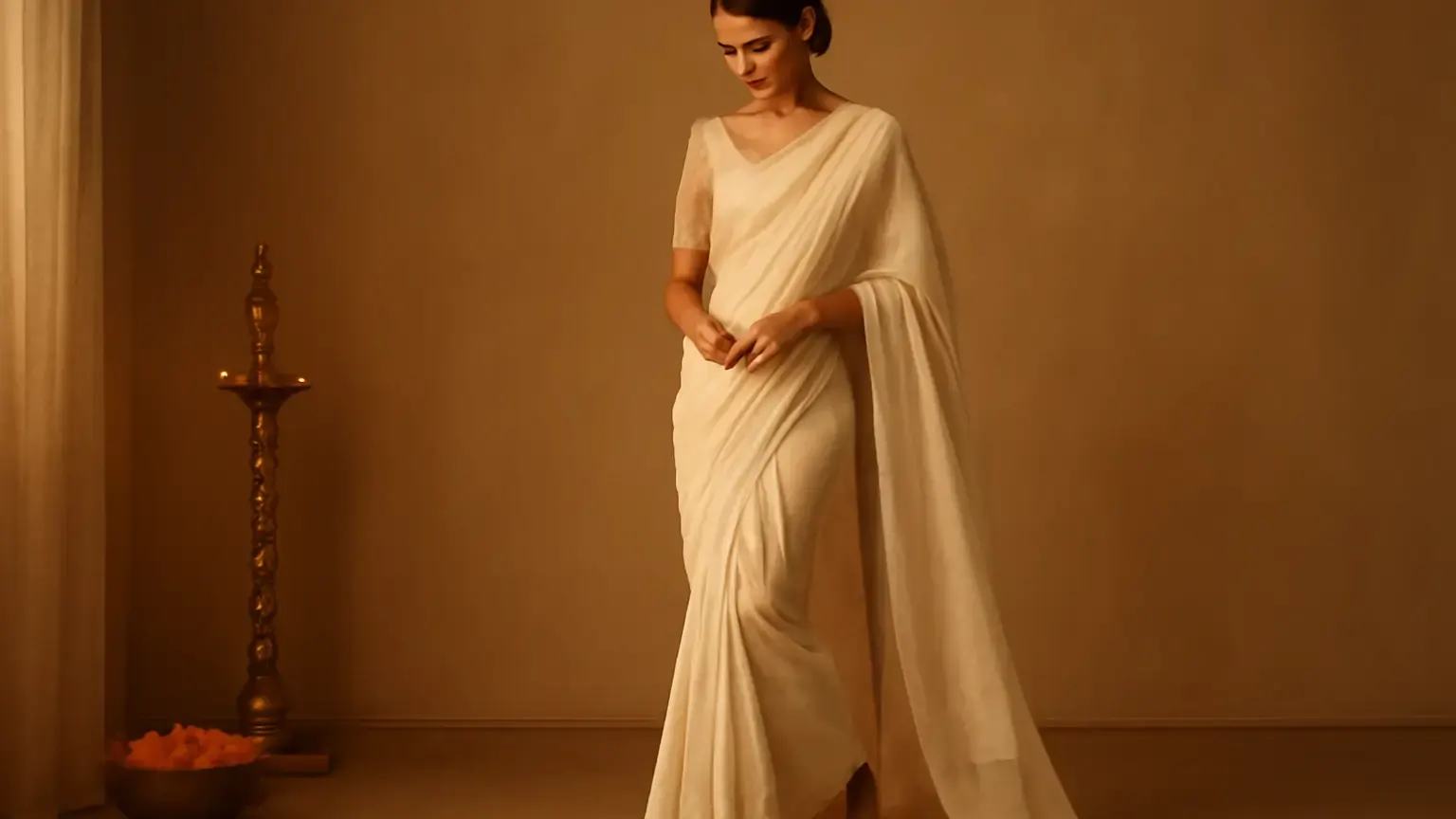
festive fashion for petite women becomes easier when every line has a job: keep hems close to the ankle, place saree drapes and lehenga waistlines high, choose a blouse that ends at the narrowest point, and repeat one colour vertically. This guide is for Indian women who want sarees, suits and lehengas to feel festive without looking overwhelmed, with practical choices for proportions, footwear, jewellery and comfort.
Start with proportion, not size
Petite dressing is not about hiding your frame or wearing only fitted clothing. It is about managing where visual breaks occur. A broad border, a long contrasting blouse, a low-slung skirt or an oversized necklace can divide the body into noticeable sections. When those breaks are placed carefully, the outfit looks intentional and the silhouette feels longer.
The most reliable formula for festive outfit proportions is a defined waist, a clean vertical line and controlled volume. This can mean a saree pleat that falls close to the body, a kurta with a long uninterrupted front panel or a lehenga whose waistband sits at the natural waist. Fit still matters: an outfit that pulls, bunches or needs constant adjustment will not look polished at any height.
- Keep the eye moving up and down: tonal colours, narrow borders and open front lines help.
- Limit competing breaks: avoid combining a sharply contrasting blouse, belt, dupatta and footwear.
- Show a little ankle or instep: this prevents hems from visually weighing down the body.
Make sarees look longer and lighter
Choose the drape before the decoration
Good petite saree styling begins with drape placement. Wear the saree slightly higher at the waist, secure the pleats neatly and keep the pallu long enough to create a continuous line without pooling around the feet. A slim, vertical fall of pleats is usually more elongating than very wide pleats spread across the front.
For saree draping for short height, avoid a pallu that finishes at the widest part of the hip or is folded into a thick horizontal block. A narrow shoulder pleat, a clean fall and a lightly pinned edge create structure. If you prefer an open pallu, let it travel diagonally from the shoulder to the opposite side instead of spreading it broadly across the torso.
Find the right border and blouse
A narrow or medium border is generally easier to balance than a very wide contrast border. This does not mean petite women must avoid traditional zari or temple borders; choose one focal border and keep the rest of the saree relatively calm.
The best blouse length for petite frame is usually one that ends near the natural waist or just below it, depending on the saree style. A blouse that extends far over the hips can shorten the legs, while an extremely cropped blouse may create an unwanted horizontal break. A V-neck, soft sweetheart neckline or modest square neck can add length without requiring a deep cut.
Use suits to build one clean vertical line
A well-cut kurta set is one of the easiest festive outfits for petite women India because it offers coverage, movement and clear tailoring. Look for a straight or gently shaped kurta with a front line that is not interrupted by excessive gathers. Side slits beginning around the knee can make the lower half feel lighter, especially when paired with straight trousers or a narrow churidar-style bottom.
Balance kurta and bottom lengths
For short kurti styling, match the hem to the bottom. A short kurti works well with a high-waisted, streamlined trouser or skirt; a mid-thigh kurti with a very wide palazzo can make the body appear divided. If you choose a long anarkali, keep the flare controlled and ensure the hem sits just above the floor when worn with your intended footwear.
A petite salwar suit fit should allow movement at the shoulder and armhole while remaining neat through the torso. Excess fabric at the sides creates bulk. If the suit is heavily embroidered, a simpler dupatta drape—one shoulder with a long vertical fall—will preserve the outfit’s lengthening effect.
Choose lehengas with a high, clean waist
A high waist lehenga can visually lengthen the legs, but the waistband should sit securely at the natural waist rather than dig into the body. The choli should finish near the waistband so there is no broad gap between the top and skirt. This creates a connected silhouette while still allowing a contemporary crop-top proportion.
For the question “what lehenga length suits petite women?”, the practical answer is a floor-skimming hem that clears the top of the foot and does not drag. Too-short hems can make the skirt look disconnected; excess length gathers at the ankles and conceals your footwear. Try the full outfit with the actual shoes before final alterations.
Choose a skirt with moderate flare when the embroidery is dense. A very full circular lehenga plus a wide dupatta can overwhelm a smaller frame. If you love volume, keep one element dramatic and make the other two—blouse and drape—more streamlined.
Let colour and fabric do the elongating work
Monochrome ethnic outfits do not have to mean one exact shade from head to toe. A saree with a related blouse, a kurta set in two tones of the same colour or a lehenga with a tonal dupatta can create continuity. Jewel tones, ivory, deep pink, green and warm metallics can all work; the key is the relationship between shades, not a particular colour rule.
If you prefer contrast, keep it deliberate. A darker blouse under a similar-toned saree may define the waist, while a contrasting dupatta can be kept narrow and placed diagonally. Small-scale prints, fine stripes and vertical embroidery are often easier to balance than large motifs spread across every panel.
Fabric weight also matters. Fluid crepe, lightweight silk blends, georgette and soft tissue can skim the body, while very stiff brocade or multiple net layers add width. Heavier fabrics are still possible: use them in one focal piece and simplify the supporting layers.
Finish with footwear and jewellery in the right scale
Comfortable festive footwear is part of the silhouette, not an afterthought. A modest block heel, low platform, pointed-toe mule or neat embellished sandal can add lift while remaining practical for family gatherings and long ceremonies. Match the shoe height to the final hem, and avoid a shoe that disappears completely beneath the outfit if you want a lighter ankle line.
For jewellery, consider jewellery scale for petite women rather than avoiding statement pieces altogether. Choose one strong focal area: long earrings with a restrained necklace, a choker with small drop earrings, or a single long necklace with simple studs. Oversized jewellery at the ears, neck, wrists and hairline at once can compete with the face and outfit proportions.
Bag size matters too. A compact potli, slim clutch or small shoulder bag generally supports a petite festive look better than a large everyday tote. Keep metallic finishes coordinated so the accessories read as one polished layer.
A practical fitting routine before the event
- Put on every layer: wear the blouse, inner, saree or skirt, dupatta and footwear together.
- Check the first visual break: make sure the blouse, waistband or kurta hem does not fall at an awkwardly wide point.
- Walk and sit: a hem that looks correct while standing may catch under the heel or bunch when seated.
- Photograph the outfit: check a full-length image from a natural distance, not only a mirror close-up.
- Edit one element: if the look feels busy, reduce border width, drape volume, jewellery or contrast rather than changing everything.
Common mistakes include wearing an unaltered ready-made skirt, allowing a dupatta to cover the entire torso, choosing a blouse that ends at the widest hip point and adding a very large necklace to compensate for a simple neckline. Tailoring and placement usually make a greater difference than buying more embellishment.
Quick takeaway
The best festive fashion for petite women is built around continuity: a high and secure waist, a controlled hem, one dominant vertical line, related colours and accessories that support rather than crowd the outfit. Whether you choose a saree, suit or lehenga, try the complete look before the event and adjust the proportions—not your personal style—to create length with ease.
Products that may help with this routine
Choose only what fits your skin, hair or personal needs. Use the links below to view current options on Amazon India.
Frequently Asked Questions
How do you style a saree for petite women?
Wear the saree slightly higher at the waist, keep pleats narrow and neat, choose a blouse ending near the natural waist, and place the pallu in a slim vertical or diagonal fall. Avoid a thick pallu block or an overly wide contrasting border.
What is the best blouse length for short women in a saree?
A blouse that ends at or just below the natural waist usually works well. It should connect neatly with the saree without extending far over the hips. The final choice depends on the saree drape, neckline and comfort, so try the full outfit before altering it.
What lehenga length suits petite women?
A floor-skimming hem that clears the top of the foot is usually easiest to balance. Check it with the exact footwear you will wear; a dragging hem adds bulk, while a noticeably short hem can make the skirt look disconnected.
What are the best festive outfits for petite women in India?
Sarees with controlled pleats, straight or gently shaped kurta sets, and high-waisted lehengas with moderate flare are versatile choices. Tonal colours, well-fitted waistlines and lighter drapes help the outfit look connected rather than visually divided.
How can you look taller in ethnic wear without wearing high heels?
Use tonal or monochrome colour, vertical embroidery, a high waist, clean hems and a long uninterrupted front line. Comfortable low platforms, block heels or pointed-toe flats can add subtle lift, but tailoring and drape placement matter more than heel height.
What footwear works best with a lehenga for petite women?
Choose footwear that gives modest lift and remains stable, such as a low platform, block heel or embellished sandal. Match the hem to the shoe height and test walking, stairs and sitting before the event.