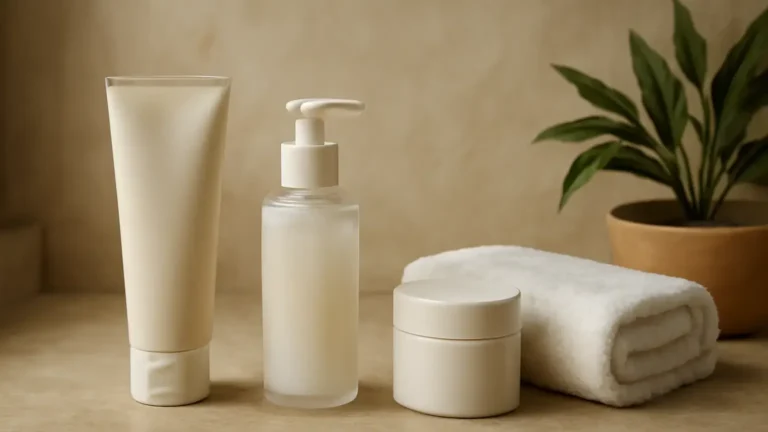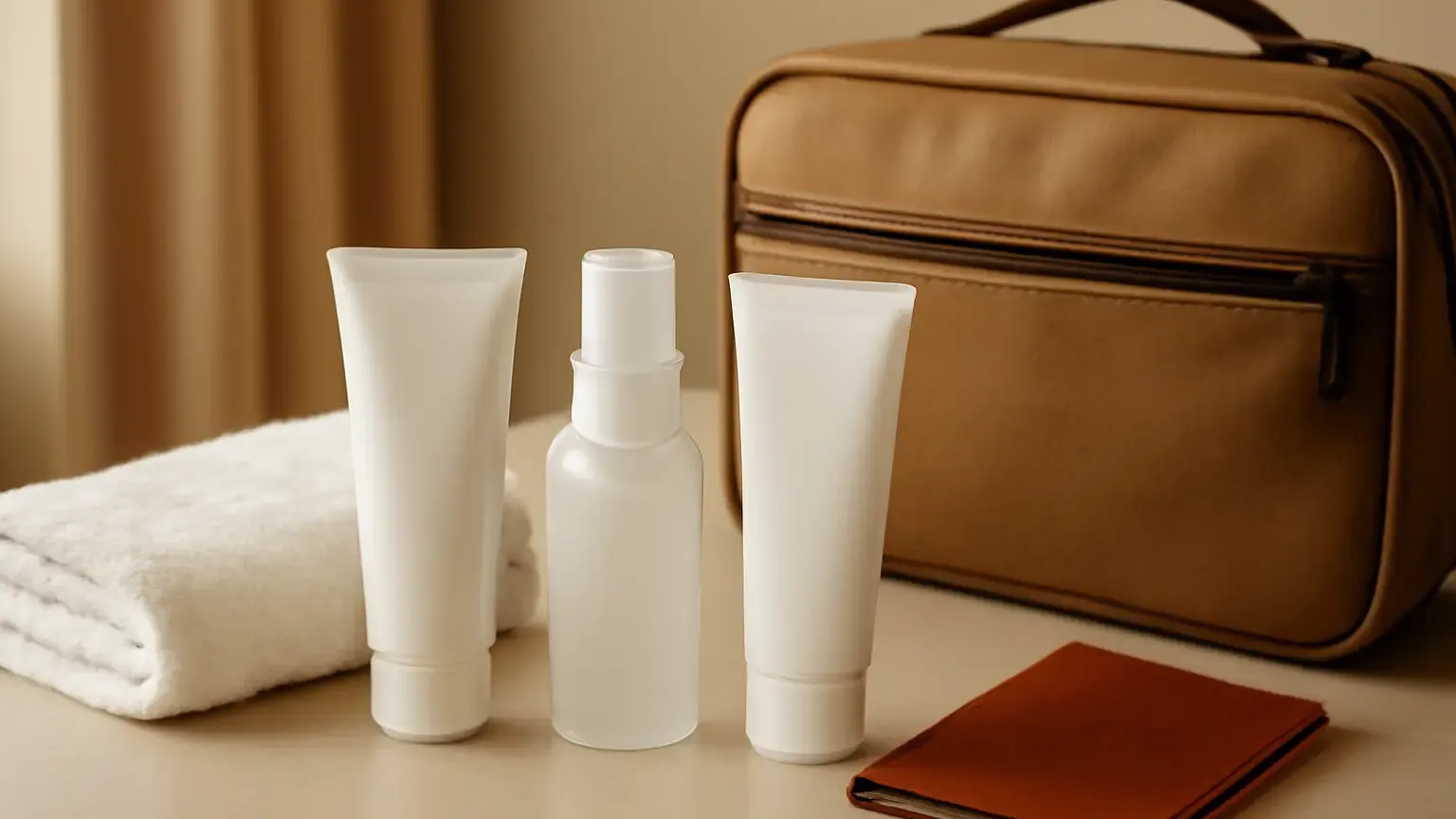
A skin care routine for travel does not need a full bathroom shelf. For anyone flying, driving or moving between Indian climates, pack a gentle cleanser, a moisturiser suited to your skin and a broad-spectrum sunscreen. Keep the formulas familiar, decant only what you can identify and adjust the amount—not the whole routine—when the air becomes dry, humid or dusty. The result is a practical routine that protects consistency without adding unnecessary luggage or irritation.
Travel can disrupt even a well-established skincare habit. Long flights expose skin to dry cabin air, road journeys may mean dust and sweat, and a hotel stay can introduce unfamiliar water, towels or room air-conditioning. The answer is not to carry every product you own. A compact routine built around three essentials is easier to follow and less likely to trigger avoidable sensitivity.
The three essentials in a skin care routine for travel
A useful travel routine has three product categories: a gentle cleanser, a moisturiser and sunscreen. These cover the basic jobs of removing daily build-up, supporting comfort and limiting sun exposure. You can add one familiar product if your usual routine genuinely needs it, but the three essentials should remain the foundation.
1. Gentle cleanser
Choose a cleanser that you already use comfortably. A mild, non-stripping formula is generally more practical than a strong exfoliating or heavily fragranced wash, especially when your skin is also dealing with travel stress. Your cleanser for travel should remove sweat, sunscreen and surface grime without leaving skin tight.
2. Moisturiser
Your moisturiser for travel should match both your normal skin preference and the expected conditions. A lightweight lotion or gel may feel comfortable in a humid destination, while a richer but non-greasy cream can be useful in dry weather or air-conditioned rooms. If you are unsure, take the familiar texture that has worked for you rather than buying a destination-specific product at the last minute.
3. Sunscreen
A broad-spectrum sunscreen is the most important daytime addition, whether you are sightseeing, sitting by a car window or walking between airport terminals. Look for a sunscreen you already tolerate and apply it as directed on its packaging. Your sunscreen for travel should be easy to access for reapplication, not buried beneath clothes and toiletries.
How to pack travel skincare without overpacking
Travel size skincare works best when it is planned around the length and type of trip. For a short weekend, you may need only small quantities. For a longer journey, take enough of each essential rather than relying on an unfamiliar replacement.
- Estimate usage: Think about the number of mornings, evenings and sunscreen applications, then pack a modest buffer.
- Use clear, labelled containers: Labels prevent confusion between cleanser, moisturiser and other liquids.
- Keep liquids together: Place bottles in a leak-resistant pouch and follow your airline’s current cabin-liquid rules. Rules can vary by airport and may change, so check before departure.
- Protect against leaks: Wipe the bottle threads, close caps firmly and place containers upright inside a secondary bag.
- Keep sunscreen accessible: In a car or carry-on, easy access makes reapplication more realistic.
For carry-on skincare, avoid transferring products into containers that are too large for the quantity you need or too flimsy for repeated opening. Solid cleanser formats can reduce liquid volume if they are already part of your routine, but do not switch solely to save space if your skin reacts to the new format.
Decanting skincare products: a safer, simpler approach
Decanting skincare products can reduce luggage, but it is not automatically suitable for every formula. Transfer only products that remain stable and can be clearly identified. Use clean, dry containers designed for cosmetic storage, and avoid topping up an old container because residue can mix with the fresh product.
Keep the original packaging or take a clear photograph of the ingredient list, product name and expiry information. This is particularly useful if you are carrying more than one similar-looking liquid. Do not decant a product if the formula separates easily, requires special packaging or has instructions to remain in its original container. When in doubt, carry the original smaller pack.
Is it safe to decant skincare products? It can be, when the container is clean, compatible, airtight and labelled, and when the product’s storage instructions allow it. If the product changes smell, colour or texture, stop using it and replace it with a familiar alternative rather than trying to rescue it.
Adjust the routine for flights, roads and hotels
Flight skincare tips
Cabin air can feel dry, and a long journey often makes people cleanse repeatedly or layer too many products. A simple approach is to cleanse before leaving or when needed, apply moisturiser if skin feels uncomfortable and use sunscreen during daytime travel or when you will be exposed to strong daylight. Avoid treating the flight as a convenient time to test a peel, mask or active serum.
Keep a small amount of moisturiser and your sunscreen where you can reach them within permitted liquid limits. Do not rely on a facial mist as a substitute for moisturiser; adding water without supporting the skin afterwards may not improve comfort for everyone.
Road trip skincare
Road trip skincare needs to account for heat, dust, sweat and frequent stops. Store products away from direct sunlight and hot car interiors. Cleanse at the end of the day, moisturise according to comfort and reapply sunscreen when you remain outdoors or in daylight for extended periods.
Do not use a shared towel or let an open product sit in a dusty car. A small pouch kept in a cooler, shaded part of the vehicle is more sensible than leaving creams on the dashboard. If water access is limited, use your normal cleanser when practical rather than repeatedly scrubbing with dry tissues.
Hotel skincare routine
A basic hotel skincare routine should not depend on complimentary toiletries. Hotel soaps and face washes may be fragranced or unfamiliar, so your own cleanser is the more predictable choice. If the room is strongly air-conditioned, apply moisturiser after cleansing and use a comfortable amount rather than adding several new products.
Hotel water, climate and laundry products can all feel different from home. Rinse cleanser thoroughly, use a clean personal towel where possible and avoid sharing skincare products. These small decisions can make a minimalist routine easier to maintain.
Adapt for humidity, heat and dry weather
Climate change skincare during a trip means responding to new conditions, not rebuilding your entire routine. In hot, humid weather, use a smaller amount of moisturiser if a heavy layer feels uncomfortable, but do not skip it automatically. Sweat does not necessarily replace moisturisation. In cold, dry or air-conditioned environments, a slightly richer familiar moisturiser may be more comfortable.
For a skin care routine while travelling in hot weather, prioritise sunscreen, shade, breathable clothing and cleansing after heavy sweating. Reapply sunscreen according to the product directions, especially after sweating or wiping the face. Avoid adding multiple mattifying products simply because the skin looks shinier than usual; over-cleansing can make the routine harder to tolerate.
For sensitive skin travel tips, keep the routine even shorter. Pack fragrance-free or previously tolerated options if those are part of your normal care, avoid physical scrubbing and leave new actives at home. If persistent burning, swelling, a spreading rash or severe discomfort develops, seek advice from a qualified dermatologist or doctor.
Why familiar products beat experimental ones on holiday
Travel is a poor time to introduce an untested exfoliant, retinoid, brightening product, peel or heavily fragranced mask. A reaction can be difficult to interpret when heat, sun, food, water and sleep changes are also present. New products may also increase sensitivity to sunlight or create dryness just when you need a dependable routine.
Use the trip to maintain what is already working. If you want to test a product, do so at home well before departure, follow its directions and give your skin time to show how it responds. Do not stop prescribed skincare without advice from the clinician who recommended it.
A simple morning and evening travel schedule
Morning
- Cleanse gently if needed, especially after a sweaty night or heavy product use.
- Apply your familiar moisturiser in an amount that feels comfortable for the climate.
- Apply broad-spectrum sunscreen as directed, including exposed neck or other areas relevant to your plans.
Evening
- Cleanse to remove sunscreen, sweat and daily build-up.
- Apply moisturiser to clean, comfortable skin.
- Use an additional familiar treatment only if it is already part of your routine and your skin is tolerating it.
If you miss a step during a rushed transfer, return to the routine at the next practical opportunity. One imperfect evening does not require aggressive correction the following morning.
Common travel skincare mistakes to avoid
- Packing too much: A crowded bag can make the basics easy to forget.
- Trying hotel products immediately: Complimentary products are optional, not essential.
- Leaving products in heat: Cars, balconies and sunny windows can expose formulas to unsuitable temperatures.
- Over-cleansing: Washing repeatedly to remove every trace of sweat can leave skin uncomfortable.
- Skipping sunscreen: Cloud, car windows and short outdoor walks do not make sun protection irrelevant.
- Ignoring expiry or storage advice: Check the label before transferring or packing a product.
Quick takeaway
The best skin care routine for travel is familiar, portable and flexible. Pack a gentle cleanser, a suitable moisturiser and broad-spectrum sunscreen; label and protect any decanted products; then adjust quantity and texture for the climate. Flights, road trips and hotel stays may need different logistics, but they rarely require a completely new skincare system.
Products that may help with this routine
Choose only what fits your skin, hair or personal needs. Use the links below to view current options on Amazon India.
Frequently Asked Questions
What should be in a skin care routine for travel?
The core routine should include a gentle cleanser, a familiar moisturiser and broad-spectrum sunscreen. Add only products you already use comfortably and genuinely need for the length of the trip.
How do I pack skincare for a flight?
Place labelled, leak-resistant containers in a transparent pouch and follow the airline and airport liquid rules. Keep sunscreen and a small amount of moisturiser accessible within the permitted cabin allowance.
Is it safe to decant skincare products?
It can be safe when the container is clean, dry, compatible with the formula, airtight and clearly labelled. Do not decant products that require original packaging or have special storage instructions.
What is a skin care routine while travelling in hot weather?
Use a gentle cleanser, a comfortable amount of moisturiser and broad-spectrum sunscreen. Reapply sunscreen as directed, cleanse after heavy sweating and avoid introducing strong new products.
What skincare should I take on a road trip?
Take a familiar cleanser, moisturiser and sunscreen in a shaded, leak-resistant pouch. Protect the products from hot car interiors, and keep sunscreen available for outdoor stops and extended daylight exposure.
Why should I avoid new skincare products while travelling?
A new product may cause irritation or dryness, and travel factors such as heat, sun, unfamiliar water and poor sleep can make the cause difficult to identify. Familiar products are easier to manage.