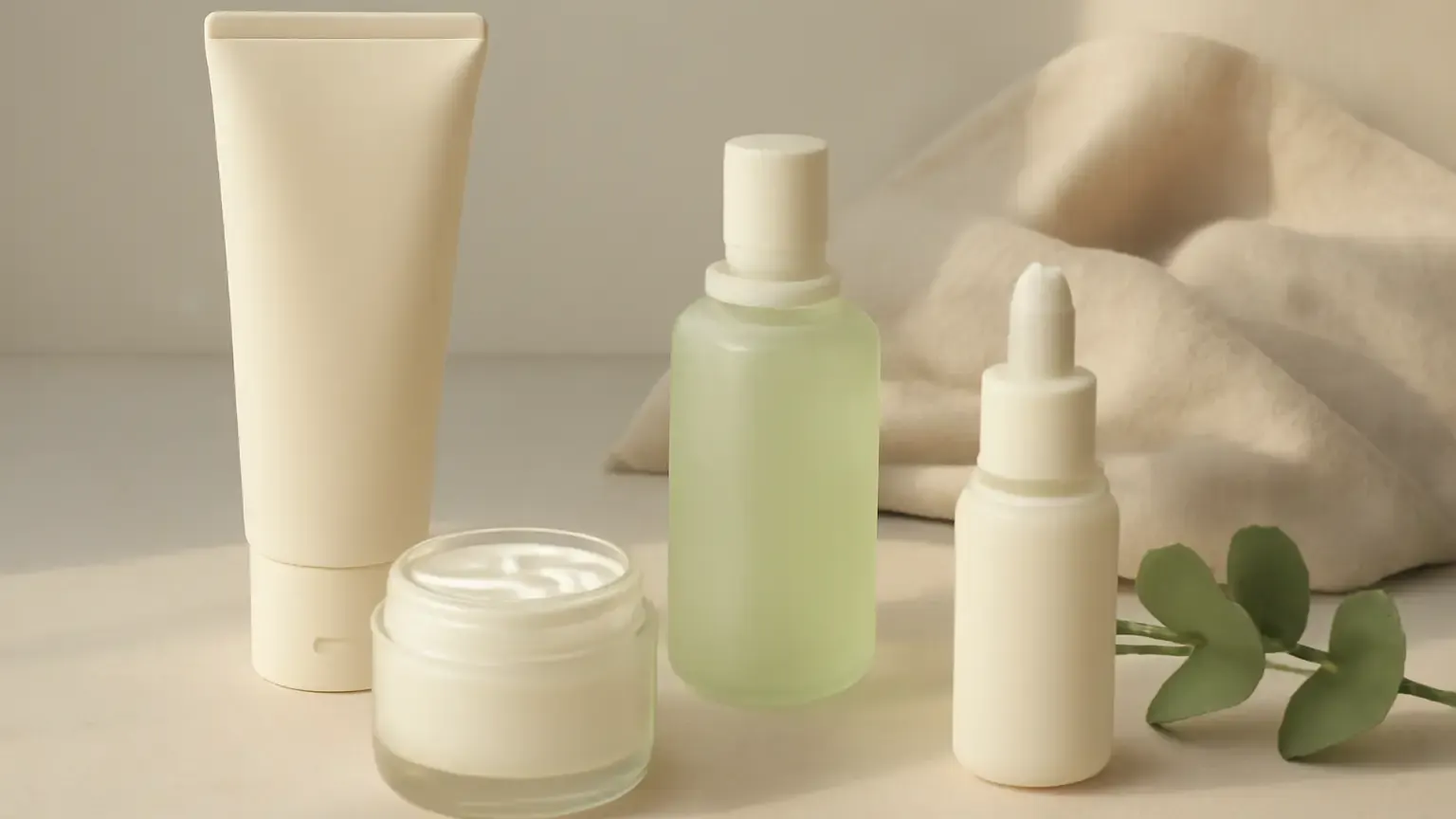
A skin care routine for combination skin works best when you stop treating your face as one uniform surface. Use a gentle cleanser everywhere, lighter hydration and oil-control ingredients on the T-zone, and richer barrier support on dry cheeks. This guide is for people whose forehead, nose or chin becomes shiny while the cheek area feels tight, flaky or comfortable. The outcome is a simple morning and evening routine with clear product placement, not a crowded shelf.
Combination skin has two or more noticeably different needs on the same face. The forehead, nose and chin—the T-zone—may look shiny, develop congestion or feel greasy by midday, while the cheeks may feel normal, tight, rough or easily irritated. This does not mean you need two complete routines. It means the same steps can be adjusted by facial zone.
The most practical approach is to keep the foundation consistent and customise only where necessary. Cleanse gently across the face, moisturise according to comfort, reserve stronger treatments for oily or congested areas, and apply sunscreen evenly to every exposed area. Your routine should also change slightly with Indian heat, humidity, air-conditioning and seasonal dryness.
How to map products across combination skin
Before choosing products, divide the face into two working zones:
- T-zone: forehead, nose and chin. Look for excess shine, visible pores, blackheads or a heavier feeling.
- Cheek area: the sides of the face, around the mouth and sometimes the jaw. Look for tightness, dullness, rough texture or sensitivity.
These are useful observations, not a diagnosis. Your zones can change with weather, menstrual-cycle-related fluctuations, stress, travel or a new product. A formula that feels appropriate during a humid monsoon may feel insufficient in dry winter air or a heavily air-conditioned room.
When deciding whether to use separate products, start with texture rather than buying duplicates. A gel cleanser can suit the whole face if it does not leave the cheeks tight. A lightweight gel-cream may work everywhere, with a second thin layer only on dry cheeks. This is often enough for a balanced combination skin skincare routine.
Combination skin routine morning: a simple order
A good combination skin routine morning should protect the barrier while controlling unnecessary shine. Follow this product layering order:
1. Cleanse according to overnight oil
Use lukewarm water and a gentle, low-foam cleanser. Apply it across the face for around 20 to 30 seconds, giving the nose, sides of the nose and chin a little extra attention without scrubbing. If your cheeks feel comfortable and your face is not particularly oily after waking, rinsing with water may be sufficient for some people.
Avoid choosing a harsh cleanser simply because of T-zone oiliness. A squeaky finish can leave the cheeks uncomfortable and may encourage over-cleansing later in the day. If you wear heavy water-resistant sunscreen or makeup, remove it properly in the evening rather than trying to compensate with an aggressive morning wash.
2. Add targeted hydration if needed
A lightweight hydrating serum containing humectants can be applied to the entire face, especially after cleansing while the skin is slightly damp. If the T-zone becomes sticky easily, use a smaller amount there and a little more on the cheeks. Hydration does not have to mean a rich or oily finish.
3. Use moisturiser by zone
Choose a non-comedogenic moisturiser if you are prone to clogged pores, but remember that this label does not guarantee that every formula will suit every person. Apply a thin layer across the face. Add a second layer or use a slightly more nourishing texture on dry cheeks if needed. On a very oily forehead or nose, you may need only the residue left on your fingers rather than a separate heavy layer.
4. Finish with broad-spectrum sunscreen
Use a broad-spectrum sunscreen as the final morning step on the face, ears and neck when exposed. Choose a comfortable finish that you will apply generously and reapply when outdoors, sweating or spending long periods in direct sun. Matte or fluid textures may feel better on the T-zone, but do not deliberately under-apply sunscreen to the cheeks.
Night skincare routine for combination skin
The evening is when you remove sunscreen, settle the skin and use any treatment deliberately. A useful combination skin routine night looks like this:
- Remove sunscreen or makeup: Use a suitable first cleanser or makeup remover when necessary. Follow with a gentle cleanser rather than repeatedly rubbing the face.
- Assess the day: If the cheeks feel tight, prioritise calming hydration. If the T-zone is congested, choose a targeted treatment night instead of layering several actives.
- Apply treatment: Place the product only where it is needed, following its label directions. Keep treatment away from irritated skin, the immediate eye area and the corners of the nose or mouth if those areas are sensitive.
- Moisturise: Use a lighter layer on comfortable or oily areas and a more cushioning layer on dry cheeks.
Do not treat every evening as an exfoliation night. A routine that repeatedly strips the surface can make both zones feel worse. Introduce one active product at a time, use it less often than the maximum suggested if you are new to it, and observe how your skin responds over several weeks.
Where to use treatments for shine and congestion
Salicylic acid for oily areas can be useful when the T-zone is prone to blackheads or congestion because it is an exfoliating ingredient that works within oil-rich pores. Apply it only to the relevant areas if your cheeks are dry or sensitive. Start with a low frequency and do not combine it in the same routine with multiple strong exfoliants simply to speed up results.
Niacinamide is another versatile option that may suit the whole face in a modest, well-tolerated formula. It can support the appearance of uneven tone and excess shine, but more is not automatically better. If a product stings, causes persistent redness or makes the cheeks rough, pause it and simplify your routine.
For dry cheeks, prioritise skin barrier care. Look for moisturising formulas with ingredients such as ceramides, glycerin or other well-tolerated emollients. Apply them to slightly damp skin and avoid using an exfoliating acid over flaky areas. Flaking is not proof that a stronger treatment is needed.
How to choose products for Indian weather
In humid cities, sweat and sebum can make rich creams uncomfortable, especially across the T-zone. A fluid sunscreen and gel-cream moisturiser may be easier to use consistently. However, humidity skincare is not the same as skipping moisturiser. The cheeks can still become dehydrated, particularly after air-conditioning, frequent face washing or exposure to heat and dust.
In cooler or drier months, keep the same basic steps but adjust the amount and texture on the cheeks. You may use a creamier moisturiser at night while retaining a lighter formula on the forehead and nose. If you travel between climates, change one product at a time so you can identify what is helping or irritating the skin.
Fragrance, essential oils and strong cooling sensations are not required for a product to feel effective. If your skin is reactive, a short ingredient list and a simple routine may be easier to manage than a collection of highly active formulas.
Common mistakes in a combination skin routine
- Using a drying cleanser everywhere: T-zone oiliness does not justify leaving the cheeks tight.
- Applying treatment to the whole face by default: Zone-specific placement can reduce unnecessary irritation.
- Skipping moisturiser on oily areas: A lightweight layer can be more comfortable than compensating with harsh cleansing.
- Using too many exfoliants: Acids, scrubs and cleansing brushes can become excessive when combined.
- Ignoring sunscreen texture: If a sunscreen feels heavy, try a different finish rather than applying too little.
- Changing everything at once: Introduce new products individually and patch test where appropriate.
Also remember that pores cannot be permanently erased, and shine is not a sign that your routine has failed. The aim is comfortable, supported skin with manageable oiliness—not a completely matte face all day.
A quick decision guide for product placement
| What you notice | Where to adjust | Practical change |
|---|---|---|
| Shine or congestion by midday | Forehead, nose and chin | Use a lighter moisturiser layer and consider a targeted treatment on selected nights. |
| Tightness after cleansing | Whole face or cheeks | Switch to a gentler cleanser, shorten cleansing time and add barrier-supportive moisturiser. |
| Flaky or rough cheeks | Cheek area | Pause exfoliation there and add a richer moisturiser layer. |
| Sunscreen feels greasy | Usually the T-zone | Try a lighter fluid or gel finish while maintaining even application. |
Give a simplified routine time to settle before judging it. If you develop persistent burning, swelling, painful breakouts, severe peeling or a rash, seek advice from a dermatologist or doctor. Do not stop prescribed care without speaking to the clinician who recommended it.
Takeaway
The most reliable skin care routine for combination skin is a shared routine with zoned application: gentle cleansing across the face, lighter layers on the T-zone, extra barrier support for dry cheeks, targeted treatment where needed and sunscreen everywhere. Start with the smallest number of products that keeps your skin comfortable, then adjust placement rather than adding a new product for every concern.
Products that may help with this routine
Choose only what fits your skin, hair or personal needs. Use the links below to view current options on Amazon India.
Frequently Asked Questions
How do I build a skin care routine for combination skin?
Cleanse gently, use lightweight hydration, moisturise lightly on oily areas and more generously on dry cheeks, apply targeted treatments only where needed, and finish the morning routine with broad-spectrum sunscreen.
What is the best morning routine for combination skin in India?
Use a gentle cleanser or water rinse, a light hydrating serum if needed, a gel-cream or non-comedogenic moisturiser adjusted by zone, and comfortable broad-spectrum sunscreen. Modify textures for humidity and air-conditioning.
What should I apply on an oily T-zone and dry cheeks?
Use the same gentle cleanser across the face, then apply a lighter moisturiser or treatment to the T-zone and a more nourishing moisturiser to dry cheeks. Sunscreen should be applied evenly to both areas.
Can I use different products on different areas of my face?
Yes. Zone-based application is useful for combination skin. For example, a salicylic acid product may be limited to a congested T-zone while a barrier-supportive moisturiser is used more generously on the cheeks.
How often should I exfoliate combination skin?
Start conservatively according to the product directions, often once or twice weekly for an exfoliating product, and reduce frequency if you experience dryness, stinging or redness. Avoid exfoliating irritated or flaky areas.
Which moisturiser is good for combination skin?
Choose a texture that keeps the cheeks comfortable without feeling heavy on the T-zone. Gel-creams or lightweight lotions may suit humid weather, while a richer formula can be applied just to dry cheeks when needed.



