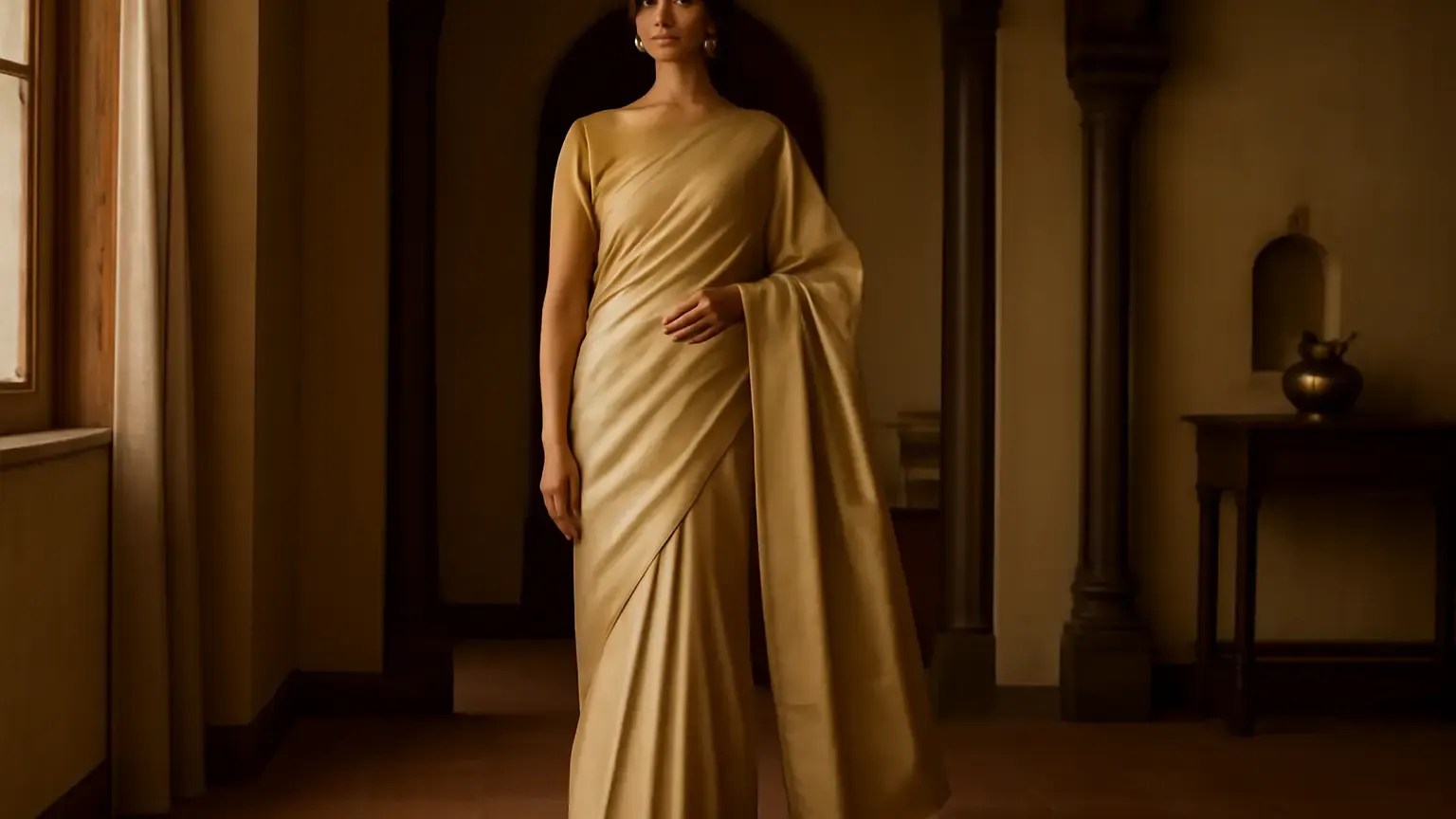
Saree styling for tall women becomes easier when the drape creates horizontal breaks instead of adding uninterrupted length. For tall women who want a more balanced silhouette, begin with a medium or wide border, build controlled pleat volume, choose a blouse with enough visual presence, place the pallu across the body, and finish with stable low or mid-height footwear. These five adjustments work across wedding, festive and everyday saree styles without hiding your height.
Height is an advantage in a saree: long pleats fall beautifully, statement borders have room to show, and architectural fabrics such as silk or organza can look especially elegant. The challenge is proportion. If every element runs vertically and closely along the body, the outfit may feel elongated rather than balanced.
The aim is not to make a tall frame look shorter. Good styling distributes attention across the shoulder, waist, hip and hem so the saree feels intentional from top to bottom. Fabric weight, border scale, blouse shape and the way the pallu is secured all influence that result.
1. Use the border to create a visual break
The border is one of the quickest ways to control the line of a saree. A medium or wide border adds a clear horizontal interruption near the hem and often makes a tall frame look more proportionate. This is particularly effective in silk sarees, traditional Kanjeevaram sarees and festive weaves where the border is part of the design language.
A wide border saree can suit a tall woman beautifully, especially when the rest of the outfit is restrained. Choose one with a clean, well-defined edge if you want the hem to look polished. A small border saree is also perfectly wearable; balance it with fuller pleats, a more visible blouse or a pallu that spreads across the torso.
- For a long, slim frame: try a medium-to-wide border with moderate fabric volume.
- For a tall, fuller frame: choose a substantial border with a fluid fabric rather than a very stiff, bulky edge.
- For a petite-looking upper body: repeat the border colour subtly on the blouse or pallu to connect the outfit.
Very narrow borders are not a rule to avoid. They work when you want a lightweight, minimalist look. Add balance elsewhere instead of forcing a broad border into an outfit that is meant to feel delicate.
2. Build pleat volume without creating bulk
Pleat volume is important in saree drape proportions. Extremely narrow, tightly pressed pleats can leave a tall frame looking visually stretched, while too many loose pleats can gather heavily at the waist and make walking uncomfortable. The most flattering middle ground is a neat set of pleats with enough width to show the fabric, colour and border.
How to set the front pleats
- Stand in the footwear you plan to wear before fixing the saree length.
- Make an even number of pleats, usually broad enough to remain distinct after pinning.
- Keep the pleats aligned from the waist to the floor, but allow the hem to fall naturally rather than pulling it too tightly.
- Spread the top few pleats slightly at the waist so the front does not become a narrow vertical column.
Lightweight cotton, linen and georgette may need more pleats to create shape, while tissue, organza and some silks already have enough body with fewer, wider folds. This is where pleat volume should follow the fabric, not a fixed number.
If the saree has a strong vertical pattern, avoid making the pleats razor-thin. A little width softens the repeated lines. Conversely, a heavily woven saree may look better with controlled pleats so the outfit does not become visually crowded.
3. Give the blouse enough proportion and presence
A blouse should relate to both the saree and your upper-body length. A very small or plain blouse paired with a minimal border can make the lower half dominate. A thoughtfully chosen statement blouse, contrasting blouse or textured fabric gives the eye a second focal point and makes the full outfit feel more balanced.
When deciding the best blouse length for tall women wearing sarees, consider the waistline created by the drape. A blouse that ends just above the natural waist gives a crisp traditional finish. A slightly longer blouse can work with a low-set saree or contemporary styling, provided it does not bunch under the pleats.
- A broad shoulder line, elbow-length sleeve or interesting neckline adds presence to the upper half.
- A high neck blouse works well with a deep or open pallu arrangement, but keep the jewellery lighter around the neck if the neckline is already strong.
- A contrasting blouse breaks up a monochrome saree and makes the look more expressive for festive dressing.
- For a formal event, embroidery, woven texture or a sculpted sleeve can provide balance without adding excessive width.
Do not choose blouse details only to make yourself look shorter. The better question is whether the blouse has enough visual weight for the saree. A very ornate blouse with a heavily patterned saree may compete rather than balance, so use one dominant feature and let the others support it.
4. Adjust the pallu placement across the torso
Pallu placement changes the perceived width and rhythm of the entire drape. A pallu left very narrow and close to the body continues a vertical line from shoulder to hem. Bringing it slightly across the torso creates a horizontal or diagonal break and shows more of the textile.
For a classic open pallu, make broad, even pleats and pin them securely at the shoulder. Let the lower edge cross the upper torso instead of falling as a thin strip. If you prefer a neatly pinned pallu, keep enough spread to show the border and avoid fixing it so tightly that it pulls upward.
Three useful pallu options
- Open pallu: best when the saree has an attractive print, border or woven motif that deserves visibility.
- Shoulder-pinned pallu: practical for ceremonies, commuting and movement; use wider pleats to retain balance.
- Waist-tucked pallu: creates a defined waist and works well for contemporary styling, especially with a structured blouse.
If you are asking, “how should tall women place the saree pallu?”, start with the shoulder and torso you want to emphasise. A broad pallu can balance a long upper body; a cleaner, narrower arrangement may be more comfortable when the saree itself is elaborate.
5. Choose footwear that supports the drape
Footwear should complete the line of the saree, not compete with it. Tall women do not need to avoid heels, but very high heels can make an already long silhouette feel more vertical and may alter the pleat length after the saree is pinned.
Block heels with saree styling are a reliable choice because they offer stability and a grounded finish. Low block heels, wedges, embellished flats and elegant juttis can all work depending on the occasion and saree fabric. The priority is a secure sole and a height that lets the hem skim above the floor without dragging.
- Choose low or mid-height block heels for long wedding functions and standing-heavy events.
- Use flats or juttis with cotton, linen or relaxed daytime drapes.
- Match the footwear finish to the mood: metallic for festive silk, neutral leather tones for everyday sarees, and simple sandals for lighter fabrics.
Put on the final footwear before adjusting the saree. This prevents a hem that is too long, too short or uneven at the front.
How to combine the five adjustments
The most successful saree draping for tall women does not apply every balancing trick at maximum intensity. Select two or three strong adjustments and keep the rest quiet.
| Desired effect | Try this combination |
|---|---|
| Traditional and grounded | Medium border, full but neat pleats, elbow-length blouse and open pallu |
| Minimal and modern | Small border, structured blouse, waist-tucked pallu and low block heels |
| Festive and dramatic | Wide border, controlled pleat volume, statement blouse and broad shoulder pallu |
| Light and comfortable | Fluid cotton or linen, moderate pleats, simple blouse and stable flats |
Fabric should guide the final decision. A stiff silk already creates structure, while a soft georgette may need careful pinning and a visible blouse detail to prevent the look from becoming too narrow. If you use saree shapewear, select a comfortable, breathable option that allows you to walk, sit and pleat naturally; support should never replace correct draping or restrict movement.
Common mistakes to avoid
- Pinning before choosing footwear: this often produces an awkward hem and distorted pleats.
- Using only vertical details: vertical stripes, a narrow pallu and slim pleats together can over-extend the silhouette.
- Making the pallu too narrow: it hides the saree’s design and removes useful visual width.
- Choosing an oversized border without considering fabric: a heavy border can drag down a fluid saree or feel stiff on a lightweight drape.
- Ignoring comfort: a beautifully balanced saree still needs secure pins, an easy waist fit and footwear suitable for the event.
A simple fitting routine before leaving home
Wear the blouse and footwear first, then wrap the saree and check the hem from the front, side and back. Fan out the pleats until they look full but not bulky. Stand naturally while checking whether the pallu begins at a comfortable shoulder point and crosses enough of the torso. Finally, walk, sit briefly and raise one arm. If the saree pulls, drags or opens at the waist, adjust it before adding jewellery.
For saree styles for tall women India offers endless options, from handloom cottons and regional silks to contemporary pre-stitched designs. The strongest choice is the one whose border, fabric and blouse naturally provide the visual balance you want.
Takeaway
Saree styling for tall women is about distributing visual weight, not reducing height. Start with the border, give the pleats enough volume, choose a blouse with presence, spread the pallu across the torso and select stable footwear. Once those proportions feel right, personal style can lead the rest.
Products that may help with this routine
Choose only what fits your skin, hair or personal needs. Use the links below to view current options on Amazon India.
Frequently Asked Questions
How do you style a saree for a tall woman?
Use a medium or wide border, controlled pleat volume, a blouse with visible proportion, a pallu spread across the torso and low or mid-height footwear. You do not need to use every adjustment at once; choose two or three that suit the fabric and occasion.
Which saree border is best for tall women?
Medium and wide borders often create a flattering horizontal break on a tall frame. A small border can also work when paired with fuller pleats, a stronger blouse or a broader pallu.
How much pleat volume suits tall women in a saree?
Pleats should be broad enough to show the fabric without becoming bulky. Lightweight fabrics may need more pleats, while structured silks and organza usually look better with fewer, wider folds.
What is the best blouse length for tall women wearing sarees?
A blouse that ends near the natural waist usually creates a clean proportion. A slightly longer blouse can work with a low-set drape or contemporary styling if it lies smoothly under the pleats.
How should tall women place the saree pallu?
Spread the pallu across the upper torso rather than keeping it as a narrow vertical strip. An open or shoulder-pinned pallu with broad pleats adds useful visual width and shows the saree design.
What footwear looks best with a saree for tall women?
Low or mid-height block heels, wedges, embellished flats and juttis can all work. Choose footwear that feels stable and set the saree length while wearing it.