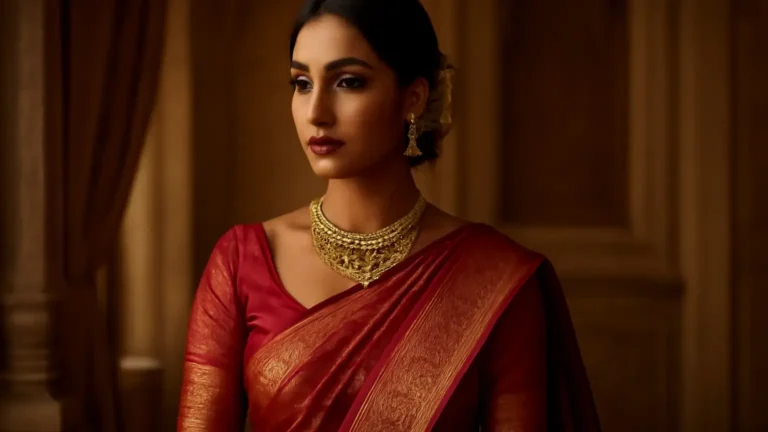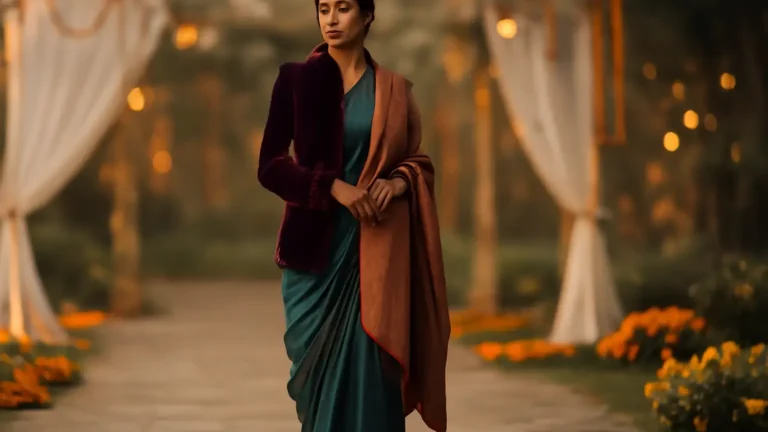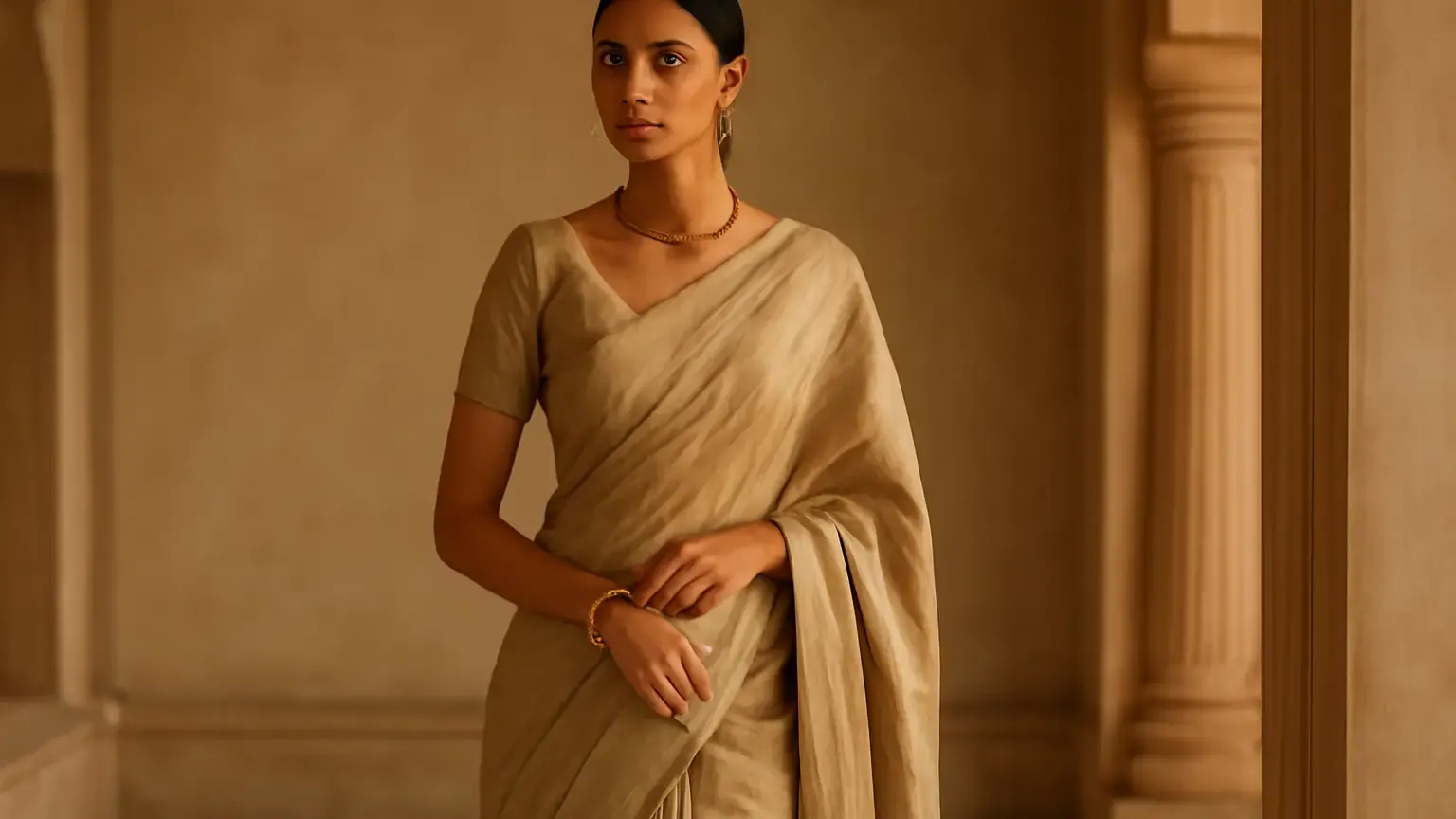
Saree styling for short blouses works best when the exposed midriff is balanced rather than hidden. This guide is for anyone wearing a crop blouse, from petite women to fuller figures, who wants a neat, lengthening drape. Start by placing the petticoat securely at your natural waist, then use medium-width pleats, a controlled pallu and jewellery that supports the blouse instead of competing with it. These five adjustments make the saree look intentional, comfortable and proportionate.
Why proportions matter with a short blouse
A short blouse brings attention to the space between the blouse hem and the saree’s upper edge. That is not a problem to conceal; it is a styling line to manage. If the saree sits too low, the torso can look visually longer. If the pleats are very broad or the pallu is bulky, the lower half may appear heavier than the blouse.
The most flattering result usually comes from creating a clear waist, keeping the front clean and allowing one strong vertical line through the pallu. Your height, body shape, saree fabric and blouse cut all matter, so treat the following as proportion guides rather than rigid rules.
- For a petite frame: prioritise a high waist saree drape, narrower pleats and a lighter pallu.
- For a fuller midsection: choose a stable waistband, an uncluttered front and a pallu that falls smoothly rather than bunching.
- For a tall frame: medium or slightly wider pleats and a longer pallu can add visual balance.
Step 1: Set the petticoat at the correct height
The foundation determines how the entire saree falls. For most short blouse saree draping, tie the petticoat at your natural waist or just slightly above it, depending on where the blouse ends. The waistband should sit firmly without digging in, and the drawstring should not create a visible ridge under a thin saree.
Choose support before adjusting height
A structured petticoat for saree styling is useful when you want a crisp flare or need the saree to stay in place during movement. A softer, lightweight petticoat works better with georgette, chiffon and other fluid fabrics. Avoid placing the waistband so low that the saree slips below the blouse hem; this can make the torso appear stretched.
Before making the final tuck, walk, sit and raise both arms. If the saree pulls down, tighten the fit modestly or use a comfortable waist slip. The goal is secure support, not compression. Smooth the fabric around the waist so the short blouse remains the focal point without an uneven bulge beneath it.
Step 2: Control the front pleat width
Front pleat setting is the easiest way to change the visual weight of a saree. Make five to seven evenly folded pleats, depending on the saree width and fabric, and keep their finished width moderate. Very wide pleats can overwhelm a short blouse, while extremely narrow pleats may create too many vertical ridges.
As a starting point, aim for pleats that are about 10–12 cm wide when folded. The exact measurement is less important than consistency. Align the lower edges, hold the pleats firmly at the waist and check that they fall straight to the floor without twisting.
Adjust the pleats to the fabric
- Cotton or linen: use defined, medium-width pleats and press them by hand as you fold.
- Silk: keep the pleats neat but not overly flat; some body gives the drape elegance.
- Chiffon or georgette: use slightly narrower pleats and secure them discreetly so they do not spread.
- Organza: avoid excessive bulk at the waist because the fabric already holds volume.
If your saree has a heavy border, make sure the border lines up vertically at the front. This creates a clean column and helps the eye move down the outfit. It is one of the most reliable short blouse saree draping ideas for a polished appearance.
Step 3: Choose the right pallu length and fall
The pallu should balance the exposed waist and the blouse neckline. For a classic shoulder drape, let it fall around mid-thigh to just above the knee, depending on your height and the saree’s border. A pallu that ends too high can make the outfit look top-heavy; one that is excessively long can pool around the feet and hide the saree’s shape.
For the best pallu length for short blouse styling, begin with enough fabric to cover the shoulder comfortably while leaving the blouse sleeve and neckline visible. A clean vertical fall generally works better than a heavily fanned pallu. Use one or two discreet pins at the shoulder and waist if the fabric is slippery.
Open or pleated pallu?
An open pallu suits lightweight sarees and creates a long, soft line. It can also provide gentle coverage across the midriff when you want a more relaxed crop blouse saree look. A pleated pallu looks sharper with silk, cotton or formal occasion sarees, but keep the pleats slim enough that they do not add width across the chest.
When standing for photographs, bring the lower edge slightly forward instead of allowing it to trail behind you. This keeps the border visible and maintains a balanced outline from shoulder to hem.
Step 4: Make a deliberate waistline adjustment
The waistline is the visual bridge between a short blouse and the saree. A neat saree waistline adjustment can make a simple outfit look tailored. After the initial tuck, inspect the front and side views. The saree should sit at one continuous level rather than dipping noticeably at the front or rising at the back.
A high waist saree drape usually lengthens the legs and works particularly well for petite women. However, do not pull the saree so high that it touches the blouse hem or restricts your breathing. Leave a small, intentional gap that matches the blouse design.
- Match the saree’s upper edge to the most flattering point of the blouse hem.
- Keep the first tuck aligned with the centre of the body, not far to one side.
- Use a few safety pins only after the fit is comfortable and the pleats are straight.
- Check the back waist in a mirror; excess fabric often gathers there when the front looks neat.
If you prefer more coverage, choose a blouse with a slightly longer front panel or a pallu that crosses the torso softly. Changing the blouse cut is often more comfortable than repeatedly tightening the saree.
Step 5: Match jewellery scale to the blouse
Jewellery completes the proportion story. A short blouse often leaves more of the neckline, shoulders and waist visible, so the accessories should be intentional rather than numerous. This is the central principle of saree jewellery styling: choose one dominant area and let the rest support it.
- Statement blouse or embellished border: wear medium earrings and a restrained necklace, or skip the necklace entirely.
- Plain crop blouse: add a short necklace, layered chain or choker, keeping the earrings proportional to your face.
- Deep neckline: use a necklace that follows the neckline instead of ending awkwardly above it.
- Heavy silk saree: medium-to-large traditional jewellery can balance the fabric’s visual weight.
- Lightweight saree: delicate metalwork, pearls or small statement earrings preserve the airy effect.
For a petite frame, vertical earrings or a fine long chain can add length without crowding the upper body. For a broader shoulder line, avoid placing the largest accessory exactly at shoulder level if it makes that area look wider. A bangle stack, waist belt or small brooch can be useful, but do not add all three unless the saree and occasion can support the detail.
How to choose the drape for the occasion
Everyday saree styling benefits from comfort first: a stable waistband, breathable fabric, modest pleat volume and pins placed where they will not scratch. For a festive event, you can increase structure with a crisp silk, sharper pleats and a more defined border. For a wedding reception, let the blouse or jewellery provide the statement rather than making the pallu, pleats and accessories equally dramatic.
Colour placement also affects proportion. A blouse close to the saree colour creates a continuous line, while a contrasting short blouse draws more attention to the waist. Both can work; choose contrast when you want the blouse to be the hero, and tonal dressing when you want a longer, quieter silhouette.
Common mistakes to avoid
- Tying the petticoat too low: this lengthens the torso visually and may cause slipping.
- Using oversized pleats with a small blouse: the front becomes bulky and hides the waist definition.
- Letting the pallu bunch at the shoulder: uneven layers can make the upper body look wider.
- Over-accessorising the neckline: several heavy pieces compete with the short blouse’s clean line.
- Ignoring movement: a drape that looks good while standing may become uncomfortable when sitting or walking.
Do one complete trial at home before an event. Wear the footwear you plan to use, test the pallu in a seated position and photograph the front, side and back. Small changes to the waistband or pleat width are easier to make before you leave.
Quick takeaway
Successful saree styling for short blouses depends on controlled proportions: place the petticoat at a secure natural or slightly high waist, keep the front pleats even, choose a pallu with a clean fall, align the waistline and scale jewellery to the blouse. These adjustments let the crop blouse look deliberate while keeping the saree comfortable, graceful and easy to move in.
Products that may help with this routine
Choose only what fits your skin, hair or personal needs. Use the links below to view current options on Amazon India.
Frequently Asked Questions
How do I drape a saree with a short blouse?
Place the petticoat at your natural or slightly high waist, use medium-width front pleats, keep the pallu smooth and secure the waistline so the saree does not drop below the blouse hem. Finish with jewellery that matches the blouse’s visual weight.
What petticoat works best for a short blouse saree?
Choose a comfortable, well-fitted petticoat with a stable waistband. A structured version supports silk and flared drapes, while a softer waist slip is generally more suitable for lightweight chiffon or georgette.
How long should the pallu be with a crop blouse?
For most body heights, a pallu ending around mid-thigh to just above the knee creates balance. Adjust the length for your height, saree border and whether you want an open or pleated pallu.
Can petite women wear a short blouse with a saree?
Yes. Petite women can try a slightly high waist drape, narrow-to-medium pleats, a controlled pallu and jewellery with vertical lines. Tonal colours can also create a more continuous silhouette.
Which jewellery looks best with a short blouse saree?
Match the jewellery scale to the blouse and saree. A plain blouse can support a short necklace or statement earrings, while an embellished blouse usually looks best with fewer, medium-sized pieces.