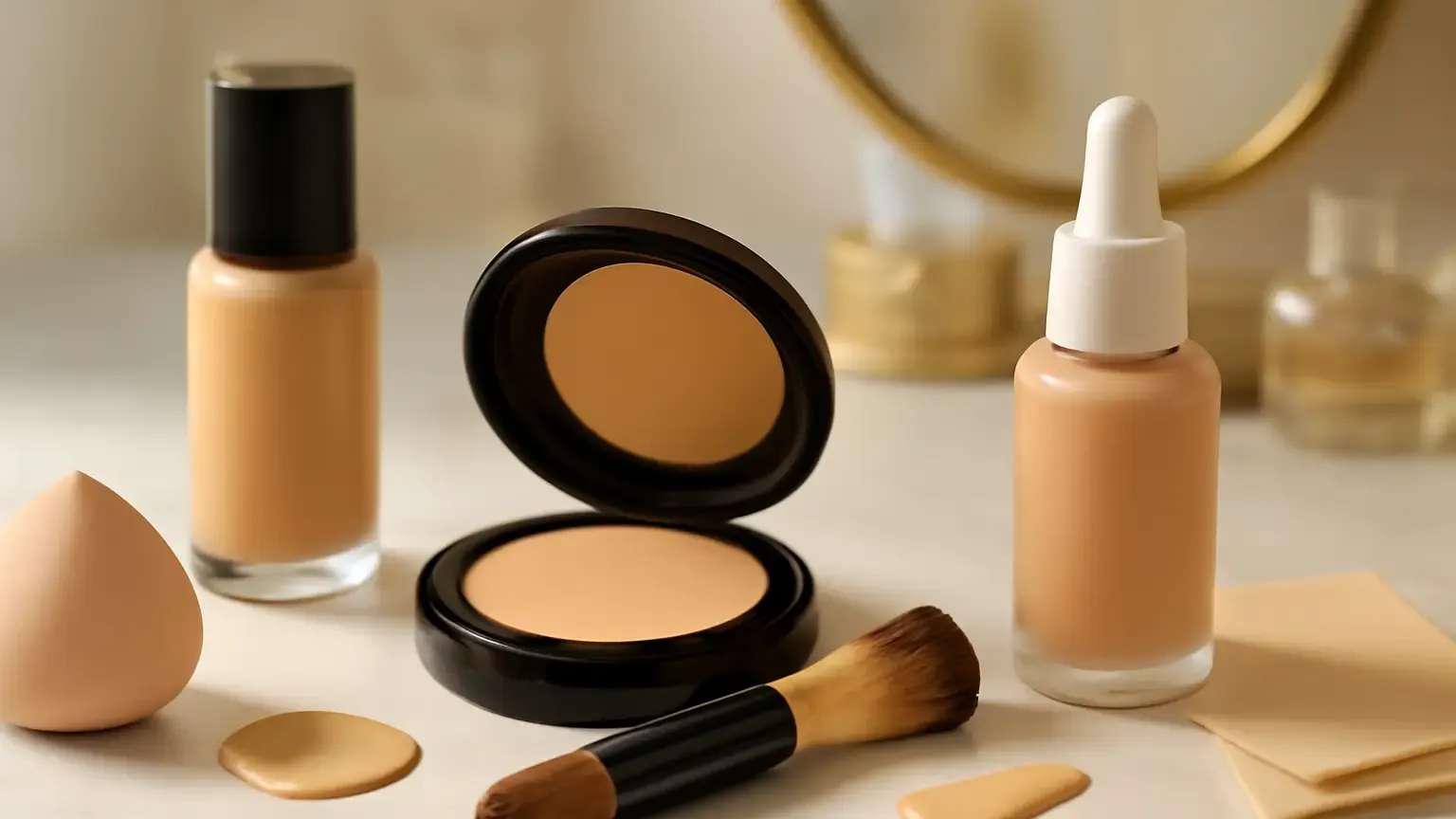
For an oily skin foundation that suits your day, choose powder or soft-matte liquid for hot, humid weather and longer wear, while serum foundation is better for comfortable, sheer coverage. The right formula depends on your climate, coverage needs and touch-up habits—not just how oily your skin feels in the morning.
Choosing between liquid, powder and serum is less about finding one universally “best” formula and more about matching the base to your day. A short commute, an eight-hour office schedule, a wedding in humid weather and a casual outing all place different demands on makeup. The same product can look polished in an air-conditioned room but move quickly in heat and humidity.
Quick answer: which oily skin foundation should you choose?
Choose liquid foundation when you want flexible coverage, a seamless finish and the ability to work across different occasions. Look for an oil-controlling or soft-matte formula if your T-zone becomes shiny quickly. Liquid is usually the most adaptable choice when you need medium coverage, spot correction or a finish that is not overly flat.
Choose powder foundation for hot, humid days, fast application and easy touch-ups. It is particularly useful when you prefer a matte foundation or dislike the feel of wet makeup. Pressed powder can also be convenient for travel and midday maintenance.
Choose serum foundation when comfort, a lightweight feel and sheer-to-light coverage matter more than maximum shine control. It can suit mildly oily skin, but may need powder through the T-zone. A serum base is often a better fit for natural everyday makeup than for a long, high-heat event.
No formula can prevent oil production completely. The realistic goal is an even base, controlled shine and touch-ups that do not create a thick layer. For sweat-proof makeup or humidity-proof makeup, preparation and application technique matter as much as the foundation label.
Liquid foundation: the most versatile option
Liquid is usually the easiest starting point for a foundation for oily skin India shoppers can adapt to different conditions. Its coverage can be sheer, medium or full, depending on the formula and how much you apply. A liquid base also works well when you have uneven tone or want targeted coverage rather than a full face of heavy product.
Best for
- Office days and occasions lasting six to ten hours
- Medium or full coverage without an obvious powdery look
- Layering lightly over blemish-prone areas or around the nose
- People who want a soft-matte or natural-matte finish
For humid conditions, choose a formula that sets down rather than staying dewy and slippery. Apply a thin layer first, allow it to settle briefly, then add coverage only where needed. A damp sponge gives a lighter result; a foundation brush generally deposits more coverage. These simple foundation application tips can make a bigger difference than applying a large amount of a supposedly long-wearing formula.
Powder foundation: efficient shine control
Powder foundation is often the practical choice for oil control makeup. It absorbs some surface shine and is quick to apply, making it useful for travel, work bags and midday maintenance. Pressed powder can provide light-to-medium coverage, while a denser application may approach fuller coverage without the drying feel of multiple liquid layers.
Best for
- Very warm or humid weather
- Short routines and quick morning application
- People who prefer a visibly matte finish
- Touch-ups after blotting away oil
Powder can emphasise dry patches, flakes or textured areas, even on an oily complexion. It is also easier to overapply around the nose and mouth. Use a small amount with a clean puff or brush, press rather than repeatedly sweep, and stop once the tone looks even.
Serum foundation: lightweight comfort with trade-offs
Serum foundation typically has a fluid texture and a thin, skin-like finish. It is a good match for someone seeking a lightweight foundation with sheer-to-light coverage and a less made-up appearance. Some formulas may contain skincare-inspired ingredients, but they should still be judged as makeup first; they do not replace sunscreen or a regular skincare routine.
Because serum formulas often have less powder or film-forming structure, they may show oil sooner than a matte liquid or powder base. Set only the areas that need it instead of covering the entire face with powder. This keeps the finish fresh while reducing movement in the T-zone.
Match the formula to climate, coverage and event length
| Need | Most suitable option | Why |
|---|---|---|
| Very humid commute or monsoon day | Powder or soft-matte liquid | Less slip and easier shine management |
| Long wedding or festive event | Thin liquid with targeted powder | Buildable coverage and controlled touch-ups |
| Natural everyday makeup | Serum or lightweight liquid | Comfortable, sheer and less visibly layered |
| Fast morning routine | Powder foundation | Quick application without drying time |
| Full coverage requirement | Liquid foundation | More reliable layering and spot coverage |
For a genuinely long wear foundation for oily skin, formula is only one part of the result. A well-prepped face, light layers and careful touch-ups often matter as much as the label on the bottle. In very warm weather, a powder or soft-matte liquid may be easier to maintain than a dewy base, but neither guarantees completely transfer-free wear.
Application routine for a smoother, longer-lasting base
- Start with clean, comfortable skin. Use a gentle cleanser if needed, then apply a lightweight moisturiser. Oily skin can still become dehydrated, and skipping moisturiser may leave makeup looking uneven.
- Give skincare time to settle. Apply broad-spectrum sunscreen in the daytime and allow it to set before makeup. If several layers feel slippery, reduce the amount of each rather than adding more powder.
- Use primer selectively. A makeup primer for oily skin can be pressed onto the sides of the nose, forehead and other areas where makeup breaks down. You do not necessarily need it across the entire face. A silicone-based primer may help create a smoother surface, while a water-based formula may feel lighter; compatibility with the rest of the routine matters.
- Apply less foundation than you expect. Dot a thin layer over the centre of the face and blend outwards. Build only where redness or discolouration remains visible. A full coverage foundation generally looks more natural when built gradually rather than spread heavily everywhere.
- Set strategically. Press a small amount of setting powder for oily skin over the T-zone, eyelids or crease-prone areas. Leave the cheeks less powdered if you want dimension.
- Finish according to the formula. A setting spray may reduce a visibly powdery finish, but it is not a substitute for choosing a suitable base or controlling oil during the day.
How to fix separation, caking and excess shine
When foundation separates around the nose
Separation can result from excess skincare, sunscreen that has not settled, too much primer, facial oil or rubbing during application. Blot the area gently, remove only the visibly broken-up product if necessary, then tap on a very small amount of foundation. Avoid adding a fresh heavy layer over oil.
When the face becomes shiny within a few hours
Use blotting papers or a single-ply tissue first. Press; do not drag. Follow with a small amount of powder only where shine remains. Repeatedly brushing powder over unblotted oil can create a grey, thick or patchy appearance.
When powder looks cakey
Too much product, a damp base underneath or frequent touch-ups can all cause caking. Pause between layers, use a clean tool and apply powder in thin pressed amounts. If the formula consistently clings to dry areas, switch to a lighter liquid or serum base and powder selectively.
When foundation turns darker
Oxidation can make a base appear deeper or warmer after application. Test shades along the jaw and check the colour in natural light after several minutes. Sunscreen, skincare and the foundation’s own formula can influence how the shade develops, so do not select a colour from the bottle alone.
Shade, finish and ingredient checks
Foundation shade matching should begin at the jawline, not the hand. Compare two or three close shades, allow them to sit briefly and choose the one that blends into both face and neck. If your neck is lighter than your face due to sun exposure, avoid correcting the difference with an overly pale base; use a shade that looks natural across the transition.
“Matte” describes finish, not a guarantee of all-day oil control. “Non-comedogenic” may be helpful for shoppers who prefer a non-comedogenic foundation, but it is not a promise that every person will tolerate the product. Patch-test new makeup when practical, keep applicators clean and stop using a product if it causes persistent irritation.
Common mistakes that shorten wear
- Applying a thick moisturiser, primer and sunscreen layer without allowing any of them to settle
- Using a very dewy base when the main concern is fast oil breakthrough
- Choosing a shade that matches the hand rather than the jaw and neck
- Rubbing foundation over areas that are already separating
- Touching up with powder before removing surface oil
- Expecting a serum formula to provide the same coverage and control as a matte liquid
Bottom line
The best oily skin foundation is the one that fits your weather, coverage preference and touch-up habits. Pick liquid for versatility and longer-event coverage, powder for speed and shine control, and serum for a comfortable, natural everyday finish. Whichever you choose, thin layers, targeted setting and blot-first touch-ups will usually produce a fresher result than applying more product from the start.
Products that may help with this routine
Choose only what fits your skin, hair or personal needs. Use the links below to view current options on Amazon India.
Frequently Asked Questions
What is the best foundation for oily skin in India for humid weather?
A powder foundation or a thin soft-matte liquid foundation is usually the most practical choice for humid Indian weather. Powder is fast and easy to refresh, while liquid offers more flexible coverage for long days and events. Set the T-zone lightly and blot before touch-ups.
Is powder or liquid foundation better for oily skin?
Powder is often better for quick application and immediate shine control. Liquid is generally better for buildable coverage, a smoother finish and longer events. The better option depends on your desired coverage, skin texture and how often you can touch up.
How do I stop foundation separating on oily skin?
Use fewer skincare layers, let sunscreen and primer settle, apply foundation thinly and avoid rubbing. When separation appears, blot first and tap a small amount of foundation over the area instead of layering product directly on top of oil.
Which serum foundation is best for oily skin?
Look for a lightweight serum formula with buildable coverage and a natural-to-soft-matte finish rather than a very emollient, glossy base. Set the T-zone selectively and assess wear in your own climate because serum formulas vary considerably.
How can I make foundation last all day on oily skin?
Start with comfortable, settled skincare, use primer only where makeup breaks down, apply thin layers and set oil-prone areas. During the day, press with blotting papers before adding a small amount of powder.
Is a matte foundation always the right choice for oily skin?
Not always. A very flat matte formula may emphasise texture or feel uncomfortable. A soft-matte liquid, strategic powder and a lighter application can control shine while keeping the skin looking more natural.