Oily skin makeup setting works best as a targeted decision, not an all-over layer of powder. For people whose T-zone turns shiny while cheeks or under-eyes stay comfortable, use powder where oil appears, then a light setting spray to unify the finish. In warm, changeable October weather, this combination usually looks fresher than choosing only one product. The right balance also makes daytime touch-ups smaller, faster and less cakey.
Powder and setting spray do different jobs, so the better choice depends on where your makeup moves and how your skin feels. Powder absorbs and visually reduces shine; spray helps settle layers and can soften a dry, dusty finish. Neither product can prevent every sign of oil, especially in humid weather, but strategic placement can keep makeup looking polished for longer.
Powder or setting spray: which is better for oily skin?
For most oily skin types, powder is the stronger first line of defence in the T-zone. It is particularly useful around the sides of the nose, centre forehead and chin, where foundation can separate as sebum rises. A setting spray is more useful as a finishing layer when makeup looks powdery, when several complexion products need to meld, or when you want a more natural surface.
The most reliable answer is usually not powder versus spray, but powder plus spray used lightly and in different places. Apply less product to areas that are not oily. The forehead, nose and chin may need a soft-matte finish, while the outer cheeks can stay satin or naturally luminous.
| What you notice | Most useful option | Why |
|---|---|---|
| Shine appears quickly in the T-zone | Targeted setting powder | It absorbs surface oil and reduces slip. |
| Makeup looks dry or visibly layered | Light setting spray | It helps the layers look less powdery. |
| Foundation moves and the face also looks dusty | Strategic layering | Powder controls oil while spray brings back cohesion. |
| Only the nose and chin need a midday refresh | Blotting, then pressed powder | It adds control without covering the whole face again. |
Build an October makeup routine around your actual skin zones
October can bring warm afternoons, changing humidity and cooler indoor air. Instead of treating the whole face identically, divide it into three practical areas: the T-zone, cheeks and under-eyes. This is the simplest way to make a humidity-proof makeup routine look like skin rather than a flat, heavily powdered mask.
T-zone: control shine without stacking product
Begin with clean, comfortable skin and a lightweight moisturiser. Let it settle before using an oil-control primer only on the forehead, nose and chin if those areas need it. A thick primer across the entire face can make the cheeks feel tight and may encourage more visible texture.
Use a thin layer of foundation or skin tint, then press a small amount of loose or pressed powder into the T-zone. Pressing is more effective than repeatedly sweeping because it places the product where it is needed and disturbs the base less. If you are deciding where to put setting powder on oily skin, start with the nose folds, nose bridge, centre forehead and centre chin rather than automatically mattifying the hairline and cheeks.
Cheeks: preserve a fresh finish
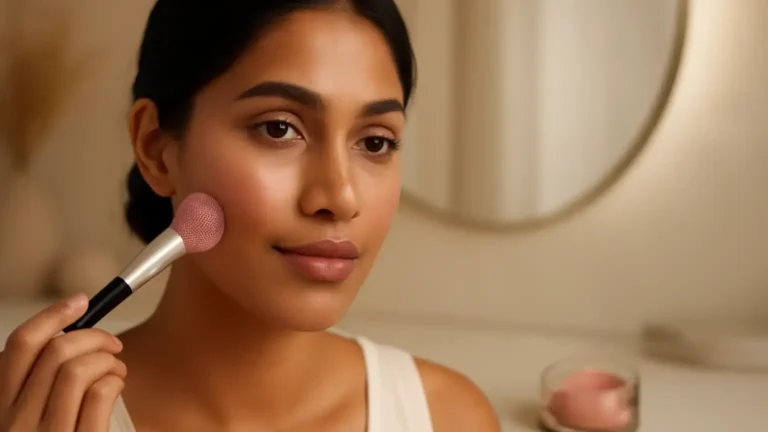
Cheeks often need less powder, even when the centre of the face becomes oily. If you apply cream blush or bronzer, use a restrained amount and give it a moment to settle before adding powder blush. A fine veil of powder can be used beneath or over cheek colour, but avoid repeated layers simply to make the makeup feel “locked”.
People who prefer a skin-like finish may leave the outer cheeks unpowdered and use a dewy setting spray very lightly from a distance. Dewy does not have to mean greasy: the aim is a soft reflection on the cheeks while keeping the T-zone controlled.
Under-eyes: prevent creasing without dryness
Under-eye makeup needs a different approach from oily nose and forehead makeup. Use only enough concealer to cover the area that needs it, wait briefly, then smooth any crease with a fingertip or small brush before setting. Press a very small amount of finely milled powder under the eyes, focusing on the crease-prone fold rather than creating a thick bright band.
If your under-eyes feel tight, skip powder in the outer corner and use a light spray over the face instead. Do not spray directly into the eyes. A product labelled for setting makeup is not a substitute for eye-area safety; stop using it if it causes stinging or irritation.
A practical makeup layering technique for longer wear
Good oily skin makeup setting begins before the final step. Try this sequence for a balanced base:
- Prep selectively: Apply moisturiser evenly, then use primer only where it improves grip or shine control.
- Keep complexion layers thin: Build coverage in small amounts instead of applying a thick foundation layer that may separate later.
- Place colour before setting: Apply cream products carefully, then add powder products where suitable.
- Press powder into high-oil areas: Use a small puff or soft brush and remove visible excess from the edges.
- Finish with restraint: Mist setting spray in a light, even layer if you want the powder and complexion products to look more integrated.
Should you use setting spray after powder? Often, yes, if the mist is fine and you use a modest amount. Hold it at the distance advised on its packaging, keep your eyes closed and allow it to dry without rubbing. If your face already looks comfortable and balanced after powder, spray is optional rather than compulsory.
How to choose products for oily skin makeup setting
Look for a setting powder for oily skin that feels finely milled and can be applied in a thin layer. Translucent powder may suit a range of complexions, while a tinted pressed powder can be convenient for daytime touch-ups. Check the shade in natural light, especially if you intend to apply it over foundation.
For setting spray, consider the finish first. A soft-matte or natural-finish formula may suit an oilier T-zone better than a strongly luminous one. A dewy setting spray can be useful on drier-looking cheeks, but spray it selectively or lightly if shine is your main concern. No finish is universally best; your choice should match the areas that need adjustment.
Also consider photographs. Some powders can appear lighter or more noticeable under flash, particularly when layered heavily. Test the amount and finish before an important event rather than assuming more product means better wear.
Touch-up decisions: what to do when shine returns
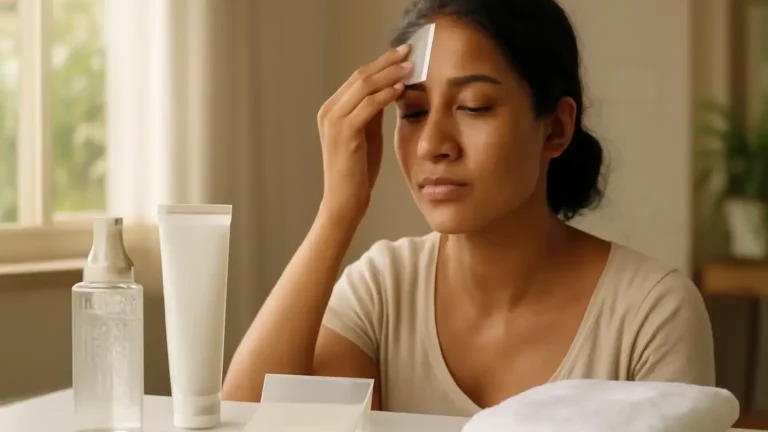
The best makeup touch-up routine starts with removing excess oil, not covering it. Gently press blotting papers onto the nose, forehead and chin. Do not rub, since friction can lift foundation and spread oil across the surrounding area.
- Blot first: Use one sheet or a clean tissue with gentle pressure.
- Inspect the base: If the makeup is intact, add only a small amount of pressed powder.
- Correct separation: If foundation has broken up, smooth the edge with a clean fingertip or sponge before adding minimal product.
- Leave stable areas alone: Do not powder the cheeks and under-eyes just because the nose is shiny.
Pressed powder is usually more practical for a handbag than loose powder because it is easier to control and less messy. However, it should not become a repeated full-face coating. If you need several substantial touch-ups every day, reassess the amount of base makeup, the primer placement and whether your skincare has fully settled.
Common mistakes that make oily makeup look heavier
- Powdering before the base has settled: Wet or slipping layers can turn uneven when powder is pressed on too soon.
- Using the same quantity everywhere: Oil-prone areas and comfortable cheeks rarely need identical coverage.
- Spraying too close: A concentrated mist can leave patches or disturb complexion makeup.
- Skipping blotting: Fresh powder over visible oil can create a thick, uneven surface.
- Over-mattifying the under-eyes: This can make fine texture and creasing more noticeable.
- Confusing a fresh finish with a wet finish: A controlled satin cheek can look fresher than an overly reflective face.
Who should choose powder, spray or both?
Choose mostly powder if your main concern is fast T-zone shine, makeup sliding around the nose or a base that stays intact but looks oily. Choose mostly setting spray if your foundation is comfortable but looks overly matte, layered or dry after powder. Choose both if your face has combination needs: press powder into the T-zone and use a light mist to soften the overall finish.
People with easily irritated skin should introduce one new product at a time and patch-test according to the product’s instructions. Persistent burning, swelling, rash or unusual irritation is a reason to stop using the product and seek advice from a dermatologist or doctor.
Takeaway
The smartest oily skin makeup setting strategy is targeted rather than heavy. Use powder for the T-zone, keep cheeks flexible, set under-eyes with a minimal amount and reserve spray for blending the finish or supporting wear. In changing October weather, blot before touching up and choose the smallest adjustment that solves the problem. That is how to set makeup on oily skin while keeping the result fresher and more natural.
Products that may help with this routine
Choose only what fits your skin, hair or personal needs. Use the links below to view current options on Amazon India.
Frequently Asked Questions
Is powder or setting spray better for oily skin?
Powder is usually better for controlling visible T-zone oil, while setting spray helps meld layers and reduce a dusty finish. Many people get the freshest result by using powder selectively and spray lightly over the finished makeup.
How do you set makeup on oily skin without looking cakey?
Use thin complexion layers, powder only the forehead, nose and chin, and blot oil before adding more product. Avoid repeatedly powdering stable cheeks and under-eyes.
Where should you put setting powder on oily skin?
Start with the centre forehead, nose bridge and sides of the nose, and centre chin. Add powder elsewhere only if makeup moves or shine develops; the outer cheeks and under-eyes often need less.
How should you touch up oily makeup during the day?
Press blotting papers or a clean tissue onto shiny areas first. Then use a small amount of pressed powder only where the base remains intact, rather than applying a new layer across the whole face.
Should you use setting spray after powder?
You can, especially when powder makes the finish look dry or visibly layered. Use a fine, light mist from the recommended distance, keep your eyes closed and let it dry without rubbing.