October fashion for women in India works best when one breathable base meets one removable layer. This guide is for women dressing through warm afternoons, humid commutes and cooler evenings, whether the plan is office, errands, dinner or a small festive gathering. The five formulas below show exactly what to combine—from cotton kurtas and linen shirts to lightweight ethnic jackets—so you stay polished without carrying a bulky extra layer or overheating before sunset.
October sits between seasons across much of India. The monsoon may be fading, afternoons can still feel warm, and evenings often bring a noticeable change in temperature. In some cities, humidity remains the main concern; in others, a dry breeze makes a thin layer genuinely useful. That makes transitional dressing more practical than dressing for a textbook autumn.
The simplest rule is one breathable base, one light top layer and flexible footwear. Choose pieces that can be removed easily, fold without taking up much space and work across more than one setting. Natural fibres such as cotton, linen, mulmul and light khadi are usually comfortable for daytime, while a fine cotton-silk blend or airy chanderi can add polish for an evening plan.
How to plan October fashion for women in India
Before getting dressed, check four details: the afternoon temperature, the likelihood of rain, your indoor environment and the evening plan. Air-conditioned offices and restaurants can feel chilly even when the street is warm, while an outdoor commute may call for maximum airflow. If you are travelling between locations, a removable layer is more useful than a heavy outfit.
- For heat and humidity: prioritise loose silhouettes, open necklines and breathable fabrics for Indian weather.
- For a cooler evening: add a shirt, dupatta, shrug or unlined jacket rather than a thick sweater.
- For office dressing: keep the base neat and the outer layer structured enough for meetings.
- For festive plans: use texture, jewellery or a luminous fabric instead of several heavy layers.
Colour can also signal the seasonal shift without making the outfit feel winter-heavy. Ivory, sage, rust, indigo and dusty rose work well in daylight. For evening, deep teal, plum or wine can make a simple outfit feel more considered. A neutral base gives you more freedom to reuse the outer layer.
Five breathable layering outfits to try
1. Cotton kurta, straight trousers and an open linen shirt
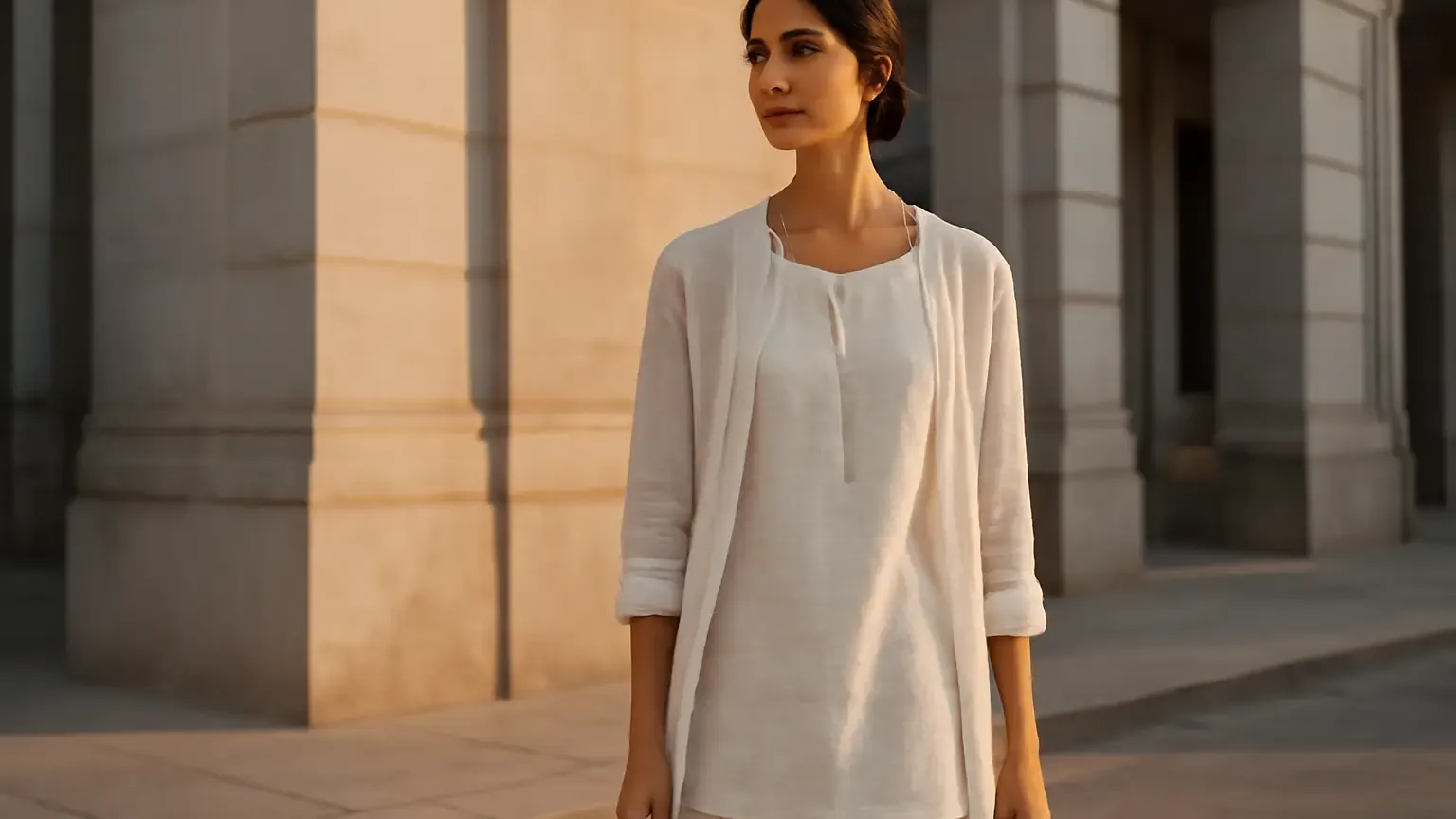
This is one of the easiest October outfit ideas India for workdays, shopping and travel. Start with a knee-length cotton kurta in white, pale blue, muted yellow or a small print. Add straight cotton trousers or ankle-length pants, then wear an open linen shirt over the kurta like a lightweight jacket. The shirt creates a clean vertical line while still allowing air to circulate.
For office wear layering for women, choose a linen shirt with a collar, covered buttons and a restrained colour such as beige, navy or olive. Roll the sleeves once if the afternoon is warm. Flat loafers, simple sandals or low block heels keep the formula practical. A structured tote makes the look more workplace-ready without adding visual bulk.
Best for: commutes, co-working spaces, casual Fridays and daytime appointments. Swap: the kurta for a sleeveless cotton top if your workplace permits it.
2. Monochrome co-ord with a cropped cotton jacket
For a polished western option, pair wide-leg trousers with a matching or closely related top. A monochrome base in cream, black, terracotta or soft grey looks intentional even when the individual pieces are simple. Add a cropped cotton jacket, an unlined denim jacket or a thin utility overshirt only when needed.
This formula suits women who want Indian transitional dressing without relying on traditional separates. Keep the jacket shorter than the widest point of the trousers or finish it near the waist to retain shape. If your base is loose, select a more defined top layer; if the jacket is boxy, use a straighter trouser or a tucked-in top.
For humid afternoons, leave the jacket open and choose a camisole or short-sleeved top underneath. For an evening meal, button one or two buttons and add small gold hoops or a sculptural ring. These are also useful casual evening outfits India because the same base moves easily from day to night.
3. Printed midi dress with a fine cotton shrug
A printed midi dress solves the one-piece dressing problem while a fine shrug provides modest coverage and temperature control. Look for an A-line, column or wrap-inspired shape in cotton, rayon made from cellulose fibres or a light viscose blend. Avoid very clingy fabric if you expect heat or humidity.
Choose a solid shrug that repeats one colour from the print. A soft beige layer calms a bright pattern; indigo or rust gives a quieter dress more depth. A lightweight ethnic jacket can replace the shrug for a more Indian finish, particularly when the dress has a simple neckline and minimal detailing.
Wear the dress with sandals during the day and change to closed flats or low heels at night. If you need a more covered silhouette, add a slim belt over the shrug or select a dress with sleeves. This formula is especially useful for travel because the dress and outer layer can be styled separately on another day.
4. Saree with a breathable blouse and a short overlay
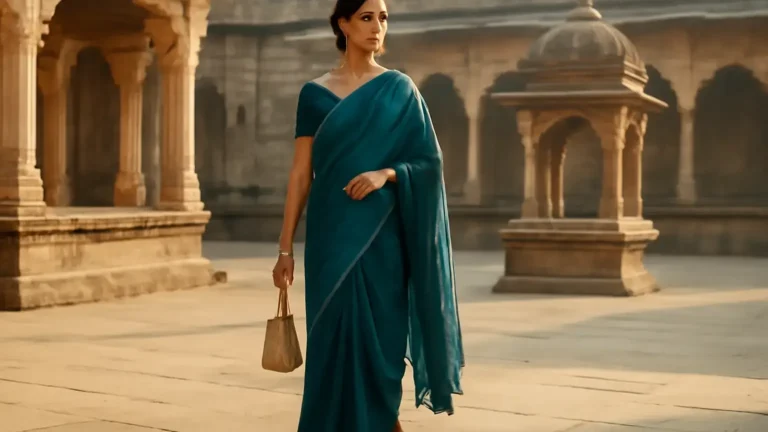
Saree layering ideas do not have to involve a heavy shawl. For October, choose a cotton, linen, kota or light handloom saree and pair it with a breathable blouse. A short, unlined jacket or neat cropped vest can be worn over the blouse before draping the saree, adding definition for a dinner or cultural event.
Keep the jacket light enough that the pleats fall cleanly. A solid overlay works with a woven or printed saree, while a textured saree can take a very plain jacket. If you prefer less structure, drape a lightweight dupatta over one shoulder and secure it discreetly near the blouse strap or with a small brooch.
For comfortable festive dressing, let one element provide the shine: earrings, a metallic border, embroidered footwear or a textured jacket. Combining a glossy saree, elaborate blouse and heavily embellished layer may look beautiful but can feel uncomfortable in a warm venue.
5. Relaxed denim, a sleeveless kurta and a longline overshirt
For errands, campus, informal workplaces or a weekend coffee plan, combine relaxed straight-leg denim with a sleeveless cotton kurta or longline top. Add an airy overshirt in cotton, linen or soft chambray. This is a practical take on monsoon-to-autumn outfits because it provides coverage after rain without the insulation of a winter jacket.
Choose denim with a little room through the thigh and waist, especially if you will be outdoors. A longline overshirt in white, faded blue or olive can be worn open in the afternoon and closed later. Canvas sneakers, leather sandals or minimal slip-ons complete the look. A crossbody bag keeps the outfit easy for walking.
If denim feels too warm where you live, substitute cotton twill trousers or drawstring pants. The key is the proportion: a roomy bottom works best with a relatively clean base top, while the overshirt should skim rather than cling.
Fabric and fit decisions that prevent bulk
Layering feels uncomfortable when every piece is thick, tight or highly structured. Start with a base that sits close to the body without compressing it. Add only one substantial visual layer. A thin shirt over a kurta is often cooler than a lined jacket over a long-sleeved top.
| Need | Useful choice | What to avoid |
|---|---|---|
| Warm commute | Loose cotton, linen or mulmul | Polyester layers with no airflow |
| Cold office air-conditioning | Fine cotton cardigan, overshirt or unlined jacket | Bulky knits over bulky sleeves |
| Festive evening | Light chanderi, cotton-silk or textured handloom | Several embellished layers |
| Unexpected drizzle | Quick-drying base and washable overshirt | Long trailing hems in delicate fabric |
Fabric labels matter, but weave and fit matter too. A loose linen blend may feel cooler than a tightly woven cotton. A roomy sleeve can improve airflow, while a tight synthetic lining can make a supposedly lightweight piece feel hot. For everyday summer-to-autumn wardrobe planning, select layers that can be washed and reworn rather than delicate pieces reserved for one occasion.
A simple styling routine for changing temperatures
- Dress for the warmest part of the day. Make the base outfit comfortable at noon rather than building around the evening chill.
- Pack one removable layer. Fold a linen shirt, cotton shrug or fine scarf into your bag instead of wearing every layer from the start.
- Use accessories to shift the mood. Add earrings, a belt or a lip colour for dinner; do not automatically add heavier clothing.
- Check movement before leaving. Sit, walk and raise your arms. If the layer pulls or the hem catches, it will be more annoying later.
- Keep footwear realistic. October plans can include wet pavements, long walks and warm venues, so breathable flats or low heels are often more useful than delicate occasion shoes.
Common October layering mistakes
The most common mistake is treating October like winter. A chunky cardigan over a full-sleeved top may be appropriate in a cold hill town, but it is excessive for a humid city afternoon. Another mistake is choosing a fashionable layer that cannot be removed easily. Complicated sleeves, heavy scarves and tight jackets become inconvenient on public transport and in crowded venues.
Also avoid matching every item too closely. A cotton kurta, linen shirt and woven bag can look more modern when their textures differ slightly. Finally, do not ignore care. Damp weather can leave thick garments smelling musty, so air layers fully before storing them and follow the garment-care label, especially for handloom or embellished pieces.
Quick takeaway
The most reliable October fashion for women in India is flexible rather than heavily seasonal. Begin with cotton, linen, mulmul or another breathable base, then add one removable layer suited to your setting. Use a shirt for work, a shrug for dresses, a short jacket for festive sarees or an overshirt for casual plans. This approach keeps outfits polished through warm afternoons and cooler evenings without sacrificing comfort.
Products that may help with this routine
Choose only what fits your skin, hair or personal needs. Use the links below to view current options on Amazon India.
Frequently Asked Questions
What to wear in October in India for women?
Choose a breathable cotton, linen or mulmul base and add one removable layer such as an open linen shirt, cotton shrug, lightweight jacket or dupatta. Adjust the layer to humidity, office air-conditioning and evening temperature.
What are the best October outfit ideas for Indian weather?
Useful options include a cotton kurta with trousers and an open linen shirt, a co-ord with a cropped cotton jacket, a midi dress with a shrug, a light saree with a short overlay and relaxed denim with an overshirt.
How do you layer clothes in warm Indian weather?
Keep the base loose and breathable, avoid stacking thick fabrics, and use one removable top layer. Open shirts, unlined jackets and lightweight dupattas provide coverage without trapping as much heat.
What are good October office outfits for women in India?
Try a cotton kurta with straight trousers and a structured linen shirt, or a monochrome trouser set with an unlined cotton jacket. Choose neat shapes, comfortable footwear and layers that can be removed during a warm commute.
What are the best breathable fabrics for autumn in India?
Cotton, linen, mulmul, light khadi, kota and airy handloom fabrics are practical starting points. The weave, fit and lining also affect comfort, so avoid dense or heavily lined pieces when humidity is high.
How can you style a saree for a cooler October evening?
Wear a light cotton, linen, kota or handloom saree with a breathable blouse, then add a short unlined jacket, cropped vest or lightweight dupatta. Keep only one element richly embellished to avoid heat and bulk.