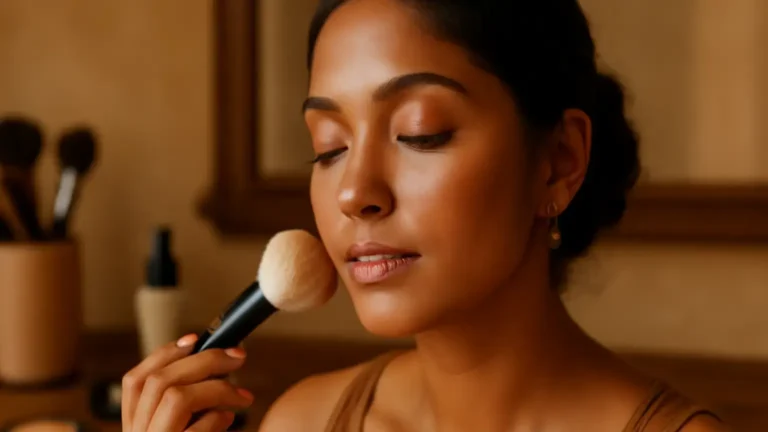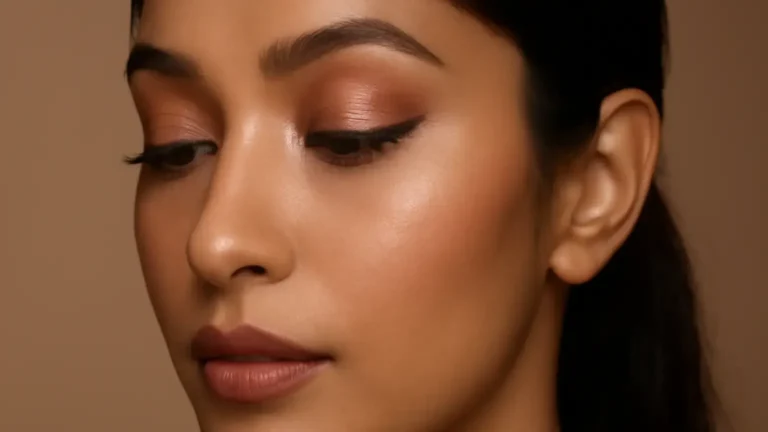
Makeup for glasses is easiest when you solve the two problems first: keep base makeup thin where the frames touch, and place eye definition where it stays visible behind the lenses. Use a light layer of foundation around the nose bridge, groom brows to balance the spectacle frames, keep liner close to the upper lashes, curl lashes before mascara, and set only the areas prone to movement. These six steps create defined eyes with fewer marks, smudges and transfers through a full day.
Glasses change where makeup moves, catches light and makes contact with the skin. The nose pads or bridge can wear away base, the frame may hide a soft eyeshadow look, and long lashes can brush against the lenses. For makeup for women who wear glasses, the most reliable approach is not adding more product. It is placing each layer strategically and checking the finished look with the frames on.
1. Build a thin, long-wearing base around the frame
The first rule of glasses-friendly makeup is to avoid a heavy layer beneath areas that touch the frame. Thick foundation may look smooth at first, but it can slide onto nose pads and leave visible gaps on the bridge. Use a lightweight skin tint or a long-wearing foundation in a thin layer, then add coverage only where it is needed.
Where to reduce product
- Apply less base across the top and sides of the nose than on the cheeks.
- Blend carefully around the nose bridge, where spectacles often move during the day.
- Press, rather than rub, a small amount of concealer over any redness that remains visible.
- Allow cream products to settle for a minute before powdering or putting on the frames.
To learn how to prevent foundation from rubbing off on nose pads, start with clean, moisturised skin but avoid applying a very rich cream immediately beneath the frame. Once makeup is applied, gently press the area with a tissue or clean sponge to remove excess slip. This does not make transfer impossible, particularly in hot and humid weather, but it reduces the amount available to move.
This targeted approach is also useful for makeup for contact points: keep the cheeks fresh and even, while using less product exactly where the spectacle frames rest.
2. Balance the brows with your frame shape
Frames already create a strong line around the eyes, so eyebrow shaping for glasses should complement rather than compete with them. Keep the natural brow structure visible and fill sparse areas with small, hair-like strokes. A brow that is too dark, too wide or sharply squared can make the upper face look crowded behind bold frames.
For thick or dark spectacle frames, a softly defined brow with brushed-up hairs usually creates balance. For thin metal frames, slightly more brow definition can help the eyes remain visible. Avoid extending the tail too far down: it may make the face appear tired when combined with a low frame.
Set the finished brows with a clear or tinted brow gel. Check them while wearing the glasses, because the frame can visually cut across the brow arch and change how much definition is needed. This small adjustment works for everyday makeup as well as occasion makeup for glasses.
3. Make eyeliner visible without making it heavy
Good eyeliner for glasses is about placement and contrast. If the frame is thick, a very fine line may disappear. If the frame is delicate, an overly broad black line can dominate the face. Keep the liner close to the upper lashes, then tailor its thickness to the frame and your eye shape.
A simple liner method
- Look straight ahead with your eyes relaxed and the glasses nearby for reference.
- Trace the upper lash line in short strokes, concentrating pigment between the lashes.
- Make the outer third slightly thicker if the frame hides the lash line.
- Keep the wing short and lifted rather than extending it beneath the frame edge.
- Check for gaps after blinking naturally, then allow the liner to dry fully.
Those searching for how to do eyeliner with glasses should remember that glasses can magnify some eyes and reduce the apparent intensity of others, depending on the prescription and lens design. Test the look with the frames on before adding more product. A dark brown pencil can look softer for daytime, while a gel or liquid formula gives stronger visibility for an evening look.
For extra definition without a thick visible stripe, try tightlining the upper waterline only if that technique feels comfortable for you. Keep pencils clean and do not share eye products. If your eyes are unusually watery, irritated or sensitive, simplify the routine and seek professional advice if discomfort persists.
The goal is smudge-proof eye makeup that remains visible when your eyes are open, not a thick line that looks dramatic only when the lids are closed.
4. Choose mascara for lift, not maximum volume
The right mascara for glasses should hold a curl and dry without leaving a soft, wet layer that touches the lenses. Very lengthening formulas can create contact when lashes are already close to the glass. A curling or tubing-style formula may be more practical than a dramatic, flexible volumising one, but suitability varies by eye shape and personal preference.
- Curl lashes before mascara, never after the mascara has dried.
- Wiggle the wand at the roots and use less product on the tips.
- Let the first coat dry before deciding whether a second is necessary.
- Comb away clumps, especially on lower lashes that may cast shadows on lenses.
For how to stop makeup smudging on glasses, give mascara enough time to set before putting the frames on. If your lashes repeatedly brush the lenses, choose more lift and less length. Avoid applying a thick coat to the lower lashes when the frames sit close to the under-eye area.
This is also the key principle behind choosing the best mascara for people who wear glasses: prioritise curl retention, comfortable wear and a dry finish over maximum length or wet-looking volume.
5. Set under-eye makeup without making it look dry
Under-eye setting powder should be used sparingly. Too much powder can emphasise fine texture and collect where the frame casts a shadow. After applying a small amount of concealer, wait briefly, smooth any crease with a fingertip or clean brush, and press a fine layer of powder only where movement is most likely.
Good concealer placement matters more than applying a large amount. Instead of sweeping powder across the entire under-eye, focus on the inner corner, lower lash line and the area closest to the frame. A small tapered brush gives better control than a large fluffy brush. If your skin is dry, use less concealer and choose a comfortable, flexible formula rather than trying to fix excess cream with more powder.
For how to set under-eye makeup for glasses, finish with a light mist of setting spray held at the recommended distance from the face, then let it dry before wearing the frames. Do not spray directly into the eyes. Setting spray can help the overall makeup settle, but it cannot replace sensible product quantities or remove friction from the frame.
6. Protect the frame contact points
Makeup transfer from glasses usually appears at predictable contact points: the nose bridge, nose pads, upper cheeks and the sides of the face beneath the temple arms. These areas need targeted control rather than a thick veil of powder over the whole face.
After your base and concealer are complete, press a clean tissue over the nose and cheek contact points. Follow with a small amount of translucent powder or a pressed powder that matches your complexion. Keep blush and contour slightly away from the exact nose-pad area, blending outward so the colour remains seamless. This is effective nose pad makeup because it controls excess slip without making the entire nose look flat or overly powdered.
Clean frame contact points regularly with a suitable lens-and-frame cloth according to the manufacturer’s care instructions. Oil, sunscreen and old makeup on the pads can increase slipping and transfer. If the glasses feel unusually tight, keep sliding or leave marks despite careful makeup, an optician can check the fit. Makeup cannot correct a frame that is applying excessive pressure.
Everyday versus occasion glasses makeup
For daily wear, prioritise a thin base, brushed brows, softly visible liner and curled lashes. This combination is quick, comfortable and less likely to build up around the frame. Add a tinted lip balm or a balanced cheek colour so the glasses look intentional rather than isolated from the rest of the face.
For an occasion, increase impact in one or two places instead of layering every product. A satin or softly luminous cream eyeshadow can remain visible above the crease, while a deeper outer-corner shade adds shape without sitting directly under the frame. Use a longer-wearing lip colour or stronger liner only after confirming that the frame does not hide the detail.
If your frames are colourful or patterned, neutral eye makeup can create balance. If the frames are transparent or understated, you have more freedom to emphasise liner, brows or eyeshadow. The most flattering choice is the one that remains visible when you look straight ahead—not only when your eyes are closed. This face-framing balance is especially useful when planning defined eyes with spectacles for photographs or events.
Common mistakes to avoid
- Applying the same foundation thickness everywhere: reduce product where the frame rests.
- Using too much mascara: excess length and wetness increase lens contact.
- Drawing liner based on a closed eye: assess it with relaxed, open eyes and the frame in position.
- Over-powdering the under-eyes: targeted setting looks fresher than a thick, dry layer.
- Ignoring frame hygiene and fit: residue and pressure can worsen rubbing and transfer.
- Testing an occasion look for the first time at the event: wear the complete combination at home and check it in natural light.
A quick glasses-friendly makeup routine
- Apply skincare and allow it to settle.
- Use a thin layer of base, with less product on the bridge and contact points.
- Fill and brush the brows while checking their balance with the frame.
- Apply eyeshadow, liner and curled mascara, allowing eye products to dry.
- Place concealer only where needed and press a small amount of powder beneath the eyes.
- Blot the nose and cheek contact points, then lightly set them.
- Put on clean glasses and check for lash contact, visible liner and transferred base.
Final takeaway
Effective makeup for glasses comes down to controlled placement: lighter base at contact points, brows that balance the frame, liner that remains visible, curled rather than overloaded lashes, and precise under-eye setting. Build the look while considering how your spectacles sit and move. These makeup tips for glasses wearers help create comfortable, defined eyes without relying on heavy layers. If persistent eye irritation, unusual watering or skin discomfort continues, pause eye makeup and consult an optometrist or dermatologist.
FAQs
How do I stop makeup smudging on glasses?
Use a thin base, reduce skincare and foundation on the nose bridge, blot contact points, and press a small amount of powder over the nose pads and upper cheeks. Let mascara and liner dry before wearing the frames, and keep the frame contact points clean.
What is the best mascara for people who wear glasses?
A mascara that holds curl and dries without remaining tacky is usually more practical than a very wet, length-heavy formula. Curl the lashes first, apply a light coat, and choose less length if your lashes touch the lenses.
How do I do eyeliner with glasses?
Keep the liner close to the upper lash line and adjust its thickness to the frame. Use a slightly stronger outer third when a bold frame hides the lash line, then check the result with your eyes open and the glasses in position.
How should I set under-eye makeup for glasses?
Apply a small amount of concealer, smooth creases after it settles, and press fine powder only along the lower lash line and areas close to the frame. Avoid coating the entire under-eye with a heavy layer.
Can I wear occasion makeup with thick frames?
Yes. Keep the base thin at contact points and place stronger definition where it remains visible above or around the frame. A softly luminous shadow, balanced brows and a controlled liner can add impact without competing with thick spectacles.
Products that may help with this routine
Choose only what fits your skin, hair or personal needs. Use the links below to view current options on Amazon India.
Frequently Asked Questions
How do I stop makeup smudging on glasses?
Use a thin base, reduce skincare and foundation on the nose bridge, blot contact points, and press a small amount of powder over the nose pads and upper cheeks. Let mascara and liner dry before wearing the frames, and keep the frame contact points clean.
What is the best mascara for people who wear glasses?
A mascara that holds curl and dries without remaining tacky is usually more practical than a very wet, length-heavy formula. Curl the lashes first, apply a light coat, and choose less length if your lashes touch the lenses.
How do I do eyeliner with glasses?
Keep the liner close to the upper lash line and adjust its thickness to the frame. Use a slightly stronger outer third when a bold frame hides the lash line, then check the result with your eyes open and the glasses in position.
How should I set under-eye makeup for glasses?
Apply a small amount of concealer, smooth creases after it settles, and press fine powder only along the lower lash line and areas close to the frame. Avoid coating the entire under-eye with a heavy layer.
Can I wear occasion makeup with thick frames?
Yes. Keep the base thin at contact points and place stronger definition where it remains visible above or around the frame. A softly luminous shadow, balanced brows and a controlled liner can add impact without competing with thick spectacles.