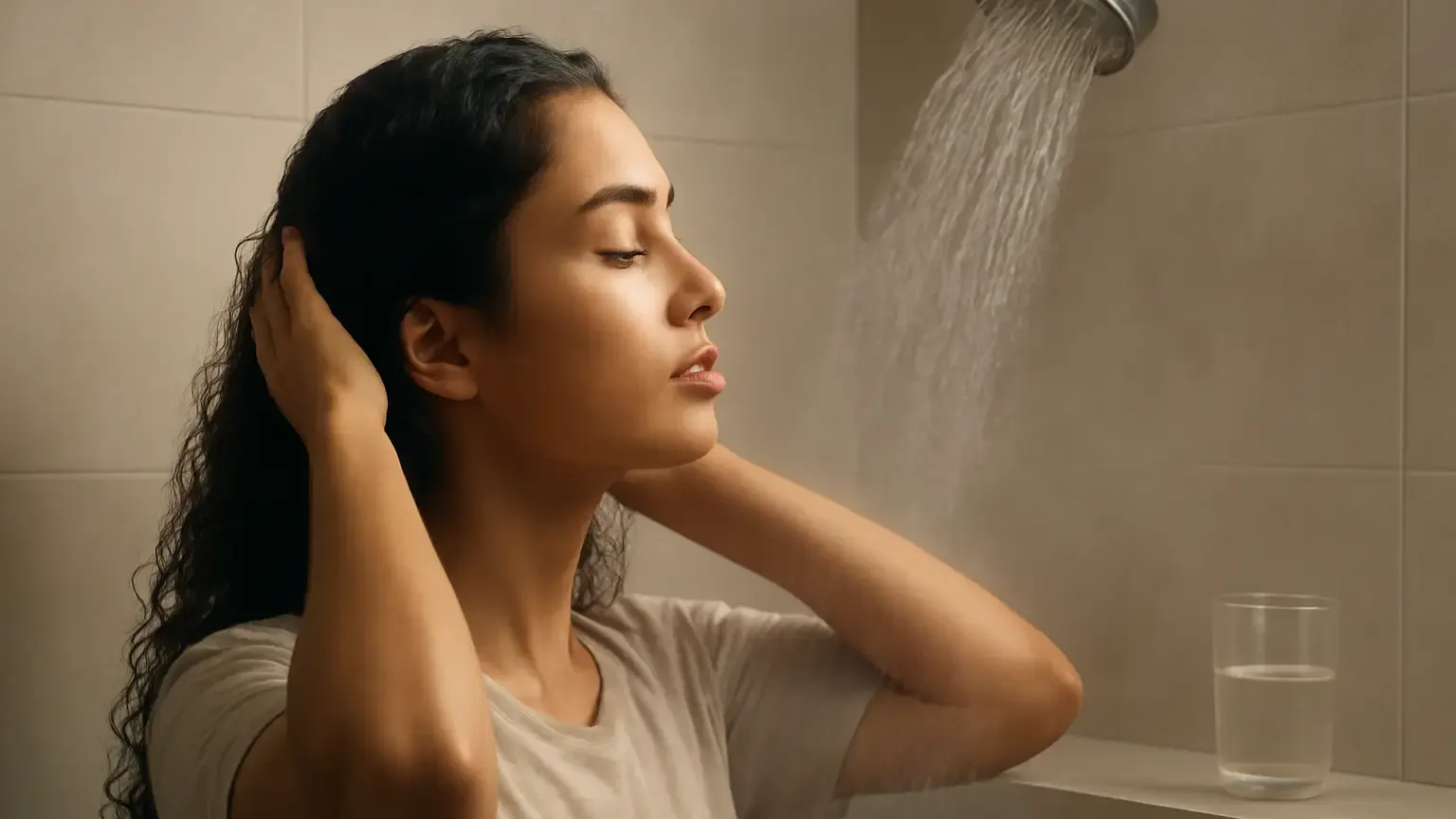
Hair porosity and water temperature matter most as a wash-day comfort and product-feel question, not a rigid rule. For people with low-, medium- or high-porosity hair, lukewarm water is usually the most balanced starting point: warm enough to spread shampoo and rinse products, but not so hot that the scalp feels dry. A cooler final rinse may feel refreshing, while very hot or icy water rarely offers a reliable porosity benefit. Adjust by scalp comfort, buildup, dryness and how your hair behaves after washing.
Water temperature can change how a wash feels, but it does not permanently open or close the hair cuticle in the dramatic way many beauty tips suggest. Temperature mainly affects comfort, oil and product removal, the spread of conditioner, and how dry or refreshed your scalp feels afterwards. Hair porosity can guide your routine, but it should not dictate every rinse.
How hair porosity and water temperature are connected
Hair porosity describes how readily the hair fibre absorbs and releases water. Low-porosity hair often resists wetting and may take longer to become fully saturated. Medium-porosity hair tends to absorb and retain water more predictably. High-porosity hair, which may be naturally porous or more porous because of bleaching, heat or repeated chemical services, can absorb water quickly but lose moisture more easily.
These are useful tendencies rather than fixed categories. A person can have a drier, more damaged length and a less porous root area. Weather, water hardness, styling residue and the condition of the scalp can also change how hair feels on a particular wash day.
In practical terms, the best water temperature for different hair porosities is usually a comfortable middle range. Water should feel warm or lukewarm, never scalding. The final rinse can be slightly cooler if that feels pleasant, but it does not need to be cold.
What warm, lukewarm and cool water actually do
Warm water
Comfortably warm water helps distribute shampoo through the roots and loosen sebum, sweat and styling residue. It can make thick conditioner easier to spread through the lengths. This is useful when the scalp feels oily or when there is visible product buildup.
However, water that is too hot may leave the scalp feeling tight or uncomfortable and can make already-dry lengths feel rougher. The issue is not that warm water changes porosity permanently; it is that excessive heat may be unpleasant for the scalp and less forgiving for fragile hair.
Lukewarm water
Lukewarm water is the safest all-purpose starting point for a lukewarm water hair wash. It supports comfortable scalp cleansing without making the shower unnecessarily hot. It also allows shampoo and conditioner to emulsify and rinse without a sharp temperature change.
For most low-, medium- and high-porosity hair, lukewarm water works well for wetting the hair, shampooing and rinsing out conditioner. If your hair is coloured, chemically treated or prone to dryness, this moderate temperature is particularly sensible.
Cool water
A cool rinse can feel refreshing, especially in a warm Indian climate, and may reduce the sensation of heat on the scalp. It can also help you avoid a very hot final rinse. But a cool or cold water hair rinse is not essential for shine, and it does not seal the cuticle permanently.
Very cold water may be uncomfortable and can make it harder to rinse thick products thoroughly. Use a comfortably cool temperature only if it suits you; do not force an icy rinse in the hope of correcting porosity.
Choosing a temperature by porosity
Low-porosity hair
Low-porosity hair may feel coated when products sit on the surface instead of spreading easily. Begin with lukewarm water and thoroughly saturate the hair before applying shampoo. A comfortably warm rinse can help soften residue and improve product distribution, but hotter water is not a substitute for proper cleansing.
A simple low porosity hair routine can include a lightweight shampoo, careful rinsing and a modest amount of conditioner applied mainly from mid-length to ends. If hair repeatedly feels waxy or limp, review product quantity and frequency of cleansing before increasing water temperature. Occasional use of a suitable clarifying shampoo may help with buildup, but follow the product directions and avoid using it aggressively on a dry or sensitive scalp.
Medium-porosity hair
Medium-porosity hair usually does not need a special water-temperature strategy. Lukewarm water for shampooing and rinsing is enough, with a slightly cooler final rinse if preferred. Focus on the condition of the scalp and ends rather than trying to make the hair behave like a different porosity type.
If the roots become oily while the lengths feel dry, apply shampoo mainly to the scalp and let the rinse carry the lather through the lengths. Use a moisturising conditioner where the hair feels rough, and adjust the amount according to length, density and styling habits.
High-porosity hair
High-porosity hair can lose moisture readily and may feel rough, tangled or frizzy after washing. Start with lukewarm water rather than very hot water, cleanse gently and avoid prolonged exposure to heat. Rinse conditioner thoroughly but do not scrub or handle the lengths roughly.
A practical high porosity hair routine may use a richer conditioner or leave-in product, depending on what the hair tolerates. Press water out with a soft towel or cotton T-shirt instead of twisting the hair tightly. Temperature alone will not prevent moisture loss; gentle handling, conditioning and protection from excessive heat are usually more influential.
A simple hair porosity wash routine
- Set a comfortable temperature. Choose lukewarm water, warm enough to feel pleasant but not hot enough to make the scalp flushed or tight.
- Wet the scalp and lengths fully. Hair that is only partly wet may not distribute shampoo or conditioner evenly. Give dense hair extra time to become saturated.
- Cleanse the scalp first. Massage shampoo gently with the fingertips, not the nails. Concentrate on the roots, where oil, sweat and residue collect.
- Rinse completely. Incomplete rinsing can make any porosity type feel heavy, dull or coated. If your hair is curly or thick, separate sections gently with your fingers.
- Condition the lengths. Apply conditioner according to your hair’s needs, detangle carefully and leave it on for the stated time. Hair should feel slippery enough to handle without force.
- Choose the final rinse. Use lukewarm water or a comfortably cool rinse. There is no need for icy water, and no temperature can replace adequate product removal.
- Dry with low friction. Blot rather than rub. Notice how the scalp and lengths feel once dry, then adjust product amount or cleansing frequency at the next wash.
Temperature decisions for common hair concerns
| Concern | Useful starting choice | What to avoid |
|---|---|---|
| Oily roots or heavy styling residue | Comfortably warm water before and during shampooing | Using very hot water as the only solution |
| Dry or tight-feeling scalp | Lukewarm water and a gentle, thorough rinse | Long, hot showers |
| Low-porosity hair that feels coated | Lukewarm saturation and careful cleansing | Adding more conditioner without checking buildup |
| High-porosity or damaged lengths | Lukewarm washing and gentle handling | Hot water, rough towel drying and high heat |
| Frizz after washing | Moderate water temperature, conditioner and low-friction drying | Expecting a cold rinse alone to provide frizz control |
Common mistakes to avoid
- Using very hot water to “open” the cuticle: Hair does not need scalding water to absorb conditioner. Excess heat may simply reduce comfort and worsen the dry feeling.
- Using icy water to “close” the cuticle: A cool rinse may feel nice, but it is not a permanent cuticle-sealing treatment.
- Testing porosity only once: A strand-in-water test is not a complete assessment. Product residue, oil and hair damage can affect how a strand behaves.
- Blaming water temperature for every hair problem: Shampoo strength, cleansing frequency, conditioner weight, hard water, heat styling and friction may matter more.
- Ignoring scalp comfort: If a temperature causes burning, persistent itching, marked flaking or ongoing discomfort, stop treating it as a styling issue. Consider speaking with a dermatologist or doctor, especially if symptoms are severe or do not settle.
The practical takeaway
For most people, the best approach to hair porosity and water temperature is simple: use lukewarm water for wetting, shampooing and rinsing, then choose a comfortably cool final rinse only if you enjoy it. Low-porosity hair may benefit from thorough saturation and residue control; medium-porosity hair usually needs no special adjustment; high-porosity hair benefits from avoiding excessive heat and reducing rough handling. Let scalp comfort, cleanliness and the finished hair feel guide the routine—not the promise that one temperature can transform porosity.
Products that may help with this routine
Choose only what fits your skin, hair or personal needs. Use the links below to view current options on Amazon India.
Frequently Asked Questions
What water temperature is best for low porosity hair?
Lukewarm water is usually the best starting point for low-porosity hair. It helps saturate the hair and rinse products without relying on very hot water. If the hair feels coated, review product quantity and cleansing rather than increasing the heat.
Is lukewarm water better for high porosity hair?
Usually, yes. Lukewarm water is gentle and comfortable for high-porosity or damaged lengths. Avoiding very hot water, rough handling and excessive heat styling is generally more useful than using a cold rinse.
Does cold water close hair cuticles?
No. A cool rinse may make the hair feel refreshed, but it does not permanently close or seal the cuticle. Thorough rinsing, suitable conditioning and gentle drying have a more practical effect on how hair feels.
How should I wash hair according to porosity?
Use lukewarm water for all porosity types, saturate the hair fully, cleanse the scalp, rinse products thoroughly and condition according to the needs of the lengths. Low-porosity hair may need more attention to buildup, while high-porosity hair often benefits from gentler handling.
Which water temperature is best for frizzy hair?
Lukewarm water is a sensible choice for frizzy hair, followed by a comfortably cool rinse if preferred. Frizz control also depends on conditioner, detangling, drying friction, humidity and heat exposure, so water temperature alone is unlikely to solve it.


