hair porosity and hair masks are easiest to match when you watch how your strands absorb, hold and release moisture—not when you depend on one viral test. This guide is for anyone with wavy, curly, coily or dry hair choosing a mask in India’s changing humidity. You’ll learn which textures suit low-, medium- and high-porosity hair, when to use heat or a pre-poo, and how to adjust the routine without overloading your strands.
Hair porosity describes how readily the hair cuticle allows water and conditioning ingredients to enter and how well the strand holds them. It is useful for choosing products, but it is not a permanent label and it can vary along the same head of hair. Sun exposure, straightening, colouring, friction, dryness and split ends can make older lengths more porous than new growth.
What hair porosity means for a mask
The cuticle is the outer protective layer of the hair shaft. When it lies relatively flat, water and products may take longer to penetrate; when it is raised or damaged, water can enter quickly but may also leave quickly. Medium-porosity hair often sits between these behaviours and may tolerate a wider range of formulas.
Porosity does not tell you whether your hair is fine, thick, straight or curly. Texture and density still matter. A fine, low-porosity curl may become limp under the same rich mask that works well on thick, high-porosity coils. The most useful question is not “What porosity am I?” but “What is my hair doing after washing and conditioning?”
Why a float test is not a definitive diagnosis
The common float test involves placing a clean strand in a glass of water and checking whether it sinks or stays near the surface. It can be a casual observation, but it is not a reliable stand-alone diagnosis. Residue from conditioner, oil, styling products or hard-water minerals can alter the result. Air trapped around a strand, its thickness and the water temperature can also affect how it behaves.
Instead, combine several observations over two or three wash days:
- Absorption: Does your hair take a long time to become fully wet, or does it soak up water immediately?
- Drying: Does it remain wet for hours, or dry unusually fast despite using conditioner?
- Product response: Do rich masks leave a coating and reduce volume, or does your hair still feel rough after them?
- Moisture retention: Does softness last until the next wash, or does the hair quickly turn dry and frizzy?
- Condition: Are the ends chemically processed, sun-exposed or heat-damaged compared with the roots?
A clarifying shampoo for buildup may help you observe your hair more clearly, but it should be used according to your hair’s tolerance rather than as a frequent reset. Follow it with conditioner, especially if your lengths feel dry.
Choosing a hair mask for different porosities
Low-porosity hair: favour lighter, water-friendly formulas
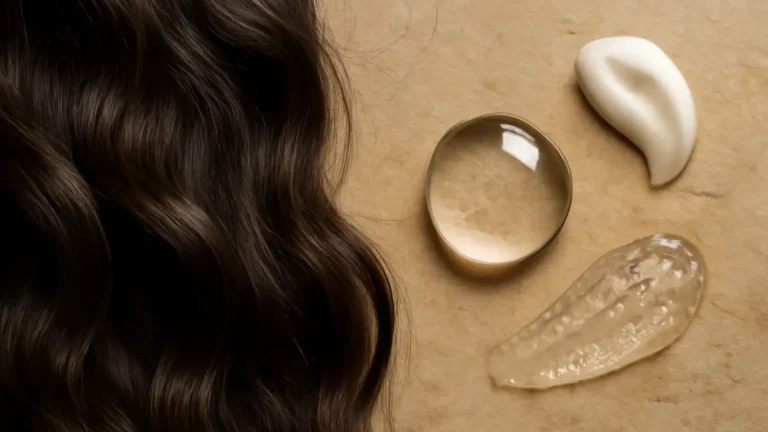
A low porosity hair mask is usually most comfortable when it has a light or gel-cream texture that spreads easily without leaving a heavy film. Look for humectant ingredients such as glycerin or aloe, along with modest amounts of emollient ingredients. Lightweight oils and fatty alcohols may provide slip without making the roots flat, though every formula behaves differently.
Apply the mask to clean, thoroughly wet lengths. Use a small amount, concentrate on the mid-lengths and ends, and comb through gently with your fingers or a wide-tooth comb. Five to ten minutes may be enough. A warm towel or heat cap for hair can help the formula soften the cuticle environment, but heat should feel comfortably warm, never hot. Rinse well if your hair feels coated.
For this hair type, a protein-free hair mask can be a sensible option when strands feel stiff, dull or overloaded after strengthening products. That does not mean low-porosity hair must avoid all protein; it means you should judge the result rather than select ingredients by porosity label alone.
Medium-porosity hair: balance moisture and strength
A medium porosity hair mask can be more flexible. Creamy conditioning formulas with humectants, emollients and occasional strengthening ingredients often work well. If your hair is coloured, frequently heat-styled or exposed to strong sun, a mask with a small amount of hydrolysed protein may support a smoother feel. If the hair is soft but lacks movement, switch to a lighter formula or use less product.
Medium-porosity strands usually benefit from a consistent schedule rather than constant product changes. Try a deep conditioning hair mask every one to two weeks, then assess softness, definition, volume and ease of detangling. Adjust for the season: humid weather can make some humectant-rich formulas feel frizzier, while dry indoor air may make them more comfortable.
High-porosity hair: prioritise rich conditioning and retention
A high porosity hair mask often needs a denser cream or butter-based texture because porous lengths can lose moisture quickly. Look for conditioning agents, oils or butters that improve slip and help reduce the rough feel of the cuticle. If the hair is bleached, coloured or heat-damaged, alternate moisture-focused care with carefully chosen strengthening care.
Protein can be useful for some high-porosity hair, but “more” is not automatically better. If strands become hard, brittle or straw-like after a protein product, pause that product and use a softer conditioning formula. If the hair feels overly stretchy when wet and breaks easily, persistent damage deserves professional advice rather than an aggressive home routine.
A practical porosity-based hair mask routine
- Start with the wash: Clean the scalp according to oil, sweat and styling-product buildup. Keep shampoo on the scalp and let the lather rinse through the lengths instead of rough-scrubbing them.
- Remove excess water: Squeeze gently with your hands or use a soft microfibre towel. Hair should be wet enough for spreading, but not dripping.
- Choose the amount: Fine or low-density hair may need a coin-sized amount for the ends; thick or dense hair may need more. Sectioning is more useful than applying a large amount all at once.
- Apply strategically: Keep rich masks away from the scalp unless the product specifically says otherwise. Smooth from mid-lengths to ends and detangle gently.
- Use warmth selectively: A warm towel can suit low-porosity hair. High-porosity hair may not need extra heat if it already absorbs products quickly. Avoid very hot water and heated tools during the masking step.
- Rinse and finish: Rinse until the hair feels conditioned but not waxy. A leave-in conditioner can help porous ends retain softness, while a lighter finish may preserve volume on low-porosity hair.
These hair mask application tips are a starting point, not a rigid prescription. In India, monsoon humidity, dry winter air, swimming, hard water and frequent washing can all change how a formula feels from week to week.
How often should you mask?
Most people can begin with once every one to two weeks and adjust based on results. A very dry, processed or high-porosity head may prefer weekly conditioning, while fine low-porosity hair may need a mask only every two or three weeks. A mask is not automatically better than a regular conditioner; overuse can create buildup, reduce bounce or make the hair feel greasy.
Use a lighter formula or reduce frequency if your hair looks flat, takes longer to dry, feels coated or loses definition. If it remains rough, tangles easily or feels dry soon after washing, consider whether the mask is too light, whether buildup is blocking the formula, or whether the ends are damaged. Product changes should be gradual so you can identify what helped.
Common mistakes when matching masks to porosity
- Treating the float test as a verdict: One glass of water cannot account for residue, strand variation or damage.
- Choosing the richest product available: Dense formulas can weigh down low-porosity or fine hair without improving moisture.
- Assuming high porosity means unlimited protein: Strengthening ingredients need to be balanced with conditioning and observed for stiffness.
- Applying a mask to a dry, product-coated head: A clean, wet surface generally makes distribution easier and more even.
- Ignoring the ends: Porosity can vary by length, so the ends may need more care than newer growth.
- Changing products too quickly: Give a routine enough time to show whether softness, tangling and manageability have improved.
Quick decision guide
Choose a lightweight hair mask when your strands are fine, easily weighed down or slow to absorb products. Choose a richer deep conditioning hair mask when the lengths feel porous, rough or quickly dry out. Select a protein-free option when strengthening products repeatedly leave the hair stiff, and consider occasional protein when damaged hair feels weak or overly stretchy. If you cannot identify a clear pattern, start with a moderate cream formula, use it sparingly and track the result across several washes.
Takeaway
hair porosity and hair masks are best matched through repeated observation: absorption, drying time, moisture retention, buildup and the condition of your lengths. Low-porosity hair commonly prefers lighter textures and gentle warmth; medium-porosity hair benefits from balance; high-porosity hair often needs richer conditioning and careful moisture retention. Use the float test only as a loose clue, not a final answer. Persistent breakage, sudden shedding, scalp discomfort or severe dryness should be discussed with a dermatologist.
Products that may help with this routine
Choose only what fits your skin, hair or personal needs. Use the links below to view current options on Amazon India.
Frequently Asked Questions
What is the best hair mask for low porosity hair?
The best hair mask for low porosity hair is usually a lightweight, water-friendly formula that spreads on wet lengths without leaving a heavy coating. Use a small amount for five to ten minutes, and add gentle warmth only if it improves softness.
How do you choose a hair mask for high porosity hair?
To choose a hair mask for high porosity hair, look for a richer conditioning texture with good slip, emollient ingredients and, when suitable, occasional strengthening ingredients. Adjust the amount and frequency if the hair feels coated or stiff.
Can a float test tell hair porosity?
A float test cannot tell hair porosity definitively. Product residue, hard-water minerals, trapped air, strand thickness and water conditions can change whether a strand sinks or floats. Compare absorption, drying time and moisture retention over several washes instead.
How often should I use a hair mask for porous hair?
You can usually start with a hair mask every one to two weeks. Very dry or processed porous lengths may tolerate weekly conditioning, while fine hair may need it less often. Reduce use if the hair becomes flat, waxy or difficult to rinse.
Is protein good for high porosity hair?
Protein may help some high-porosity hair feel stronger, particularly after chemical or heat damage, but it is not universally required. Alternate it with conditioning care and reduce or stop that product if the hair becomes hard, brittle or straw-like.