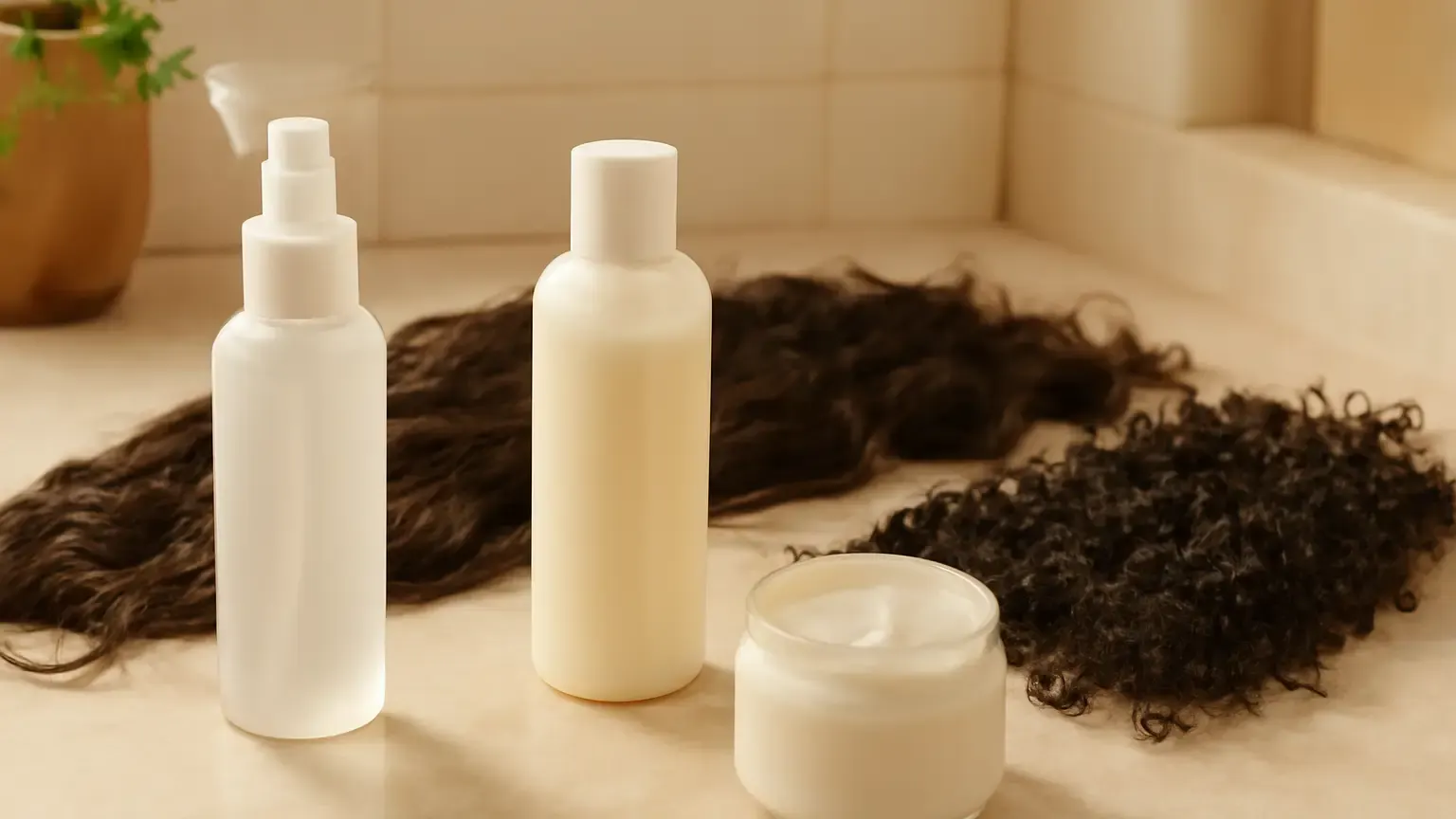
Hair porosity and leave in conditioner choices become simpler when you match product weight to how quickly your strands absorb and lose moisture. This guide is for anyone with wavy, curly, coily or dry hair who is unsure whether to choose a mist, milk, cream or richer leave-in. The practical answer: start light on low-porosity hair, use a balanced lotion on medium porosity, and build in richer layers only when high-porosity hair genuinely needs them.
Leave-in conditioner can make hair softer, easier to detangle and more defined, but the same formula will not suit every head of hair. A lightweight spray may disappear beautifully into high-density curls yet leave very porous ends rough. A rich cream may support dry, porous strands but sit on low-porosity hair as a sticky film.
Porosity describes how readily the hair cuticle allows water and conditioning ingredients in, and how well the strand holds on to that moisture. It is not the same as curl type, thickness, density or damage level. Two people with 2C waves can need very different leave-in textures, just as two people with coily hair can differ in porosity.
What hair porosity changes about leave-in conditioner
Hair porosity is best treated as a practical guide rather than a permanent label. Heat styling, colouring, sun exposure, friction and chemical processing can change the condition of the cuticle over time. Your roots and ends may also behave differently.
- Low-porosity hair: The cuticle is relatively compact, so water and product may sit on the surface before slowly absorbing. Hair can feel smooth but become weighed down quickly.
- Medium-porosity hair: The strand usually accepts moisture without much resistance and retains it reasonably well. This hair often tolerates the widest range of textures.
- High-porosity hair: The cuticle may be more raised or uneven, allowing moisture in quickly but losing it just as quickly. Hair can feel dry, frizzy or rough despite frequent conditioning.
A strand-in-water porosity test is not a definitive diagnosis because oils, styling residue and surface tension affect the result. Notice how your hair behaves after washing: does water bead up, does it dry unusually fast, and does product remain on top? Those observations are more useful for selecting a routine.
Leave-in conditioner by hair porosity
| Porosity | Best starting texture | Application approach | Watch for |
|---|---|---|---|
| Low | Water-based spray, mist or light milk | Apply to very damp hair, using a small amount section by section | Waxy feel, limp roots, dullness and residue |
| Medium | Light lotion or flexible cream | Use enough to smooth and detangle, then adjust by season | Dry ends or heaviness after repeated layering |
| High | Moisturising cream, milk or layered leave-in system | Work through damp hair and seal fragile ends if needed | Persistent roughness, tangling and fast moisture loss |
Low-porosity hair: choose light and water-first
For low porosity hair care, look for water-based hair products with a fluid texture. A mist or leave-in milk is usually easier to distribute than a dense butter-heavy cream. Ingredients such as humectants and lightweight conditioning agents may provide slip without leaving a heavy coating, though the complete formula matters more than any single ingredient.
Apply the product after washing while hair is soaking wet or very damp. Start with one or two sprays per section, or a pea-sized amount of lotion for several sections, then add only if the ends still feel rough. Warm water during washing can help the hair feel more receptive, but there is no need to use very hot water.
Low-porosity hair often benefits from occasional gentle cleansing when styling products accumulate. If your hair feels coated even after wetting, takes a long time to become saturated, or looks dull and flat, reduce the amount before reaching for a richer product. A lightweight leave-in conditioner is not automatically better if you apply several layers of it.
Medium-porosity hair: use the most adaptable texture
A medium porosity hair routine can include a spray, milk or cream depending on strand thickness, curl pattern and the weather. Fine hair may prefer a fluid lotion, while coarse hair may need a cream. In humid Indian weather, begin with less product because sweat and moisture in the air can make layered styling feel heavy.
Medium-porosity hair usually needs a balanced routine rather than constant correction. Apply leave-in to wet or damp hair, comb or finger-detangle gently, and assess the ends once the hair is partly dry. If it feels soft and flexible, the quantity is working. If the hair feels coated or loses volume, reduce the next application instead of changing every product at once.
High-porosity hair: prioritise retention, not just more product
High porosity hair care often requires richer conditioning because moisture escapes more easily. A cream-based leave-in may give better slip and reduce the need for repeated reapplication. If your hair is very dry or chemically processed, you can layer a water-based leave-in under a richer cream, but test this on one section first.
Use the product on wet hair, concentrating on the mid-lengths and ends. Smooth it over small sections with your palms, then scrunch or style as preferred. A small amount of gel or another finishing product may help hold moisture and definition, but excessive layering can leave curls stiff, flaky or difficult to refresh.
High-porosity hair does not automatically need protein at every wash. Some people like occasional strengthening formulas, while others find frequent protein makes hair feel rigid. If you are unsure, choose a moisturising, protein-free leave-in conditioner for a few washes and observe flexibility, detangling and breakage during handling.
How to choose the right leave-in texture
Porosity is the starting point, not the only decision factor. Match the formula to these practical details:
- Strand thickness: Fine strands usually need less product than coarse strands, even when both are high porosity.
- Density: Thick hair may need sectioning for even coverage, while sparse hair can become flat with one full pump.
- Hair condition: Coloured, heat-styled or frequently bleached lengths may need more cushioning than untreated roots.
- Climate: Humidity can increase frizz and make rich layers feel sticky; dry indoor air can make a light formula feel insufficient.
- Styling goal: Choose a spray for refreshment, a milk for light slip, a cream for softness and a richer formula when you need more protection on the ends.
For a leave-in conditioner for curly hair, slip and distribution matter as much as richness. Curly hair tends to tangle where strands meet, so apply in sections rather than rubbing product over the surface. For a leave-in conditioner for dry hair, compare how the hair feels after drying, not just how slippery it feels immediately after application.
How to apply leave-in conditioner without overdoing it
- Wash and condition first. Leave-in is an additional layer, not a replacement for rinsed conditioner when your hair needs thorough detangling.
- Remove excess water gently. Keep enough water in the hair to help distribute the formula. Blot with a soft T-shirt or towel rather than rough-drying.
- Divide into sections. Two to six sections usually work better than applying one large amount to the top of the head.
- Start with less. Use a spray or small coin-sized amount, depending on the product instructions and hair length. Spread it between your palms first.
- Target the lengths. Apply from the mid-lengths to the ends unless your scalp and roots specifically tolerate the product. Avoid placing a rich cream directly on the scalp.
- Check before adding more. If the strands feel flexible, smooth and easy to separate, stop. Add a little more only to dry or tangled areas.
When learning how to apply leave-in conditioner, change one variable at a time. Keep the same shampoo, rinse-out conditioner and styling product while testing the leave-in quantity. This makes it easier to tell whether the texture is unsuitable or the amount is simply too high.
Signs of buildup, under-moisturising and excessive layering
Hair product buildup may show up as a coated or waxy feel, dull appearance, curls that will not clump, flakes when products are rubbed together, or hair that seems oily soon after washing. Low-porosity hair is often more sensitive to this, but any texture can experience buildup.
Try using less leave-in, applying it only to the ends, and cleansing thoroughly according to your normal wash schedule. An occasional clarifying shampoo may be useful for some routines, but follow it with conditioner and avoid repeated aggressive cleansing if it leaves the hair dry or uncomfortable.
Under-moisturising looks different. Hair may feel rough, tangle quickly, become frizzy as it dries, or lose softness within a day. High-porosity ends may show this pattern even when the roots feel fine. First increase water at application and improve section-by-section distribution. Then add a small amount of richer product rather than immediately doubling every layer.
Excessive layering can create a confusing mix of symptoms: hair feels greasy but still appears dry, definition disappears, or the ends become stiff. A simple routine with one leave-in and one styling product is often easier to assess than a long sequence of sprays, creams, oils and gels.
A simple hair porosity leave in routine
For low porosity: Cleanse, condition, rinse well, then apply a light water-based leave-in to very damp hair. Use a small quantity and allow the hair to dry fully before deciding whether it needs more. Refresh with water and a tiny amount of mist rather than repeatedly adding cream.
For medium porosity: Cleanse and condition as usual, then apply a flexible lotion or cream in sections. Add styling product only if you need hold or definition. Adjust the quantity for monsoon humidity, dry winter air and changes in hair length.
For high porosity: Cleanse gently, condition thoroughly and apply a moisturising leave-in while the hair is wet. Concentrate on porous ends. If softness disappears quickly, test a richer cream or a light sealing layer, but avoid stacking several rich products before you know which one helps.
Review the routine after two or three wash days rather than judging it in one hour. Hair needs time to show whether moisture is being retained and whether residue is accumulating.
Common mistakes to avoid
- Choosing a product only because it is marketed for your curl pattern.
- Applying a full pump or handful before checking the product’s concentration.
- Putting heavy leave-in directly on the scalp and then mistaking oiliness for moisturised hair.
- Adding more product to hair that is actually coated and needs better cleansing.
- Assuming high porosity always requires oils, butters or multiple layers.
- Changing shampoo, conditioner, leave-in and styling products at the same time.
- Ignoring the difference between thirsty ends and naturally fine, low-density hair.
The takeaway
The best hair porosity and leave in conditioner match is the lightest texture that leaves your hair soft, flexible and manageable until the next wash. Start with a small amount on damp hair, assess the result after drying, and adjust for strand thickness, damage, climate and styling needs. Low-porosity hair usually needs restraint, medium-porosity hair allows flexibility, and high-porosity hair may need richer support—but all three can suffer from excessive layering.
Products that may help with this routine
Choose only what fits your skin, hair or personal needs. Use the links below to view current options on Amazon India.
Frequently Asked Questions
What leave-in conditioner is best for low porosity hair?
A lightweight, water-based spray, mist or leave-in milk is usually the best starting point for low-porosity hair. Apply a small amount to very damp hair and add more only if the ends remain rough. If the hair feels coated, limp or waxy, reduce the quantity and cleanse away residue rather than switching immediately to a richer cream.
How much leave-in conditioner should I use for high porosity hair?
Begin with a small coin-sized amount for several sections of medium-length hair, then adjust according to thickness, length and dryness. Apply to wet hair, focusing on the mid-lengths and ends. High-porosity hair may need a second light layer or richer cream, but adding too much can cause stiffness, flakes and buildup.
Can medium porosity hair use leave-in conditioner every day?
It can, but daily use is not automatically necessary. Medium-porosity hair may need leave-in after washing and occasional light refreshment between washes. Use water and a very small amount first, then stop if the hair is soft and flexible. Repeated full applications can cause heaviness even when the hair is not highly porous.
How do I layer leave-in conditioner without buildup?
Apply products from lightest to richest, use wet or damp hair, and give each layer a practical purpose. Start with a water-based leave-in, then add a small amount of cream or gel only where needed. Keep rich products away from the scalp, assess the hair after drying, and clarify occasionally if your routine leaves a persistent coating.
Is water-based leave-in conditioner good for fine hair?
Often, yes. A water-based leave-in conditioner usually spreads more easily and is less likely to flatten fine strands than a dense butter-based cream. Fine hair can still need a richer formula on damaged ends, so test a small amount on the lower lengths rather than applying a heavy product from roots to tips.
What are the signs of leave-in conditioner buildup?
Common signs include a waxy or sticky coating, dullness, limp roots, reduced curl definition, flakes when products rub together and hair that feels greasy but remains difficult to moisturise. Reduce the amount and simplify layers first. If residue continues, use a suitable clarifying wash followed by conditioner.