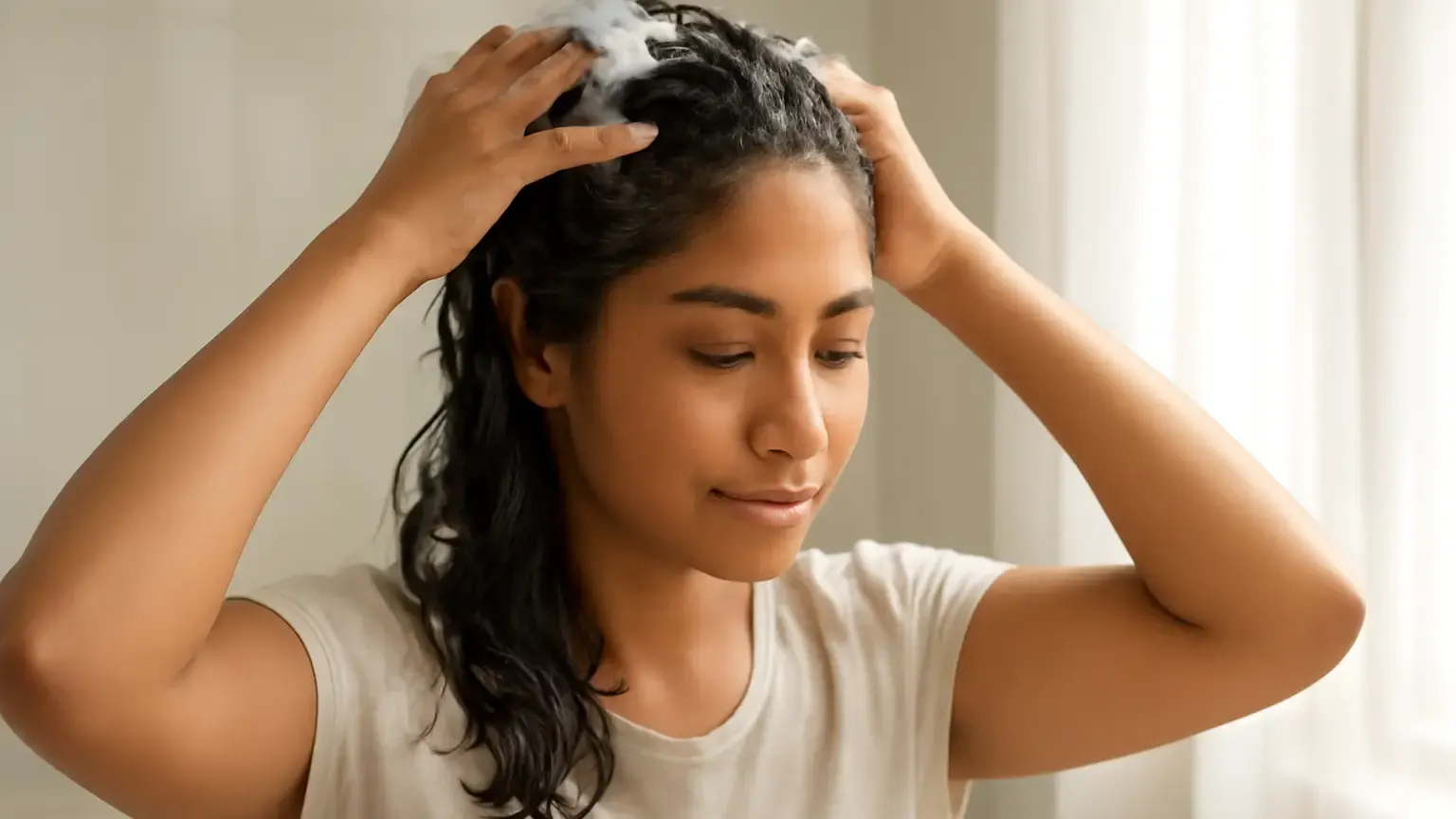
These hair care tips for hair wash frequency are for anyone whose scalp feels oily, sweaty, itchy or coated while the lengths feel dry. Start with the scalp, not a fixed calendar: wash when oil, sweat or buildup becomes uncomfortable, then adjust for weather, exercise and hair texture. You may need frequent scalp cleansing and generous conditioning on the lengths—or fewer washes with careful buildup control. The goal is a comfortable scalp and protected ends, not a universal number.
There is no single correct number of hair washes for everyone. A person commuting through humid Mumbai weather, exercising daily or wearing a helmet may need a different routine from someone with a dry scalp and tightly coiled hair. The useful question is not simply “How many times should I shampoo?” It is “What is my scalp telling me, and how are my lengths responding?”
Hair washing frequency should mainly be set by the scalp. Conditioning frequency and technique should be set by the lengths. Keeping those two decisions separate makes it easier to clean the roots without repeatedly drying the mid-lengths and ends.
How to read the signals that it is time to wash
Scalp oil, sweat and product residue are normal, but they can become uncomfortable when they accumulate. Look for a combination of signs rather than relying on one bad hair day.
- Oil at the roots: If the scalp looks shiny, feels greasy or makes the hair clump soon after styling, your wash interval may be too long.
- Sweat and odour: After exercise, outdoor travel or a hot day, sweat can leave the scalp damp and uncomfortable. Rinsing or washing may be sensible, particularly if you wore a helmet or cap.
- Scalp buildup: A coated feeling, visible flakes of product, flat roots or difficulty creating a clean lather can point to accumulated styling products, oil or mineral residue.
- Itch or tenderness: Persistent irritation is not a signal to scrub harder. Use a gentle approach and seek professional advice if it continues or becomes severe.
- Dry, tight feeling: If the scalp feels tight immediately after washing, the cleanser may be too strong, the water too hot or the routine too frequent for your needs.
A scalp that feels clean and comfortable until the next planned wash is usually giving you a workable schedule. You do not need to wait until the hair looks visibly dirty.
Hair care tips for hair wash frequency by scalp type
Oily scalp or frequent sweating
An oily scalp may benefit from washing every day or every other day, depending on comfort, hairstyle and the cleanser used. Daily washing is not automatically harmful when the product is mild and the lengths are protected. Apply shampoo primarily to the scalp, massage with fingertips and let the lather move through the lengths while rinsing rather than scrubbing the ends.
If roots become greasy quickly, reducing conditioner near the scalp can help. Choose a lightweight conditioner and keep it from the first few centimetres of the roots. People who exercise often may wash after training when sweat feels sticky, rather than forcing a fixed weekly routine.
Dry scalp or dry, textured lengths
A dry scalp and dry hair lengths often tolerate a longer interval, such as every three to seven days, but the right timing depends on oil, sweat and styling products. Curly, coily or highly porous hair can feel dry along the lengths even when the scalp needs cleansing. In that case, focus shampoo on the roots, use a conditioner for dry hair through the lengths and detangle gently while the hair is slippery.
Do not confuse a dry scalp with flakes caused by another concern. If flakes, redness, burning or itching persist, a dermatologist can help identify the appropriate next step. General hair care cannot replace professional evaluation of ongoing scalp symptoms.
Normal or combination scalp
If your roots become oily after two or three days but the ends remain comfortable, that interval may be a useful starting point. Adjust it during hot, humid months, travel, illness, swimming or periods of increased exercise. Combination hair often benefits from a scalp-focused wash and a richer conditioner only from the mid-lengths down.
How often should you wash your hair in India?
For hair washing frequency India routines need to account for climate, pollution, water and lifestyle. Humidity can increase sweat and make roots feel oily sooner. Dust and pollution may make the scalp feel coated, while hard water can leave hair rough or dull without necessarily meaning that the scalp needs more shampoo.
Use this as a practical starting framework:
- Hot, humid weather: Wash when sweat and oil become uncomfortable; this may mean every one or two days for an active or oily scalp.
- Dry or cooler weather: Extend the interval if the scalp remains comfortable, and pay more attention to moisturising the lengths.
- Daily workouts: A post-workout hair care routine can include a full wash, a water rinse when appropriate, or a gentle scalp cleanse based on sweat and product use.
- Helmet or cap use: Check for trapped sweat and flattening at the roots. Let the scalp dry between uses and wash when it feels damp, oily or uncomfortable.
- Swimming: Rinse after swimming and cleanse when chlorine, salt or pool residue remains. Condition the lengths to reduce a rough feel.
Climate is a decision factor, not a rule. Someone in Bengaluru or Delhi may have a different schedule from someone in Kochi or Kolkata, but individual scalp signals still matter more than the city name.
Separate scalp cleansing from length care
The scalp produces oil; the ends receive less natural lubrication and are more exposed to friction, heat and environmental stress. Treating the whole head identically can leave the roots unclean or the ends over-cleansed.
- Brush or finger-detangle gently before the shower if your hair tangles easily.
- Wet the scalp and lengths thoroughly with lukewarm water.
- Apply a small amount of gentle shampoo to the scalp, adding more only if needed.
- Massage with the pads of your fingers for about a minute. Avoid scratching with nails.
- Rinse fully. A second cleanse may be useful after heavy oiling or substantial buildup, but it is not required every time.
- Apply conditioner from the mid-lengths to the ends. Leave it on according to the product directions and rinse well.
- Blot with a soft towel or microfiber towel instead of rubbing aggressively.
Pre-shampoo oiling may suit some dry lengths, but heavy oil does not need to be left on indefinitely. If oiling makes the scalp itchy, congested or difficult to cleanse, reduce the amount or skip it.
Choosing products without overcomplicating the routine
A gentle shampoo is a useful everyday option for a scalp that needs regular cleansing. A clarifying shampoo may help occasional product or mineral buildup, but it should be used according to the product directions and balanced with conditioning. More cleansing is not automatically better; frequent clarifying can make dry lengths feel rough.
For hard water hair care, focus on thorough rinsing, regular conditioning and an occasional suitable chelating or clarifying product if recommended for your hair needs. Hard water residue can affect feel and manageability, but it is not a reason to scrub the scalp repeatedly.
Hair porosity also affects how the lengths respond. Porous or chemically treated hair may need more conditioning and less friction, while fine hair may prefer lighter products to avoid flat roots. A curly hair wash routine can involve fewer full washes, but it should still respond to sweat, oil and scalp comfort rather than an internet rule.
Common hair-washing mistakes to avoid
- Following a rigid calendar: A “wash only once a week” or “wash every day” rule may not suit your scalp, climate or activity.
- Scrubbing the ends: Shampoo belongs mainly at the scalp; vigorous cleansing on the ends can increase dryness and tangling.
- Using very hot water: Hot water can leave the scalp and lengths feeling dry or tight. Lukewarm water is a more comfortable choice.
- Applying conditioner to oily roots: This may weigh down fine hair and make the scalp seem greasy sooner.
- Using dry shampoo as a replacement: It can temporarily improve the appearance of roots, but it does not remove sweat, oil and residue. Wash when the scalp needs cleansing.
- Changing several products at once: Introduce one change at a time so you can identify what improves or worsens comfort.
A simple two-week way to find your schedule
For two weeks, note the day you wash, how the scalp feels on the following days, whether you exercised, and how the lengths feel after drying. Record oiliness, sweat, itch, visible buildup, tangling and dryness. If the scalp is uncomfortable before wash day, shorten the interval. If the scalp is comfortable but the ends are dry, keep the scalp schedule and improve length conditioning rather than delaying cleansing indefinitely.
Make one adjustment at a time and reassess after several washes. A routine that works in winter may need changing during summer, monsoon humidity, travel or a new exercise habit.
Concise takeaway
The best hair care tips for hair wash frequency begin with your scalp: wash when oil, sweat or buildup affects comfort, and adjust for climate and activity. Keep shampoo near the roots, condition the lengths, and change the schedule when your hair or scalp signals a different need. If irritation, heavy flaking, pain or unusual shedding persists, consult a dermatologist rather than repeatedly changing products.
Products that may help with this routine
Choose only what fits your skin, hair or personal needs. Use the links below to view current options on Amazon India.
Frequently Asked Questions
How often should you wash your hair in India?
Wash according to scalp oil, sweat, buildup and comfort. In hot or humid weather, an oily or active scalp may need washing every day or every other day, while a dry scalp or textured hair may suit a longer interval. Climate is a guide, not a fixed rule.
How often should you wash oily hair?
Oily hair may need washing daily or every other day, especially after sweating. Use a gentle shampoo on the scalp, rinse thoroughly and keep conditioner on the lengths rather than the roots.
What is the best hair wash frequency for a dry scalp?
A dry scalp may be comfortable with washing every three to seven days, but there is no universal schedule. Use lukewarm water, a gentle cleanser and conditioner on dry lengths. Persistent itching, redness or flakes should be assessed by a dermatologist.
Should you wash your hair after sweating?
If sweat leaves the scalp damp, sticky, odorous or itchy, wash or rinse it based on the amount of sweat and product present. After intense exercise, cleansing the scalp and conditioning the lengths can improve comfort.
How often should you shampoo curly hair?
Many people with curly hair wash less frequently, often every few days to weekly, but the scalp still needs cleansing when oil, sweat or buildup accumulates. Apply shampoo mainly to the scalp and use conditioner generously through the lengths.
Can overwashing damage hair?
Overwashing can make some hair lengths feel dry or rough, particularly when the cleanser is strong or shampoo is scrubbed through the ends. Protect the lengths with a gentle scalp-focused wash and suitable conditioner instead of following an overly frequent routine automatically.