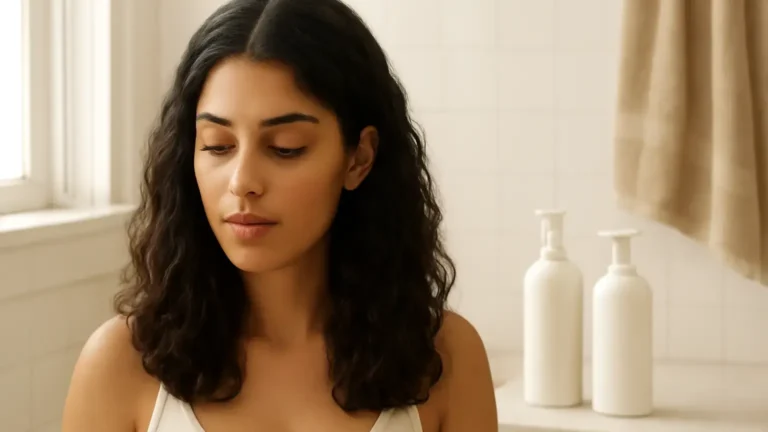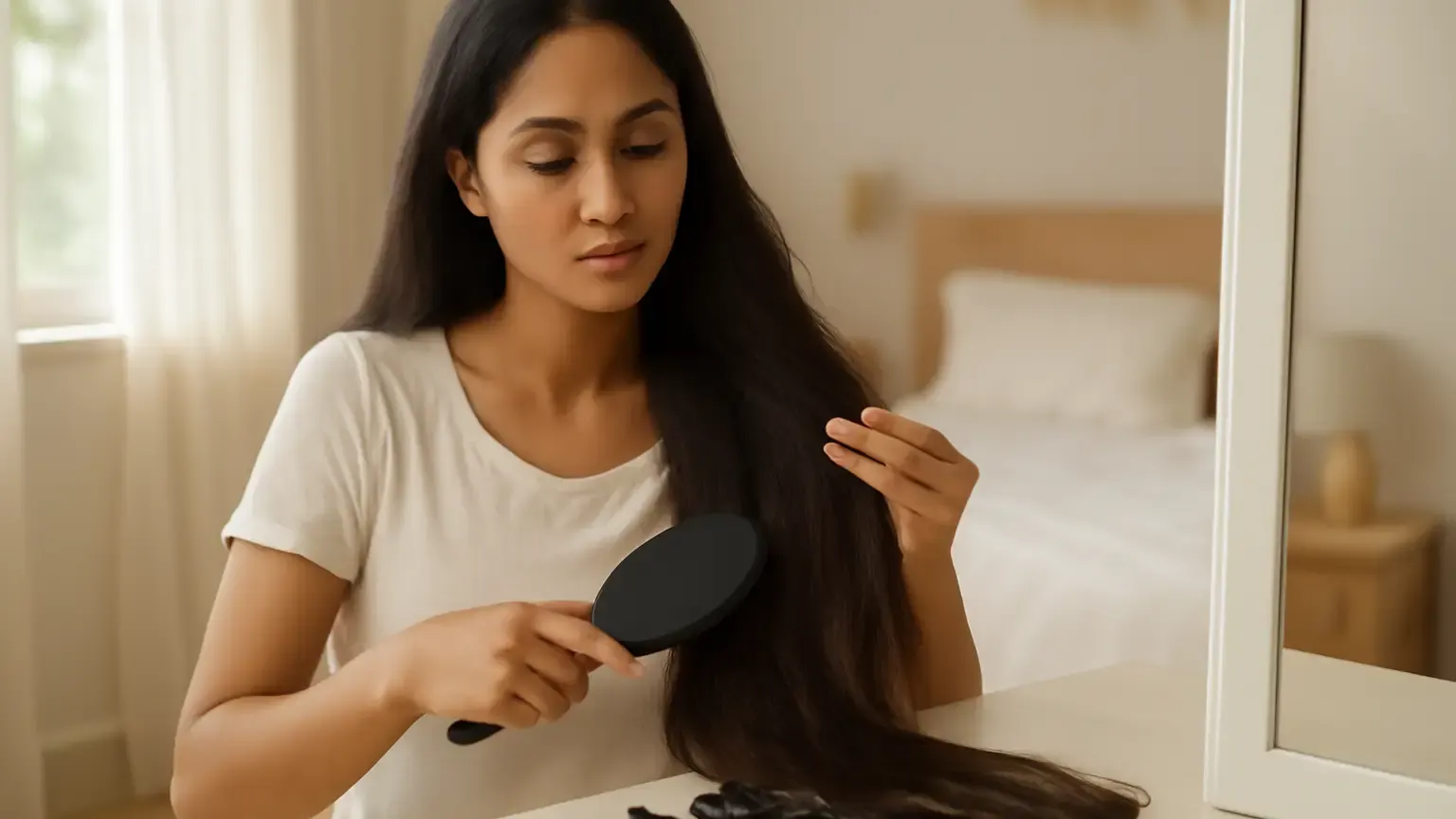
These hair care tips for hair extensions are for anyone wearing clip-ins, tape-ins or other added hair in India’s heat and humidity. Brush from the ends upward, keep shampoo mainly at the roots, condition the lengths without coating attachment points, protect against heat, and secure the hair loosely before sleep. Together, these choices reduce tangles, matting and unnecessary pulling while helping extensions look neat for longer—without requiring an elaborate salon-only routine.
Extensions tangle more readily than natural hair because loose added strands do not receive oils from the scalp in the same way. The hair may also rub against clothing, pillows and neighbouring wefts. A simple routine therefore matters more than a large collection of products.
1. Detangle from the ends upward
The safest answer to how to brush hair extensions without tangling is to work in small sections and start at the lowest few centimetres. Hold the hair above the section you are brushing so the pull does not travel directly to the attachment point.
- Separate the hair with your fingers and remove any obvious knot gently.
- Use a flexible detangling brush or a suitable wide-tooth comb on the ends first.
- Move gradually towards the mid-lengths, then the roots.
- Brush over clip, tape or bonded areas only when necessary, using very light pressure.
A brush for hair extensions should glide rather than snag. Avoid aggressively raking through wet hair; extensions are heavier when saturated and can place extra stress on natural hair. If a knot will not loosen, pause and separate it with your fingers instead of pulling harder.
2. Wash gently and less often when appropriate
A good hair extension washing technique cleans the scalp without roughening the lengths. For clip-ins, remove the pieces before washing and clean them only when they have collected sweat, styling product or visible residue. Permanent methods should be washed while attached, following the instructions provided by the stylist or manufacturer.
How to wash the lengths
- Brush out major tangles before water reaches the hair.
- Use lukewarm water and let it flow down the lengths rather than scrubbing them into a bundle.
- Apply a gentle, preferably sulfate-free shampoo for extensions, mainly to the scalp and roots.
- Press and smooth the cleanser through the lengths; do not pile the hair on top of the head.
- Rinse thoroughly, as leftover product can make strands sticky and more likely to mat.
How often should you wash clip in hair extensions? There is no fixed number for everyone. Wash them when they are dirty or coated, not automatically after every wear. Your scalp, workout schedule and climate matter, while the care label remains the deciding guide. Synthetic fibres may have different washing limits from human hair extensions.
3. Put conditioner on the mid-lengths and ends
Conditioner reduces friction, but placing it at the wrong point can loosen or coat the attachment area. Apply a small amount of leave-in conditioner for extensions or rinse-out conditioner from the mid-lengths to the ends. Keep rich formulas away from clips, tapes, bonds and the scalp unless the product instructions specifically allow it.
For human hair extensions care, allow conditioner to sit briefly, then rinse until the hair feels clean and flexible rather than slippery with residue. A lightweight leave-in can help dry ends, particularly after washing, but use less than you think you need. Product build-up attracts dust and can make the strands stick together.
After rinsing, squeeze water out with your hands and blot with a soft towel. Do not twist, wring or scrub the extension hair. Detangle from the ends upward again once the hair is damp and manageable.
4. Control heat and drying friction
Can you use heat on hair extensions? Often, human-hair extensions can be styled with heat when their care instructions permit it, but frequent high temperatures can dry and weaken the hair. Some synthetic extensions can melt, frizz or lose their shape, so check the fibre guidance before using a dryer, straightener or curler.
For safer styling:
- Apply a heat protectant for extensions evenly to the lengths before heated tools.
- Dry the attachment area and roots first on a low or medium setting, keeping the airflow moving.
- Use the lowest temperature that achieves the look and avoid repeated passes over one section.
- Make sure the hair is fully dry before sleeping or tying it up.
Air drying is gentler, but do not leave heavy, wet hair hanging for hours if the attachments feel strained. A cool setting can help finish the routine. Heat protection lowers styling stress; it does not make unlimited heat harmless.
5. Change your sleeping arrangements
Night-time rubbing is a common cause of tangles. Before bed, follow these steps for sleeping with hair extensions:
- Make sure the hair is dry and gently detangled.
- Gather it into a loose low braid or a soft, low ponytail. Avoid tight elastics.
- Keep clip-ins in only if the manufacturer or stylist says overnight wear is suitable; otherwise remove them.
- Use a smooth silk or satin pillowcase, or a comfortable satin bonnet, to reduce friction.
Never sleep with wet hair bundled tightly. A loose braid is practical for many people, but very curly or textured extensions may need a different protective arrangement to preserve their shape. The right choice is the one that prevents rubbing without pulling at the roots.
6. Position clips correctly and store removable pieces well
Correct clip-in extension placement helps prevent both tangling and tension. Place wefts where there is enough natural hair to support them, usually below the crown and away from the fragile hairline. Backcomb only lightly if extra grip is needed; repeated aggressive teasing can stress the natural hair.
Where should clip in hair extensions be placed? They should sit flat in clean sections, with the clips closed securely but not digging into the scalp. Avoid stacking too many wefts in one narrow area. If a piece slips, feels painful or creates a tight pulling sensation, remove it and reposition it rather than adding more force.
After removal, close the clips, gently detangle each weft, and lay it flat or hang it in a clean, dry place. Keep pieces away from bathroom steam, direct sunlight and loose items that can catch the hair. Good hair extension storage is a small but important part of extension matting prevention.
A simple weekly hair extension care routine
For a manageable hair extension care routine, check the hair at the end of each wear instead of waiting for a large knot. Remove clip-ins, brush from ends to roots, and store them properly. On wash day, cleanse gently, condition only the lengths, blot dry and detangle while damp. Before styling, use heat protection and inspect the attachment areas for tension.
People following hair extensions maintenance India routines may need to adjust this schedule during humid monsoon weather, hot commutes or frequent workouts. Sweat does not automatically mean the extensions need harsh shampoo; it may simply mean the scalp needs a gentle cleanse while the lengths are handled carefully. A stylist can also advise on the correct routine for tape-ins, bonds, keratin attachments or synthetic fibres.
Common mistakes that create tangles
- Brushing from the roots down: this pushes small knots together and increases pulling.
- Washing with hair piled on the head: the lengths rub against each other and mat.
- Using oil or conditioner on attachments: this may affect grip and encourage slippage, depending on the method.
- Leaving hair loose at night: pillow friction can create a nest of knots.
- Clipping heavy wefts onto very fine sections: the hair may feel sore and the piece may move.
- Overusing dry shampoo or styling spray: residue can make strands rough, coated or sticky.
When to change the routine or ask for help
Some light shedding and occasional small knots can be normal, particularly near removable clips. Persistent matting, scalp soreness, redness, broken natural hair or a tightening sensation means the extensions should be removed or checked by a qualified stylist rather than brushed through forcefully. If scalp discomfort or hair loss continues, consult a dermatologist or doctor. Extensions should enhance styling, not cause ongoing pain or damage.
Takeaway
The most effective hair care tips for hair extensions are consistent and gentle: detangle from the ends upward, wash without scrubbing the lengths, condition away from attachment points, protect before heat, secure hair loosely at night, and place or store clips carefully. These habits make fewer tangles and lower tension a realistic goal across different extension types and Indian weather conditions.
Products that may help with this routine
Choose only what fits your skin, hair or personal needs. Use the links below to view current options on Amazon India.
Frequently Asked Questions
How do you brush hair extensions without tangling?
Start at the ends with a flexible extension-safe brush or wide-tooth comb, then work upwards in small sections. Hold the hair above the section being brushed so the attachment point does not receive the pulling force.
How often should you wash clip in hair extensions?
Wash clip-ins when they are visibly dirty, sweaty or coated with styling product rather than after every wear. Remove them before washing and follow the care label, especially if they are synthetic.
How do you sleep with clip in hair extensions?
Remove clip-ins overnight unless the manufacturer or stylist specifically approves sleeping in them. For suitable attached extensions, use dry, gently detangled hair in a loose low braid and reduce friction with a satin or silk pillowcase.
How should you wash human hair extensions at home?
Brush out tangles first, use lukewarm water and a gentle shampoo mainly at the scalp or roots, smooth cleanser down the lengths without scrubbing, then condition from the mid-lengths to the ends and rinse thoroughly.
Can you use heat on hair extensions?
Human-hair extensions may tolerate limited heat when their instructions allow it. Use heat protectant and the lowest effective temperature. Do not assume synthetic extensions are heat-safe; check the fibre guidance first.