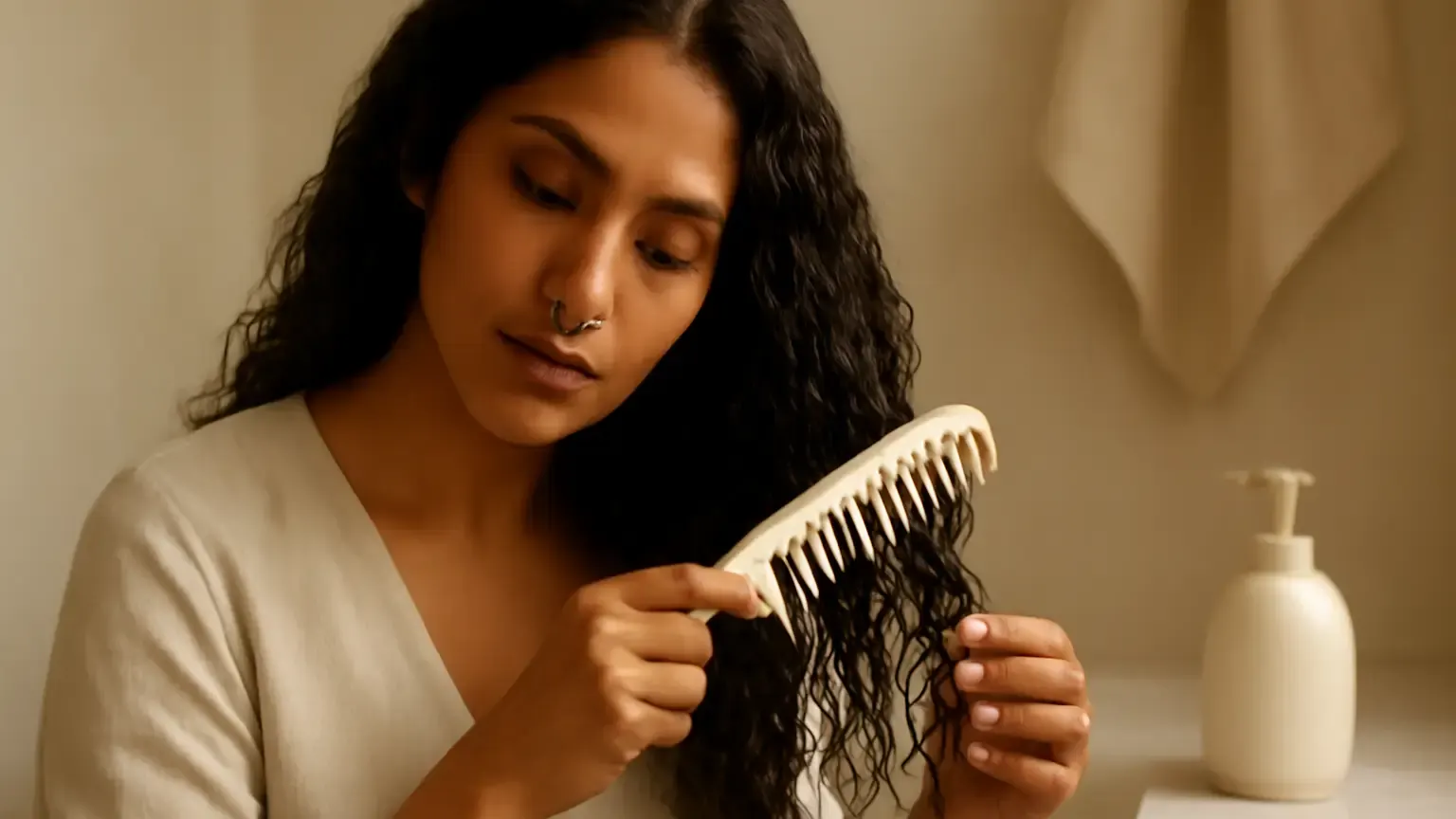
Hair detangling tips work best when you match the method to your texture: detangle straight hair when it is mostly dry, and wavy or curly hair when it is wet and coated with conditioner. This guide is for anyone dealing with knots, long hair or frequent wash-day breakage, especially in India’s humid conditions. The key outcome is less pulling: use sections, add slip, start at the ends and move towards the roots.
Why detangling can cause breakage
Hair becomes more vulnerable when it is stretched, rubbed or pulled through a knot. A tangle is not only a cosmetic inconvenience: forcing a comb through it can create friction along the hair shaft, snap weakened strands and increase unnecessary traction at the scalp. This is why gentle handling matters as much as the product you use.
Water changes the equation, but not in the same way for every texture. Straight hair usually has fewer bends for knots to form, yet fine strands can be fragile when saturated. Wavy and curly hair often benefit from wet detangling because conditioner provides slip and reduces the force needed to separate curls. Very coily or highly textured hair may also need a moisturising pre-wash step before cleansing.
Your hair porosity, density, length, chemical history and daily exposure to humidity all influence the right approach. Treat the suggestions below as a starting point, then adjust according to how easily your hair stretches, knots and dries.
Dry versus conditioned detangling: which is better?
| Hair situation | Usually suitable | Why |
|---|---|---|
| Straight, fine or lightly tangled hair | Mostly dry or slightly damp detangling | Helps avoid excessive wet stretching and lets you see knots clearly. |
| Wavy hair with moderate knots | Damp, conditioned detangling | Balances shape retention with enough slip to loosen tangles. |
| Curly or coily hair | Wet detangling with conditioner | Supports curl grouping and reduces combing friction. |
| Very dry, compacted or matted areas | Pre-wash softening | Oil or a pre-poo treatment can soften the area before shampooing. |
There is no universal rule that hair must always be detangled wet or dry. For example, brushing straight hair aggressively while soaking wet may cause more stretch, while trying to separate tight curls without conditioner may create unnecessary pulling. If you are asking, “is it better to detangle hair with conditioner?”, the practical answer is usually yes for wavy, curly and coily hair, but the product should create slip without making you tug.
How to detangle hair without breakage
1. Prepare before you cleanse
Do not begin by dragging shampoo through a mass of knots. If your ends are tangled, gently separate the largest knots with your fingers first. For dry or textured hair, smooth a small amount of conditioner, hair cream or a suitable pre-poo treatment over the lengths. Leave it for a few minutes so the strands have time to soften.
Use only enough product to provide glide. Heavy application can make fine hair limp and may require vigorous cleansing later. If your scalp is oily or easily irritated, keep oils and rich products on the lengths rather than applying them directly to the scalp. This keeps the routine more scalp-friendly.
2. Work in manageable sections
Sectioning hair is one of the simplest ways to reduce repeated pulling. Divide thick or long hair into four to eight sections, depending on density. Clip or loosely tie each section with a snag-free accessory, leaving one area free at a time. Smaller sections are especially useful for curls, dense hair and the nape, where knots often collect.
Keep each section comfortable rather than tightly pulled. If the hair is already fragile, avoid tight elastics and do not hold a section under tension while combing.
3. Start at the ends
Hold the section a few centimetres above the knot to reduce tension at the roots. Use your fingers to loosen the tips first, then move gradually upwards. Once the lower half is clear, comb the middle and finally the roots. This prevents a comb from pushing every small knot into one large, painful tangle.
For stubborn knots, add more conditioner or water and pause. Separate the knot sideways with your fingertips instead of forcing the tool down through it. A few slow passes are safer than one hard pull.
Choose the right detangling tool
Tool choice should reflect both texture and the state of your hair. A wide-tooth comb is a versatile option for conditioned curls, waves and dense hair because its spaced teeth can move through sections with less snagging. Use it slowly, and do not assume a wide gap makes force acceptable.
A detangling brush can suit straight, wavy or curly hair when used with light pressure and in small sections. Look for flexible bristles that bend around minor knots rather than a rigid brush that catches and pulls. For very tight knots, your fingers are often the gentlest first tool because they can feel resistance before a strand snaps.
Clean tools regularly. Product residue, shed hair and dust can increase drag. Avoid sharing combs or brushes when there is scalp irritation or an active concern. A tool should glide; if it repeatedly catches, change your technique before changing to a more aggressive brush.
Texture-specific wash day routines
Straight hair
Detangle before washing if the hair is lightly knotted, beginning at the ends with a gentle brush or comb. After shampooing, apply conditioner mainly from mid-length to ends. If your hair tangles easily, use a small amount of leave-in conditioner after rinsing, particularly at the tips. Avoid vigorous towel rubbing, which can create surface friction and new knots.
Wavy hair
Waves can puff up when brushed dry, but a fully wet head may stretch more easily. Try detangling when the hair is damp and coated with conditioner. Use your fingers first, followed by a wide-tooth comb or suitable detangling brush. Scrunch gently after rinsing instead of repeatedly brushing, so you preserve the natural wave pattern.
Curly and coily hair
Divide the hair before getting it completely saturated if that makes the process easier. Apply conditioner generously enough to create slip, then use finger detangling followed by a wide-tooth comb where needed. Keep the hair in sections while rinsing if it re-tangles quickly. After washing, blot rather than rub with a microfiber towel or a smooth cotton T-shirt, and avoid separating curls repeatedly while they dry.
Detangling tips for Indian hair and humid weather
Indian hair can range from fine and straight to dense, wavy, curly or coily, so geography alone cannot determine a routine. However, heat, humidity, sweat, dust, hard-water buildup and frequent oiling may all affect how the hair feels on wash day. If oiling is part of your routine, use a moderate amount and concentrate on the lengths when they are dry; too much oil can make knots feel compacted rather than soft.
In humid weather, allow the hair to dry fully before tying it tightly. Damp hair trapped in a braid or bun may knot at the nape. A loose sleep braid, smooth pillowcase and protective style can reduce overnight friction. If hard water leaves your hair rough or coated, consider whether your existing cleansing routine is removing buildup without making the lengths feel stripped. Avoid adding multiple strong cleansing steps at once.
Common mistakes that increase hair breakage
- Starting at the roots: This pushes tangles down the length and increases pulling.
- Using a small brush on a large section: Dense hair needs smaller sections, not more force.
- Detangling without enough slip: Add water and conditioner before trying to separate stubborn knots.
- Rubbing with a rough towel: Press and blot instead of twisting or scrubbing.
- Ignoring the ends: Dry, split or highly rough ends catch more easily and may need a trim from a qualified professional.
- Wearing tight styles: Repeated tension can make the scalp and hairline uncomfortable.
If you notice persistent excessive shedding, painful scalp areas, sudden changes in hair density or severe breakage, consult a dermatologist or doctor. Gentle grooming can reduce mechanical damage, but it cannot address every underlying hair or scalp concern.
A simple low-breakage wash day checklist
- Assess whether your hair is best handled dry, damp or wet with conditioner.
- Remove large knots with your fingers and apply enough product for slip.
- Use sectioning hair techniques that keep each part small and comfortable.
- Work from ends to roots with a wide-tooth comb or flexible brush.
- Cleanse the scalp gently and condition the lengths.
- Blot with a microfiber towel or smooth fabric; do not rub.
- Detangle only as much as needed, then allow the hair to dry without repeated handling.
The most effective hair detangling tips are consistent rather than complicated: choose the right moisture level, use sections, support the hair near the knot and stop when resistance becomes strong. A slower wash day routine usually creates less breakage than trying to finish with one forceful brushing session.
Products that may help with this routine
Choose only what fits your skin, hair or personal needs. Use the links below to view current options on Amazon India.
Frequently Asked Questions
How to detangle hair without breakage?
Apply conditioner or a suitable softening product for your texture, divide the hair into sections, loosen knots with your fingers and work from the ends towards the roots. Hold the hair above the knot so you do not pull at the scalp.
What are the best detangling tips for Indian hair?
Match the routine to your texture rather than assuming all Indian hair is the same. Use pre-wash softening for dry or dense lengths, condition before combing waves or curls, protect hair from humidity and avoid tying it tightly while damp.
Should you detangle curly hair wet or dry?
Most curly hair is easier to detangle wet or very damp with conditioner because the added slip reduces friction. Finger-detangle first, then use a wide-tooth comb only where needed. Some looser curls may prefer damp rather than fully saturated hair.
What is the best comb for detangling wavy hair?
A wide-tooth comb is a useful starting choice for wavy hair, especially when it is damp and conditioned. A flexible detangling brush may also work, but use small sections and light pressure to avoid disrupting the wave pattern.
How can I prevent hair breakage on wash day?
Reduce force and friction: loosen knots before shampooing, use enough conditioner, section the hair, start at the ends, avoid rough towel rubbing and do not tie wet hair tightly. If breakage remains severe or sudden, seek professional medical advice.