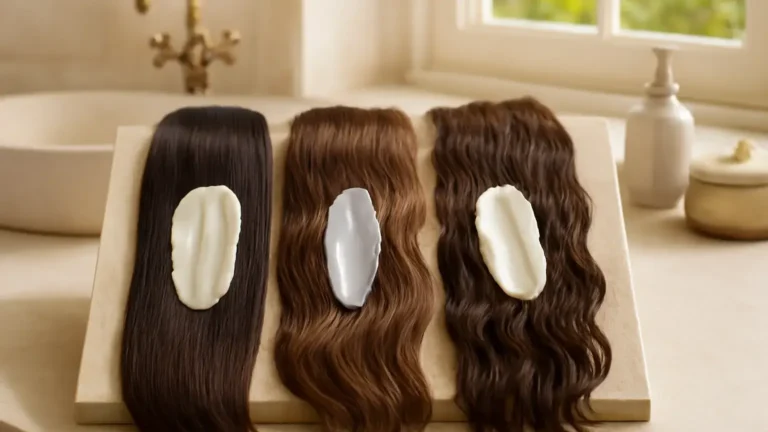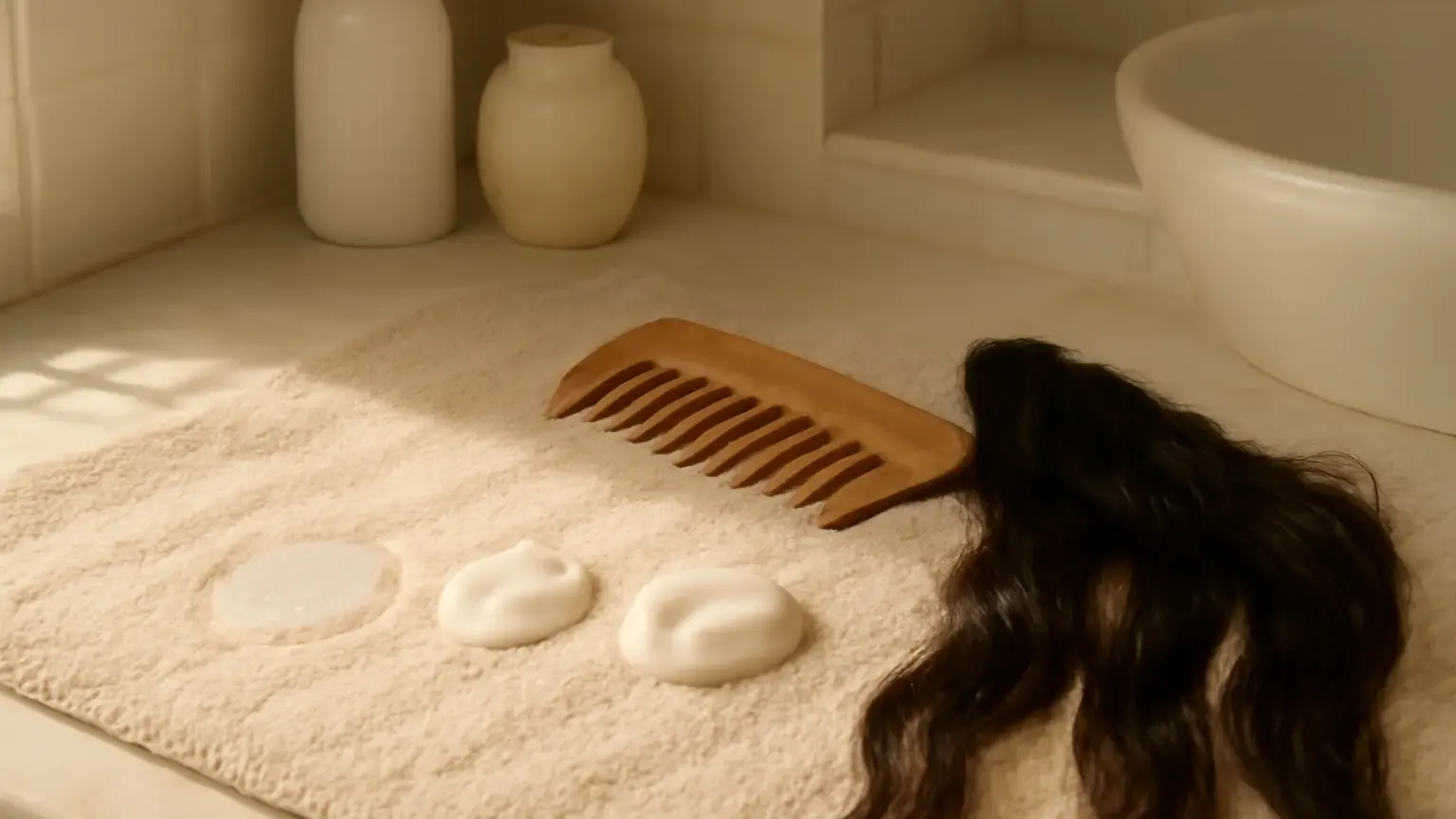
Hair porosity and leave in conditioner choices become simpler when you match product weight to how your cuticle absorbs and holds water. This guide is for anyone with straight, wavy, curly or coily hair who is unsure whether to use a mist, milk or cream. Start light for low-porosity or fine hair, choose a balanced lotion for medium porosity, and use a richer leave-in for high porosity—then adjust the amount for humidity, dryness and buildup.
Leave-in conditioner is not a single type of product. It can be a watery spray, a light milk, a lotion or a dense cream, and each format behaves differently on the hair. The right choice depends on porosity, strand thickness, density, styling habits and the weather where you live.
What hair porosity means for leave-in conditioner
Hair porosity describes how easily the outer cuticle allows water and cosmetic ingredients in, and how well the strand retains moisture afterwards. It is influenced by genetics, but colouring, heat styling, chemical processing, sun exposure and friction can change how the hair behaves.
- Low porosity hair: The cuticle is relatively compact. Water and heavy products may sit on the surface, leaving hair coated or limp.
- Medium porosity hair: Hair usually absorbs and retains moisture with less effort. It often tolerates a wider range of leave-in textures.
- High porosity hair: The cuticle is more raised or damaged, so hair may absorb water quickly but lose it just as fast. It often benefits from richer conditioning and sealing.
Porosity is only one decision factor. Fine hair can become weighed down even when it is high porosity, while thick, dense hair may need more product even when it is low porosity. Treat the categories as a starting point, then judge the finish after drying.
Leave-in conditioner by hair porosity: the quick choice
| Hair behaviour | Best starting format | Typical amount | What to watch |
|---|---|---|---|
| Low porosity | Mist, spray or lightweight leave-in conditioner | 1–2 sprays per small section, or a pea-sized amount for shoulder-length hair | Coating, waxiness and limp roots |
| Medium porosity | Milk or balanced lotion | 1–2 peas per section, adjusted for density | Dry ends or loss of volume |
| High porosity | Creamy leave-in conditioner, often followed by a sealant | 2–4 peas per section, or more for very dense hair | Persistent roughness, tangling and moisture loss |
These amounts are deliberately conservative. Apply to soaking-wet or very damp hair, spread the product between your palms and add more only where the ends still feel rough. Hair that is fine, short or low density usually needs less than hair that is long, thick or tightly curled.
Choosing the right weight for each porosity level
Low porosity hair
Choose formulas that spread easily without leaving a buttery film. A lightweight leave in conditioner in a spray or milk format is often easier to distribute than a thick butter. Apply from mid-lengths to ends, rather than placing a large amount near the scalp.
For low porosity hair, water-based formulas can be a practical first step. Ingredients such as light conditioning agents, aloe or modest amounts of humectants may support softness, but the whole formula matters more than one ingredient on the label. If hair feels coated, use less product and consider occasional clarifying according to your normal routine.
Medium porosity hair
Medium porosity hair is usually the most flexible. A lotion, milk or moderate cream can work, depending on whether your strands are fine or coarse. If the hair feels soft but lacks definition, reduce the amount before changing the product. If the ends feel dry after styling, a slightly richer texture may be useful on wash day.
People with medium porosity hair do not automatically need frequent protein treatments. Rotate conditioning products based on how the hair feels, and avoid adding several new products at once. This makes it easier to identify what improves softness and what contributes to hair product buildup.
High porosity hair
High porosity hair often benefits from a richer cream that helps smooth the cuticle and reduce friction during detangling. A leave-in can be followed by a small amount of gel or oil if your hair loses moisture quickly. However, more product is not always better; excess layering can create stiffness, residue and dullness.
If high porosity hair is coloured, heat-styled or prone to breakage, handle it gently and use a wide-tooth comb on damp hair. Protein-containing products may suit some damaged hair, while others prefer protein free hair products. Neither choice should be treated as universal: observe whether the hair becomes stronger and smoother or unusually hard and brittle.
How to apply leave-in conditioner without overloading hair
- Start with clean, conditioned hair. Press out excess water instead of rubbing with a towel. Leave-in works most evenly when hair is damp.
- Divide by density. Split thick or curly hair into four to eight sections. Fewer sections are enough for fine, short or straight hair.
- Use a small first dose. Rub the product between your palms, then smooth it over the mid-lengths and ends. Keep heavy creams away from the roots unless the scalp area is specifically dry and the product is suitable.
- Detangle gently. Use fingers or a wide-tooth comb, moving from the ends upwards. Stop when the product is distributed; repeated combing can increase friction.
- Decide whether to layer. Add styling gel for hold or a tiny amount of oil for sealing only if the initial leave-in does not give enough slip or moisture.
- Let the hair dry and assess it. A good amount should leave hair flexible, smooth and manageable—not greasy, sticky or flat.
Layering: when to use the LOC method for hair
The LOC method for hair usually means applying liquid or leave-in, then oil, then cream. Some routines reverse the final two steps. The principle is simple: add water-based moisture first, then use richer products to slow moisture loss.
For low porosity hair, a full three-step routine may be too heavy. Try leave-in alone, or leave-in followed by a small amount of lightweight styling product. Medium porosity hair may need only two layers. High porosity hair may respond better to leave-in plus cream, with oil used sparingly on the ends.
Layering is particularly useful for curly and coily textures, but it is not compulsory. If hair looks oily before the next wash, feels difficult to re-wet or loses movement, remove one layer rather than adding more water or more product.
Adjusting your routine for Indian weather
Humid weather
During monsoon or in coastal areas, humid weather hair care often requires a lighter hand. Hair can absorb moisture from the air and become fluffy, while heavy creams may feel sticky. Use a smaller amount of leave-in, choose a light lotion and consider a humidity-resistant styling product if frizz is your main concern. Avoid piling on oil simply because the ends feel rough immediately after application.
Dry climate and indoor air-conditioning
In dry climate hair care, hair may need more conditioning and better protection from friction. Apply leave-in to damp hair, give extra attention to the ends and use a richer cream if a mist disappears too quickly. A soft satin or silk-like pillow covering and gentle detangling can also reduce mechanical dryness without adding another cosmetic layer.
Hard water and frequent washing
Hard water can leave hair feeling rough or coated, but that sensation does not prove a porosity category. If the issue persists, discuss a suitable chelating or clarifying routine with a qualified hair professional, especially if your hair is coloured or chemically treated. Always follow with conditioner because aggressive or overly frequent cleansing can increase dryness.
Signs your leave-in is too light, too heavy or simply mismatched
- Too light: Ends still feel rough soon after drying, tangles return quickly, or curls lose definition despite using enough water.
- Too heavy: Hair looks greasy, sticky or flat; roots lose volume; strands take unusually long to dry.
- Too much buildup: Hair feels coated even after washing, products stop spreading, or the surface looks dull and waxy.
- Possible formula mismatch: Hair becomes unusually stiff, rough or brittle after repeated use of a protein-rich product.
Change one variable at a time: amount, application area, product texture or layering step. This is more reliable than replacing the entire routine after one disappointing wash.
Common mistakes to avoid
Applying a large amount to dry hair is a frequent cause of greasiness and uneven distribution. Another mistake is treating a porosity test—such as floating a strand in water—as a definitive diagnosis. Cleanliness, product residue and strand condition can affect the result. Hair behaviour over several washes is more useful than a single home test.
Do not assume that every high porosity routine needs oil, or that every low porosity routine must avoid cream completely. Also avoid using leave-in conditioner as a substitute for rinsed conditioner when your hair needs thorough conditioning. Leave-in products are designed to remain in small amounts; they are not always concentrated enough to replace a rinse-out formula.
Hair porosity leave-in guide: final buying checklist
Before purchasing, check five things: your porosity pattern, strand thickness, hair density, preferred finish and local climate. Choose a spray or milk if your hair is fine, easily weighed down or low porosity. Choose a lotion if you have medium porosity hair and want everyday softness. Choose a cream if your hair is high porosity, coarse or quick to lose moisture—but begin with a small amount.
The best hair porosity and leave in conditioner match is the one that leaves hair comfortable and flexible between washes. Reassess when the season, colour treatment, styling frequency or water quality changes. If persistent severe breakage, scalp discomfort or sudden hair loss concerns you, consult a dermatologist rather than relying on a leave-in product to address it.
Takeaway: Start with the lightest texture likely to meet your hair’s needs, apply it to damp lengths, and increase weight or layering only when the hair still loses moisture. This approach keeps the hair porosity and leave in conditioner decision practical instead of rigid.
Products that may help with this routine
Choose only what fits your skin, hair or personal needs. Use the links below to view current options on Amazon India.
Frequently Asked Questions
What is the best leave in conditioner for low porosity hair?
A mist, spray or lightweight milk is usually the best starting point because low porosity hair can become coated by dense creams. Apply a small amount to damp mid-lengths and ends, then increase only if the hair remains dry.
How much leave in conditioner should I use for high porosity hair?
Begin with about two to four pea-sized amounts divided across the sections of shoulder-length hair, adjusting for density and length. Apply on damp hair and add more only to areas that still feel rough.
Can leave in conditioner cause buildup on low porosity hair?
Yes. A heavy formula, too much product or frequent layering can leave low porosity hair waxy, dull or flat. Use less, keep it away from the roots and clarify occasionally if your normal routine allows.
Should medium porosity hair use leave in conditioner?
It can, especially when the hair is dry, tangled, curly or exposed to heat. Medium porosity hair often works well with a balanced milk or lotion, but the amount should reflect strand thickness and density.
What is the best leave in conditioner for curly hair in humid weather?
Choose a lightweight conditioning formula that provides slip without a greasy film, then pair it with a suitable styling product for hold. Use less during humid weather and assess whether the hair becomes sticky or loses definition.
How should I layer leave in conditioner and hair oil?
Apply leave-in to damp hair first, allow it to spread through the lengths, and use only a few drops of oil on the ends if they still lose moisture. Fine or low porosity hair may need the leave-in alone.