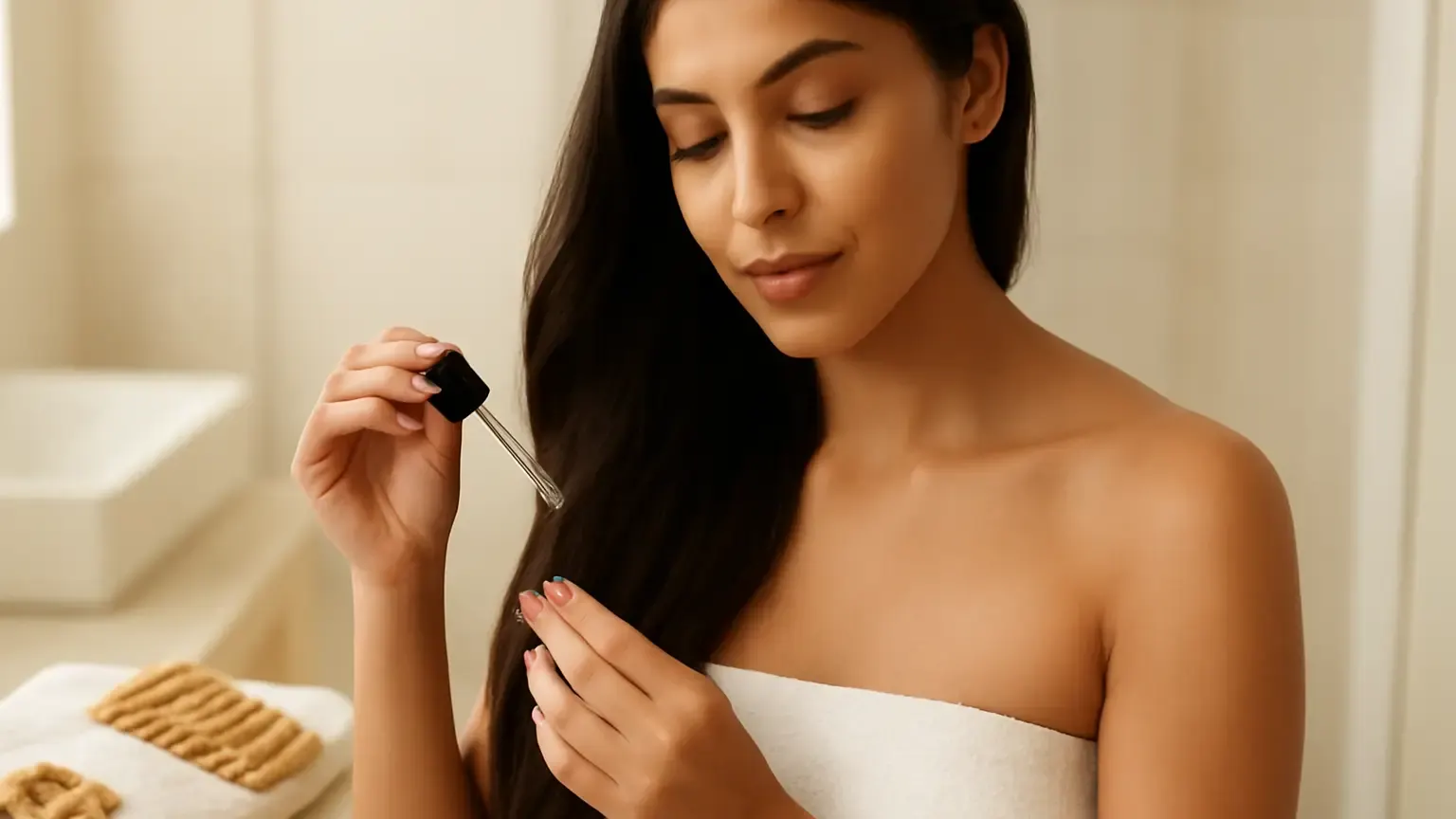
Hair porosity and oils are easiest to manage when you match the oil’s weight to how quickly your strands absorb and lose water: use a small amount of a lightweight oil for low-porosity or fine hair, a balanced amount for medium porosity, and a richer pre-wash layer for dry or high-porosity lengths. This guide helps Indian haircare shoppers choose a practical routine without creating buildup.
Hair porosity describes how easily the cuticle layer allows water and products into the hair shaft, and how well the strand holds on to that moisture. It is influenced by genetics, but heat styling, colouring, chemical services, sun exposure and repeated friction can change how hair behaves over time.
Porosity is not the same as hair thickness. Fine, medium and coarse hair can each be low, medium or high porosity. Your best oil choice also depends on density, scalp comfort, climate, wash frequency and whether your hair is straight, wavy, curly or coily.
How hair porosity changes your oiling routine
Oil does not add water to the strand. Instead, it can reduce friction, slow moisture loss and make hair feel smoother. Used before shampooing, it may also help limit the rough, stripped feeling that some people notice after washing. The right amount matters more than using a particularly exotic oil.
| Porosity | Typical behaviour | Useful oil approach |
|---|---|---|
| Low | Water and products may sit on the surface; hair can take time to become fully wet. | Lightweight oil, small quantity and shorter pre-shampoo contact time. |
| Medium | Usually absorbs and retains moisture reasonably well, but may become dry with heat or over-washing. | Balanced oiling with moderate quantity and a regular wash schedule. |
| High | Absorbs water quickly but may lose it quickly; frizz, roughness and tangling may be more noticeable. | Richer pre-wash oiling, careful sectioning and consistent conditioning. |
Low-porosity hair: choose lightness over layering
Low-porosity strands have a cuticle structure that tends to resist water and product penetration. A rich oil can therefore leave the hair looking flat, sticky or greasy even when the ends feel dry. If your hair takes a long time to become wet in the shower and products seem to sit on top, a low porosity hair oil routine should be especially restrained.
Try lightweight hair oils such as argan, grapeseed, jojoba or sunflower oil if they suit your hair and scalp. These are starting points, not requirements; the best choice is the one that spreads easily and rinses without a heavy film. Use around a few drops for short or fine hair, or up to a teaspoon for longer, denser hair. Focus on the mid-lengths and ends rather than repeatedly coating the scalp.
Low-porosity pre-shampoo method
- Detangle gently and divide dry hair into two to four sections.
- Warm a small amount between your palms; do not heat oil until it is hot.
- Apply a thin layer to the lengths and ends.
- Leave it for about 20 to 45 minutes, then shampoo thoroughly.
- Use conditioner if the hair still feels rough after rinsing.
For low porosity hair, oiling once every one to two weeks may be enough. If your roots become limp or your hair feels waxy, reduce the quantity or frequency before changing oils. A gentle wash routine and occasional clarifying shampoo for buildup can be more useful than adding another treatment.
Medium-porosity hair: maintain balance
Medium-porosity hair generally accepts water and products without extreme resistance or rapid moisture loss. It may still become dry in strong sun, hard-water areas, humid weather or after frequent heat styling. This is where medium porosity hair care benefits from consistency rather than a complicated oil blend.
A small to moderate amount of coconut, almond, sesame, jojoba or argan oil may work, depending on your texture and tolerance. Coconut oil can feel strengthening or smoothing for some people but stiff or dry for others, so treat it as an optional experiment rather than a universal answer. A teaspoon is often sufficient for shoulder-length, medium-density hair; adjust down for fine strands and up slightly for very dense hair.
For a simple routine, oil the lengths before washing every one to two weeks. Leave it on for 30 minutes to two hours, then shampoo according to how much oil you applied. If your hair is regularly exposed to colour, straightening or hot tools, a pre-shampoo layer may be useful more often, but it should not replace conditioner or leave-in care.
High-porosity hair: use richer protection without overloading
High-porosity hair often wets quickly and dries quickly. Raised or damaged cuticles can contribute to frizz, tangling and uneven moisture retention. A high porosity hair oil routine can make the lengths feel more manageable, particularly when the hair is bleached, coloured, heat-styled or naturally very curly.
Richer options such as olive, avocado, sesame, mustard or coconut oil may suit some high-porosity textures, while others prefer a blend that includes a lighter oil. Mustard oil has a strong aroma and may feel irritating for some scalps, so patch-test a small area and stop if discomfort develops. Avoid applying very hot oil, vigorous massage or large quantities to a sensitive scalp.
A protective high-porosity pre-wash routine
- Apply oil to lightly damp or dry lengths, depending on which method gives you less friction.
- Work in sections, giving extra attention to porous ends without saturating them.
- Leave the oil on for 30 minutes to two hours rather than sleeping in a heavy coating by default.
- Shampoo the scalp and let the lather pass through the lengths; avoid rough rubbing.
- Follow with conditioner and detangle from the ends upward.
How often should you oil high porosity hair? Start once weekly if your hair is dry or chemically treated, then adjust based on softness, rinse-out ease and scalp comfort. If the hair starts feeling coated, alternate oiling weeks and prioritise a moisturising conditioner or leave-in product instead.
How to identify your porosity without relying on one test
The popular glass-of-water float test is not a dependable diagnosis because surface oil, residue, strand thickness and trapped air can affect the result. Instead, use a pattern of observations over several wash days. Ask:
- Does water sit on the hair before it becomes fully wet?
- Does the hair take a long time to dry, or dry unusually fast?
- Do products sit on the surface, or disappear quickly but leave the hair dry again?
- Does the hair remain smooth after conditioning, or become rough and frizzy soon afterwards?
This practical hair strand porosity test is only a guide. Porosity can vary between roots and ends, and damaged ends may be more porous than new growth. If you are wondering how to tell if hair has low porosity, look for repeated product buildup, slow wetting and a tendency for rich products to weigh the hair down rather than relying on one strand in a glass.
Quantity, timing and signs of buildup
The ideal oil quantity for hair is enough to create slip without making the strands look saturated. Begin with a few drops, spread them between your palms and add more only where needed. Dense, coarse or very long hair may need more than fine or short hair, but more does not automatically mean better protection.
Common signs of hair oil buildup include greasy roots soon after washing, strands that clump together, dullness, a waxy coating, reduced volume and hair that seems resistant to water. Persistent itch, burning, redness or flaking is not simply a buildup problem; stop using the product and consider speaking with a dermatologist, especially if symptoms continue.
To reset mild buildup, wash the scalp thoroughly with a suitable shampoo and avoid adding oil until the hair feels clean and responsive. A clarifying product can be used occasionally if your usual routine leaves residue, but frequent clarifying may make dry or high-porosity hair feel rough. Follow the label and balance it with conditioner.
Choosing the best hair oil for porosity: a practical checklist
- Start with texture: Fine or low-density hair usually needs less product, even when its porosity is high.
- Match the weight: Choose lightweight hair oils for easily weighed-down strands and richer oils for dry, coarse or highly porous lengths.
- Consider the purpose: Pre-shampoo oiling is mainly for slip and reduced wash-day friction; it is not a substitute for hydration.
- Check the rinse: The right oil should wash out without repeated aggressive shampooing.
- Watch the scalp: Keep lengths-focused oiling separate from scalp massage if your scalp becomes oily, uncomfortable or congested.
- Review the climate: Humidity may increase frizz, while dry indoor air or strong sun may increase the need for conditioning and protection.
When comparing the best hair oil for porosity, do not choose solely by the oil’s name. Compare the product’s texture, fragrance, added ingredients, your wash frequency and your strand response. A simple single-oil formula can be easier to evaluate than a heavily fragranced blend containing many potential irritants.
Common oiling mistakes to avoid
- Applying oil to the scalp and lengths every day without checking whether hair actually needs it.
- Leaving a heavy layer overnight because longer contact time is assumed to be more effective.
- Using very hot oil or scratching the scalp during massage.
- Adding oil to mask severely dry hair while skipping conditioner and gentle detangling.
- Using a strong clarifying wash repeatedly to remove excess oil, then adding more oil to correct the resulting dryness.
Takeaway: let your strands set the weight
Hair porosity and oils are best managed through observation, not rigid rules. Low-porosity hair usually benefits from a light, sparing pre-shampoo layer; medium-porosity hair can follow a balanced routine; and high-porosity hair may need richer oiling paired with conditioning and gentle handling. Start small, wash thoroughly and change one variable at a time. If your hair feels coated, reduce the oil before assuming you need a stronger shampoo.
Products that may help with this routine
Choose only what fits your skin, hair or personal needs. Use the links below to view current options on Amazon India.
Frequently Asked Questions
What is the best hair oil for low porosity hair?
A lightweight oil such as argan, grapeseed, jojoba or sunflower may suit low-porosity hair better than a heavy layer. Start with a few drops on the lengths, leave it on for 20 to 45 minutes before shampooing and adjust based on buildup or limpness.
How often should you oil high porosity hair?
Begin with once-weekly pre-shampoo oiling if the hair is dry, coloured or heat-damaged. Use a moderate amount, rinse thoroughly and reduce the frequency if the hair feels coated, greasy or difficult to cleanse.
Can oiling help dry high porosity hair?
Oiling may reduce friction and help slow moisture loss, so it can make dry high-porosity hair feel smoother. It does not add water to the strand and should be paired with conditioner, gentle detangling and suitable leave-in care.
How can I tell if my hair has low porosity?
Look for a consistent pattern of water taking time to penetrate, products sitting on the surface, slow drying and rich products causing limpness or buildup. A single float test is not reliable enough to determine porosity.
What are the signs that hair oil is causing buildup?
Greasy roots, dull or waxy strands, clumping, reduced volume and hair that feels resistant to water can indicate buildup. Wash thoroughly, pause oiling and consider occasional clarifying if your normal shampoo does not remove the residue.


