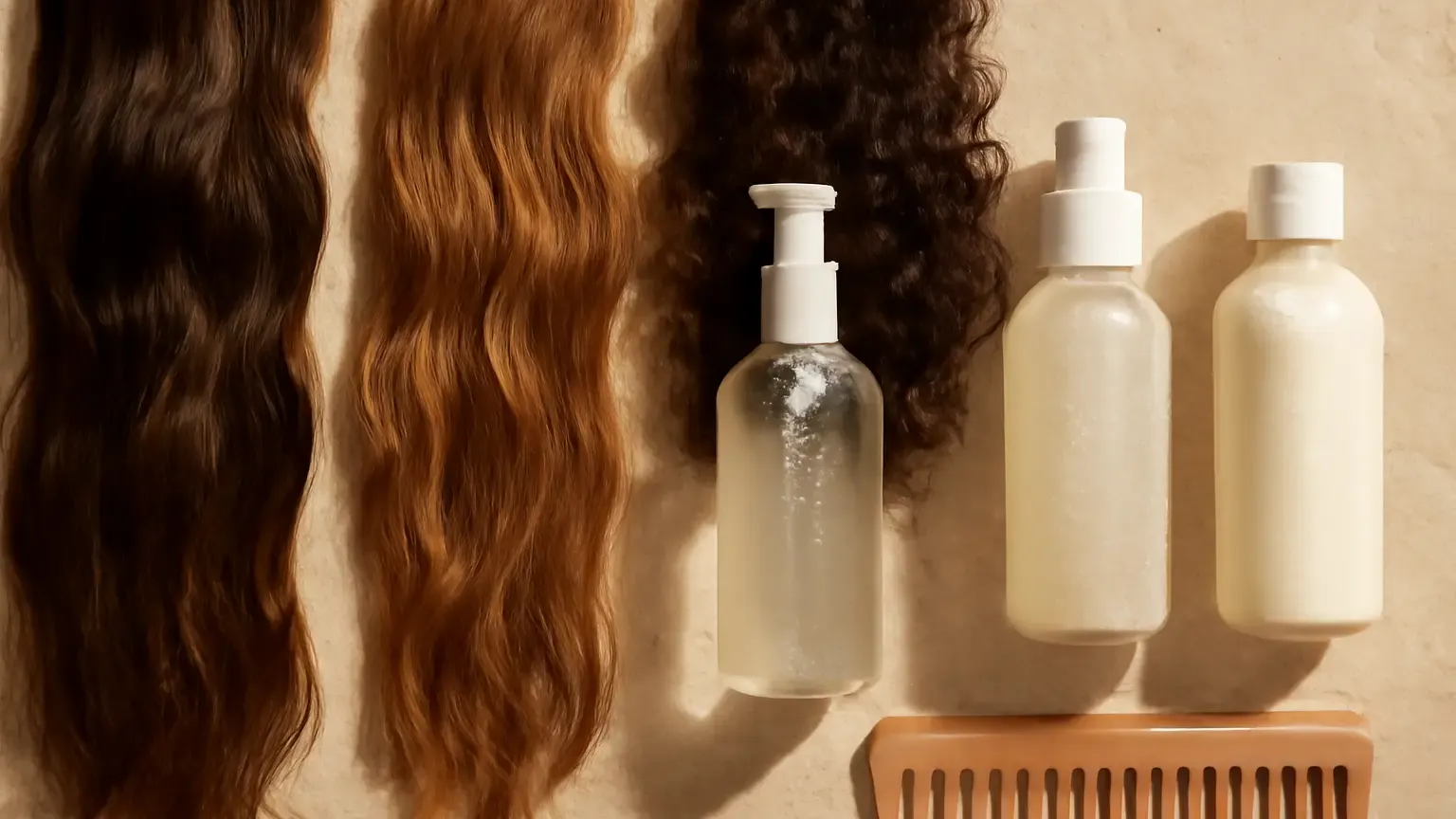
Hair porosity and moisture are easiest to manage when product weight matches how quickly your strands absorb and lose water. This guide is for anyone with dry, frizzy, limp or buildup-prone hair who wants a practical comparison—not a laboratory label. Start with a water-based leave-in and a small amount of styling product, then adjust based on absorption, hair drying time, softness and residue rather than relying on a home porosity test alone.
Hair porosity describes how easily the cuticle allows water and conditioning ingredients to enter and leave the hair shaft. It is useful as a styling framework, but it is not a permanent diagnosis or a precise test result. Porosity can vary along one head of hair, and chemical processing, bleaching, heat and friction may alter the outer cuticle.
The most useful question is not “Which porosity am I?” but “How does my hair behave after washing and conditioning?” Hair that takes a long time to get fully wet, feels coated easily and dries slowly may need lighter layers. Hair that wets quickly, dries quickly, tangles or feels rough may benefit from richer conditioning and better sealing. Medium-porosity hair usually sits between these extremes.
Hair porosity and moisture: what product weight should you choose?
Product weight means the combined richness of your cleanser, conditioner, leave-in, cream, oil and styling product. A rich formula is not automatically better for dry hair. The right choice depends on how your strands respond after the product has had time to settle.
| Hair behaviour | Start with | Reduce or add |
|---|---|---|
| Low absorption, limp roots, residue | Water-based hair products, lightweight conditioner and a small amount of gel | Reduce thick oils, butters and repeated leave-in layers |
| Balanced absorption and softness | Medium-weight conditioner, leave-in or cream as needed | Adjust based on season, length and styling frequency |
| Fast moisture loss, rough ends, frizz | Richer conditioner, cream and a light sealing layer | Add conditioning gradually; avoid piling on protein or oil without assessing feel |
These are starting points, not strict categories. Fine hair may become weighed down even when it is porous, while coarse hair may tolerate more conditioning even when it is less porous. Density, curl pattern, climate and wash frequency matter too.
How low, medium and high porosity hair often behave
Low porosity: slow absorption and quick buildup
Low-porosity hair often resists water at first, especially when coated with styling residue or natural oils. Conditioner may sit on the surface, and the hair can take a long time to dry. For low porosity hair products, begin with a mild cleanser, a light rinse-out conditioner and a small amount of leave-in. Applying conditioner to thoroughly wet hair can help it spread without requiring a heavy layer.
Warm water during washing may help soften surface residue, but very hot water can leave the scalp or lengths uncomfortable and dry. Avoid treating every dry-feeling day with more cream. If your roots look flat, strands feel waxy or curls stop separating, the issue may be hair product buildup rather than a lack of moisture.
Medium porosity: flexible but still easy to overload
Medium porosity hair commonly absorbs conditioner without much resistance and retains softness reasonably well. A medium porosity hair routine can be simple: cleanse the scalp, condition the lengths, apply one leave-in or styling product and review the result on the next wash day.
This hair type usually does not need an elaborate layering system. Use a lightweight hair moisturiser when the hair feels dry, and reserve richer creams for longer, colder or more humid days. If the hair becomes stiff after repeated strengthening products, reassess your protein moisture balance instead of adding more layers.
High porosity: quick absorption and faster moisture loss
High porosity hair care often focuses on retaining the water that enters easily. Hair may feel rough after drying, become frizzy in humid weather, tangle at the ends or lose definition soon after styling. This can occur with naturally raised cuticles or with damage from bleaching, colouring, frequent heat or friction.
Richer conditioners, leave-ins and creams may be useful, but “more” is not the same as “better.” Apply products to wet hair, smooth them through in sections and finish with a compatible gel or a small amount of oil if needed. For best products for high porosity hair, look for formulas that provide conditioning and slip; choose by texture and response rather than by a porosity label on the bottle.
Application order: use water first, then support moisture retention
Order matters because a product cannot replace water that was never added to the hair. A practical sequence is:
- Cleanse the scalp: Use a cleanser suited to your oiliness, styling habits and wash frequency. Let the lather rinse through the lengths rather than scrubbing them aggressively.
- Condition thoroughly: Concentrate conditioner from mid-length to ends. Detangle gently with fingers or a wide-tooth comb if your hair tolerates it.
- Apply leave-in to wet or very damp hair: Start with less than you think you need, especially on fine or low-porosity hair.
- Add a styler: Use gel, mousse or cream according to the hold and finish you want. Scrunch or smooth in sections.
- Seal only if useful: A small amount of oil or a richer cream can reduce the dry feel of porous ends, but it should not be mandatory for every routine.
The LOC method for hair—leave-in, oil, cream—is one possible layering order, not a rule for everyone. Some hair does better with leave-in followed by gel; some becomes greasy when oil is applied before cream. Change one step at a time so you can identify what helped.
Drying time and buildup: the signals that matter most
Hair drying time can provide a useful clue, but it is not a porosity diagnosis. Very dense hair, cool weather, high humidity, long hair and heavy styling products can all extend drying time. Conversely, a small amount of fine hair can dry quickly without being highly porous.
Notice the pattern over several wash days:
- Long drying plus flatness: Try less product, lighter textures and better sectioning during application.
- Fast drying plus roughness: Add more conditioning slip and use a product that helps reduce moisture loss.
- Sticky, dull or coated feel: Pause extra layers and consider a suitable clarifying shampoo for buildup, following it with conditioner.
- Dry ends but oily or weighed-down roots: Keep richer products away from the scalp and focus them on the oldest lengths.
How to tell if hair has product buildup? Look for a recurring film, reduced volume, dullness, strands that repel water, or styling products that stop working as expected. These signs can also have other explanations, so make a small routine change rather than making a firm porosity judgement from one wash.
How often should you deep condition porous hair?
There is no universal schedule. Many people can begin with deep conditioning every one to two weeks, then adjust according to feel. Hair that is coloured, bleached, heat-styled or prone to tangling may appreciate conditioning more regularly. Fine hair or hair that becomes limp may need a shorter contact time or a lighter formula.
Use deep conditioning for porous hair when the lengths feel rough, dry or difficult to detangle, not simply because a chart assigns a label. If a mask leaves the hair soft at first but greasy or flat after drying, use less, rinse more thoroughly or switch to a lighter conditioner. A protein-containing treatment can be helpful for some damaged-feeling hair, but frequent use may make strands feel rigid. Alternate carefully and judge the result after the hair is fully dry.
Common mistakes when building a moisture routine
- Trusting the float test as a diagnosis: A strand’s surface oils, styling residue, water temperature and density can affect the result. Use home tests only as casual observations.
- Choosing the richest product for the driest hair: Heavy formulas can hide the real issue and create buildup, particularly on fine or low-porosity strands.
- Changing several products at once: Keep the cleanser and conditioner stable while testing one leave-in or styler.
- Applying oil to dry hair and expecting hydration: Oil can help reduce friction and support sealing, but it does not provide water.
- Ignoring the scalp: Keep leave-ins, oils and creams mainly on the lengths unless a product is specifically intended for the scalp.
A simple two-week adjustment plan
For the first wash, use a moderate amount of conditioner and one styling product on wet hair. Record how easily the hair absorbs water, how long it takes to dry, whether the roots stay light and how the ends feel the next morning. On the second wash, change only one factor: reduce product if the hair is coated, or add a richer conditioning layer if the ends feel rough.
Repeat the observation for two weeks rather than judging one humid day or one unusually sweaty commute. Your routine may need seasonal changes in India: humid monsoon weather can increase frizz and drying time, while dry winter air or frequent indoor air-conditioning may make the lengths feel less comfortable.
Takeaway
A useful hair porosity moisture balance comes from matching product weight to behaviour: lighter, water-focused layers for hair that gets coated easily; flexible medium-weight conditioning for balanced hair; and richer, better-sealed layers for hair that loses softness quickly. Treat porosity as a changing styling guide, not a diagnosis. If hair fall, scalp irritation, persistent breakage or severe dryness continues, seek advice from a dermatologist or qualified healthcare professional.
Products that may help with this routine
Choose only what fits your skin, hair or personal needs. Use the links below to view current options on Amazon India.
Frequently Asked Questions
How do you moisturise low porosity hair?
Use water-based hair products, apply conditioner to very wet hair, start with a small amount of leave-in and avoid stacking heavy oils, butters and creams. If the hair feels coated or flat, review buildup before adding more moisture.
What are the best products for high porosity hair?
Look for conditioning formulas that provide slip and help reduce moisture loss, such as a richer conditioner, leave-in cream or gel. Apply products to wet hair and choose by your hair’s response, not by a label alone.
How often should you deep condition porous hair?
Begin with every one to two weeks and adjust. Increase conditioning when the lengths feel rough or tangle easily, but reduce frequency or use a lighter formula if the hair becomes limp or coated.
Can hair porosity change over time?
Yes. The outer cuticle can be affected by bleaching, colouring, heat, friction, weather and product buildup. Porosity may also vary between roots and ends, so reassess hair behaviour rather than relying on one permanent category.
What is the best routine for medium porosity hair?
Use a simple routine: cleanse the scalp, condition the lengths, apply one leave-in or styling product and adjust based on softness, volume and drying time. Medium porosity hair usually does not need multiple rich layers.
How can you tell if hair has product buildup?
Recurring dullness, a coated or sticky feel, reduced volume, water that seems to sit on the strands and styling products that stop performing can suggest buildup. Clarify appropriately, then condition and reassess rather than assuming it is a porosity problem.