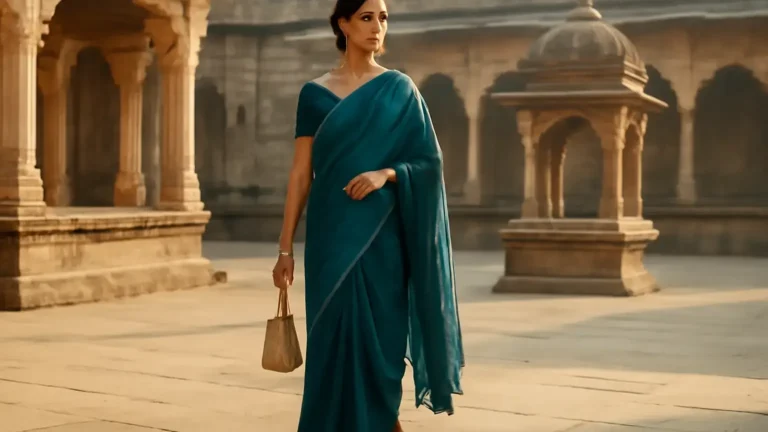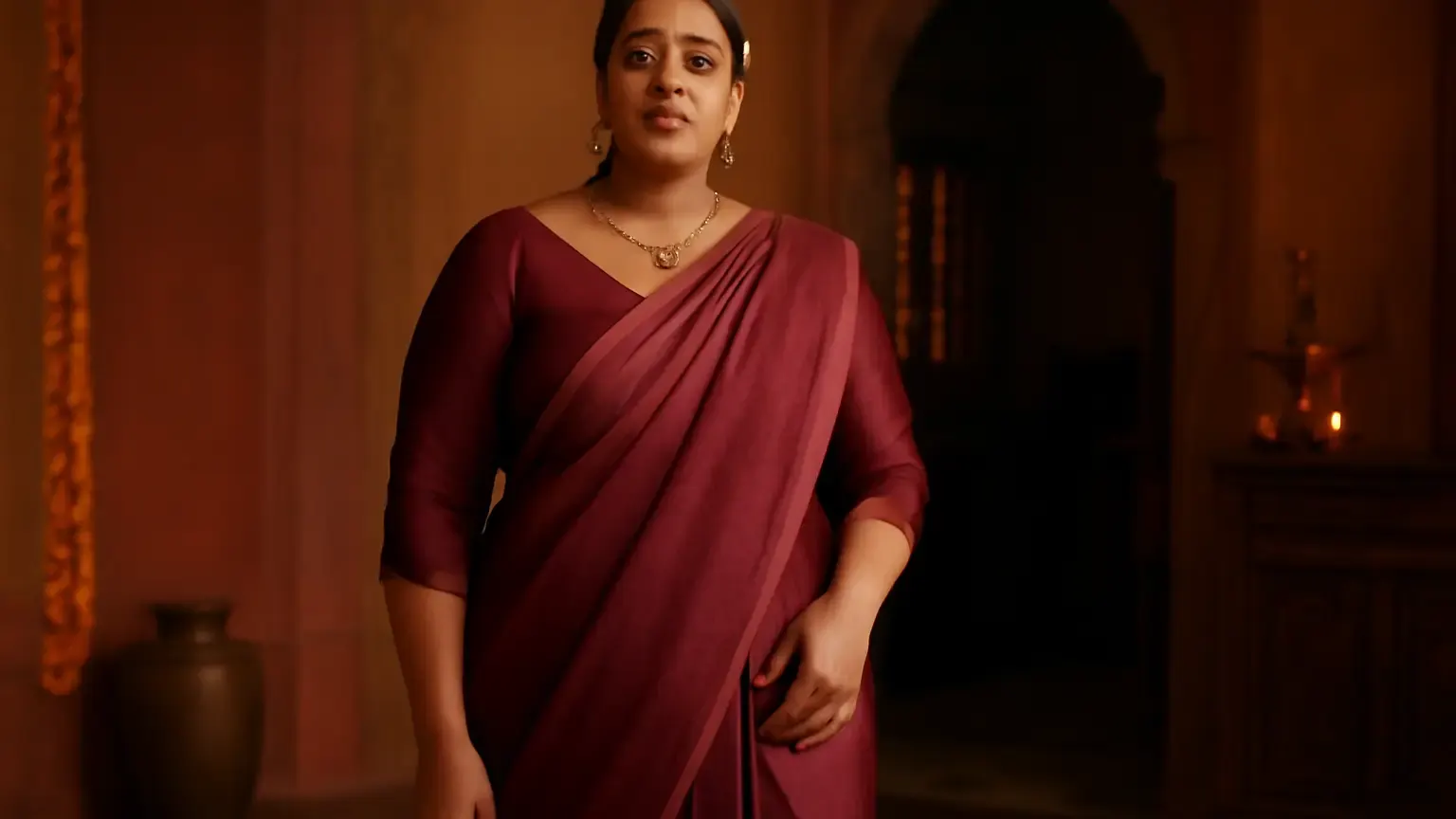
Festive fashion for apple shaped women works best when it creates gentle vertical movement, opens the neckline and adds controlled structure without restricting comfort. This guide is for women who carry more fullness around the midsection and want practical choices across sarees, suits, lehengas and Indo-western looks. The key decision is not hiding the waist; it is balancing the outfit through proportion, drape, hem length, fabric fall and well-placed detail.
Apple-shaped bodies often have a fuller midsection, a relatively broad upper body, slimmer legs or arms, and less definition at the natural waist. These are general styling observations rather than fixed rules: every body is different, and fit should always take priority over a prescribed shape guide.
For festive dressing, balance usually comes from three elements: an open or elongated neckline, fabric that skims rather than clings, and details that guide the eye vertically. You can use these principles with a saree, salwar suit, anarkali, lehenga or contemporary Indian outfit without giving up colour, embellishment or personal style.
1. Start with necklines that open up the upper body
The neckline sets the visual direction of an outfit. A V-neck kurta, a modest scoop neck or a soft sweetheart shape creates an open space at the chest and can make the upper half look longer. These shapes are especially useful when the bodice has embroidery, mirror work or a dense print.
A shallow V is a practical choice for family gatherings or office celebrations because it looks polished without feeling too revealing. A collar with a narrow opening can also work, provided it does not sit tightly around the neck. If you prefer higher necklines, choose a clean jewel neck with a long pendant or an open jacket to introduce length.
How to apply it
- Choose embroidery that follows the neckline instead of spreading broadly across the chest.
- Pair a simple neck with statement earrings for festive wear, rather than adding a heavy necklace and a broad yoke together.
- Keep dupatta borders vertical or diagonal when possible; a wide horizontal border across the bust can add visual width.
2. Use saree drapes to create uninterrupted vertical movement
Sarees can be highly flattering when the fabric and pleat placement work together. For festive sarees for apple shape, look for materials with fluid fall, such as lightweight silk blends, crepe, georgette, soft satin or a supple cotton-silk. Very stiff fabric can stand away from the body and create extra volume at the midsection, while extremely clingy fabric may require more smoothing and adjustment.
Among useful saree draping tips, the first is to keep the front pleats narrow, even and pressed so they fall in a clean column. Place the pallu over one shoulder and let it fall in a long, relatively straight line. A pinned pallu offers security for dancing, serving food or moving between ceremonies; a loose pallu gives a softer, more relaxed effect.
Keep the blouse comfortable rather than excessively tight. A V, elongated U or wrap-inspired neckline can complement the saree, while three-quarter sleeves provide coverage without cutting the arm at its widest point. A blouse that ends at a visually comfortable point, rather than squeezing into the waist, will make the complete drape look more refined.
3. Choose silhouettes that skim instead of cling
The most versatile suit shapes are often straight-cut kurta sets, gently flared kurtas and A-line styles with controlled volume. A straight kurta creates two long side lines and works well with cigarette pants, straight trousers or a narrow palazzo. An A-line kurta can soften the midsection, but it should begin its flare gradually rather than expanding sharply from the bust.
Empire waist silhouettes can be comfortable when the seam sits just below the bust and the lower fabric falls freely. The important caveat is proportion: a very high seam with a large gathered skirt may look bulky, while a lightly gathered panel can create an elegant fluid line.
For festive outfits for apple body shape, compare the overall silhouette in motion. Sit down, lift your arms and walk a few steps before buying or tailoring. The outfit should not pull across the stomach, twist at the side seams or force you to keep adjusting the waist.
4. Add structure through one deliberate layer
Structured ethnic jackets are an effective way to add shape without relying on a tight waistband. A long jacket over a kurta, a sleeveless embroidered waistcoat or a sharply finished shrug can frame the body with two vertical edges. Select a layer that remains open or closes with one central fastening; multiple bulky buttons across the middle may create unwanted width.
For Indo-western festive outfits, try a longline jacket over a column dress, a kurta with a cropped but open vest, or a draped skirt with a tailored blouse and long shrug. Match the jacket and base outfit in similar tones for a streamlined result, or use a darker outer layer over a lighter base when you want clear definition.
Structure does not have to mean stiffness. A lined jacquard, light raw silk, crepe or soft brocade can hold the edge of a jacket while remaining easier to wear than heavy canvas-like fabric. Check the armhole and shoulder seam: a jacket that restricts movement will quickly become uncomfortable during a long celebration.
5. Balance hem lengths, bottoms and footwear
Hem placement changes the apparent proportion of the whole outfit. A kurta that ends at the widest part of the calf may make the lower body look broader, while a length that falls below the calf or near the ankle often creates a cleaner line. For many women, a knee-to-mid-calf straight kurta with narrow trousers is easy to style, but personal height and the outfit’s volume matter.
High waist ethnic skirts can work beautifully with a long, lightly fitted blouse or an open jacket, especially when the waistband is broad and comfortable. Avoid a narrow elastic or rigid band that digs into the stomach. If choosing a lehenga, consider a skirt with a smooth waistband, moderate flare and an embroidered vertical panel rather than dense horizontal work concentrated at the midsection.
Footwear also contributes to balance. A small heel, pointed flat or shoe in a similar tone to the lower garment can extend the line of the legs. Comfort remains essential: festive footwear should allow you to stand and walk naturally rather than altering your posture.
6. Select comfortable fabrics and place detail thoughtfully
Comfortable festive fabrics make styling easier because they allow the outfit to fall naturally. Look for breathable cotton-silk, soft silk blends, crepe, georgette, viscose, modal blends or lightweight brocade, depending on the season and event. In warm or humid Indian weather, an airy lining and breathable blouse can be more useful than an extra layer of embellishment.
Use detail to direct attention, not to create a single heavy focal point at the stomach. Embroidery along the neckline, sleeve cuff, shoulder, pallu border or lower hem can distribute interest. A tonal outfit with one bright accent—such as a jewel-toned dupatta or embellished sleeve—often looks more balanced than several competing contrasts.
Print scale matters too. Medium-scale motifs, scattered patterns and narrow vertical designs are generally easier to balance than a large, high-contrast motif placed directly over the midsection. This is a styling option, not a rule; if you love a bold print, wear it confidently and keep the cut clean.
How to build a balanced festive outfit in five minutes
- Choose the base: Start with a fluid saree, straight kurta set, lightly flared suit or smooth-skirted lehenga.
- Check the neckline: Prefer an open neckline or create length with a pendant, open dupatta or jacket.
- Inspect the middle: Make sure the waistband, seam or tuck lies flat and does not pinch when you sit.
- Add one layer or focal detail: Use a long jacket, a clean pallu, earrings or an embellished sleeve—not every statement piece at once.
- Test movement: Walk, sit, raise your arms and check the back view before finalising the look.
Common festive styling mistakes to avoid
- Over-layering: A heavy dupatta, jacket and dense blouse can overwhelm the frame. Choose one major layer and keep the others lighter.
- Ignoring fabric behaviour: A beautiful fabric may still feel uncomfortable if it clings, overheats or needs constant adjustment.
- Using a tight waistband to create definition: A smooth, broad waistband or an open jacket usually gives a better result than compression.
- Placing every detail at the centre: Spread embellishment across the neckline, sleeves, hem and pallu to encourage the eye to travel.
- Following shape rules too literally: Try the outfit in your own proportions. A trusted tailor can adjust the shoulder, bust, armhole and length more effectively than a generic size label.
A concise takeaway
The strongest festive fashion for apple shaped women combines an open neckline, a clean vertical line, gentle structure and fabric that feels good for hours. Start with the occasion and your comfort needs, then refine the drape, hemline and accessories. Whether you choose a saree, suit or Indo-western ensemble, balance should support confidence—not limit the colours, prints or silhouettes you enjoy.
Products that may help with this routine
Choose only what fits your skin, hair or personal needs. Use the links below to view current options on Amazon India.
Frequently Asked Questions
What are the best festive outfits for an apple body shape?
Straight-cut kurta sets, gently flared suits, fluid sarees with neat pleats, and lehengas with smooth broad waistbands are versatile choices. Look for open necklines, comfortable fabric and details that create vertical movement.
Which saree drape suits apple shaped women?
A neat front-pleat drape with a long, relatively straight pallu usually creates a clean vertical line. Lightweight silk blends, crepe, georgette and soft cotton-silk tend to fall more smoothly than very stiff fabrics.
What necklines flatter an apple body shape in ethnic wear?
A modest V-neck, elongated U-neck or soft sweetheart neckline can open the upper body and add length. If you prefer coverage, a clean jewel neck paired with a long pendant or open jacket can create a similar effect.
Are straight-cut kurta sets good for apple shaped women?
Yes. A straight-cut kurta creates long side lines and can skim the midsection without clinging. Pair it with straight trousers or a narrow palazzo, and check that the side seams remain smooth while sitting and walking.
How can apple shaped women style an ethnic jacket?
Choose one longline or open structured jacket over a simple base outfit. Similar-toned layers create a streamlined look, while a lightly tailored waistcoat or shrug adds shape without requiring a tight waistband.
Which fabrics are comfortable for festive Indian outfits?
Soft silk blends, crepe, georgette, viscose, modal blends, breathable cotton-silk and lightweight brocade can work well, depending on the weather and garment. Choose fabric with enough fall to skim the body and a lining that does not trap heat.