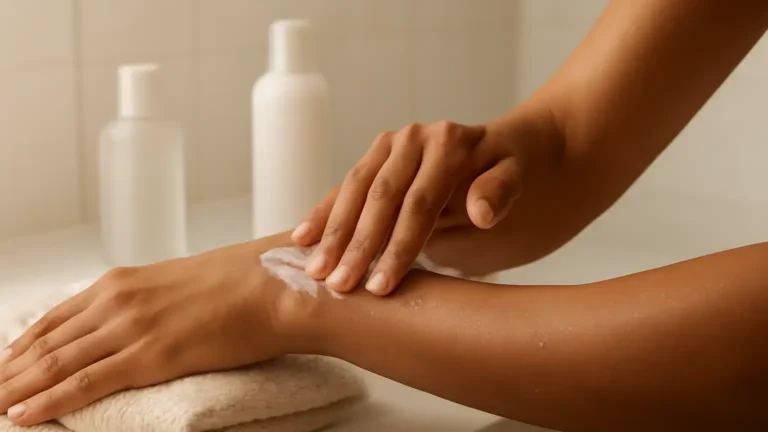
A dry skin body sunscreen should protect without leaving tightness, flakes or uneven streaks. This guide is for anyone with dry or ashy body skin choosing between lotion, milk and spray formats, especially in India’s bright, hot weather. The practical decision is simple: pick a hydrating broad-spectrum formula, apply enough to every exposed area over suitably moisturised skin, and reapply when sun, sweat or water removes the film.
Body sunscreen is easy to underestimate. Arms, neck, shoulders, hands, feet and legs may receive considerable sun exposure, yet they are often covered quickly with too little product or skipped altogether. Dryness makes the problem more visible: a formula can catch on flakes, settle into rough patches or look streaky when spread thinly.
The right approach is not simply to find the richest formula. You need a texture you can apply generously, a moisturising routine that does not interfere with protection, and a repeatable way to cover the areas that remain uncovered by clothing. These five checks can help you compare options and build a comfortable routine.
1. Check the texture: lotion, milk or spray
Texture affects how much product you will use and whether you can spread it evenly. For dry body skin, a body sunscreen lotion is often the easiest starting point because it gives you time to massage the product across larger areas. Look for a formula described as moisturising or comfortable rather than one that dries down extremely quickly.
A sunscreen milk for dry skin usually has a lighter, more fluid consistency. It can be useful in humid Indian weather or when you dislike the feel of a thick cream. However, fluid products may run between the fingers, so dispense them into your palm and work in one body section at a time.
A sunscreen spray for body can be convenient for the back of the arms, legs or quick top-ups. It should not be treated as a shortcut to adequate coverage. Spray generously into your hand before applying when possible, particularly near the face, and do not rely on a brief mist that disappears before the skin looks evenly coated.
2. Check the protection and finish
Choose a product labelled broad-spectrum, meaning it is designed to help protect against both UVA and UVB radiation. An SPF 30 or higher product is a practical everyday option for exposed body skin; people spending long periods outdoors may prefer a higher SPF. SPF is only one part of the decision, since the benefit depends on applying enough and repeating the application.
A hydrating body sunscreen may include ingredients such as glycerin, ceramides or squalane to support a more comfortable feel. These ingredients can make a difference when your skin becomes tight after bathing. Still, “hydrating” does not mean you can skip all moisturising if your skin needs it.
Finish matters too. A non-sticky sunscreen can be more pleasant for commuting, but an ultra-matte formula may feel drying on already rough skin. If the product pills, clings to flakes or leaves a heavy film under clothing, you are less likely to apply the amount required. Test a small area first and assess how it feels after several minutes.
3. Check your moisturiser and sunscreen layering
For many people, moisturiser and sunscreen layering works better than asking one product to solve both dryness and sun protection. After bathing, pat the skin dry rather than rubbing it vigorously. Apply a plain body moisturiser to dry areas, allow it to settle, and then apply sunscreen as the final skincare step on exposed skin.
How to layer without pilling
- Use a moderate amount of moisturiser instead of a thick, wet layer.
- Give it a few minutes to absorb before sunscreen application.
- Press and smooth the sunscreen over the skin rather than repeatedly rubbing the same spot.
- If two products roll into little flakes, try less moisturiser, a longer waiting time or a more compatible texture.
In the morning, sunscreen should generally be the last skincare layer on areas that will be exposed. Do not mix sunscreen into body lotion in your palm, because dilution and uneven distribution can reduce the reliability of the protective film.
4. Check the quantity and the areas you cover
Even an excellent body sunscreen for dry skin India shoppers choose will underperform if it is applied sparingly. There is no single spoon measurement that suits every body, so use enough to create an even, visible layer before it settles. A commonly used guide for the entire exposed body is approximately one shot-glass-sized amount, but the exact quantity depends on body size, clothing and how much skin is uncovered.
For daily application, divide the body into sections: left arm, right arm, front of the neck and chest, each leg, and the tops of the feet. Apply a little at a time, then add more where the skin still feels dry or looks uneven. Remember commonly missed sun protection for exposed areas:
- the backs of the hands and fingers;
- ears and the back of the neck;
- shoulders and forearms;
- the tops of the feet, especially with sandals;
- part lines or exposed scalp areas where appropriate hair-safe protection is available.
Clothing does not always cover as completely as expected. Sleeves can ride up, trousers can leave the ankle exposed, and dupattas or scarves can shift during travel. Cover the skin that is actually exposed rather than assuming a garment will remain in place.
5. Check for even application and reapplication
Patchy sunscreen application commonly happens when a large amount is placed in one area and dragged across too much skin. A better method is to dot the product across each section, spread it in two directions, and check the edges near sleeves and clothing. Do not forget that dry flakes can interrupt the film, so gentle regular moisturising can improve the surface before sunscreen is used.
For outdoor days, sunscreen reapplication matters as much as the first layer. Reapply according to the product directions, particularly after sweating, swimming, towelling or prolonged outdoor exposure. A water-resistant sunscreen body product may hold up better around water, but water resistance is not waterproof protection; it still needs to be reapplied after the stated period and after towel drying.
Sprays are useful for a top-up only when they deliver enough product over the whole area. If you can see obvious gaps, rub the product in gently and add more. Hands, forearms and the neck often need extra attention during a midday refresh because they are repeatedly washed or wiped.
How to choose for common dry-skin situations
| Situation | Useful format or feature | What to watch for |
|---|---|---|
| Flaky or ashy skin | Moisturising lotion with a comfortable, flexible finish | Fast-drying formulas that catch on flakes |
| Hot, humid commute | Light milk or lotion with broad-spectrum SPF | Heavy layers that encourage you to apply too little |
| Long outdoor activity | Higher SPF and water-resistant labelling when relevant | Skipping reapplication after sweat or water |
| Quick touch-ups | Spray format used generously and spread evenly | A short mist that leaves transparent gaps |
Common mistakes with dry body skin and sunscreen
- Applying only to the face: Hands, neck, arms and feet can be just as exposed during the day.
- Using a tiny amount to avoid stickiness: Choose a lighter texture instead of compromising coverage.
- Rubbing over a thick moisturiser: Excess layering can cause pilling and make the finish uneven.
- Applying only once before leaving home: Sweat, water, friction and time can reduce the layer.
- Judging protection by feel alone: A product can feel light while still requiring generous application.
Takeaway: make comfort part of the protection decision
The best dry skin body sunscreen is one you can apply generously and consistently. Start with a hydrating lotion if your skin is flaky, consider a lighter milk for humid days, and use sprays for convenience without misting too lightly. Layer over settled moisturiser, divide the body into sections, cover every exposed area and reapply after sweat, water or extended sun. If dryness is persistent, painful, cracked, intensely itchy or worsening, seek advice from a dermatologist rather than relying only on cosmetic products.
Products that may help with this routine
Choose only what fits your skin, hair or personal needs. Use the links below to view current options on Amazon India.
Frequently Asked Questions
Which sunscreen is best for dry body skin?
Choose a broad-spectrum SPF 30 or higher formula with a comfortable moisturising texture. A lotion is usually easiest for generous coverage, while a milk may feel lighter in humid weather. Pick the texture you can apply evenly without rubbing over flakes or leaving large areas uncovered.
How much body sunscreen should I apply?
Apply enough to form an even layer over every exposed area. A commonly used guide for the entire exposed body is about one shot-glass-sized amount, although the right quantity varies with body size, clothing and the amount of skin uncovered. Divide the body into sections so you do not miss areas.
Can I apply moisturiser before body sunscreen?
Yes. Apply a plain body moisturiser first, allow it to settle for a few minutes, and then use sunscreen as the final skincare layer on exposed skin. Avoid mixing the two products together, as that can make the protective layer uneven.
How often should I reapply body sunscreen?
Follow the product directions and reapply after swimming, sweating, towelling or prolonged outdoor exposure. Even water-resistant formulas need reapplication after water contact or towel drying. Hands, forearms and the neck may need special attention because they are frequently washed or wiped.
Is sunscreen spray enough for dry skin?
A spray can work if you apply enough product and spread it evenly, but a brief mist is often insufficient. For dry skin, dispense spray into your hand when practical, apply section by section and check for gaps. A lotion may be easier when you need richer hydration and more controlled coverage.