Dry skin and hard water can leave your face or body feeling tight soon after bathing, especially if your home water leaves white scale on taps. This guide is for people who notice post-shower dryness and want practical, low-cost changes before investing in equipment. Use lukewarm water, shorten the shower, choose a gentle cleanser, and apply moisturiser on damp skin; treat a filter as an optional aid, not a guaranteed fix.
Hard water contains higher levels of dissolved minerals, commonly calcium and magnesium. It is not automatically harmful to skin, but mineral-rich water can interact with cleanser, leave residue and encourage a longer or hotter wash. Those habits can make dryness more noticeable. If you see chalky deposits around taps or shower fittings, hard water may be one factor in your routine, alongside dry weather, frequent cleansing, indoor air conditioning or unsuitable products.
The most useful approach is not to blame the water alone. Change the parts of your routine that remove too much surface oil, increase water loss or leave residue behind. Try one change at a time for several days so you can tell what actually helps.
1. Switch from hot water to lukewarm water
Hot water can feel comforting, but it may strip some of the oils that help keep the skin barrier comfortable. If your cheeks, arms or legs feel tight immediately after bathing, temperature is a sensible first place to adjust. Use lukewarm water for both your shower and your face washing routine. It should feel comfortably warm rather than steaming hot.
You do not need to take a cold shower. A moderate temperature is easier to maintain and less disruptive to your normal bathing habits. Keep the spray directed at the body rather than holding your face under hot water, and avoid repeated rinsing simply because the water feels pleasant.
2. Keep shower duration short and focused
A long shower increases contact with water, cleanser and heat. For dry-feeling skin, aim for a practical shower duration of roughly five to ten minutes. Wash areas that need cleansing—such as the underarms, groin, feet and visibly sweaty areas—rather than aggressively soaping every inch of skin at every shower.
After exercise or humid weather, you may need to rinse more often. In that case, make the extra rinse brief and use cleanser selectively. Pat dry with a soft towel instead of rubbing until the skin feels completely dry. This small change can reduce friction and leaves enough moisture on the surface for the next step.
3. Replace harsh soap with a gentle cleanser
A strongly fragranced bar or squeaky-clean body wash can be a poor match for tight skin. Choose a gentle cleanser labelled for sensitive or dry skin, and look for a creamy, lotion-like or syndet formula. A cleanser should remove sweat, sunscreen and grime without making your face or body feel stretched immediately afterwards.
For hard water skin care for dry skin, product texture matters as much as the label. If a cleanser combines with mineral-rich water and leaves a film, reduce the amount, rinse thoroughly and compare it with a different formula. You can use a separate mild face cleanser if your body wash feels uncomfortable on facial skin.
Use less cleanser, not more
More lather does not necessarily mean better cleansing. Dispense a small amount, massage gently with fingertips and rinse without scrubbing. On non-sweaty mornings, many people can cleanse the body selectively and use their normal face washing routine without repeated washing.
4. Moisturise while the skin is still slightly damp
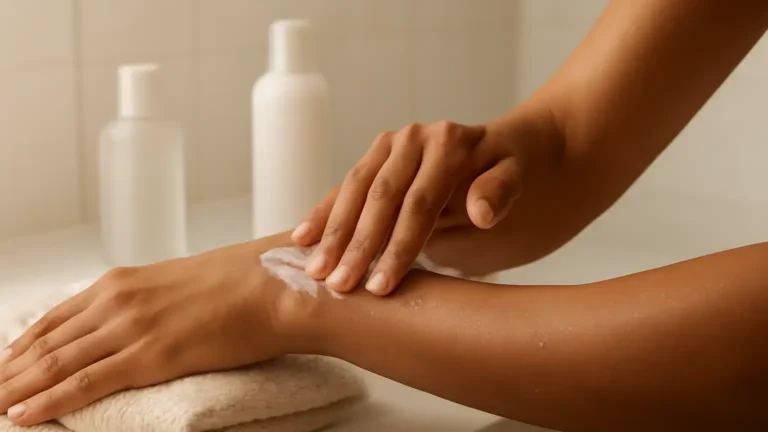
The most reliable timing change is simple: apply moisturiser within a few minutes of stepping out, while skin is still slightly damp. This helps slow surface water loss. Do not wait until the skin feels tight, as that often leads to applying too little or rubbing more vigorously.
For the body, choose a body moisturiser with a creamier texture if lotion is not enough. For persistent roughness, a formula containing glycerin, petrolatum, squalane or ceramides may feel more protective. A ceramide moisturiser can support a comfortable skin barrier, but no single ingredient suits everyone. If you are prone to sensitivity, introduce one new product at a time and patch test it on a small area.
On the face, apply a modest layer rather than repeatedly washing and reapplying products. The goal is to support skin barrier repair through consistent, non-irritating care—not to create a heavy coating that feels uncomfortable.
5. Simplify your routine on dry days
When skin feels tight, adding exfoliating acids, scrubs, cleansing brushes or multiple active products can make the routine harder to assess. Pause non-essential exfoliation for a short period and keep the basics: gentle cleansing, moisturiser and daytime sun protection. Fragrance-free skincare is worth considering if scented products sting or make dryness more noticeable.
Pay attention to where the discomfort occurs. Dryness limited to the face may relate to a cleanser, makeup removal or frequent face washing. Dryness mainly on the shins and elbows may reflect hot bathing, low humidity or insufficient body moisturiser. This distinction helps you avoid replacing every product in the bathroom at once.
6. Consider a filter—but know what it can and cannot do
A shower filter and a water softener are not interchangeable. Many shower filters are designed to reduce chlorine or alter certain water qualities, but their performance depends on the filter media, water chemistry and replacement schedule. They may not remove the calcium and magnesium that create classic hard-water scale. A household water softener is a different system that treats water at a broader level and usually requires more planning, installation and maintenance.
If you are searching for the best shower filter for dry skin, treat marketing claims cautiously. Check what the product is certified or specifically designed to reduce, how often the cartridge needs changing, whether it fits your shower, and whether replacement parts are easy to obtain in India. A filter is more reasonable when you have confirmed water-quality concerns or strongly dislike the residue, but it should follow basic routine changes rather than replace them.
What to check before buying
- Water evidence: Look for recurring scale on taps, a slippery or coated feel, or local water-quality information.
- Maintenance: An overdue cartridge may offer little benefit and can add another neglected task.
- Scope: A shower attachment affects the shower outlet, not necessarily the water used at the basin or kitchen sink.
- Expectation: Equipment may reduce a water-related nuisance, but it cannot correct a harsh cleanser, hot water or skipped moisturising.
A simple seven-day routine for tight, dry-feeling skin
- Use lukewarm water and keep bathing brief.
- Cleanse only where needed with a gentle cleanser.
- Rinse thoroughly, especially around the hairline and body folds.
- Pat rather than rub with a towel.
- Apply moisturiser on damp skin within a few minutes.
- Use a richer cream on areas that remain rough, if it feels comfortable.
- Record whether tightness appears after the shower, after face washing or later in the day.
Avoid changing temperature, cleanser, moisturiser and filter all at once. That makes it difficult to identify the useful step and may introduce several potential irritants. Start with water temperature and immediate moisturising, then review cleanser choice. Consider a filter only if you still have a clear water-related concern.
When to seek professional advice
Dryness that persists despite a gentle routine deserves attention, particularly if there is marked redness, swelling, cracking, bleeding, significant itch, pain, oozing or a spreading rash. These signs can have causes beyond bathing water. A dermatologist or doctor can assess concerning or ongoing symptoms; do not stop prescribed skincare or medication without professional guidance.
The takeaway
Managing dry skin and hard water starts with controllable habits: lukewarm water, a shorter shower, selective cleansing and prompt moisturising. Choose fragrance-free skincare when sensitivity is a concern, and use a ceramide moisturiser or richer body cream if your skin tolerates it. A shower filter may be useful for some homes, but it is not a universal solution for dryness. Build the routine first, then decide whether water treatment is worth the cost and maintenance.
Products that may help with this routine
Choose only what fits your skin, hair or personal needs. Use the links below to view current options on Amazon India.
Frequently Asked Questions
How do you manage dry skin and hard water at home?
Use lukewarm water, keep showers short, cleanse selectively with a gentle formula, rinse thoroughly and apply moisturiser while skin is still slightly damp. If dryness continues, review products and consider local water-quality information before buying a filter.
Is hard water causing dry skin after washing your face?
It may contribute, particularly if mineral residue combines with cleanser or you wash with hot water. However, cleanser ingredients, washing frequency, weather and existing sensitivity can also be involved. Try a mild cleanser, lukewarm water and immediate moisturising before assuming water is the only cause.
What is the best shower filter for dry skin?
There is no universally best filter. Choose one based on the specific contaminant or water issue it is designed to address, independent performance information, cartridge replacement needs and compatibility with your shower. Many filters do not remove all hardness minerals, so check the product’s stated function carefully.
How should you moisturise dry skin after a shower?
Pat the skin so it remains slightly damp, then apply a cream or lotion within a few minutes. Ingredients such as glycerin, ceramides, petrolatum or squalane may support comfort, but introduce products gradually if your skin is sensitive.
Should you use hot water for dry skin?
Hot water is usually not the best choice for dry-feeling skin because it can increase tightness and remove surface oils. Lukewarm water is a more comfortable option; you do not need to switch to cold water.