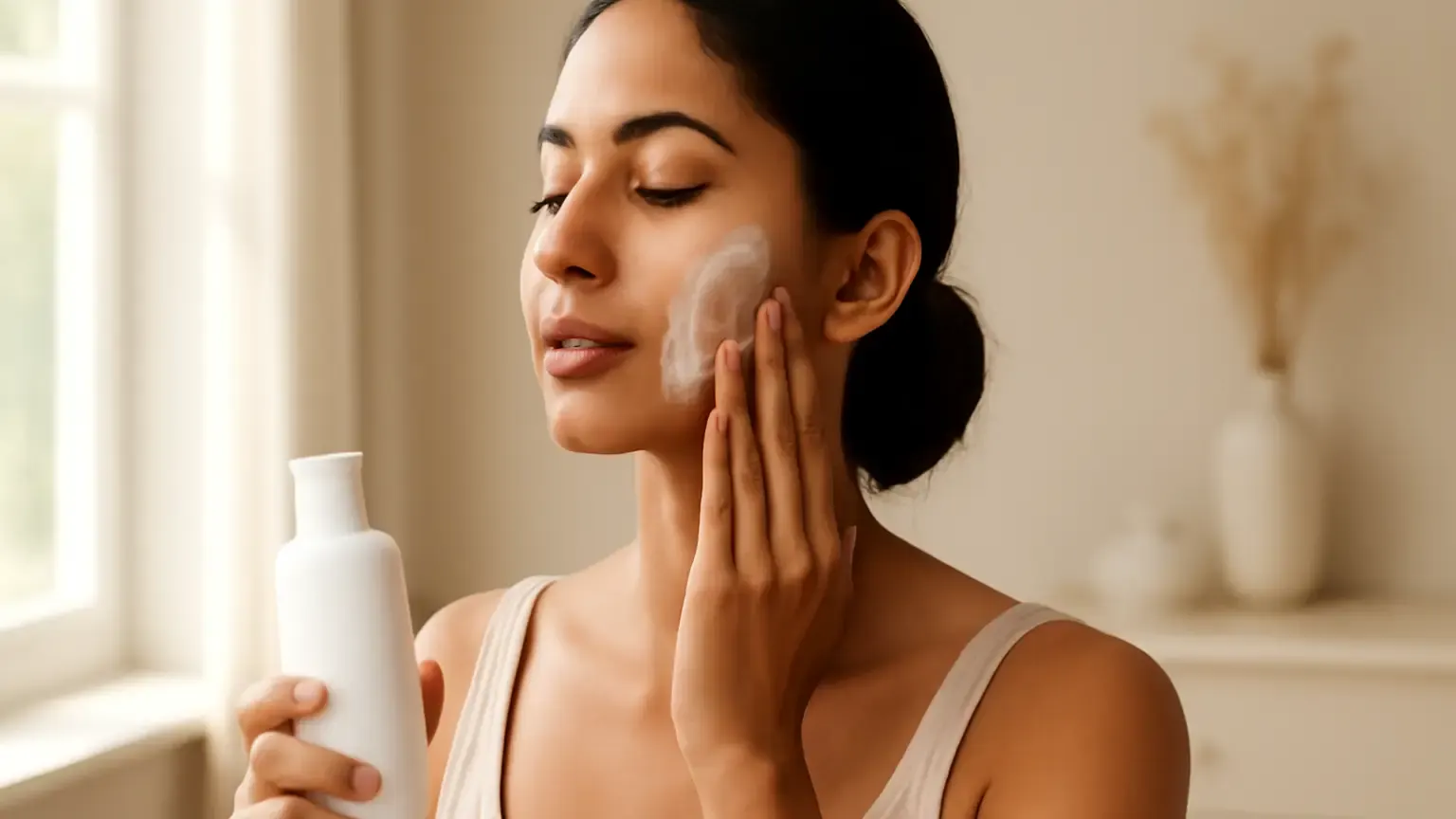
These skin care tips for sunscreen are for anyone who spends time in Indian daylight, commutes, works beside windows or wears makeup outdoors. The key decision is simple: choose a broad-spectrum formula with suitable SPF and PA protection, apply enough to the face, ears and neck, then reapply when exposure, sweat or wiping removes it. Most patchy protection comes from too little product, rushed blending, skipped edges or incompatible layers—not from needing a more complicated routine.
Sunscreen works only where it has been applied in a reasonably even layer and in an adequate amount. A high SPF cannot fully compensate for missed areas, a thin application or product that has rubbed away during the day. In India, strong daylight, heat, humidity and frequent commuting can make these errors especially easy to overlook.
Start with the right sunscreen, not just the highest SPF
For daily use, look for a broad-spectrum sunscreen that protects against UVA and UVB. UVA contributes to tanning and long-term visible sun damage, while UVB is strongly associated with sunburn. An SPF 30 sunscreen may suit ordinary daily exposure, but people who spend longer outdoors, drive, walk at midday or are prone to tanning may prefer a higher SPF. SPF is not a licence to apply less.
A PA rating indicates UVA protection; a higher rating such as PA++++ sunscreen can be a useful choice for intense or frequent exposure. Choose a finish you can apply generously. A comfortable lotion, gel, fluid or cream is usually more useful than a formula that feels so heavy that you use only a small amount.
Mineral sunscreen, usually based on zinc oxide or titanium dioxide, sits on the skin and can be useful for people who prefer that type of filter. Chemical sunscreen uses organic filters that absorb UV energy. Neither category removes the need for adequate quantity, even coverage and reapplication. If a new sunscreen causes persistent stinging, redness or discomfort, stop using it and seek professional advice if the reaction continues.
Skin care tips for sunscreen: avoid these 7 coverage-wasting mistakes
1. Applying too little
The most common mistake is treating sunscreen like a light serum. For the face and front of the neck, use the commonly taught two-finger rule: dispense two lines of product along the index and middle fingers. This is a practical guide, not a laboratory measurement, and larger faces or exposed neck areas may need more.
If two fingers feel excessive with a particular formula, apply the required amount in two thin passes rather than quietly reducing it. Two layers do not magically increase protection if the total amount remains too small, but dividing the application can make generous coverage easier and more comfortable.
2. Stopping at the cheeks
Your face and neck sunscreen routine should include the forehead, temples, nose, eyelids if the product is suitable for that area, chin, jawline, ears and the exposed front and sides of the neck. Blend carefully around the hairline and along the neckline. These borders are commonly missed because people apply sunscreen only to the central face.
Do not apply directly into the eyes. A sunscreen labelled for the eye area, worn with care, may be more comfortable; sunglasses and a hat also reduce direct exposure. The lips need a suitable lip product with sun protection rather than face sunscreen wiped across them.
3. Rubbing it away while trying to blend
Vigorous rubbing can leave thin patches, especially around the nose, brows and hairline. Apply sunscreen in small dots or short sections, then spread gently until the surface looks even. Give it a little time to settle before touching the face again.
Patting is not always necessary, and aggressive massaging is not better. The aim is a continuous-looking layer, not a perfectly invisible finish at the cost of removing product. If the formula pills, pause between skincare layers and use less of the products underneath.
4. Applying it over damp, sweaty or unsettled layers
Moisture, sweat and a still-wet moisturiser can make sunscreen slide, separate or gather in small rolls. After cleansing, apply moisturiser if needed and allow it to settle. Sunscreen should be the final dedicated skincare step before makeup.
This does not mean skin must feel dry or tight. It means the preceding layer should no longer be visibly wet. In hot weather, blot sweat gently before application. Reapply after heavy sweating according to the label, as even a water-resistant sunscreen is not permanent and may need refreshing after swimming, towel drying or prolonged perspiration.
5. Mixing sunscreen into moisturiser or foundation
Mixing products may make a sunscreen feel lighter, but it can dilute the protective layer and make the amount impossible to judge. Apply moisturiser first, then sunscreen as its own step. Foundation or concealer comes afterwards.
The same principle applies to tinted sunscreen. Treat it as sunscreen only when you apply enough to create the labelled protection, which may leave more colour than you want. If you prefer lighter coverage, use a properly applied sunscreen underneath and add a small amount of makeup on top.
6. Assuming indoor daylight never counts
Indoor sunscreen is not equally necessary for everyone, every day. If you are in a room away from windows and have little daylight exposure, your need may be lower than someone sitting beside a sunny window. UVA can pass through ordinary glass, and a bright commute, balcony, shopfront or open office can add meaningful exposure.
Ask where you spend the day, whether sunlight reaches your face, and how often you step outside. If you work near windows, drive regularly or move between indoor and outdoor spaces, morning sunscreen is a sensible habit. Curtains, shade, sunglasses and wide-brimmed hats can supplement—not replace—sunscreen when exposure is high.
7. Treating morning application as all-day protection
Sunscreen reapplication depends on exposure and product loss. Reapply after swimming, sweating, towel drying or wiping the face. During outdoor activity, refreshing about every two hours is a widely used practical guideline, but follow the product label and your actual conditions.
For a desk day with minimal daylight exposure, a midday reapplication may be less urgent than it is for a beach visit or outdoor commute. However, if you spend time outside later, apply again before going out rather than relying on the morning layer.
How to apply sunscreen correctly in a morning routine
- Cleanse gently if needed. Avoid leaving heavy sweat, dust or excess oil that prevents a comfortable, even layer.
- Apply lightweight skincare first. Use moisturiser only if your skin needs it, and allow it to settle.
- Measure a useful amount. Start with the two-finger rule for the face and exposed neck, adding more for larger areas.
- Place it across the face, ears and neck. Use dots or sections so the product is not concentrated in one spot.
- Spread gently and check the edges. Look at the hairline, temples, jaw, ears and sides of the neck in good light.
- Wait before makeup. A short settling period can reduce movement and improve sunscreen under makeup.
There is no need to wait a fixed number of minutes for sunscreen to become effective before stepping outside, but applying it before exposure gives you a more consistent routine. If you know you will be outdoors, apply before leaving rather than at the last second on the pavement.
Reapplying sunscreen without ruining makeup
There is no single perfect method for reapplying over makeup. First remove excess oil or sweat by gently pressing a clean tissue or blotting paper onto the skin. Do not drag it across the face. Then choose the method that lets you use enough product: carefully pat a compatible lotion over makeup, use a cushion-style product only if you can apply a meaningful amount, or remove and redo makeup on high-exposure days.
Powders and sprays may be convenient for touch-ups, but they are easy to under-apply. Do not assume a quick mist equals full protection. A hat, sunglasses and shade are valuable when reapplying over makeup is impractical.
If you experience sunscreen pilling, test the routine on one cheek first. Use fewer skincare layers, allow each one to settle, avoid vigorous rubbing and check whether silicone-heavy makeup is being layered over a very different texture. Persistent irritation is a reason to simplify the routine and ask a dermatologist for individual guidance.
Choose texture based on your real routine
A fluid or gel can feel comfortable in humid Indian weather, while a cream may be preferable when skin feels dry or tight. Those prone to shine may look for a non-greasy or matte finish, but a dry-touch formula is not automatically more protective. The best option is the one you can apply in the recommended amount without skipping the neck or reducing the frequency of use.
For outdoor sports, select a water-resistant option and pair it with physical barriers such as a cap, sunglasses and shade. For everyday indoor work, prioritise a finish that sits comfortably under your normal skincare and makeup. If your skin is sensitive, introduce one new product at a time and patch-test cautiously according to the product instructions.
A simple decision guide for daily protection
- Mostly indoors and away from windows: use a comfortable broad-spectrum formula in the morning, especially if you may step outside.
- Near windows or commuting: choose reliable UVA coverage, apply to the face, ears and neck, and refresh before later outdoor exposure.
- Long outdoor periods: use a suitable higher-SPF formula, protective clothing, sunglasses and shade; reapply after sweat or wiping.
- Makeup every day: prioritise a sunscreen that layers well, and plan a realistic reapplication method before relying on a powder or mist.
Quick takeaway
The most effective skin care tips for sunscreen are practical: apply enough, cover the face, ears and neck, let layers settle, account for indoor daylight near windows and reapply when exposure or sweat removes protection. A comfortable broad-spectrum product used consistently is more useful than an impressive formula applied thinly or only to the cheeks.
Products that may help with this routine
Choose only what fits your skin, hair or personal needs. Use the links below to view current options on Amazon India.
Frequently Asked Questions
How much sunscreen should I use on my face and neck?
Use the two-finger rule as a practical starting point: apply two lines of sunscreen along the index and middle fingers for the face and exposed neck. Add more if you are covering a larger area, ears or part of the upper chest.
Should I wear sunscreen indoors near windows?
It is sensible to wear sunscreen if you sit close to sunny windows, drive, use a balcony or move outdoors during the day. If you remain far from windows with minimal daylight exposure, the need may be lower.
How often should I reapply sunscreen over makeup?
Reapply after sweating, swimming, towel drying or wiping the face. During extended outdoor exposure, about every two hours is a useful general guideline, but follow the product label. Patting a compatible lotion over makeup or redoing makeup may provide more reliable coverage than a quick powder or mist.
Can sunscreen be applied after moisturiser?
Yes. Apply moisturiser first, let it settle, and use sunscreen as the final skincare step before makeup. Avoid mixing the two because dilution can make the protective amount difficult to judge.
Why does sunscreen pill under makeup?
Pilling can result from too many skincare layers, applying products before they settle, vigorous rubbing or incompatible textures. Try fewer layers, use gentle spreading motions and allow moisturiser and sunscreen to settle before applying makeup.
Is SPF 30 enough for Indian skin?
SPF 30 can be suitable for ordinary daily exposure when applied generously and evenly, but people with long outdoor commutes or intense sun exposure may prefer higher SPF and strong UVA protection. Shade, clothing, sunglasses and reapplication remain important.



