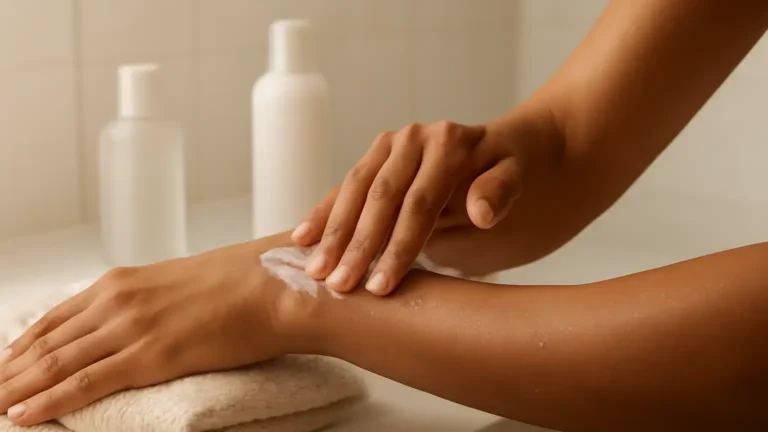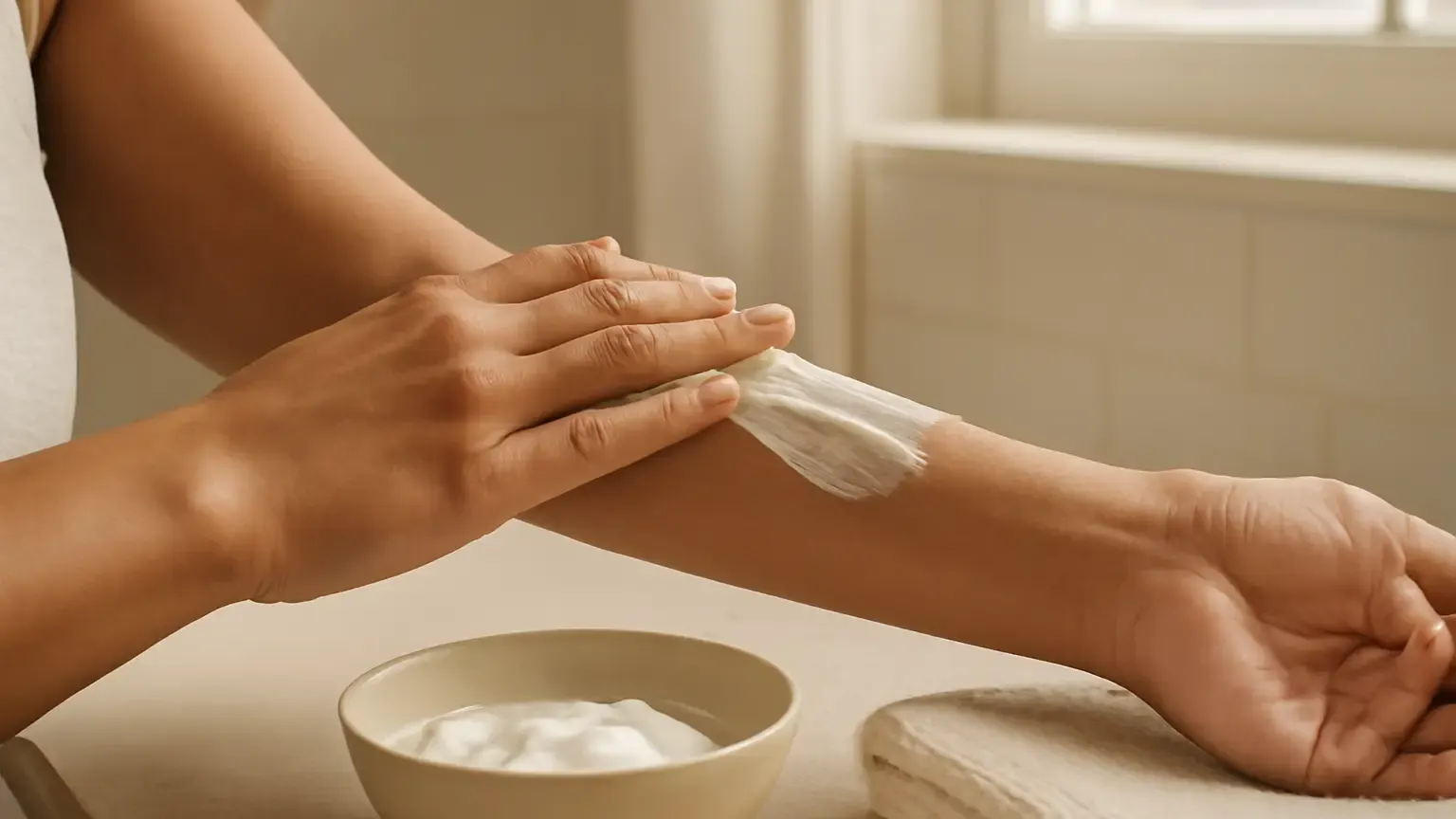
dry skin body exfoliation works best when it removes surface roughness without stripping the moisture barrier. For adults with flaky, tight or uneven body skin—especially in dry weather or after hot showers—the gentler choice is usually a low-strength chemical exfoliant or a soft, infrequent scrub. Whichever you choose, apply a rich moisturiser immediately on slightly damp skin; that step matters as much as exfoliation for a smoother, more comfortable result.
Body skin can feel rough for several reasons: low humidity, hot water, frequent cleansing, friction from clothing and a naturally slower build-up of dead skin cells. Exfoliation can make the surface feel more even, but it is not a substitute for daily moisturising. Used too often or too aggressively, it may leave dry skin tighter, redder and more uncomfortable.
Chemical and physical exfoliation: what is the difference?
Chemical exfoliation uses acids or exfoliating ingredients to loosen the bonds between surface cells. On the body, lactic acid is a popular option because it can help smooth rough texture while also supporting hydration. Salicylic acid is oil-soluble and may be useful for areas prone to blocked pores, but it can feel drying for some people. A product’s strength and the rest of its formula matter more than the word “acid” on the label.
Physical exfoliation uses friction to lift loose surface flakes. This includes a mild body scrub, a soft washcloth or exfoliating gloves. Physical methods give immediate smoothness, but pressure, rough particles and repeated passes can irritate the skin barrier. Scrubs with sharp or irregular particles are a poor match for already cracked, sore or highly sensitive skin.
Neither method is automatically better. For most dry skin, a gentle chemical product used sparingly is easier to control than vigorous rubbing. A soft physical method can also work when the skin is only mildly rough and the user can keep pressure very light.
How to choose the best body exfoliation for dry skin
Choose a chemical option when
- Your main concern is widespread roughness or dull-looking texture rather than visible flakes that need lifting.
- You prefer a quick routine without scrubbing.
- You can introduce a low-strength product gradually and follow it with a moisturiser.
- You want to target rough areas such as the upper arms, thighs or elbows with more even coverage.
A lactic acid body lotion can be a practical format because it combines exfoliation with a leave-on moisturising step. Start with a product made for the body rather than applying a strong facial peel over large areas. Avoid using several exfoliating products together while you are learning how your skin responds.
Choose a physical option when
- You have mild surface flaking and want a once-in-a-while smoothing step.
- You can use a soft cloth or gentle scrub with minimal pressure.
- You want to rinse the product away rather than leave an active ingredient on the skin.
Exfoliating gloves can be too abrasive if used firmly or every day. If you use them, keep the motion brief and light, reserve them for sturdier areas such as the knees or elbows, and wash them regularly so they dry fully between uses.
How often should you exfoliate dry skin body?
For a new routine, begin once a week. If there is no lasting stinging, redness, unusual tightness or increased flaking, some people can progress to twice weekly. Many dry-skin types do not need more than that. Daily exfoliation is rarely necessary and can undermine the skin barrier even when the skin initially feels polished.
A physical scrub usually needs more spacing because friction is involved. A mild leave-on chemical product may be used more regularly only if its label allows it and your skin remains comfortable. Do not increase frequency simply because results are not immediate; smoother texture often develops over several weeks.
Do not exfoliate over cuts, sunburn, freshly shaved or waxed skin, active irritation, or areas that are peeling heavily. If you have persistent itching, painful cracks, a spreading rash or recurring inflammation, consult a dermatologist rather than intensifying exfoliation. A healthcare professional can also advise if you suspect an underlying skin concern.
A gentle dry skin body scrub routine
This simple routine suits people choosing a mild physical method:
- Keep the water lukewarm. A lukewarm shower is less likely to worsen tightness than a very hot, long shower.
- Cleanse selectively. Use a gentle, fragrance-free cleanser where needed rather than vigorously washing every area.
- Soften the skin first. Let water loosen surface flakes for a few minutes, but do not soak until the skin feels pruney.
- Use a small amount of scrub. Massage with fingertips in short, light circles for about 20 to 30 seconds per area. Never scrub until the skin feels hot.
- Rinse and pat dry. Avoid rubbing with a rough towel.
- Moisturise immediately. Apply a generous body moisturiser while the skin is still slightly damp.
If a scrub leaves a squeaky-clean feeling, burning or tightness, it is probably too harsh or too frequent. A dry skin body scrub routine should leave the skin comfortable, not polished at the cost of irritation.
How to use chemical exfoliation without over-drying
Apply a body exfoliant to clean, completely dry skin unless the product instructions say otherwise. Start with one area, such as the upper arms, rather than covering the entire body on the first use. Follow the stated amount and do not layer it with a scrub, strong retinoid or other exfoliating treatment on the same day.
Patch test a small area first, especially if you have sensitive skin or a history of reacting to fragranced products. A little tingling may occur with some formulas, but strong burning, swelling or persistent redness is a reason to rinse and stop using that product. Avoid applying acids immediately after hair removal or on damaged skin.
For bumps on the upper arms that may resemble keratosis pilaris, gentle consistency is more helpful than harsh scrubbing. Ingredients such as lactic acid, urea or salicylic acid may appear in body products designed for rough texture, but individual tolerance differs. Do not pick or scratch the bumps.
What to apply after body exfoliation
The most important post-exfoliation step is a moisturiser that reduces water loss and supports a comfortable skin barrier. Apply it within a few minutes of rinsing or bathing, while the skin is slightly damp. Look for a texture you will use consistently rather than choosing the richest product and abandoning it because it feels uncomfortable in India’s humid weather.
For very dry areas, a urea moisturiser for dry skin can soften roughness and improve the feel of thickened patches. Other useful formula categories include ceramides, glycerin, hyaluronic acid, shea butter and petrolatum. Humectants attract water, emollients smooth the surface, and occlusives help reduce moisture loss; a well-formulated product may combine all three.
Fragrance-free body care is often the safer starting point when dryness comes with stinging or sensitivity. Fragrance is not automatically harmful, but avoiding it can simplify the routine and make it easier to identify what is causing a reaction. If exposed areas will see strong sun, use suitable sun protection, since freshly exfoliated skin may be more prone to discomfort from sunlight.
Common mistakes that make dry skin rougher
- Scrubbing harder for faster results: pressure does not compensate for an unsuitable product and can increase irritation.
- Using hot water: long, hot showers can worsen the dry, tight feeling.
- Exfoliating every day: frequent removal of surface cells can disrupt the barrier.
- Skipping moisturiser: exfoliation without immediate hydration often leaves skin feeling rough again.
- Combining multiple actives: a scrub, acid lotion and strong treatment can be too much in one routine.
- Applying products to broken skin: exfoliants belong on intact skin only.
- Ignoring seasonal changes: reduce exfoliation during dry winter weather or whenever your skin becomes tight and reactive.
A simple decision guide
Choose a low-strength chemical exfoliant if you want even coverage and can commit to a gradual, leave-on routine. Choose a soft physical method if your roughness is mild and you prefer a rinse-off product. If your skin is very dry, irritated or sensitive, pause exfoliation and focus first on a gentle cleanser, lukewarm water and regular moisturising.
For either method, the reliable order is: cleanse gently, exfoliate occasionally, rinse if required, and moisturise immediately. Keep the rest of the routine simple for a few weeks so you can judge whether the product is helping.
Takeaway
Effective dry skin body exfoliation is gentle, occasional and followed straight away by a nourishing moisturiser. Chemical exfoliation may offer more even coverage, while a soft scrub can suit mild roughness and rinse-off preferences. Start once weekly, avoid damaged or irritated skin, and let comfort—not the most intense smoothing effect—guide your routine.
Products that may help with this routine
Choose only what fits your skin, hair or personal needs. Use the links below to view current options on Amazon India.
Frequently Asked Questions
Is chemical exfoliation better for dry skin?
It can be a gentler choice than vigorous scrubbing because it offers more even coverage with less friction. Start with a low-strength body formula once weekly, patch test first, and moisturise immediately. It is not suitable for broken, sunburned or actively irritated skin.
How often should you exfoliate dry skin body?
Begin once a week. If your skin remains comfortable without persistent redness, stinging or tightness, you may increase to twice weekly. Most dry skin does not need daily exfoliation, and physical scrubs may need more recovery time than mild chemical products.
What to apply after body exfoliation?
Apply a rich body moisturiser within a few minutes, while the skin is slightly damp. Ingredients such as glycerin, ceramides, urea, shea butter and petrolatum can help improve comfort and reduce moisture loss.
Can I exfoliate dry skin with a scrub?
Yes, if the skin is intact and only mildly rough. Use a soft scrub or cloth with very light pressure for a short time, rinse thoroughly and moisturise. Avoid rough particles, exfoliating gloves used aggressively, and scrubbing over cracks, rashes or freshly shaved skin.
What is the best body exfoliation for dry skin?
There is no single best option for everyone. A low-strength lactic acid body product may suit widespread roughness, while a gentle rinse-off scrub may suit mild flaking. If the skin is irritated or highly sensitive, moisturising without exfoliating is the better first step.
How to exfoliate dry skin without irritation?
Use lukewarm water, choose one gentle exfoliating method, start once weekly, avoid damaged skin and patch test new products. Keep pressure light for physical exfoliation and apply moisturiser immediately afterward.