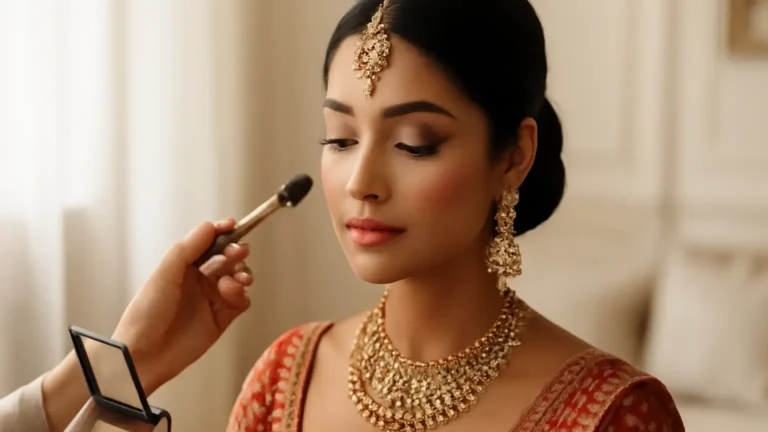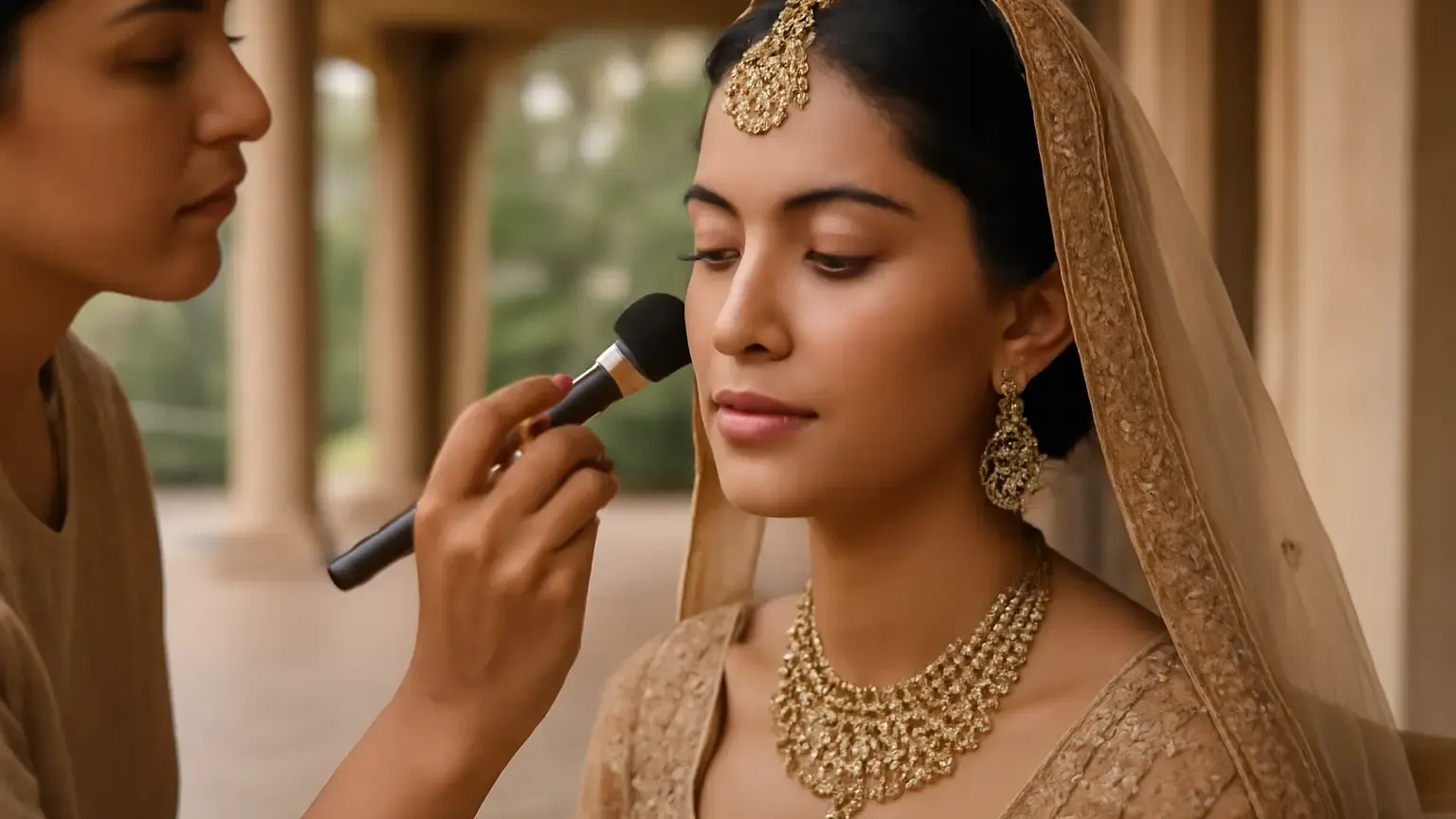
Bridal makeup for winter weddings should feel flexible, moisturised and secure rather than heavily powdered. This guide is for brides getting married in India’s cooler months, whether the venue is an indoor banquet hall, an outdoor lawn or a destination location. Test the full look early, prep in light layers, choose a satin or softly radiant complexion, powder only where needed and plan touch-ups around wind, travel, indoor heating and ceremony timing.
Start with a realistic makeup trial
A winter bridal look is easiest to perfect when the trial recreates the wedding conditions. Schedule it at a similar time of day and, if possible, wear the jewellery, blouse neckline or dupatta that may affect how the complexion appears in photographs. Take photos in daylight, warm indoor light and with flash. A base that looks beautifully dewy in a salon may appear oily under flash, while a heavily mattified finish can emphasise dry patches in close-up images.
During the makeup trial, ask the artist to test the exact foundation, concealer, powder and lip products planned for the wedding. Wear the look for several hours. Notice whether the cheeks feel tight, whether the nose becomes shiny, whether the under-eyes crease and whether the lips remain comfortable while speaking and eating. This is also the right time to decide if you prefer a natural satin finish, a more polished matte finish or selective dewy makeup on the high points.
Do not introduce an aggressive facial, peel, scrub or unfamiliar active immediately before the event just to improve makeup texture. A calm, familiar routine is generally more predictable. If you have persistent redness, irritation, cracking or another concerning symptom, consult a qualified dermatologist rather than trying to conceal an unresolved problem with extra makeup.
Build winter skin prep in thin, timed layers
Good winter skin prep is not the same as applying the richest cream available. Too much product can cause foundation to slide, pill or separate around the nose. Begin with clean, comfortable skin and use products your skin already tolerates.
- Hydrate without flooding the skin: Apply a lightweight moisturiser, adding a little more only to areas that feel dry. Ingredients such as glycerin, squalane or ceramides can support a comfortable-feeling routine, but the product should suit your own skin.
- Allow settling time: Wait several minutes before makeup. Gently press away excess shine with a tissue rather than rubbing.
- Use a hydrating primer selectively: Place a hydrating primer on the cheeks or around the mouth if those areas need slip. Avoid layering it everywhere if the forehead and nose already become oily.
- Protect exposed skin: For daytime functions, use a familiar broad-spectrum sunscreen that sits well under makeup. Allow it to set before complexion products.
On the wedding morning, keep the routine simple. A chilled facial tool or cool compress may feel refreshing, but avoid vigorous rubbing or any step that leaves the skin flushed. Skin prep should make application smoother, not create a new reaction to manage.
Choose complexion textures for comfort and photographs
The best foundation for dry winter wedding makeup is not automatically the most moisturising or the most full coverage. Look for a formula that gives the coverage you need with a flexible, skin-like finish. A satin or natural finish often balances comfort, longevity and photography more effectively than an extremely glossy base or a flat, thick matte layer.
Apply a long-wear foundation in a thin layer, then build coverage only where required. Use a damp sponge for a softer finish or a brush for more coverage, and press rather than repeatedly buffing over flaky areas. Spot conceal blemishes or pigmentation instead of adding a second heavy layer across the whole face. This keeps the complexion lighter and reduces the chance of texture becoming obvious as the day progresses.
For the under-eye concealer, use less than you expect. A flexible concealer placed at the inner corner, darkness and any crease-prone area is usually more comfortable than a thick triangle. Ask the artist to assess the product after smiling and looking down, since movement often reveals excess product before photographs do.
Use cream colour, then powder with a map
Cream blush can bring life to a winter complexion without making the cheeks look dry or dusty. Tap it onto the fullest part of the cheek and blend towards the temples. Cream bronzer or a soft contour can also look more integrated than several layers of powder. If you need extra staying power, lightly set the cream colour with a closely matched powder product rather than covering it with a pale, heavily pigmented layer.
Powder placement matters more than the amount in the compact. Use a small brush or puff to set the sides of the nose, the centre of the forehead, the chin, the area beneath the eyes and any place where makeup tends to move. Leave the outer cheeks and high points less powdered if they do not become shiny. A fine translucent powder can help, but tinted powder may be more useful when you need a small amount of additional coverage. The correct choice depends on the foundation shade and the finish you want in photographs.
Do not repeatedly powder over oil or sweat during the ceremony. First blot gently, then add a small amount of powder only to the area that needs it. Continual layering can make the base look dense and emphasise fine texture.
Keep lips comfortable through rituals and meals
Winter air can make lipstick feel tight, especially when the bride is speaking, smiling and travelling between venues. Begin lip care several days before the wedding with a simple lip balm that you already know works for you. Apply a thin layer before makeup, let it settle and remove excess before lip liner. Avoid harsh scrubbing to “smooth” peeling lips; it can leave them more sensitive.
Choose a creamy long-wear lipstick, satin formula or lip stain topped with a comfortable lipstick, depending on your priorities. Very dry liquid mattes may last well but can become uncomfortable for some brides. Define the lips with a liner close to the lipstick shade, fill in the corners and carry the exact products used for the look. A small amount of balm can be pressed over the centre later, but too much may disturb the edges.
For a longer ceremony, ask whether the artist can provide a small touch-up pot rather than expecting you to carry a full lipstick tube. This is especially practical when the original shade is custom-mixed or layered.
Adapt the base to the venue
Indoor banquet halls
Indoor venues may have warm lighting, air-conditioning or heating, each of which changes how the skin feels. Keep the complexion balanced rather than very glossy, because warm lights can exaggerate shine. Carry blotting tissue, a little powder, lip colour and setting spray. Spray from the recommended distance and allow it to dry without touching the face.
Outdoor lawns and winter ceremonies
An outdoor winter wedding adds wind, dust, sun and temperature changes. Secure the base with thin layers and pay attention to the areas touched by a dupatta, veil or scarf. A wind-resistant hairstyle and carefully placed eye makeup may matter as much as foundation. Sunglasses during travel can leave marks, so check the nose and cheek area before the ceremony begins.
Destination weddings
For destination winter bridal makeup, plan around the actual climate rather than assuming every winter location behaves alike. A dry hill location may need more cheek moisturisation, while a coastal destination may require lighter layers and stronger oil control. Pack products in a leak-resistant pouch, keep makeup away from direct heat and carry a small mirror. If flying, place essential complexion and lip products in hand luggage where practical, so a checked-bag delay does not remove the basics.
Prepare a small, useful touch-up kit
A good touch-up kit contains only products that solve likely problems. Include blotting tissue, a small powder, lipstick or lip stain, lip balm, cotton buds, a compact mirror and any approved product needed to repair a tear track or smudged corner. Add a miniature setting spray only if it is already part of the tested routine.
Ask a trusted family member, bridesmaid or makeup artist to hold the kit. The bride should not need to search through a large handbag between rituals. For an outdoor event, add tissues and a clean handkerchief; for a destination event, include the exact shade references or product names in case a replacement is needed.
Common winter bridal makeup mistakes to avoid
- Over-moisturising immediately before foundation: This can create movement and patchiness instead of comfort.
- Using powder as a substitute for skin prep: Powder can control shine but cannot correct dehydrated-feeling skin.
- Choosing full coverage everywhere: Layer coverage only where it serves the photograph and the bride’s preference.
- Trying a new facial or product close to the wedding: Unfamiliar treatments can make makeup less predictable.
- Ignoring the lips until the wedding morning: Comfortable lipstick usually starts with consistent, gentle lip care.
- Skipping the venue test: Indoor warmth, outdoor wind and travel humidity can require different powder and touch-up decisions.
A simple final checklist
Before approving the look, confirm five things: the base remains comfortable after several hours; coverage is built rather than caked; powder is placed only where needed; the lip formula survives talking and eating reasonably well; and the touch-up kit matches the venue. Take photographs from close range and at a distance, then assess the look in daylight as well as artificial light.
The most reliable bridal makeup for winter weddings is not defined by a single finish or product. It comes from a tested routine, compatible textures, restrained powder and a venue-aware plan for small corrections throughout the day.
Products that may help with this routine
Choose only what fits your skin, hair or personal needs. Use the links below to view current options on Amazon India.
Frequently Asked Questions
How should I prep dry skin for winter bridal makeup?
Use a familiar gentle cleanse, a comfortable moisturiser and, if needed, a hydrating primer on dry areas. Let each layer settle before makeup, and avoid harsh scrubs or new treatments close to the wedding.
What is the best foundation for dry winter wedding makeup?
Choose a tested foundation with a flexible satin or natural finish and the coverage you actually need. Apply it in thin layers and spot-conceal instead of using heavy coverage across the entire face.
How can I make bridal makeup last in cold weather?
Test the full routine in advance, prep in light layers, set only movement- or shine-prone areas, use a compatible setting spray and carry a small touch-up kit for blotting and lipstick repairs.
What makeup should a winter bride carry for touch-ups?
Pack blotting tissue, a small powder, the wedding lipstick, lip balm, cotton buds and a compact mirror. Outdoor or destination brides may also need a clean handkerchief and a few travel-safe essentials.
How can I stop bridal lipstick from drying out in winter?
Use a familiar lip balm regularly before the wedding, apply a thin layer before lipstick and choose a creamy long-wear or satin formula. Avoid harsh lip scrubbing and carry the lipstick for reapplication.
What changes for winter bridal makeup at an outdoor wedding?
Account for wind, dust, sunlight and temperature changes. Use thin secure layers, protect areas rubbed by a veil or dupatta, and plan quick checks before the ceremony and after travel.