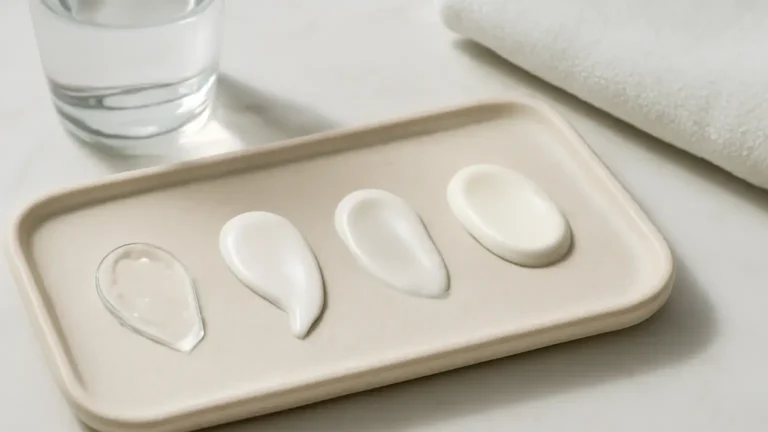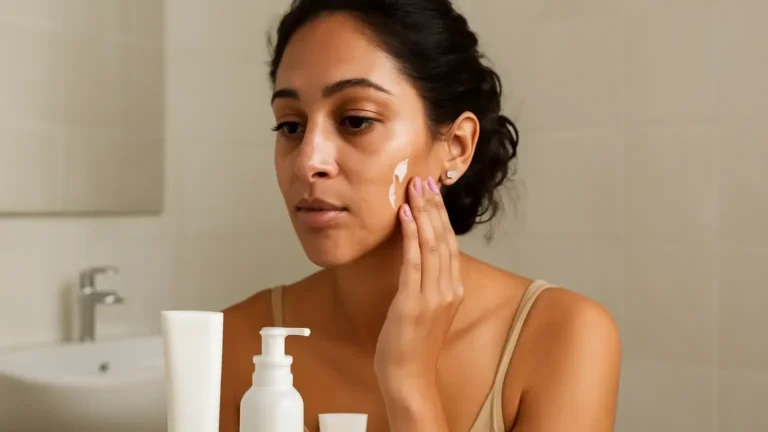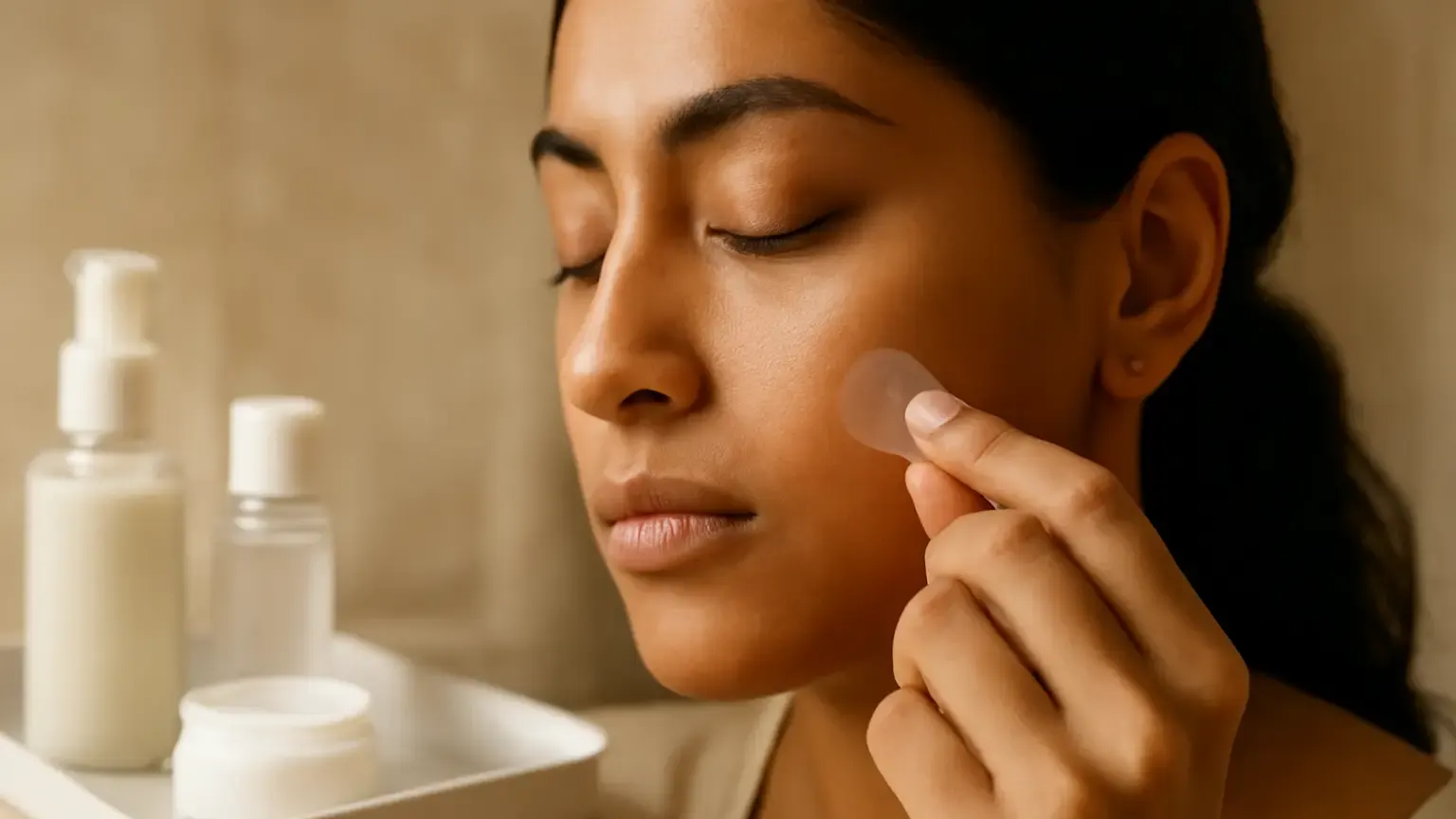
Acne Prone Skin and Hydrocolloid Patches can work well together when the spot is small, raised and close to the surface. In practical terms, a patch may protect a whitehead or accidentally opened pimple from picking and absorb some surface fluid overnight. It will not clear every breakout: deep, painful or recurring acne needs a broader plan. Here is how to decide whether a patch is worth using, apply it safely and know when to stop.
Acne Prone Skin and Hydrocolloid Patches are best understood as a selective, protective pairing—not a complete acne treatment. A plain patch can cover a small surface-level blemish, reduce touching and absorb some fluid. It is less likely to help a deep, closed or repeatedly inflamed spot.
How hydrocolloid patches work
Hydrocolloid patches are small adhesive dressings made with a gel-forming material. When the material contacts moisture, it creates a soft gel that can absorb some wound fluid or surface fluid from a superficial pimple. The patch also creates a physical barrier between the blemish, fingers, hair and environmental dirt.
This explains why a whitehead acne patch may look cloudy or swollen after several hours. The covered spot may appear flatter or calmer when the patch is removed, although results vary. The patch does not reliably clear a blocked pore, regulate oil production or address why repeated breakouts develop. It also cannot reach a deep spot below the skin’s surface.
In short, hydrocolloid is a type of occlusion and protection. It is not a universal acne cure, and it should not replace a consistent routine or appropriate clinical care.
Are hydrocolloid patches good for acne prone skin?
They can be useful for acne-prone skin when the adhesive and surrounding routine suit you. They are especially practical if you squeeze spots, scratch in your sleep or need a discreet cover during the day. A plain hydrocolloid design is often a sensible starting point for sensitive acne-prone skin because it avoids adding several potentially irritating active ingredients at once.
The answer depends on the blemish. A patch is most appropriate for one small, raised spot with a visible surface point or a spot that has accidentally opened. It is not the best tool for widespread congestion, closed comedones or deep painful pimples.
Best candidates for a patch
- A small whitehead or superficial pimple with a visible surface point.
- A spot that has accidentally opened and needs protection from touching.
- A single blemish you want to shield overnight or during a commute.
- A raised spot that is not surrounded by an itchy rash, broken skin or spreading irritation.
When a patch is unlikely to help
- Deep painful pimples, firm under-skin bumps or widespread congestion.
- Closed comedones without surface fluid.
- Large, repeatedly inflamed areas rather than one distinct spot.
- Skin reacting to the adhesive or to another product underneath it.
For recurring, painful or extensive acne, dermatologist advice for acne can help you choose appropriate care. A patch may still protect one individual spot, but it should not delay professional advice when breakouts are persistent or distressing.
Choosing hydrocolloid patches for acne prone skin
Read the product label rather than choosing only by colour, shape or claims. Look for a size that covers the blemish with a small margin, an adhesive that feels comfortable and clear instructions about wear time. If your skin reacts easily, start with a plain hydrocolloid patch instead of a medicated version containing several active acne ingredients.
Some formulas include salicylic acid, tea tree oil or other active acne ingredients. These may be useful for some people, but they can also increase dryness or stinging, particularly when combined with exfoliating cleansers, retinoid products or a damaged skin barrier. Niacinamide, ceramides and other familiar skincare ingredients do not automatically make a patch suitable for every person. More ingredients do not necessarily mean better results.
For pimple patches for Indian skin, comfort in local conditions matters. In hot or humid weather, sweat can loosen the edge and trap uncomfortable moisture. A thin patch with secure but not harsh adhesion may be more practical than a thick design. If you use several products, also consider whether the surrounding routine is non-comedogenic skincare and lightweight.
Acne patch application: how to apply a hydrocolloid patch
Clean acne patch application is more important than applying a patch repeatedly. Follow these steps:
- Wash your hands. This reduces the chance of transferring oil and microbes to the area.
- Cleanse gently. Use a mild facial cleanser and lukewarm water. Avoid scrubbing the spot to make it ready.
- Dry completely. Pat the area dry and wait until there is no cleanser, water, serum or moisturiser on the exact patch site.
- Choose the right size. The patch should cover the blemish and sit on intact surrounding skin without folding.
- Press, do not rub. Hold it in place for a few seconds so the edges adhere evenly.
- Leave it according to the label. Remove it slowly with clean hands, especially if the edges are firmly attached.
Do not put a patch over wet skincare, sunscreen, facial oil or makeup. These layers can interfere with adhesion and may increase slipping. Do not share patches, reuse a removed patch or cut a patch with unclean scissors.
How long should you leave a hydrocolloid patch on?
Most products are intended for several hours, often overnight, but the label is the best guide. Overnight pimple patches can be convenient because they stay in place while you are less likely to touch the spot. Remove one when it becomes visibly swollen, cloudy, loose or uncomfortable, or when the stated wear time has passed.
Leaving a patch on longer is not automatically more effective. If the area feels hot, itchy, increasingly red or painful, remove it rather than trying to complete the recommended time. Clean away any residue gently and give the skin a break.
Can you wear pimple patches under makeup?
Yes, some thin, transparent patches are designed for daytime use and can sit under makeup. Apply the patch to clean, completely dry skin first. Wait until it is firmly attached, then dab makeup around it rather than rubbing directly across the edges. Heavy foundation, powder or setting spray can make patches under makeup more visible and may loosen them.
Makeup compatibility depends on the product’s thickness, finish and adhesive. Test the combination at home before relying on it for a long day, especially in humid weather. If the patch rolls, collects product or lifts at the corners, remove it and avoid repeatedly pressing makeup over the adhesive.
Where patches fit in an acne-safe routine
A simple routine usually works better than layering many spot products. In the morning, cleanse gently if needed, apply a light moisturiser and finish with broad-spectrum sunscreen. At night, cleanse away makeup and sunscreen, dry the skin and apply the patch only to the intended spot. Keep the rest of the routine calm and avoid applying strong exfoliants directly beneath the dressing unless the product instructions or a clinician specifically support that combination.
Good skin barrier care matters when you are using adhesive products or active treatments. After removing the patch, do not peel, scrape or squeeze the blemish. Apply a bland moisturiser if the surrounding skin feels dry. Daytime sunscreen is especially useful when you are trying to reduce the chance that a healing spot becomes a lingering post-pimple mark or contributes to visible hyperpigmentation.
Common mistakes that make patches less useful
- Using one on every bump: A patch cannot address every kind of acne, especially deep or non-surface lesions.
- Applying it over a full routine: Oils and creams can prevent a good seal.
- Picking before application: Forcefully opening a spot can increase irritation and the risk of a mark.
- Changing patches constantly: Repeated removal can disturb fragile skin and the adhesive may irritate it.
- Ignoring a reaction: Itching, a rash or worsening redness is a reason to remove the product.
- Expecting instant acne control: A patch may protect one blemish, but recurring breakouts require broader skin-barrier care and, when needed, professional guidance.
When should you stop using pimple patches?
Stop using pimple patches if you develop marked burning, swelling, blistering, a spreading rash or persistent itching. Adhesive sensitivity can appear even if another patch was previously comfortable. Also stop experimenting with patches alone if the area repeatedly becomes inflamed, the spots are painful or the acne is leaving scars or persistent marks.
Seek medical advice for painful deep nodules, rapidly worsening breakouts, extensive inflammation, repeated scarring or acne that is affecting your confidence and daily life. A dermatologist or doctor can assess persistent acne and discuss suitable options without relying on trial and error. Do not stop prescribed care because a patch seems convenient, and mention all active products you use if you seek advice.
Quick decision guide
| What the spot looks or feels like | Is a patch worth considering? | Practical next step |
|---|---|---|
| Small, surface-level whitehead | Usually yes | Clean, dry and apply a plain hydrocolloid patch. |
| Accidentally opened spot | Often yes | Use a clean patch as a protective cover and avoid picking. |
| Deep, tender under-skin bump | Usually no | Do not squeeze; consider professional advice if recurring or severe. |
| Itchy or rash-like area | No | Remove potential irritants and seek advice if it persists. |
Takeaway
Acne Prone Skin and Hydrocolloid Patches work best when the patch is used selectively on a small, surface-level blemish, applied to clean dry skin and removed when the label advises. They can reduce touching and protect a spot, but they are not a complete acne routine. If breakouts are deep, recurrent, painful or leaving marks, stop experimenting with patches alone and seek dermatologist advice.
Products that may help with this routine
Choose only what fits your skin, hair or personal needs. Use the links below to view current options on Amazon India.
Frequently Asked Questions
Are hydrocolloid patches good for acne prone skin?
They can help protect small, surface-level pimples and absorb some fluid, especially when picking is a concern. They are less useful for deep, painful or under-skin acne and should not replace a consistent routine or professional advice when breakouts persist.
How long should you leave a hydrocolloid patch on?
Follow the product label, commonly for several hours or overnight. Remove it sooner if it becomes loose, swollen, itchy, hot or uncomfortable. Longer wear does not necessarily improve results.
Can you wear pimple patches under makeup?
Some thin, transparent patches can be worn under makeup. Apply them to clean, completely dry skin, let them adhere first and dab makeup around the edges. Test the combination at home, particularly in hot or humid weather.
Do pimple patches work on deep painful pimples?
Usually not very well. Hydrocolloid patches are designed to cover surface-level spots and cannot meaningfully reach a deep bump. Avoid squeezing it and consider dermatologist advice if deep pimples recur or become painful.
How do you apply a hydrocolloid patch to a pimple?
Wash your hands, cleanse gently, dry the skin fully and place the patch over the spot with a small margin of clean surrounding skin. Press the edges down without rubbing, then remove it according to the label.
Are pimple patches suitable for Indian skin?
They can be suitable for Indian skin, but comfort depends on the adhesive, climate and individual sensitivity. In heat or humidity, choose a secure, breathable-feeling design, avoid applying it over wet skincare and remove it if irritation develops.