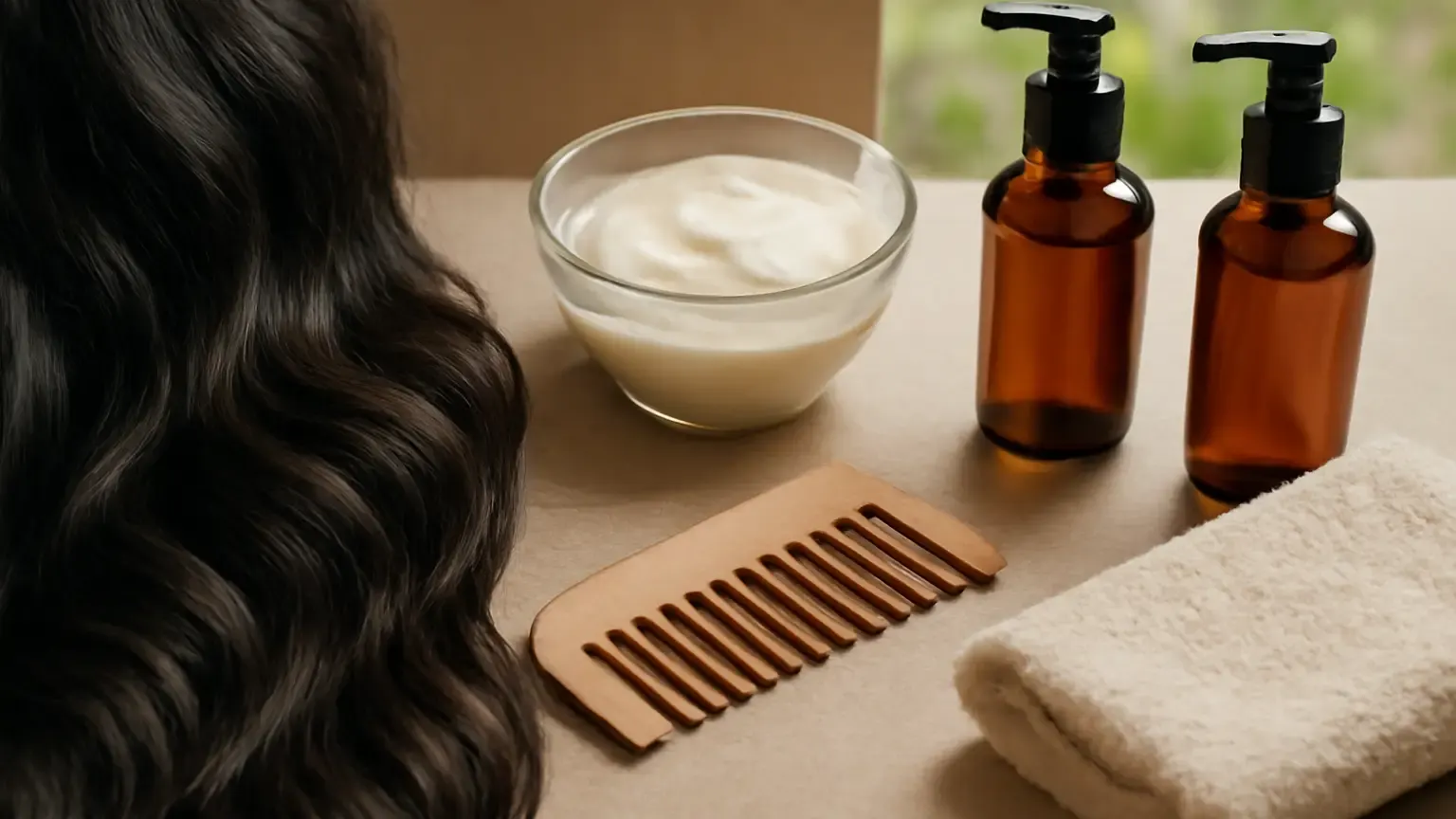
A high porosity hair routine works best when it focuses on moisture retention rather than piling on rich products. This guide is for hair that absorbs water quickly but dries out, frizzes or tangles soon after washing. Use gentle cleansing, conditioner-led detangling, light leave-in layers and a small amount of sealant; add protein only when your strands need more structure. In India, adjust the routine for humid monsoons, dry indoor air and seasonal changes.
What high porosity hair needs
High porosity hair has cuticles that are more raised or uneven, so water and conditioning ingredients can enter readily but may also escape quickly. Porosity is separate from curl pattern: straight, wavy, curly and coily hair can all be highly porous. Colouring, heat styling, chemical processing, sun exposure and repeated friction can increase porosity, although some hair is naturally porous.
Common signs include hair that becomes wet quickly, dries unusually fast, feels rough at the ends, tangles easily or looks frizzy despite using conditioner. These signs are not a diagnosis, and the simple “float test” is not reliably precise because residue and strand thickness can affect the result. Look at how your hair behaves over several washes instead.
The main goal is moisture retention: put water and conditioner into the fibre, reduce unnecessary rough handling and slow moisture loss without coating the hair so heavily that it becomes limp or dull. A balanced routine usually includes gentle cleansing, regular conditioning, occasional deep conditioning, careful leave-in layering and flexible hair sealing.
Build the wash-day foundation
1. Cleanse according to your scalp and buildup
Start with a cleanser that removes sweat, oil, pollution and styling residue without leaving the lengths squeaky. A mild sulfate-free shampoo can suit dry or frequently washed hair, but “sulfate-free” does not automatically mean better for every scalp. Choose the formula based on how oily your roots become and how often you wash.
Apply shampoo mainly to the scalp, then let the lather travel through the lengths as you rinse. Avoid rough scrubbing of the ends. If you use oils, gels, silicone-rich products or multiple layers of cream, occasional use of a clarifying shampoo may help remove residue. It is not a daily cleanser: use it when hair feels coated, products stop performing or the scalp needs a more thorough wash, then follow with conditioner.
Hard or mineral-heavy water can also leave hair feeling coated or dry. If your texture changes after moving, travelling or switching water sources, consider a product designed for mineral buildup rather than repeatedly increasing oil or mask use.
2. Condition before you detangle
After cleansing, squeeze out excess water and apply conditioner generously from mid-lengths to ends. Let it sit for a few minutes. This is the stage for detangling: use your fingers or a wide-tooth comb, start at the ends and work upwards. Do not force a comb through dry, knotted hair, because high porosity strands can be more vulnerable to snapping when rough or dehydrated.
For hair that feels dry, a weekly or fortnightly deep conditioning session can provide more softness than applying a heavy mask at every wash. Use warmth only if the product instructions allow it, and rinse thoroughly. In hot, humid Indian weather, a lighter mask used for a shorter time may work better than a very rich one that leaves residue.
Layer moisture without making hair heavy
Product order matters, but the amount matters more. On damp, freshly conditioned hair, apply a small quantity of leave-in conditioner to the areas that feel roughest. Emulsify it between your palms first, then distribute it with smoothing hands. Fine or low-density hair may need only a spray leave-in; thick, curly or very dry lengths may prefer a creamier formula.
If you use styling products, layer them from lightest to richest: leave-in, styling gel or mousse, then a small amount of cream or oil only where needed. Wait briefly between layers and reassess. Hair should feel flexible and coated, not greasy, sticky or unable to move. Using several products with similar conditioning ingredients does not necessarily improve moisture retention.
Ingredients can guide your choice, but no single ingredient suits everyone. Humectants can attract water, emollients can improve slip and softness, and occlusive ingredients can help slow water loss. In very humid conditions, a heavily humectant-rich routine may increase puffiness for some people. In dry air, the same type of formula may feel more comfortable. Treat these as testing points, not absolute rules.
How to seal moisture in high porosity hair
Hair sealing means applying a thin final layer over damp, conditioned hair to help reduce moisture loss and friction. It is not the same as soaking the hair in oil. Choose a lightweight serum, a few drops of oil or a small amount of a sealing cream, concentrating on the ends and porous sections.
For fine hair, start with one or two drops warmed between your hands. For dense or coarse hair, divide the hair into sections and use a little more only where the leave-in has not provided enough slip. If hair looks oily, attracts dust, loses volume or becomes difficult to cleanse, reduce the amount or skip the sealant on the next wash.
In monsoon humidity, sealing is often most useful on the ends rather than all over. During cooler, drier months or in rooms with constant air-conditioning, you may need a richer leave-in and more regular sealing. This seasonal adjustment is more practical than following one fixed formula throughout the year.
Use protein strategically, not automatically
A protein treatment can temporarily improve the feel of hair that is overly soft, stretchy when wet or prone to breakage. Look for conditioning formulas containing hydrolysed proteins, and follow the label’s timing instructions. Begin with occasional use rather than adding protein to every wash.
Protein is not a substitute for moisture, and more is not better. If hair becomes stiff, rough, brittle or tangly after treatment, pause protein and return to gentle cleansing and conditioning. This answers a common concern: can high porosity hair get too much protein? Yes. Porosity does not create a need for constant protein; the hair’s response should guide frequency.
There is no universal schedule for how often should high porosity hair use protein. Some chemically processed hair may tolerate a light protein product every few weeks, while other hair may need it rarely or not at all. Keep a simple note of what you used and how the hair felt after drying.
Adapt the routine to Indian weather
- Monsoon and coastal humidity: use lighter leave-in layers, keep the scalp clean and choose a styling product that offers frizz control without repeated oiling. Dry hair fully before tying it up.
- Hot, dry weather: retain conditioner in the routine, protect the lengths from direct sun and refresh with water plus a small amount of leave-in rather than adding several layers of oil.
- Winter or dry indoor air: use a richer conditioner if needed, seal the ends and reduce hot-water exposure. Hot showers can make the scalp and lengths feel drier.
- During travel or weather changes: pack one gentle cleanser, one reliable conditioner, a light leave-in and one styling product. Changing every product at once makes it difficult to identify what caused dryness or buildup.
At night, a loose braid, satin or smooth pillowcase and gentle scrunchies can reduce friction. Low-tension protective hairstyles may help retain length, but avoid tight buns, wet ponytails and styles that pull at the hairline.
Common mistakes that reduce moisture retention
- Using oil on dry, unconditioned hair and expecting it to add water.
- Applying a heavy mask at every wash instead of adjusting quantity and frequency.
- Brushing aggressively from the roots through wet tangles.
- Skipping cleansing because the hair feels dry, then layering more products over buildup.
- Using protein whenever hair feels rough, even when the roughness is caused by residue or insufficient conditioning.
- Copying a routine designed for a different density, curl pattern, climate or wash frequency.
Make one change at a time and assess the hair after two or three washes. The best products for high porosity hair are not necessarily the richest products; they are the ones that provide slip, softness and control without making your hair difficult to cleanse or style.
A simple weekly plan and takeaway
On wash day, cleanse the scalp, condition the lengths, detangle gently and apply a modest leave-in to damp hair. Add styling product according to your texture, then seal only the driest areas. Once a week or every two weeks, replace the regular conditioner with a deep conditioner if your hair needs more softness. Use clarifying shampoo when buildup appears, and introduce a protein treatment only when your hair shows signs that it may benefit from extra structure.
Keep the routine flexible for humidity, water quality and seasonal dryness. A successful high porosity hair routine balances water, conditioning, protection and cleansing; it does not depend on maximum product quantity. If you have persistent scalp irritation, sudden shedding, severe breakage or ongoing changes that concern you, seek advice from a dermatologist or qualified healthcare professional rather than treating the issue only as porosity.
Products that may help with this routine
Choose only what fits your skin, hair or personal needs. Use the links below to view current options on Amazon India.
Frequently Asked Questions
How do you care for high porosity hair?
Cleanse the scalp gently, condition and detangle the lengths while wet, use a light leave-in on damp hair, seal the ends sparingly and deep-condition when the hair feels dry. Adjust product weight for your hair density and the weather.
What is the best routine for high porosity hair in humid weather?
Use a moderate amount of conditioner, a lightweight leave-in and a humidity-compatible styling product. Keep oils and heavy creams mainly on the ends, clarify when buildup appears and dry the hair fully before tying it up.
How often should high porosity hair use protein?
There is no fixed schedule. Start with an occasional light protein treatment, such as every few weeks if the hair feels overly soft or stretchy, and reduce or stop if it becomes stiff, rough or brittle.
How do you seal moisture in high porosity hair?
Apply a small amount of serum, oil or sealing cream over damp hair after conditioner or leave-in. Concentrate on porous ends and use less on fine hair. Sealing slows moisture loss but does not replace water and conditioner.
What products are good for high porosity hair?
Look for a cleanser suited to your scalp, a conditioner with good slip, a lightweight leave-in, a suitable styling product and an occasional deep conditioner. A protein product can be useful when your hair responds well to it, but it is not required for every routine.
Can high porosity hair get too much protein?
Yes. Excessive or unsuitable protein can leave hair feeling hard, rough or brittle. If that happens, pause protein and focus on gentle cleansing, conditioning and careful detangling until the hair feels flexible again.