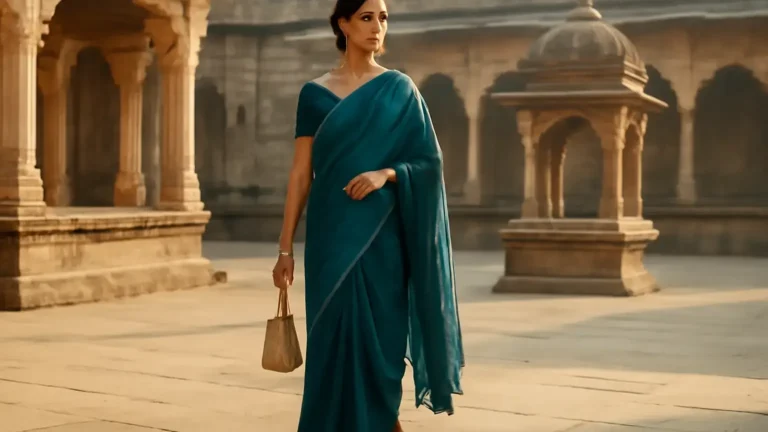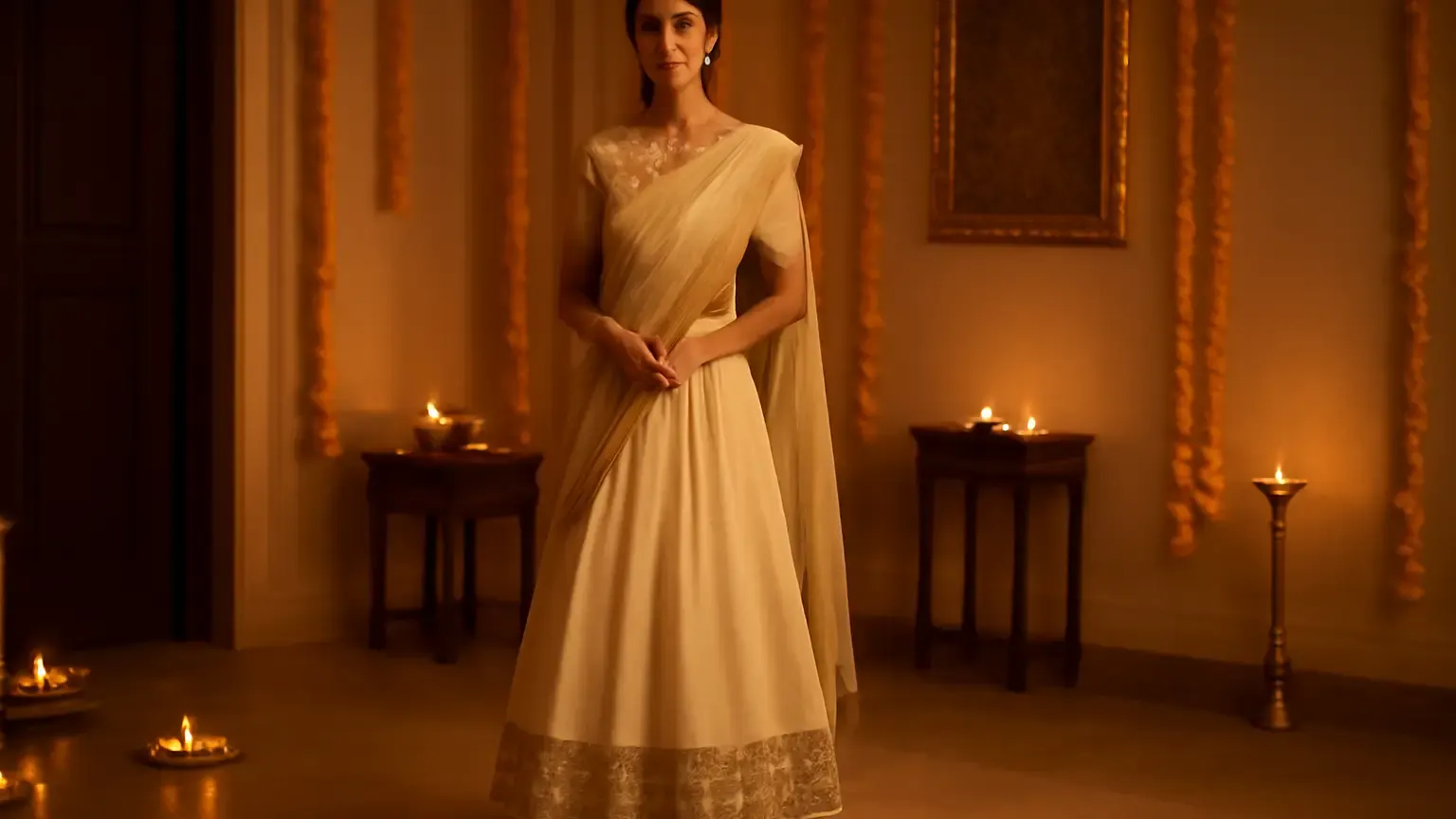
Festive fashion for petite women is easiest when every garment creates a clear vertical line and keeps visual weight close to the body. This guide is for shorter women choosing sarees, suits or lehengas for Diwali, weddings and family celebrations. The most reliable decisions are a well-placed waist, controlled hem volume, a proportionate blouse, smaller print scale, modest jewellery and comfortable footwear that adds height without making the outfit difficult to walk in.
Petite dressing is not about hiding your height or following a single “slimming” formula. It is about balancing the relationship between fabric, body, accessories and movement. A heavily flared skirt, long blouse and oversized jewellery can each look beautiful separately but overwhelm a smaller frame when combined. The aim of proportion-balancing outfits is to make the outfit look intentional from head to toe.
Use the seven choices below as a practical fitting checklist. You do not need to follow all seven rigidly; choose the adjustments that suit your comfort, body shape and the formality of the event.
1. Choose a hemline that leaves the silhouette visible
Long garments can work beautifully on a petite frame, but excess fabric should not pool around the feet. For sarees, the lower edge should sit close to the floor when you are wearing the footwear planned for the event. A saree that is too long can create distracting folds, while a very short drape may look unfinished.
For suits, the best anarkali length for short height usually falls at the ankle or just above it, depending on the flare and shoes. An ankle-skimming hem lets a narrow strip of footwear show and prevents the body from appearing swallowed by fabric. Straight-cut or lightly flared kurta sets can finish below the knee or mid-calf, provided the trousers create a clean line.
Lehengas need similar control. A skirt should skim the top of the foot rather than drag across it. Keep the border moderate in width, because a very broad contrasting border creates a strong horizontal break near the floor. If you love a statement border, balance it with a simpler blouse and dupatta.
2. Place the waist higher and keep the blouse visually neat
Waist placement is one of the fastest ways to alter perceived proportions. A lehenga waistband that sits at the natural waist, or slightly above it if comfortable, gives the legs a longer visual start. The same principle applies to a saree: a tidy tuck and a pleat line that falls vertically can make the lower half look more continuous.
When choosing high-waisted ethnic wear, check that the waistband does not cut into the body when sitting. Comfort matters at long celebrations. A slightly raised waist with a well-fitted blouse is more effective than an extremely high waist that causes bunching.
Make the blouse work with the skirt or saree
Cropped blouse designs can suit petite women when the hem ends at a flattering point and does not expose an awkward gap during movement. A blouse that is too long can shorten the legs, while one that is too cropped may feel impractical. Try sitting, lifting your arms and walking before final alterations.
For the neckline, a moderate V, square, sweetheart or open round shape can create breathing space around the face and upper body. The best choice depends on your proportions and comfort, but a neckline that is not crowded with heavy embroidery generally looks lighter. This answers a common question: which blouse neckline suits petite women? Usually, a defined neckline with controlled detailing works better than a high, heavily embellished front that visually compresses the torso.
3. Use print scale and borders strategically
Prints are not off-limits in petite Indian festive wear. The useful decision is scale. Small to medium motifs, closely spaced florals and delicate butis tend to maintain a sense of continuity. Large motifs can still work, especially on a blouse or dupatta, but they need breathing room and should not compete with a wide border, dense embroidery and oversized jewellery all at once.
Vertical prints for petite frames can be especially useful on straight kurtas, sarees and dupattas. Narrow stripes, elongated motifs, vertical embroidery panels and repeated lines guide the eye up and down. A border running along the length of a dupatta can create a similar effect when worn over one shoulder.
Colour can help too. A monochrome or closely related colour palette reduces abrupt visual breaks. This does not mean every piece must be identical. A deep rose lehenga with a softer rose blouse, or an ivory suit with a slightly darker dupatta, can look cohesive without being flat. If you prefer contrast, keep it focused in one area rather than dividing the outfit into several equally strong blocks.
4. Select the right volume for sarees, suits and lehengas
Volume should be deliberate rather than automatically reduced. Petite women can wear a dramatic outfit; the key is to let one element lead. If the lehenga has a full flare, choose a closer-fitting blouse and a dupatta draped in a narrow, clean line. If the blouse has statement sleeves, reduce skirt embellishment or keep the drape uncomplicated.
For petite saree styling, make pleats narrow and even, and pin them securely so they remain vertical. A lightweight georgette, chiffon, crepe or soft silk blend may be easier to manage than a very stiff, bulky textile, although fabric choice should also reflect the occasion and season. A lighter pallu placed over one shoulder can prevent the upper body from appearing crowded.
In suits, excessive gathers at the waist can add width and shorten the line. A lightly flared kurta, straight palazzo or narrow cigarette pant often gives more definition than multiple layers of gathered fabric. Those wanting a traditional look can retain volume in the dupatta while keeping the base silhouette clean.
5. Treat footwear as part of the outfit, not an afterthought
The right footwear should add a little height, support the outfit’s line and remain wearable for the whole event. Pointed-toe juttis, low wedges, block heels and platform sandals can visually extend the foot. Choose the height after checking the final hem, especially for a saree or lehenga.
For comfortable festive footwear, prioritise a stable base, soft straps and enough room at the toes. A narrow high heel that changes your walk can make the whole look appear less confident. A modest block heel is often more practical for uneven floors, ceremonies that involve standing and dancing.
When considering how to choose festive footwear for short women, match the shoe as closely as practical to the outfit or skin tone if you want a continuous line. A strong ankle strap creates a horizontal break, so use one only when it is comfortable and intentionally styled. Always carry a small blister-cover or foot cushion for long functions, particularly if the footwear is new.
6. Scale jewellery to the neckline and garment detail
Jewellery can frame the face and add festive richness, but too many large pieces can overwhelm a petite silhouette. Start with one focal point: earrings, necklace, maang tikka, kamarbandh or bangles. Then add supporting pieces that repeat the same scale or metal finish.
Minimal jewellery styling does not have to look plain. A pair of medium jhumkas with slim bangles may have more impact than a heavy necklace, large earrings and a broad waistband worn together. If the blouse already has a high neckline or dense embroidery, let the earrings lead. If the neckline is open and simple, a short necklace can add definition.
Keep the jewellery’s visual weight in proportion to the outfit. Delicate embroidery usually benefits from refined accessories, while a richly woven silk can support slightly more traditional ornamentation. The deciding factor is not whether a piece is “allowed” for petite women, but whether the full look has a clear focal point.
7. Build one uninterrupted line from hair to hem
The final choice is coordination. Hair, dupatta, blouse, skirt, shoes and jewellery should not all create separate stopping points. A sleek low bun, a softly pinned braid or a controlled half-up style can keep the upper silhouette tidy when the outfit is detailed. Choose the hairstyle based on face shape, hair texture and the event rather than height rules alone.
For dupattas, a narrow front drape or a clean one-shoulder fall often supports verticality better than several loose folds across the torso. If you prefer a two-shoulder drape, keep both sides similar in length and avoid letting the edge end at the widest part of the body.
This is also where petite-friendly sleeve lengths help. Sleeves that finish around the elbow or wrist can look polished when the width is controlled. Very wide sleeves ending at the mid-forearm may add a horizontal block, while a slim full sleeve can create a longer line. Test the sleeve with bangles and dupatta placement before deciding.
Quick outfit formulas for different occasions
- Family puja or daytime celebration: Choose a small-print saree with narrow pleats, a defined blouse neckline, low block heels and medium earrings.
- Wedding guest look: Try a high-waisted lehenga with moderate flare, a shorter fitted blouse, a narrow dupatta drape and one statement jewellery piece.
- Office or intimate festive gathering: Wear a straight kurta set with vertical embroidery, ankle-length trousers, a tonal dupatta and comfortable juttis.
- Evening reception: Select a monochrome or low-contrast palette, a controlled anarkali flare, pointed footwear and a clean hairstyle.
Common proportion mistakes to avoid
- Buying a ready-made lehenga without checking the waistband, blouse length and final hem together.
- Combining a broad border, large motifs, dramatic sleeves and heavy jewellery in one look.
- Setting the saree length before deciding which shoes you will wear.
- Using a very long, loose dupatta to conceal the outfit instead of pinning it for a clear shape.
- Choosing an outfit only for photographs and ignoring sitting, walking, stairs and dancing.
A simple fitting routine before the event
- Wear the intended innerwear, footwear and jewellery while trying on the outfit.
- Take front, side and walking photographs in natural light to check where the eye stops.
- Sit, climb a few steps and raise your arms. Correct slipping, dragging or tightness before adding accessories.
- Remove one element if the outfit has no clear focal point. Often this means a lighter dupatta or fewer jewellery pieces.
Takeaway: Festive fashion for petite women works best when the waist is clear, hems are controlled, prints are intentional and accessories support rather than interrupt the silhouette. Start with the garment’s fit, then choose footwear, drape and jewellery as part of the same proportion plan.
Products that may help with this routine
Choose only what fits your skin, hair or personal needs. Use the links below to view current options on Amazon India.
Frequently Asked Questions
What saree length is best for petite women?
A saree should reach close to the floor when worn with the event footwear, without dragging or pooling. Narrow, even pleats and a tidy pallu usually create a cleaner line than excessive fabric.
How do I style a lehenga for short height?
Choose a natural or slightly raised waist, a fitted blouse of moderate length, a controlled flare and a skirt hem that lightly skims the foot. Keep either the skirt, blouse or jewellery as the main focal point.
Which blouse neckline suits petite women?
Moderate V, square, sweetheart and open round necklines can work well because they create definition without crowding the upper body. Select the neckline according to comfort, bust coverage and the blouse’s embroidery.
What is the best anarkali length for short height?
An ankle-skimming anarkali or one that finishes just above the ankle usually works well, provided the flare is not so full that it hides the feet. Final length should be set with the intended footwear.
Can petite women wear large prints for festivals?
Yes. Use large prints as a focused feature on the blouse, dupatta or one panel, and balance them with simpler surrounding pieces. Avoid combining several oversized motifs with broad borders and heavy accessories.
How can petite women make festive outfits look taller?
Use a clear waist, vertical pleats or embroidery, a closely related colour palette, controlled hems and footwear that does not create a harsh ankle break. These choices lengthen the visual line without requiring uncomfortable heels.