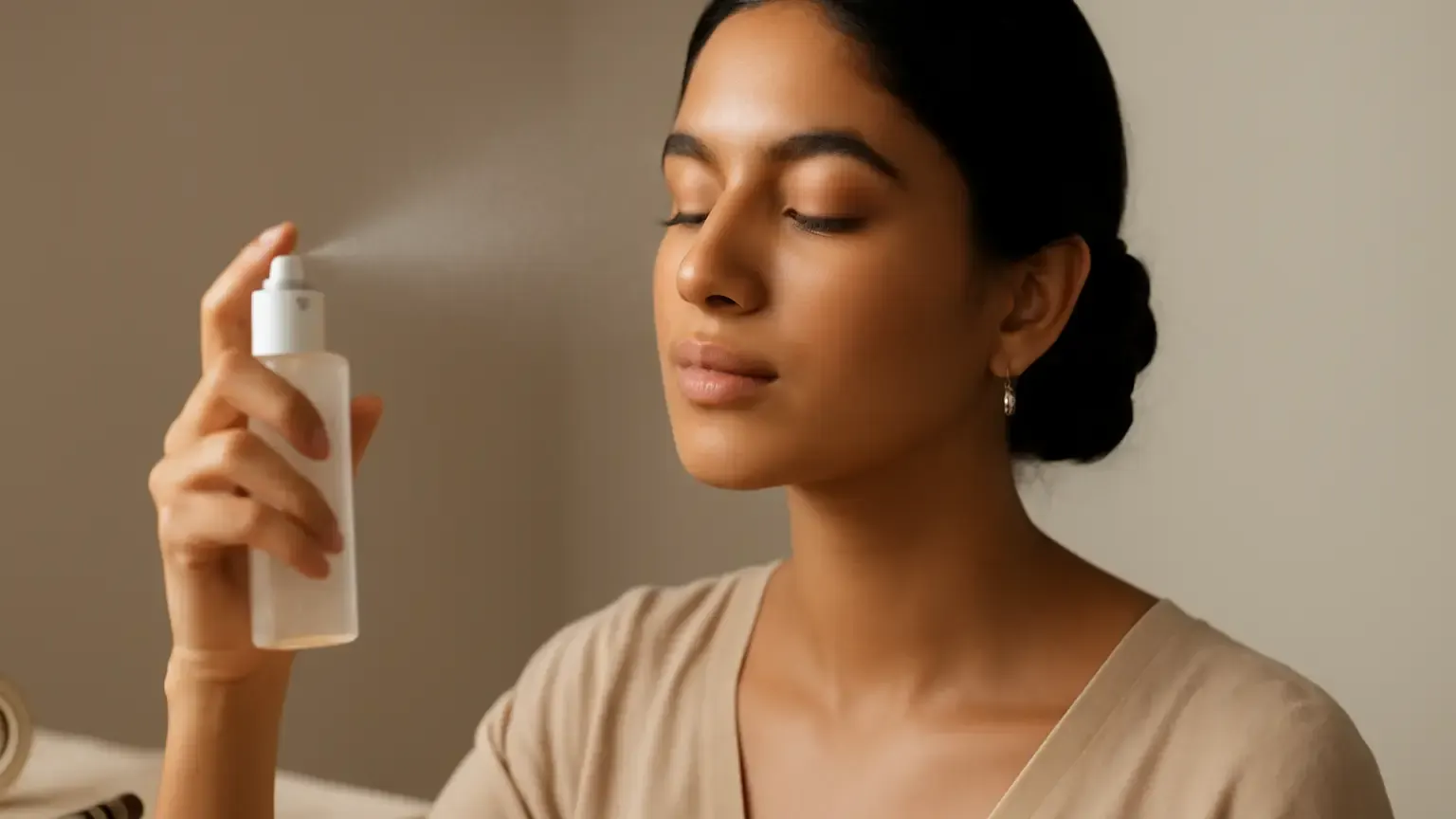
Makeup setting spray is most useful when you need powder, cream and liquid products to look more cohesive and last through heat, humidity or a long day. This guide is for anyone choosing between setting and fixing sprays, especially Indian makeup users managing oily T-zones, dry patches or event makeup. The practical answer: use a setting spray for finish and light wear support, reserve a fixing spray for stronger hold, and skip both when carefully placed powder already does the job.
A spray can be the finishing touch that makes makeup look less dusty, but not every bottle labelled “setting” or “fixing” performs the same role. Names are not fully standardised across beauty brands, so the ingredient list, finish and strength of the film it leaves on the skin matter more than the front label.
What does makeup setting spray do?
Makeup setting spray is a fine liquid mist applied over finished makeup. Its main job is to help layers of foundation, concealer, blush, bronzer and powder sit together visually. Many formulas contain water-binding ingredients, solvents and cosmetic film-formers that can reduce a powdery appearance and offer some support against fading or light transfer.
It does not create an invisible shield that makes makeup completely sweatproof, waterproof or rub-proof. Your result depends on the formula, how much makeup is underneath, skin oils, humidity and whether you touch your face. Think of it as a finish-and-wear-support product rather than a guarantee of all-day perfection.
Setting spray vs fixing spray: the useful distinction
In everyday beauty shopping, “setting spray” often refers to a lighter product designed to melt powders together and add a matte, natural or dewy makeup finish. A fixing spray usually suggests a stronger film intended to improve makeup longevity and reduce movement. However, some brands use the terms interchangeably, while others call a strong-hold product a setting spray.
| Feature | Setting spray | Fixing spray |
|---|---|---|
| Primary purpose | Unifies layers and refines the finish | Provides stronger hold against fading or transfer |
| Best for | Daily makeup, powder-heavy looks and a less cakey appearance | Long events, stage-style makeup or high-humidity occasions |
| Feel and finish | Often lighter, with matte, natural or dewy options | May feel more film-forming or noticeable once dry |
| What to check | Finish, skin comfort and compatibility with your base | Hold claims, alcohol content and possible dryness or sensitivity |
So, fixing spray vs setting spray is not a universal technical rule. If a product promises strong hold, read its directions carefully and patch-test it if your skin is easily reactive. For most everyday routines, a comfortable setting spray is sufficient.
How to use makeup setting spray correctly
The best results come from a controlled mist rather than soaking the face. Follow these steps:
- Finish the makeup first. Complete foundation, concealer, colour products and any final powder placement. If you use mascara or eyeliner that smudges easily, allow it to dry before spraying.
- Shake the bottle. This helps distribute ingredients that may settle between uses.
- Use the right spray application distance. Hold the bottle roughly 20–30 cm from your face, unless the product directions specify otherwise. Too close can leave wet spots; too far can create uneven coverage or let the mist drift away.
- Mist in a simple pattern. Close your eyes and mouth, then spray in an X and T pattern or use a few even passes. Two to four light sprays are usually more useful than one heavy layer.
- Let it air-dry. Do not immediately press a sponge or rub the skin. Fanning can disturb makeup and is unnecessary.
If you are asking how to use makeup setting spray over a delicate eye look, keep the eyes closed and avoid spraying directly into them. If the nozzle produces large droplets, clean or replace it according to the product instructions rather than holding the bottle closer.
Choose by skin type and desired finish
For oily or combination skin
Look for a lightweight, non-greasy formula and a soft-matte or natural finish if shine is your concern. A setting spray for oily skin should complement—not replace—a sensible oily skin makeup routine: moisturise lightly, use long-lasting base makeup where needed, and powder only the T-zone or areas that crease. Applying several layers of strong-hold spray can make the surface feel tight without stopping oil production.
For the query “best setting spray for oily skin in India”, there is no single winner for every person. Heat, humidity, sunscreen, foundation texture and your preferred finish all change the result. Compare the formula’s finish and comfort, not just its hold claim.
For dry or dehydrated-feeling skin
In a dry skin makeup routine, excessive powder and high-alcohol formulas can emphasise texture. Choose a hydrating-feeling mist with a natural or radiant finish, but do not treat it as a moisturiser. Apply a suitable moisturiser and sunscreen first, allow them to settle, then use a thin base. A few sprays can soften a powdery look; too much liquid over dry patches may make the makeup separate.
Is setting spray good for dry skin? It can be, particularly when it reduces a chalky appearance and feels comfortable. Test it on a small area first if fragrance or alcohol commonly bothers your skin.
For normal skin or a special event
Choose according to the look you want. A natural or dewy makeup finish can suit fresh daytime makeup, while a matte makeup finish may be more practical for photographs or a long ceremony. For an event, test the complete combination of primer, base, powder and spray beforehand; products that work well individually can still pill or separate together.
When powder is enough—and when to skip spray
You can skip setting spray when your makeup is light, your day is short, or you already have good control with targeted powder. Powder is often the more precise choice for a shiny forehead, under-eye creasing or makeup that moves in a small area. This is especially true when you dislike fragrance, a wet sensation or the possibility of a film on your skin.
Powder versus setting spray is not an either-or decision. Powder absorbs and anchors in selected areas; spray can blend the appearance of layers across the whole face. Use one, the other or both based on need:
- Choose powder alone for short wear, targeted shine control and a more controlled matte result.
- Choose spray alone when the makeup looks powdery or you want a lighter, more seamless finish.
- Use both for a long day: powder the areas that crease or shine, then mist lightly once the rest of the makeup is complete.
- Skip both when your base already looks balanced and additional layers make it feel heavy.
For maximum durability, a thin layer of powder beneath a compatible fixing product can work, but layering should be tested. More product does not automatically mean better makeup longevity.
Common mistakes that reduce wear time
- Spraying too close: Large wet droplets can create spots, disturb blush and make foundation patchy.
- Over-spraying: A soaked face takes longer to dry and may break down cream products rather than secure them.
- Using spray to fix poor prep: Uneven skincare, too much sunscreen or incompatible base layers can still cause pilling and separation.
- Ignoring the finish: A radiant formula can increase the appearance of shine, while a strong matte formula may make dry areas look flatter.
- Rubbing after misting: Touching the face while it is drying can lift coverage and create marks.
- Expecting a spray to stop sweat: Makeup products cannot control perspiration. Blot gently and reapply selectively instead of repeatedly soaking the face.
A simple decision guide
Ask four questions before buying. Do you need a more seamless finish or stronger hold? Is your skin mainly oily, dry or mixed? Will you wear the makeup for two hours or through a humid, crowded event? Finally, do you prefer matte, natural or dewy results?
For daily office or college makeup, a comfortable setting spray—or no spray—usually makes sense. For a wedding, performance or long outdoor day, a compatible fixing spray may be worth considering after a trial run. If your skin is sensitive, prioritise a simple formula and discontinue use if it causes persistent burning, itching or irritation; seek medical advice for severe or ongoing symptoms.
Final takeaway
Makeup setting spray is best viewed as a finishing and blending step, while fixing spray generally aims for a stronger hold, though labels vary. Hold the bottle 20–30 cm away, mist lightly and match the finish to your skin and occasion. Powder may be enough for targeted shine or short wear, and skipping both is perfectly reasonable when your makeup already looks comfortable and secure.
Products that may help with this routine
Choose only what fits your skin, hair or personal needs. Use the links below to view current options on Amazon India.
Frequently Asked Questions
How to use makeup setting spray without making makeup wet?
Hold the bottle about 20–30 cm away, close your eyes and mouth, and use two to four light sprays in an X and T pattern. Let the mist air-dry instead of rubbing or pressing the face.
Setting spray or fixing spray which is better?
A setting spray is usually better for daily makeup, a seamless finish and light wear support. A fixing spray may suit long events or humid conditions when stronger hold is needed, but product labels vary, so check the formula and finish.
Can I skip setting spray if I use powder?
Yes. Powder can be enough for short wear, targeted shine control or areas that crease. Use spray only if you want to soften a powdery look or add extra support for a longer day.
Is setting spray good for dry skin?
It can be useful when it reduces a powdery appearance, particularly in a natural or radiant finish. Use a comfortable formula over well-moisturised skin, and avoid applying enough to leave dry patches wet or heavy.
What is the best setting spray for oily skin in India?
The best choice depends on your foundation, climate, preferred finish and skin comfort. Look for a lightweight natural or soft-matte formula, use targeted powder on the T-zone and test the full routine before an event.