Winter hair care India works best when you adjust your routine before the first dry, chilly weeks—not when your scalp already feels tight and your ends turn rough. This guide is for anyone dealing with seasonal dryness, frizz or static, especially in cooler North Indian cities and dry indoor air. Make six changes: wash more gently, condition more richly, comfort the scalp, reduce heat, manage static and protect hair while styling. The result is a simpler routine with fewer winter-specific problems.
Winter does not affect every Indian hair routine in the same way. A dry, cold spell in Delhi, Jaipur or Chandigarh may increase roughness and static, while coastal cities can remain humid. Indoor fans, heaters, hot showers, woollen clothing and frequent shampooing also influence how hair feels. The aim is not to stop washing or coat the scalp in heavy oil; it is to retain enough moisture without creating buildup.
Use the six changes below as a pre-winter checklist. Start with the change that matches your main concern, then add the others only if your hair needs them.
1. Make washing gentler and review your hair wash frequency
A winter routine should clean the scalp without leaving the lengths squeaky, tight or straw-like. Hot water and strong cleansing can remove surface oils quickly, particularly if your hair is curly, coloured, chemically treated or naturally dry.
What to change
- Use lukewarm rather than very hot water. Finish with a comfortable, slightly cooler rinse if you prefer, but there is no need for an icy rinse.
- Choose a gentle shampoo for regular use and apply it mainly to the scalp. Let the lather run through the lengths instead of scrubbing them directly.
- Wash according to oil, sweat, pollution and styling-product buildup—not according to a fixed winter rule. Some people need every other day; others are comfortable with two washes a week.
- Detangle gently before washing if the hair is prone to knots, and use your fingertips rather than scratching with nails.
People who exercise frequently, wear helmets for long commutes or have an oily scalp may still need regular cleansing in winter. The practical adjustment is a milder formula and better technique, not automatically fewer washes. If a shampoo leaves the scalp persistently uncomfortable, switch gradually rather than layering oil over the irritation.
2. Add richer conditioning without weighing hair down
Cold, dry air can make the outer hair cuticle feel less smooth. The simplest response is more consistent conditioning, especially from the ears downward. Winter hair moisturising is about improving slip and reducing moisture loss; it does not mean making every strand greasy.
After every wash, apply conditioner to the mid-lengths and ends. Leave it on for the time stated on the product, then rinse thoroughly. Once a week, or whenever the ends feel rough, use a deep conditioning hair mask. Fine or straight hair may need a light mask for five to ten minutes, while thick, curly or highly porous hair may benefit from a richer formula used less often.
A leave-in conditioner can help between washes when the lengths are dry or tangled. Use a small amount on damp hair, concentrating on the ends. Start with less than you think you need; adding another small amount is easier than removing residue. If hair becomes limp, waxy or visibly coated, reduce the frequency or choose a lighter product.
3. Treat scalp comfort as a separate step
The scalp and the hair lengths have different needs. A dry-feeling scalp may need a gentler wash and lighter comfort, while the ends may require a mask. Heavy oiling is not the only solution, and it can be inconvenient for people with an oily scalp, fine hair or regular workouts.
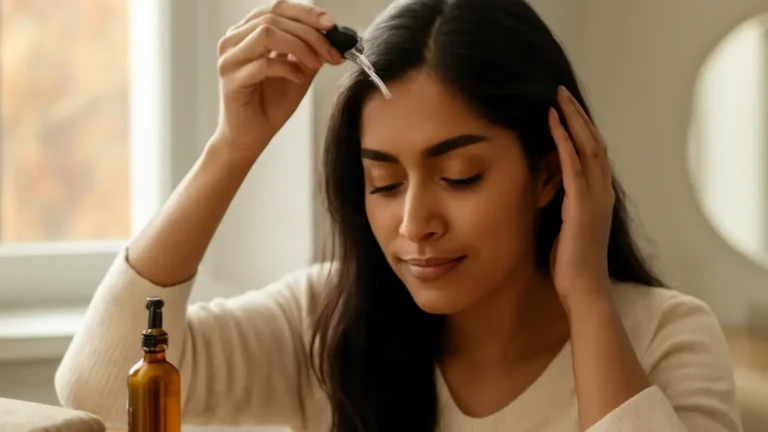
For dry scalp in winter, begin with simple measures: avoid very hot water, do not scratch, rinse shampoo completely and allow the scalp to dry rather than keeping it damp under a cap. If you enjoy oiling, try scalp-friendly hair oiling before a wash. Use a small amount, massage with light pressure and leave it on for a limited period that suits your washing routine. Stop if it causes itching, increased flakes or discomfort.
Do not confuse a dry sensation with every type of flaking. Persistent flakes, redness, soreness, crusting, sudden hair shedding or intense itching deserve advice from a dermatologist rather than repeated home remedies. Beauty care can support comfort, but it cannot identify or treat a scalp condition.
4. Reduce heat styling damage before it becomes your default
Winter often encourages longer blow-drying, hotter settings and repeated straightening because hair takes longer to dry. That combination can make brittle ends and frizz more noticeable. Reducing heat styling damage does not require abandoning every heated tool.
- Gently squeeze excess water with a microfibre towel or soft cotton T-shirt instead of rubbing wet hair vigorously.
- Let hair air-dry partially before using a dryer, when your schedule and climate allow.
- Use the lowest effective heat and keep the dryer moving rather than holding it over one section.
- Apply a heat protectant before blow-drying, straightening or curling, following the product directions.
- Keep heated styling for selected days instead of restyling daily to control small amounts of frizz.
For naturally curly or wavy hair, a diffuser on a moderate setting may provide more control than brushing the hair repeatedly while it dries. For straight, fine hair, a lower heat setting and a lightweight protectant can reduce the risk of a coated, flat finish.
5. Build an anti-static hair care habit
Static appears when dry hair and dry air interact with friction from combs, sweaters, scarves and caps. It is especially common when hair is fine, dehydrated or repeatedly rubbed against synthetic and woollen fabrics. An anti-static hair care plan should reduce both dryness and friction.
Apply a small amount of leave-in conditioner or a smoothing product to the lengths before putting on a scarf or cap. Use a wide-tooth comb or a brush suited to your hair type, and avoid aggressive brushing once the hair is dry. A wooden comb may feel comfortable for some people, but no comb material prevents static on every hair type.
Do not keep adding oil whenever flyaways appear. Too much oil can attract dust, flatten the roots and make the next wash more difficult. Instead, smooth a tiny amount over the surface or use a product designed for lightweight frizz control. If static is concentrated around the crown, look at the fabric touching your hair as well as the hair product you are using.
6. Change how you protect and style hair outdoors
Protective styling for winter should limit friction, pulling and exposure while remaining loose enough for comfort. Tight buns, high ponytails and repeated rubber-band use can stress the same areas, especially when hair is dry and less flexible.
Choose a loose braid, low ponytail, soft bun or tucked style for commutes and outdoor errands. Use fabric-covered ties or silk or satin scrunchies where practical. Secure the style gently and vary its position instead of pulling the same hairline every day.
Use wool caps thoughtfully
Wool cap hair protection is useful in genuinely cold weather, but direct friction can create tangles and static. If a cap feels rough, place a smooth, breathable layer between the fabric and hair, or choose a lined cap that does not snag. Make sure the cap is clean and not so tight that it causes pressure or discomfort. Never put a heavy cap over soaking-wet hair; let the scalp and roots dry first.
For long hair, a loose braid under the cap usually creates less friction than leaving the lengths loose. For short hair, a small amount of leave-in product on the ends may be enough. If your hair is curly, preserve the shape with a loose pineapple or gentle wrap rather than flattening it under repeated tight headwear.
A practical Indian winter hair care routine
Here is a simple way to combine the changes without buying a completely new shelf of products:
- Before washing: detangle carefully. If your scalp and hair tolerate it, use a small amount of oil before a wash rather than leaving heavy oil on overnight by default.
- During washing: use lukewarm water, a gentle shampoo on the scalp and a thorough rinse.
- After washing: condition the lengths every time. Add a mask periodically if the ends still feel rough.
- Drying: squeeze, do not rub. Part-air-dry where possible and use heat protection before a dryer or tool.
- Between washes: smooth a little leave-in conditioner over dry lengths, control static with less friction and keep hairstyles loose.
- Weekly review: check whether your hair feels dry, coated, limp or irritated, then adjust one product or step rather than changing everything at once.
This routine suits many straight, wavy and curly hair types, but the balance differs. Fine hair may need frequent washing and lightweight conditioning. Thick or curly hair may prefer richer conditioning and less frequent cleansing. Coloured or chemically treated hair usually benefits from lower heat and more careful detangling. Weather also matters: a dry North Indian winter may require more moisture support than a mild coastal season.
Common winter hair mistakes to avoid
- Using very hot water: it can make the scalp and lengths feel more stripped.
- Skipping conditioner: dry hair tends to tangle and experience more friction when it lacks slip.
- Oiling heavily before every wash: this is not necessary for everyone and may leave some scalps uncomfortable or hair weighed down.
- Rubbing with a towel: rough handling while wet can increase tangling and breakage.
- Wearing a damp cap or tying wet hair tightly: this creates unnecessary friction and discomfort.
- Chasing frizz with constant heat: short-term smoothness can come at the cost of rougher ends over time.
Takeaway
Good winter hair care India does not need to be complicated. Start before the coldest weeks by switching to gentler washing, conditioning more deliberately, keeping the scalp comfortable, limiting heat, reducing friction and choosing loose protective styles. Adjust the routine for your hair texture, scalp comfort and local climate; the best winter plan is the one that keeps hair clean, comfortable and manageable without unnecessary buildup.
Products that may help with this routine
Choose products based on your skin, hair or personal needs rather than buying every item in a routine.
- Gentle Shampoo For Dry Hair Amazon India
(paid link) See relevant options on Amazon - Deep Conditioning Hair Mask Amazon India
(paid link) See relevant options on Amazon - Leave In Conditioner For Frizzy Hair Amazon India
(paid link) See relevant options on Amazon - Satin Scrunchies For Hair Amazon India
(paid link) See relevant options on Amazon
Frequently Asked Questions
How often should I wash my hair in winter India?
Wash as often as your scalp, activity level and product buildup require. Many people are comfortable every other day or two times a week, but oily scalps, frequent workouts and helmet use may require more regular washing. Use lukewarm water and a gentle shampoo rather than skipping washes automatically.
How can I stop frizzy hair in winter India?
Condition after every wash, use a small amount of leave-in conditioner on damp or dry lengths, reduce towel friction and limit high heat. Loose hairstyles and smooth-lined caps can also reduce rubbing from winter clothing.
What is the best oil for dry scalp in winter India?
There is no single best oil for every scalp. If you enjoy oiling, choose a simple hair oil your scalp tolerates, use a small amount before shampooing and massage gently. Stop if it increases itching, flakes or discomfort; persistent symptoms should be assessed by a dermatologist.
What is a winter hair care routine for dry hair in India?
Use lukewarm water and a gentle shampoo, condition every wash, apply a deep-conditioning mask periodically, reduce heat styling and use a leave-in conditioner on the ends. Protect the hair from friction with loose styles and a smooth-lined cap.
How should I protect my hair from wool caps in winter?
Avoid direct rough friction by choosing a smooth-lined cap or wearing a breathable layer underneath. Keep the cap clean, avoid putting it over wet hair and wear the hair in a loose braid or low style to reduce tangling.
Should I use a hair mask in winter?
A hair mask can help if the lengths feel rough, tangled or dehydrated. Use it about once a week or according to the product directions, applying it mainly from the mid-lengths to the ends. Fine hair may need a lighter formula or less frequent use.