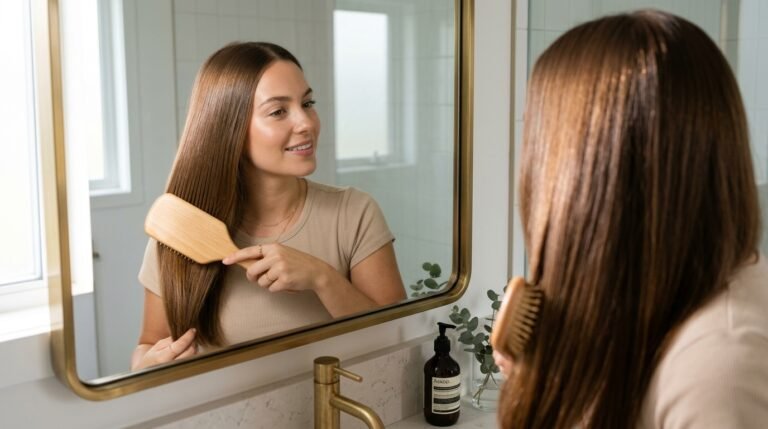
You leave home with smooth hair, but one humid commute later the roots feel sweaty, the lengths are frizzy and the helmet lining is damp. If you are wondering how to take care of hair in rainy season, do not reach for a rigid wash timetable or another DIY treatment. Respond to what happened: clean a genuinely sweaty or dirty scalp, condition the lengths, dry gently and avoid trapping damp hair in a tight style.
Quick answer: How should you take care of your hair in the rainy season?
Wash according to how quickly your scalp becomes oily, sweaty or dirty—not simply because it is monsoon. After substantial rain exposure, rinse or shampoo when needed, condition the lengths and dry the roots. Blot instead of rubbing, detangle gently with a wide-tooth comb and do not tie or cover very wet hair.
Shampoo frequency may change, but the basics—gentle cleansing, conditioner and low-friction drying—remain useful. For a broader seasonal checklist, see monsoon hair care tips for humid weather.
What does rainy-season weather actually change?
High humidity can make a hairstyle lose shape quickly and make frizz, puffiness or flat roots more noticeable. Sweat, hair oil and styling residue may also feel heavier during an Indian bus, bike or auto-rickshaw commute. A helmet or scarf can hold that moisture close to the scalp until it is removed.
Monsoon does not automatically cause dandruff, fungal infection or hair loss. An itchy or flaky scalp can reflect dandruff, product irritation, eczema, psoriasis or scalp ringworm, and these need different care. Respond to dampness and buildup without self-diagnosing the symptom.
What to do after your hair gets wet in rain
1. Remove the wet layer
Remove a damp helmet, cap, scarf or dupatta when you reach shelter. Blot the scalp and lengths; do not twist or scrub. The American Academy of Dermatology (AAD) advises wrapping or pressing hair with a towel or T-shirt rather than rubbing it dry.
2. Decide whether you need a rinse or shampoo
A few raindrops do not automatically require a full wash. If the hair is soaked, the scalp is sweaty, or the commute has left dust and product residue, rinse thoroughly or shampoo when practical. If only the ends are damp, blot and dry them. Ask what is on the scalp—not whether one raindrop touched it.
3. Clean the scalp, not the lengths aggressively
Massage shampoo gently over the scalp with your fingertips. Let the lather run through the lengths while rinsing instead of rubbing shampoo through every strand. This approach removes scalp oil and buildup while limiting unnecessary dryness along the hair shaft.
4. Condition according to hair type
Apply rinse-off conditioner after shampooing. For fine or straight hair, concentrate it on the ends; dry, curly or coily hair may need conditioner through more of the length. Rinse as the label directs. Conditioner helps with detangling and manageability—it does not need to sit heavily on an oily scalp.
5. Dry before you tie, cover or sleep
Press out excess water, keep the hair loose and let it partially air-dry. If the roots stay wet or time is short, keep a hair dryer moving on low or medium heat. The AAD recommends lower settings because excessive heat can damage hair.
A practical rainy-season hair routine at home
Wash when the scalp needs it
There is no universal “three washes a week” rule. The AAD recommends washing according to how quickly hair becomes dirty or oily: straight hair with an oily scalp may need frequent washing, while dry, thick, curly or coily hair usually needs less. Let visible oil, sweat, buildup and hair texture set the schedule. For more detail, see how often to wash your hair.
Condition after shampooing
Apply conditioner after washing and detangle from the ends upward. Straight hair is easier to comb after it dries a little; thick, curly or tightly coiled hair may be easier to detangle while damp and conditioned.
If humidity makes the lengths difficult to manage, a leave-in conditioner can reduce frizz and ease detangling. Use the smallest effective amount from mid-lengths to ends, choosing a lighter formula for fine hair. For year-round help, see how to manage frizzy hair.
Dry with less friction
Do not rub, wring or repeatedly brush very wet hair. Blot, keep it loose and detangle according to texture. Air-dry when practical; use low heat when humid air leaves the roots wet for too long.
Reset after a sweaty commute
Remove the helmet or head covering, loosen the hair and let the scalp cool. Blot mildly sweaty roots; wash when the scalp feels greasy, dirty or uncomfortable. Clean and dry reusable helmet padding as directed. See oily scalp care for more product-specific guidance.
Adjust the routine to your scalp and hair
| What you notice | Practical adjustment | Why it may help |
|---|---|---|
| Fine hair goes flat and roots look greasy quickly | Shampoo as needed; keep conditioner and leave-in products mainly on the ends | Cleans the scalp without weighing down the roots |
| Curly, coily or dry lengths become puffy | Shampoo according to scalp need; condition more of the length; detangle while damp | More conditioning can improve slip and manageability |
| Colour-treated or heat-styled hair tangles easily | Reduce hot-tool use, condition after shampoo and use a compatible leave-in on the lengths | Chemically or heat-treated hair benefits from gentler handling |
| The scalp becomes itchy after a new product | Stop the new product, rinse thoroughly and simplify the routine | Shampoo, conditioner, dye or styling products can trigger irritation in some people |
| Flaking continues despite regular cleansing | Use an evidence-based dandruff shampoo as directed; see what actually helps dandruff | Persistent flakes are not solved by harder scrubbing or random DIY masks |
Monsoon beauty ideas for easier hair days
- Choose a loose braid, low ponytail or claw-clip style only after the hair is dry; avoid pulling tightly at the hairline.
- Keep a small absorbent towel or cotton handkerchief in your commute bag for the roots—not for vigorous rubbing.
- Use a pea-sized amount of anti-frizz or leave-in product on the lengths, then add more only if needed.
- Plan heat styling for days when it will add real value. Repeated straightening followed by immediate humidity often means more heat without longer-lasting results.
- Pair a clean hairline and dry helmet lining with your monsoon skin care routine, especially if sweat collects around the forehead.
Common rainy-season hair-care mistakes
- Following a fixed washing rule: “Twice a week” and “daily” can both be wrong. Wash according to oil, sweat, buildup, hair texture and any treatment instructions.
- Tying or covering dripping-wet hair: A tight style adds pulling and friction. Blot, partially dry and keep the style loose.
- Rubbing with a towel or forcefully brushing: Let straight hair dry slightly before using a wide-tooth comb; textured hair is often easier to detangle while damp.
- Treating a symptom with random DIY remedies: Lemon, onion juice, baking soda and undiluted essential oils do not diagnose or reliably cure an itchy scalp, dandruff or hair loss. Choose care based on the actual concern.
When should you see a dermatologist?
Seek professional assessment if the scalp is persistently very itchy, painful, red or swollen; develops sores, pus-filled bumps or thick scale; or has patchy hair loss. The NHS advises review when dandruff remains after about four weeks of anti-dandruff shampoo, is severe, or occurs with marked itching, redness or swelling.
Seek advice for sudden or continuing excessive shedding, a widening part, a thinner ponytail or bald patches rather than assuming the weather is responsible. Avoid starting supplements or medicated scalp products merely because an online post labels the problem “seasonal hair fall.”
Frequently asked questions
1. What should I carry for hair care during a rainy commute?
Carry an umbrella or rain hood, a clean cloth for blotting, a wide-tooth comb and a small leave-in product if needed. Keep wet items in a separate pouch.
2. Can dry shampoo replace washing after a sweaty commute?
No. Dry shampoo absorbs oil but does not clean the scalp. The AAD advises washing with regular shampoo and water after one or two dry-shampoo uses.
3. Should I shampoo every time my hair gets wet in rain?
Not necessarily. Blot minor dampness. Shampoo when the scalp or hair is substantially wet, sweaty, visibly dirty or coated with product and commute residue.
4. Is hair oil necessary in the rainy season?
No. Oiling is a grooming choice, not a required seasonal step or hair-loss treatment. If it makes the scalp itchy, very greasy or difficult to cleanse, use less or skip it.
5. Can I dilute normal conditioner and use it as a leave-in spray?
No. Rinse-off conditioner is not formulated to remain on hair. Use a labelled leave-in product sparingly on the mid-lengths and ends.
6. Does monsoon weather cause hair loss?
Rain does not explain hair loss. Breakage, ordinary shedding and medical hair loss can look similar in a comb or drain. A dermatologist can assess persistent shedding, thinning or bald patches.
7. When does an itchy monsoon scalp need medical advice?
Get advice if itching is severe or persistent, the scalp is red, swollen, painful or oozing, or you notice thick scale or patchy hair loss. Scalp conditions can resemble one another and may need different treatments.
A better rainy-season rule: respond, do not overcorrect
Knowing how to take care of hair in rainy season comes down to a simple hair care routine: assess dampness and sweat, cleanse as needed, condition the lengths, dry gently and keep wet hair loose. Make it part of consistent hair care for Indian weather, not a reset every time clouds gather.
Medical note: This article provides general educational information and does not diagnose or treat hair or scalp conditions.