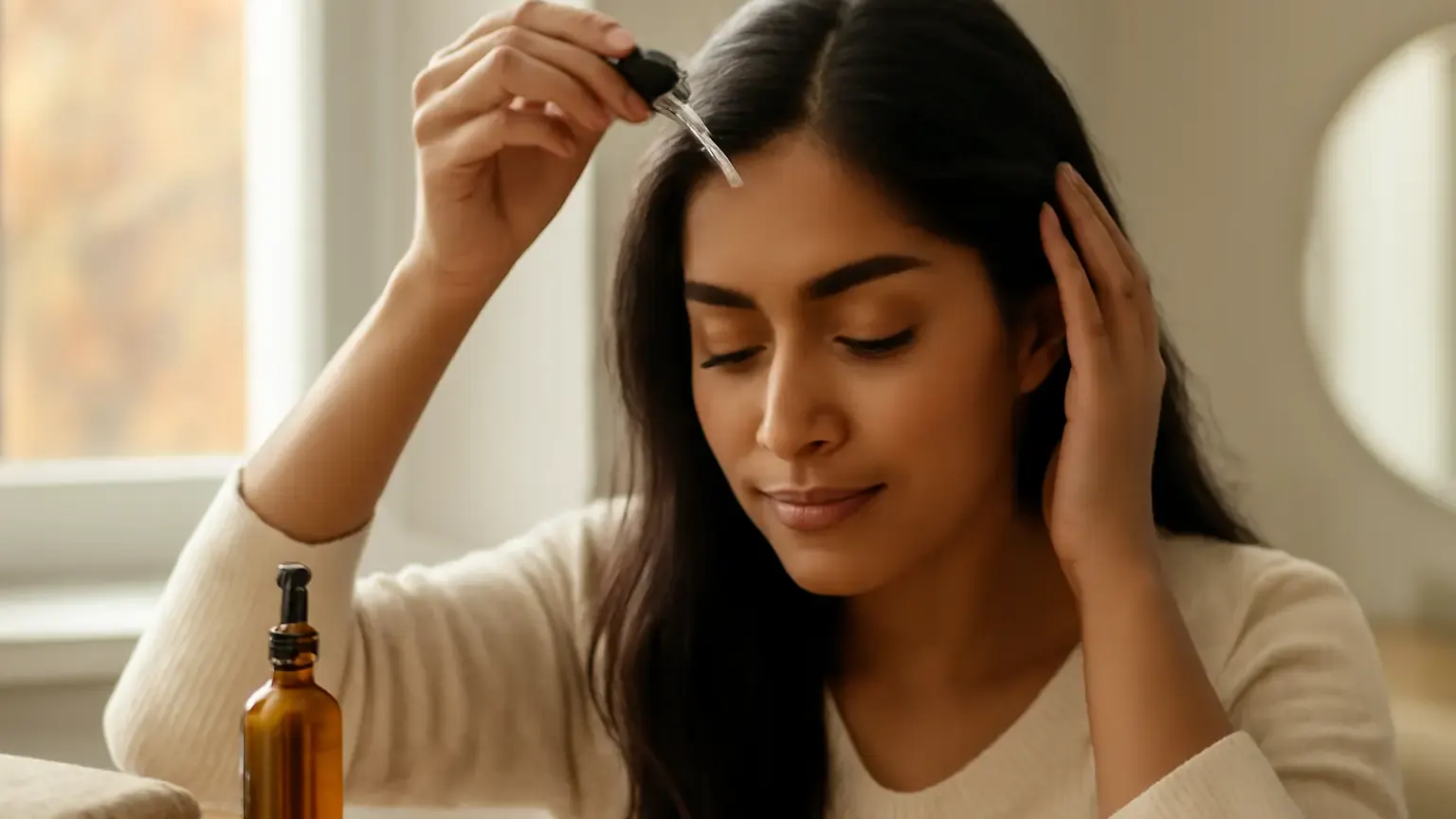
Hair care for dry scalp in October is mostly about making three calm adjustments: wash a little less aggressively, add light scalp hydration, and remove products that leave the skin feeling stripped. This routine suits people who notice tightness, mild dryness or small flakes when monsoon humidity shifts and indoor air-conditioning continues. The aim is a more comfortable scalp—not a cure for persistent itching or inflammation—and each step can be adapted to your hair texture, oil production and styling needs.
October can be an awkward month for the scalp in India. Monsoon humidity may begin to fall, while heat, dust, hard water and air-conditioning continue to affect the skin and hair. A scalp that felt comfortable in July can start to feel tight after washing, especially if you use hot water, shampoo frequently or layer several styling products.
Dryness does not always mean your scalp needs a heavy oil treatment. Tightness can also come from over-cleansing, hot water, residue, fragrance sensitivity or a combination of changing weather conditions. This three-step hair care for dry scalp plan focuses on reducing unnecessary stripping while keeping the routine practical for Indian hair types and busy schedules.
First, check whether dryness is the real concern
A dry scalp often feels tight after cleansing and may show fine, loose flakes. Hair lengths can also feel rough or static-prone. By contrast, stubborn greasy scale, marked redness, burning, sores or intense itching may need professional assessment rather than a routine change alone.
Before changing everything, track when the discomfort appears. Is it immediately after shampooing, after a day in air-conditioning, or after using a new colour, oil or styling product? This simple observation helps separate a cleansing problem from possible irritation or buildup.
Also consider your lengths. Curly, coily, bleached or heat-styled hair may need conditioning even when the scalp itself becomes oily. The best routine treats the scalp and hair fibre as related but different areas.
Step 1: Adjust washing frequency and technique
The first change in a dry scalp hair care routine is often not a new product; it is a gentler wash schedule. Washing every day is not automatically wrong, particularly if you sweat, exercise or have an oily scalp. However, a dry-feeling scalp may benefit from one fewer wash per week if the hair remains fresh and comfortable.
How to set your washing frequency
- Wash when the scalp feels oily, sweaty or coated, rather than following a rigid calendar.
- Try adding a day between washes if tightness follows frequent cleansing and there is no heavy sweat or visible buildup.
- Keep regular washing if skipping it causes itchiness, oiliness or product residue.
- Use a small amount of shampoo on the scalp and let the lather rinse through the lengths instead of scrubbing the ends.
Choose a gentle shampoo for routine cleansing and massage with the pads of your fingers, not your nails. A short, light scalp massage is enough to distribute the cleanser. It should not feel like vigorous scratching.
Keep water lukewarm. Lukewarm water can be more comfortable than very hot water, which may increase the sensation of dryness for some people. Rinse thoroughly around the hairline, behind the ears and at the nape, where residue can collect.
When to use a clarifying shampoo
A clarifying shampoo can help when the scalp feels coated with dry shampoo, oils, waxes or styling cream, but it is not usually the best everyday choice for tightness. Use it occasionally according to your product’s directions, then follow with conditioner on the lengths. If your scalp feels more uncomfortable afterwards, return to a milder cleanser and review the products creating the residue.
Step 2: Add targeted scalp hydration
Once cleansing is less aggressive, add simple scalp hydration rather than applying multiple rich products at once. Look for a lightweight scalp serum, lotion or rinse-off formula made for the scalp. Ingredients such as glycerin, panthenol, aloe or simple emollients may support a more comfortable feel, but individual tolerance matters.
Apply a scalp product only to clean skin and follow its label. Start with a small amount along the areas that feel tight—often the parting, temples or hairline. Do not saturate the entire scalp with oil just because it feels dry. Heavy oils can make hair look greasy, trap product residue or be difficult to remove, particularly if you already experience buildup.
For the hair lengths, use a scalp-friendly conditioner mainly from mid-length to ends. A conditioner is designed to soften the hair fibre, so putting it directly on the scalp is not always necessary. If a product specifically states that it is suitable for scalp use, follow those directions and watch for any change in comfort.
A lightweight leave-in conditioner can help dry ends cope with October’s changing humidity. Keep it away from the roots if your scalp becomes oily easily. For curly or textured hair, apply it in sections to damp lengths and avoid rubbing the scalp repeatedly while styling.
Step 3: Choose gentler hair products
Product selection is the third part of a practical hair routine for dry scalp. “Gentle” does not mean that every product must be fragrance-free or that one ingredient is universally bad. It means choosing formulas that meet your needs without leaving repeated tightness, burning or residue.
For the next two to three weeks, simplify your shelf:
- Use one regular shampoo instead of rotating several strong cleansers.
- Choose fragrance-free hair products if scented formulas seem to trigger discomfort.
- Pause scalp scrubs, abrasive brushes and frequent DIY treatments.
- Keep styling sprays, gels and dry shampoo mostly on the hair, not directly on the scalp.
- Lower heat-styling intensity and avoid directing a hot dryer at one area for too long.
Ingredients are only one part of the decision. A shampoo that feels comfortable, rinses cleanly and does not worsen tightness is more useful than a popular formula that does not suit you. If you colour or chemically treat your hair, select a cleanser and conditioner that are compatible with that service and reduce unnecessary washing where practical.
A simple October schedule
Here is a flexible example rather than a prescription:
- Wash day: Wet the scalp thoroughly, cleanse once with a gentle shampoo, rinse well, then condition the lengths.
- After washing: Apply a small amount of scalp hydration product if needed, followed by leave-in conditioner on the lengths.
- Between washes: Brush or detangle gently, avoid scratching, and refresh only the areas that need it.
- Weekly check: Notice whether tightness, flakes, oiliness or buildup is improving. Adjust washing frequency rather than adding several new products.
If you wear braids, tight ponytails, extensions or other protective hairstyles, leave enough room at the hairline and avoid tension on already uncomfortable areas. A style that pulls can make scalp discomfort feel worse, even when the shampoo itself is suitable.
Common mistakes that can increase tightness
Over-oiling the scalp
Oil can reduce friction on the hair, but it does not automatically provide the type of hydration a dry-feeling scalp needs. Repeated oiling followed by vigorous shampooing can create a cycle of coating and stripping.
Scrubbing away every flake
Scrubbing can temporarily remove visible flakes but may make sensitive skin feel more irritated. Use gentle cleansing and avoid picking at the scalp.
Changing too many products at once
If you replace your shampoo, conditioner, oil and styling products on the same day, you will not know what helped or caused discomfort. Change one major variable at a time where possible.
Ignoring water, heat and environment
Hot showers, high dryer heat, dusty commutes and long hours in air-conditioning can all affect comfort. The routine works better when these everyday triggers are addressed alongside product choices.
When to ask a dermatologist
Seek medical advice if tightness continues despite a simpler routine, or if you have persistent redness, strong itching, pain, sores, thick scale, hair loss or oozing. Do not assume every flake is ordinary dryness. A dermatologist can assess the scalp and advise appropriate care, especially after hair colour, chemical treatments or a new product has caused a concerning reaction.
Concise takeaway
Effective hair care for dry scalp in October is a process of reducing unnecessary stripping: wash according to oil and sweat levels, use lukewarm water and a gentle shampoo, add light hydration where needed, and keep richer products on the lengths. Review the routine after two to three weeks, and get professional guidance if symptoms are persistent or severe.
Products that may help with this routine
Choose only what fits your skin, hair or personal needs. Use the links below to view current options on Amazon India.
Frequently Asked Questions
How often should you wash a dry scalp?
Wash when the scalp is oily, sweaty or coated, but consider adding a day between washes if tightness follows frequent cleansing. Use a gentle shampoo, lukewarm water and light fingertip pressure.
What is the best hair care routine for dry scalp in October?
Use a three-step routine: adjust washing frequency, add a lightweight scalp hydration product if needed, and choose gentler hair products. Condition the lengths and monitor changes in tightness or flaking.
What can you use for a tight dry scalp?
Start with gentler cleansing, lukewarm water and a scalp-compatible lightweight hydrating formula. Avoid layering heavy oils or scrubs, and seek advice if tightness comes with redness, pain or persistent itching.
Can conditioner be applied to the scalp for dryness?
Most regular conditioners are best applied from mid-length to ends. Use conditioner on the scalp only when the product specifically says it is suitable for scalp use, and stop if it causes residue or irritation.
How do you choose shampoo for dry scalp?
Choose a gentle shampoo that cleans without leaving repeated tightness or burning. If you have heavy product buildup, use clarifying shampoo occasionally according to its directions rather than as your everyday cleanser.
How can you moisturize a dry scalp naturally?
Avoid assuming that a kitchen ingredient or heavy oil is automatically safe. Try a simple scalp-compatible hydrating product, reduce hot water and over-cleansing, and consult a dermatologist for persistent symptoms.