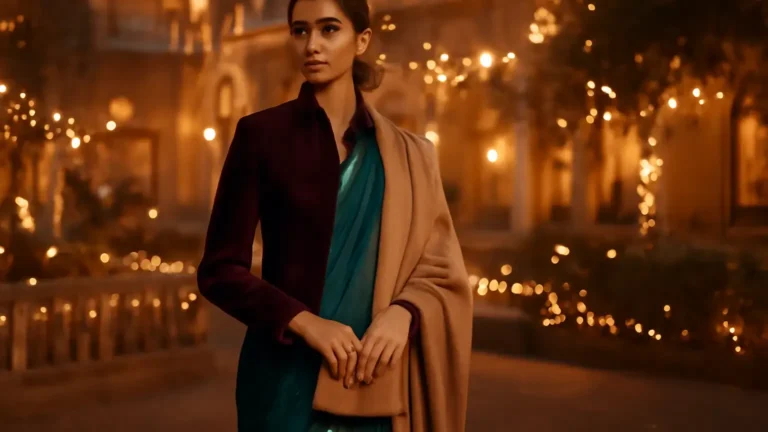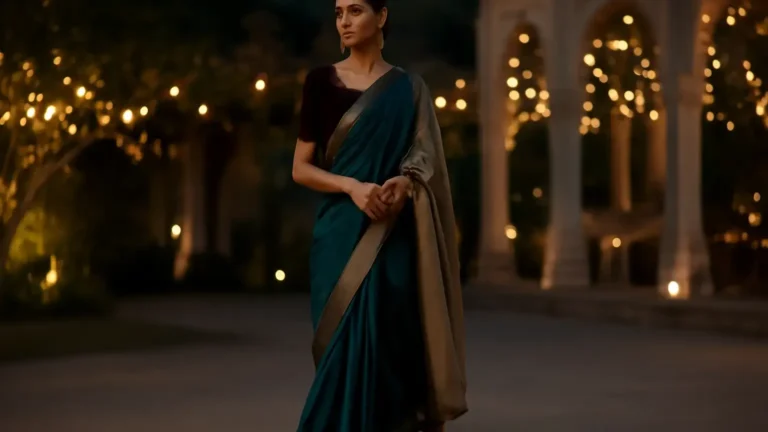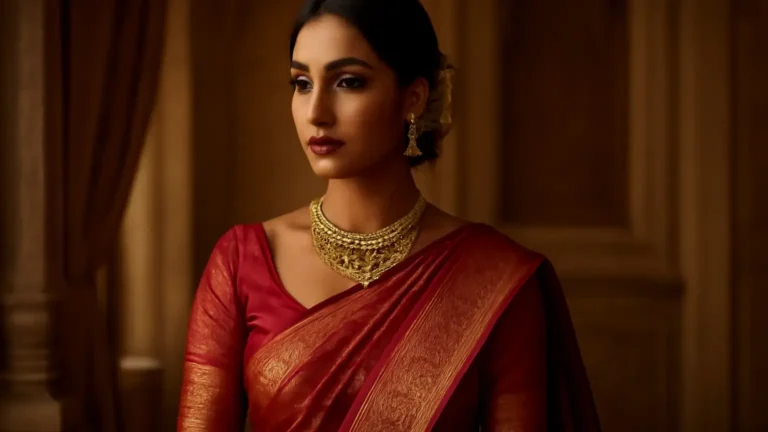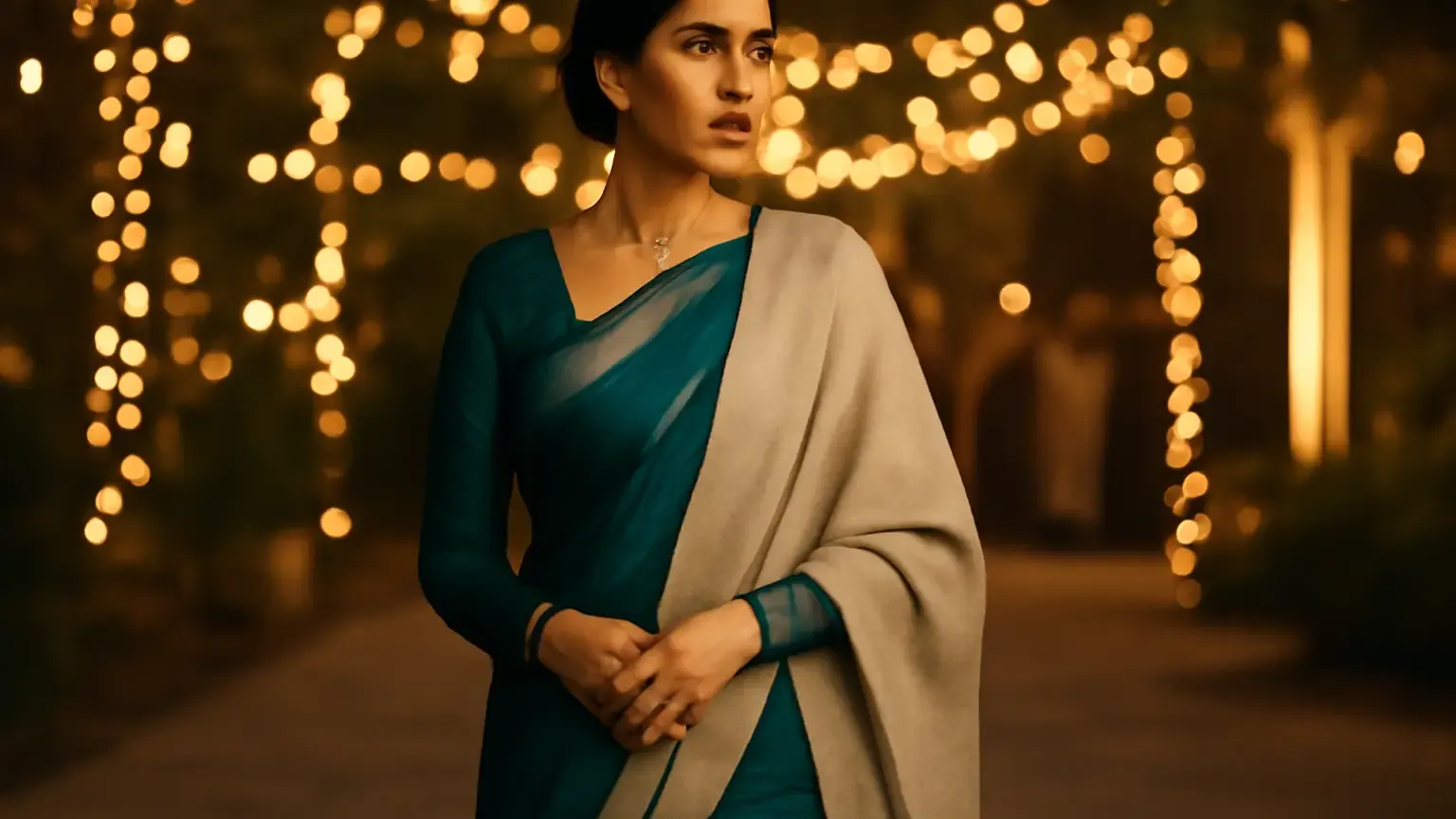
Saree styling for winter weddings works best when warmth is built into the base, not piled on top. This guide is for wedding guests, bridesmaids and family members dressing for chilly evening ceremonies who want comfortable coverage without losing a clean silhouette. Choose a substantial saree, add fitted sleeves or one controlled outer layer, and keep the petticoat and footwear practical so the final look stays festive, mobile and proportionate.
Start with the winter wedding setting
Before choosing a colour or drape, assess the venue. A heated banquet hall needs less insulation than an open lawn, heritage venue or late-night pheras. Also consider how long you will stand, whether you will travel between locations and whether the blouse will be exposed during photographs or while greeting guests.
For a formal evening wedding outfit, aim for one warm foundation layer, one statement layer and breathable comfort at the feet. More layers are not automatically better: loose fabrics can catch on chairs, bunch at the waist and make the saree appear heavier than it is.
- Indoor reception: a silk saree, lined blouse and light shawl may be enough.
- Open-air ceremony: choose covered sleeves, a warmer petticoat and a secure wrap or jacket.
- Very cold travel or long ceremonies: prioritise a thermal petticoat, closed footwear and a removable outer layer.
Choose the saree fabric before adding layers
Fabric controls both warmth and proportion. Dense silk, Banarasi silk, brocade and velvet-blend textures hold more warmth and fall neatly, making them strong choices for winter. A silk saree winter look also photographs well under warm venue lighting, especially in jewel tones, deep neutrals and muted metallics.
A wool-blend saree can be useful for an outdoor function, but check its hand-feel and drape before committing. Some heavier weaves create extra volume at the pleats. If the saree is substantial, balance it with a streamlined blouse rather than a heavily embellished jacket.
Light georgette and organza can still work in winter, particularly for indoor functions, but they need a considered base. Use a lined blouse, a full-length petticoat and a carefully selected wrap rather than several unrelated layers. Satin can look elegant but may feel cold against the skin and shift while walking.
Quick fabric comparison
| Fabric or finish | Best for | Watch for |
|---|---|---|
| Silk or Banarasi silk | Formal evening receptions | Can feel heavy with ornate layers |
| Brocade | Festive, structured styling | Needs a simple blouse or drape |
| Velvet accents | Blouses, borders and jackets | May add visual width |
| Wool blend | Cold outdoor events | Test pleat bulk and comfort |
| Georgette or organza | Indoor, lighter outfits | Requires a warmer base layer |
Get the blouse sleeves and fit right
The blouse is the most efficient place to add warmth because it stays close to the body. A long-sleeve blouse in velvet, silk or a lined fabric gives coverage without changing the saree’s outline. Three-quarter sleeves are a practical middle ground when you want bangles and a visible wrist.
For what blouse sleeves are best for a winter wedding, choose according to the saree’s weight and the venue. Full sleeves suit sleeveless-looking drapes and substantial silk. Elbow-length or three-quarter sleeves work with ornate sarees when you want the arms to appear lighter. A high neck can add warmth, while a modest boat neck gives coverage without looking closed-in.
Fit matters more than sleeve length. The armhole should allow you to lift your arms, and the sleeve should not pinch when you move. Avoid wearing a thin camisole or bulky thermal garment under a fitted blouse unless the blouse has been tailored for it; bunching near the underarm is visible through the saree and affects comfort.
Compare a shawl, cape and jacket
One controlled outer layer usually looks more polished than several small additions. The right choice depends on how much arm and torso movement you need.
Saree shawl
A saree shawl is the most flexible option. A wool, pashmina-style or silk-wool wrap can be draped over both shoulders, tucked at one side or carried for later. Choose a size that covers the upper back without reaching so far down that it hides the saree border. Secure it with a discreet brooch or a small hidden pin before dancing or moving through the venue.
Saree cape
A saree cape creates a graceful vertical line and is useful when you want coverage without the structure of a jacket. Chiffon or georgette capes are decorative rather than genuinely warm, so reserve them for milder evenings or layer them over a long-sleeve blouse. A velvet or lined cape offers more insulation but should have enough shoulder room to prevent pulling.
Saree jacket
A saree jacket gives the strongest protection and can make a simple saree look occasion-ready. A cropped jacket preserves the waist and works well with high-waisted pleats. A longer, open-front jacket creates a column effect and can be flattering over a heavier saree. Avoid placing a wide belt over a thick jacket and pallu together; it can create unnecessary bulk at the midsection.
As a simple rule, select a shawl for flexibility, a cape for softness and a jacket for structure. Do not combine all three.
Build a warm base under the saree
Good saree layering begins underneath. A properly fitted petticoat should support the pleats without gripping tightly or dragging on the floor. For a cold venue, consider a thermal petticoat or a smooth full-length base layer designed to sit under traditional drapes. It should not be so thick that the waist tie becomes visible through the saree.
When deciding what to wear under a saree in cold weather, use a close-fitting, breathable base with minimal seams. Avoid rough wool directly against the skin, especially for long ceremonies. A thin full-length slip, thermal leg layer and comfortable blouse lining are more practical than adding thick leggings that interrupt the fall of the saree.
Test the complete outfit at home. Sit on a chair, climb a few steps, walk at a normal pace and place your arms around someone. If the pleats open, the petticoat twists or the shawl slips, adjust the base before adding jewellery.
Use saree draping tips to reduce visual bulk
The drape can make a warm outfit look light. Keep the front pleats even and moderately narrow rather than creating many deep folds. Secure them at the waist and, if needed, use a second discreet pin near the knee so they remain orderly while walking.
Place the pallu with intention. A narrow shoulder pleat and a clean fall lengthen the upper body, while a very broad, heavily folded pallu can make a jacket or shawl look crowded. If you are wearing a structured layer, let the pallu fall in a single direction instead of wrapping it repeatedly around the torso.
Keep the saree’s border visible where possible. A visible border gives definition to a warm, darker outfit and stops the extra fabric from reading as shapeless. A fitted blouse, defined waist and slightly raised hem also help maintain polished proportions; the hem should clear the floor without exposing too much footwear.
Finish with warm wedding accessories
Accessories should support the winter plan, not compete with it. Choose one prominent element: earrings, a brooch on the shawl, a necklace or an embellished jacket. If the blouse and saree are already ornate, a brooch can secure a wrap while adding a small festive detail.
Closed-toe footwear, block heels and cushioned insoles are sensible for lawns and cold stone floors. Match the metal or embroidery of the footwear to the blouse or border rather than trying to coordinate every item. A small structured potli or shoulder bag keeps your hands free to manage the pallu and shawl.
Hair can also affect comfort. A low bun or braid keeps the neckline clear and allows a shawl to sit neatly. Avoid placing a heavy necklace under a high-neck blouse and jacket combination; earrings or a hair ornament may give a cleaner finish.
Common winter saree styling mistakes
- Adding layers without testing movement: warmth is wasted if you cannot sit, walk or dance comfortably.
- Pairing a heavy saree with a heavy jacket: use contrast, such as a simple silk saree with a textured jacket.
- Choosing a loose shawl with an unsecured pallu: pin one or both layers discreetly before leaving.
- Ignoring the waistline: thick petticoats, wide belts and bulky jackets can erase the saree’s shape.
- Wearing untested fabrics: try the blouse, base and outer layer together to identify itching, slipping or overheating.
A practical winter wedding dressing formula
- Check whether the ceremony is indoors, outdoors or mixed and estimate the time spent outside.
- Select the saree fabric, then choose a blouse sleeve length that supplies the missing coverage.
- Add either a shawl, cape or jacket, not multiple competing outer layers.
- Fit the petticoat and base layer so pleats remain smooth and the waist stays defined.
- Pin the pleats and pallu, then test sitting, walking and arm movement.
- Complete the look with secure footwear and one useful warm accessory.
Takeaway: Saree styling for winter weddings looks most elegant when the warmth is concentrated in the fabric, blouse and base rather than spread across bulky outerwear. Build from the venue outward, keep one clear silhouette and choose the layer that solves your actual comfort problem.
Products that may help with this routine
Choose only what fits your skin, hair or personal needs. Use the links below to view current options on Amazon India.
Frequently Asked Questions
How do you style a saree in winter?
Choose a warmer saree such as silk, brocade or a wool blend, pair it with a lined long-sleeve or three-quarter-sleeve blouse, and add one controlled layer such as a shawl, cape or jacket. Use a smooth thermal petticoat for outdoor events and secure the pleats and pallu before leaving.
What blouse sleeves are best for a winter wedding?
Full sleeves provide the most coverage, while three-quarter sleeves offer a lighter look and leave room for bangles. Velvet, silk and lined fabrics are practical choices. The blouse should fit closely enough to look neat but allow comfortable arm movement.
Can you wear a shawl with a saree to a wedding?
Yes. Choose a shawl that complements the saree rather than hiding its border, and drape it over both shoulders or secure it at one side with a discreet brooch. A wool, pashmina-style or silk-wool wrap is more useful for warmth than a very sheer decorative scarf.
What are the best saree fabrics for winter weddings?
Silk, Banarasi silk, brocade and velvet-blend fabrics are good choices for formal winter weddings because they have substance and hold their shape. A wool-blend saree can suit a colder outdoor event, but test its weight and pleat bulk first.
How can you layer a saree without looking bulky?
Use one substantial base layer, keep the blouse fitted, and choose only one outer layer. Narrow, even pleats, a defined waist and a cleanly pinned pallu help preserve proportion. Avoid combining a heavy saree, thick jacket, wide belt and large shawl.
What should you wear under a saree in cold weather?
Wear a smooth, breathable full-length base or thermal petticoat with minimal seams, plus a lined blouse if needed. The base should fit close to the body without compressing or showing through the saree. Test it while sitting and walking before the event.