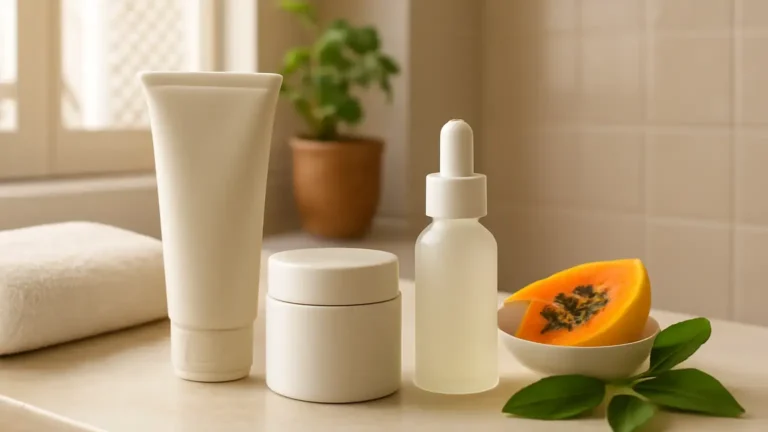
Skin care for uneven texture works best when it is calm, consistent and easy to repeat. This guide is for anyone noticing rough patches, visible pores, small bumps or dehydration lines, including people with sensitive skin. Start with a gentle cleanser, moisturiser and daily sunscreen; then add carefully spaced exfoliation only if your skin tolerates it. The realistic goal is a smoother-looking surface and more comfortable skin—not erased pores, instant perfection or guaranteed removal of marks.
Uneven texture can mean several different things: skin that feels rough to the touch, tiny bumps, flaky areas, visible pores, dehydration lines or an uneven-looking surface after breakouts. These concerns do not always need an aggressive routine. In fact, too many strong products, frequent scrubbing and inconsistent sunscreen can make the surface look more irritated and noticeable.
A useful skin care routine for textured skin has five foundations. It cleans without stripping, replenishes moisture, limits daily sun exposure, uses exfoliation thoughtfully and allows enough time to assess what is working. The right approach also depends on whether your skin is oily, dry, combination or sensitive.
1. Switch to a gentle cleanser
Clean skin is a sensible starting point, but “squeaky clean” is not the goal. A harsh cleanser may remove too much surface oil and leave skin feeling tight. That tightness can make roughness and fine dehydration lines look more obvious, especially after washing.
How to cleanse without overdoing it
- Use a mild, non-abrasive gentle cleanser with lukewarm water.
- Massage with fingertips rather than a cleansing brush, rough cloth or textured tool.
- Cleanse at night to remove sunscreen, makeup, sweat and daily grime.
- In the morning, rinse with water or cleanse lightly if your skin is oily or feels unclean.
- Pat dry and apply moisturiser while the skin is slightly damp.
If you regularly wear water-resistant sunscreen or makeup, a suitable first cleanse can help remove residue. Avoid treating every bump as proof that you need stronger washing. Clogged pores are influenced by oil, dead skin and product compatibility, not simply by whether you scrub hard enough.
2. Make moisturising consistent
A moisturiser does not physically flatten pores, but it can make the skin surface look and feel more even by supporting hydration and reducing the look of dryness. A barrier-supporting moisturiser is especially useful when skin feels tight, stings after products or becomes flaky around the nose and cheeks.
Look for a texture that suits your climate and skin type. In humid Indian weather, a lightweight lotion or gel-cream may feel more comfortable during the day, while dry or air-conditioned environments may call for a richer cream at night. Ingredients such as glycerine, ceramides, squalane or panthenol can be useful options, but the complete formula and your tolerance matter more than a single ingredient.
Apply moisturiser after cleansing, and use enough to leave the skin comfortable rather than immediately greasy. If you use an exfoliant, moisturiser becomes even more important because it helps keep the routine balanced. Avoid adding several new products at once; otherwise, it becomes difficult to identify what is causing dryness or irritation.
3. Wear broad-spectrum sunscreen every day
Daily sunscreen is an important part of skin care for uneven texture because ultraviolet exposure can contribute to uneven tone, visible dryness and a less uniform-looking surface over time. Sunscreen will not erase pores or instantly smooth bumps, but it helps protect the progress made by the rest of your routine.
Choose a comfortable broad-spectrum sunscreen with SPF 30 or higher and apply it as the final morning skincare step. Use a generous, even layer on the face, ears and neck when exposed. Reapply when you are outdoors for extended periods, sweating or wiping your face. In India, strong sunlight can be present even when the day feels mild or cloudy, so make sunscreen a daily habit rather than a beach-only product.
If sunscreen pills, feels heavy or causes you to apply too little, try a different finish or formula. A product you can apply consistently is more useful than an ideal-sounding formula that you avoid. Hats, shade and sunglasses can provide additional protection, but they do not replace sunscreen on exposed skin.
4. Add carefully spaced exfoliation
Exfoliation can help improve the feel of rough skin by loosening some surface build-up. It should be an optional addition to a stable routine, not the first step. Start with one exfoliating product and use it infrequently so you can observe your skin’s response.
Chemical exfoliation versus physical scrubs
Chemical exfoliation uses ingredients such as lactic acid, glycolic acid or salicylic acid. Lactic acid may suit people who want a gentler-feeling option, while salicylic acid is often chosen for oily areas and the appearance of congestion. These are general cosmetic categories, not guarantees, and tolerance varies.
Physical scrubs use particles or friction to lift surface debris. Uneven particles, forceful rubbing or frequent use can leave sensitive skin feeling raw. If you choose a scrub, use a smooth, gentle product sparingly; many people can avoid physical scrubs altogether and choose a mild chemical exfoliant instead.
- Begin once a week, preferably at night.
- Do not use an exfoliant on the same night as several other strong actives.
- Follow with a simple moisturiser.
- Pause if you experience persistent stinging, burning, swelling, cracking or unusual redness.
- Use patch testing on a small area before applying a new active more widely.
Do not exfoliate immediately after shaving, waxing or when the skin is already peeling. People with sensitive skin may prefer to focus on cleansing, moisturising and sunscreen for several weeks before considering an exfoliant.
5. Give the routine enough time
Patience is a practical skincare step, not an empty promise. The surface may feel more comfortable within days of improving cleansing and moisturising, but visible changes in texture usually need longer observation. Try to assess the routine after several weeks of consistent use rather than changing products every few days.
Take occasional photos in similar lighting if you want to compare progress. Do not judge your skin under harsh overhead light or compare it with filtered images. Natural pores, fine lines and small variations are part of real skin. The goal is to make the surface appear smoother and feel less rough, not to create poreless skin.
Introduce only one major change at a time. A simple routine also makes it easier to identify whether an ingredient is helpful, neutral or irritating. If a product repeatedly causes discomfort, more use will not necessarily produce better results.
A simple morning and evening routine
Morning
- Cleanse lightly or rinse, depending on how your skin feels.
- Apply a comfortable moisturiser if needed.
- Finish with broad-spectrum sunscreen.
Evening
- Remove makeup or sunscreen thoroughly but gently.
- Cleanse with a mild cleanser.
- Apply moisturiser.
- On one selected night each week, use an exfoliant instead of adding multiple active products.
This routine can be adjusted for oily, dry or combination skin. Oily skin may prefer lighter layers, while dry skin may need a richer moisturiser. If your skin is reactive, keep the routine basic for longer and introduce changes one at a time.
Common mistakes that can make texture look worse
- Scrubbing daily to chase a perfectly smooth feel.
- Using several acids, retinoid products or strong treatments at once.
- Skipping moisturiser because the skin feels oily.
- Applying too little sunscreen or using it only on sunny outings.
- Picking at bumps, flakes or pores.
- Changing the entire routine before giving one change a fair trial.
Persistent, painful, intensely itchy or rapidly changing skin concerns deserve professional advice. A dermatologist can assess the concern and recommend appropriate care, particularly if texture is accompanied by significant inflammation, scarring or ongoing discomfort. General skincare advice should not replace prescribed treatment or a medical assessment.
Takeaway
The most dependable approach to how to smooth skin texture is not aggressive polishing. Use a gentle cleanser, a consistent moisturiser, daily sunscreen, carefully spaced exfoliation and realistic patience. These changes can support a smoother-looking surface while respecting natural pores and the needs of your skin barrier.
Products that may help with this routine
Choose only what fits your skin, hair or personal needs. Use the links below to view current options on Amazon India.
Frequently Asked Questions
What is the best skin care routine for textured skin?
Start with gentle cleansing, a suitable moisturiser and daily broad-spectrum sunscreen. Once those steps are comfortable and consistent, consider one carefully spaced exfoliant. Add only one new product at a time.
How often should you exfoliate uneven skin texture?
Begin with once a week and assess how your skin responds. Some people may tolerate more frequent use, while sensitive or dry skin may need less. Stop if there is persistent stinging, burning, peeling or redness.
How can you smooth skin texture without irritating skin?
Avoid harsh scrubbing and multiple strong actives. Use a gentle cleanser, moisturiser and sunscreen first, patch-test new products, introduce one exfoliant slowly and avoid exfoliating already irritated skin.
Can sunscreen improve uneven skin texture?
Sunscreen does not erase pores or instantly smooth bumps, but consistent broad-spectrum protection helps limit the effects of ultraviolet exposure that can contribute to uneven tone and a less uniform-looking surface.
How long does it take to see smoother skin texture?
Comfort and dryness may improve sooner, while visible texture changes can take several weeks of consistent care. Compare progress in similar lighting and avoid changing several products at once.
What moisturiser is good for rough textured skin?
Choose a moisturiser that leaves your skin comfortable and does not sting. Hydrating ingredients such as glycerine, ceramides, panthenol or squalane may suit different people, with lighter textures often preferred in humid weather.