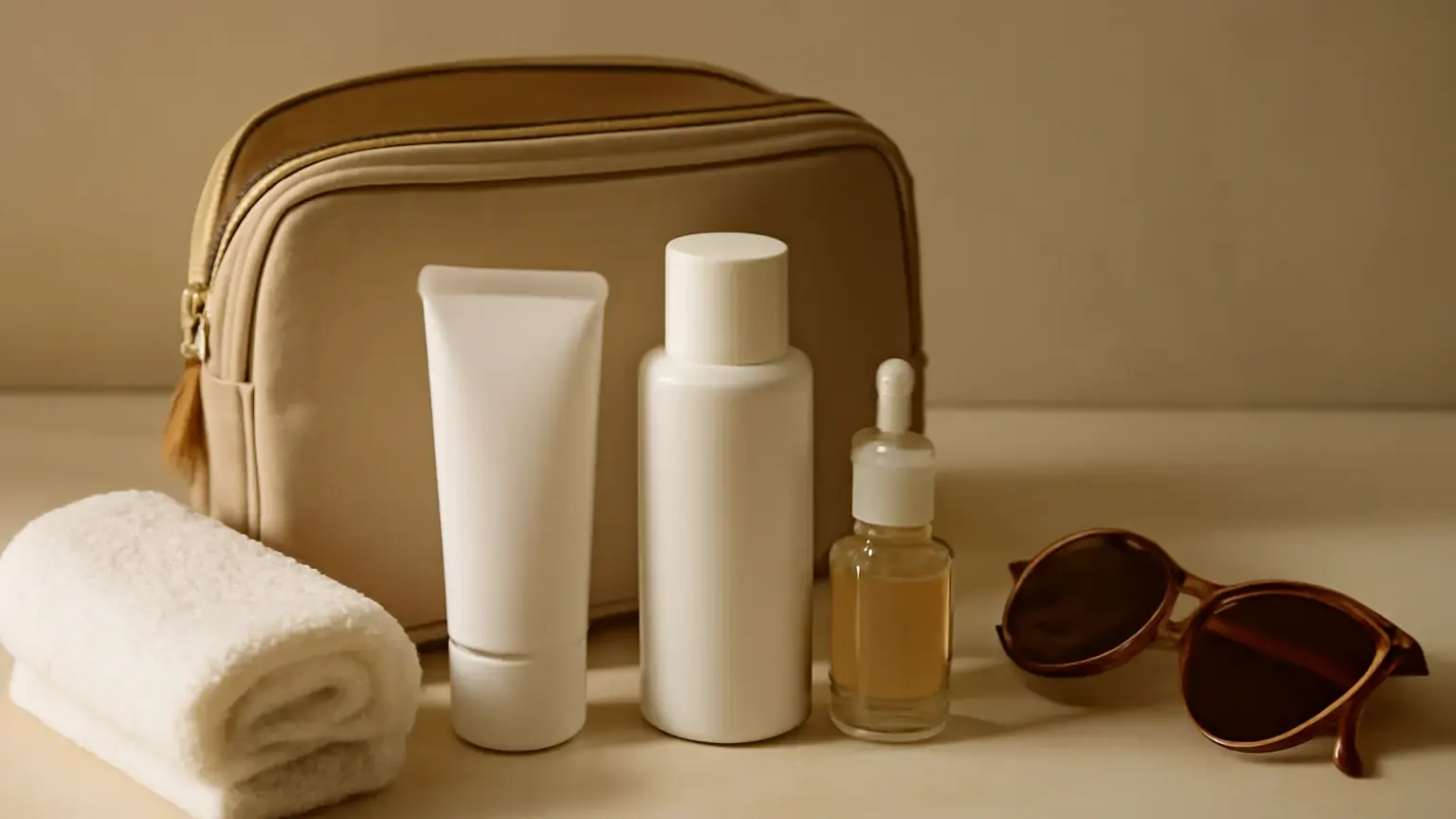
A skin care routine for travel only needs four essentials: a familiar cleanser, moisturiser, sunscreen and one optional treatment. Use lighter layers in humid weather, a richer moisturiser in dry air and fewer steps during flights. This answer-first plan helps you pack for short trips across India or changing climates without carrying your entire bathroom shelf.
A skin care routine for travel works best when it is short enough to follow and flexible enough for heat, dry cabin air, hard water and unfamiliar surroundings. The four essentials are a gentle cleanser, a moisturiser, a broad-spectrum sunscreen and one optional treatment you already tolerate. Adjust the texture, amount and frequency rather than buying a completely new routine for every destination.
Travel can change how skin feels within a single day. A morning at a humid railway station, several hours in air-conditioning and an evening in a dry hill climate create different demands without changing what your skin fundamentally needs. The solution is not a suitcase full of new products. It is a compact routine with a few reliable steps and sensible adjustments.
The four essentials to pack
For most travellers, the basic kit is a gentle cleanser, a moisturiser, a broad-spectrum sunscreen and one optional treatment. These cover cleansing, comfort, daily UV protection and a targeted step without making your routine difficult to maintain. Together, they form a practical travel skin care routine India travellers can use across cities, airports and changing weather.
1. Gentle cleanser
Choose a cleanser that removes sunscreen, sweat and everyday grime without leaving the face tight or squeaky. A hydrating cleanser is usually the most adaptable choice for travel because it is less likely to feel stripping in dry hotel rooms or during long flights. If you normally use a stronger cleanser for oiliness, take the one your skin already tolerates rather than buying a new formula at the airport.
Cleanse at night and after heavy sweating. In the morning, rinse with water or use a small amount of cleanser according to how your skin feels. Over-cleansing can worsen the sensation of dryness, while skipping cleansing after sunscreen and sweat may leave the skin uncomfortable.
2. Barrier-supporting moisturiser
A barrier-supporting moisturiser helps reduce tightness caused by cabin air-conditioning, low humidity and repeated face washing. For a hot, humid destination, select a light lotion or gel-cream. For dry weather, mountain travel or long flights, a richer cream may be more comfortable. Ingredients such as glycerin, ceramides, squalane or panthenol can support a comfortable skin barrier, but the most important factor is that the product suits you.
Pack one dependable moisturiser rather than separate day and night creams. You can use a thinner layer in the morning and a slightly more generous layer at night. If your face becomes oily in humidity, do not automatically remove moisturiser; reduce the amount or switch to a lighter texture.
3. Broad-spectrum sunscreen
A broad-spectrum sunscreen is essential whenever you will be outdoors, even if the day feels cool or cloudy. Use a sunscreen that you have already worn comfortably and apply it as the final morning skincare step. Pay attention to the face, ears, neck and exposed hands. Reapply when you are outdoors for extended periods, sweating, swimming or wiping your face.
Sun protection is particularly relevant during road journeys, sightseeing and window-side travel. A hat, sunglasses, shade and clothing can complement sunscreen, but they do not make sunscreen unnecessary on exposed skin.
4. One optional treatment
The optional treatment should solve a real need, not create an experiment. You might pack a familiar hydrating serum for dry conditions, a treatment you already use occasionally for congestion, or a soothing product if your skin is easily stressed. Keep the frequency conservative while travelling.
A short trip is not the ideal time to introduce a new exfoliating acid, retinoid or strong brightening product. Changing water, sleep, food, climate and cleansing habits can already make skin unpredictable. If you do pack an active, use it only if your skin has tolerated it before and avoid combining several intensive products.
Build a morning and night routine
A practical skin care routine for short trips is based on order and consistency rather than a long product list. Keep the routine familiar so you can focus on the journey instead of troubleshooting a reaction.
Morning
- Rinse or cleanse gently, depending on sweat and overnight oil.
- Apply your optional treatment only if it is familiar and appropriate for the day.
- Apply moisturiser, using less in humid weather and more in dry conditions.
- Finish with broad-spectrum sunscreen before leaving your accommodation.
Night
- Remove sunscreen and makeup with your gentle cleanser. If you wear water-resistant products or makeup, cleanse carefully without aggressive rubbing.
- Apply the optional treatment according to your usual schedule, not more often because you are travelling.
- Seal in comfort with moisturiser, especially around areas that feel tight.
This simple sequence is also a useful skin care routine for short trips because it has few decisions. If you are exhausted after a journey, cleansing and moisturising are the minimum; resume the full routine when practical.
Adjust the routine for flights and airports
Skin care during flights should focus on comfort and protection, not a complicated sheet-mask routine. Cabin air is typically dry, and long flights combine low humidity with limited access to water and a tendency to touch or wipe the face.
Before leaving for the airport
Cleanse if needed, apply moisturiser and use sunscreen if you will be outside during the day. Carry only the amount that fits current airport liquid rules and place liquids in a transparent, accessible pouch where required. A small moisturiser, lip balm and sunscreen are usually more useful in hand luggage than multiple serums. These are practical carry-on skincare essentials for a short journey.
During the flight
If your face feels dry, apply a thin layer of moisturiser with clean hands. Do not repeatedly wash your face in an airport or aircraft bathroom unless necessary; frequent cleansing can increase tightness. Avoid misting alone as a substitute for moisturiser because water that evaporates may leave skin feeling even less comfortable. Drink fluids normally, but do not treat excessive water consumption as a skincare solution.
If you are sleeping through daylight hours, consider your window seat and exposure. For daytime travel or time outdoors after landing, sunscreen remains important. Clean hands before touching your face and avoid picking at bumps caused by sweat, friction or travel stress.
A simple airport skincare routine
An airport skincare routine can be limited to cleansing when needed, applying a familiar moisturiser if the skin feels tight and using sunscreen for daytime exposure. Avoid testing samples, strong actives or heavily fragranced products while travelling. The aim is comfort and consistency, not completing every step at the terminal.
Make climate-based decisions
Climate-adaptive skincare means changing the amount and texture of products, not rebuilding your routine at every destination.
Humid weather
For skincare for humid weather, choose a lighter moisturiser and apply a thin layer. Sweat does not replace moisturiser, and humidity does not protect skin from UV exposure. If sunscreen feels heavy, look for a familiar lightweight formula rather than skipping it. Blot sweat gently and cleanse after prolonged outdoor activity.
Dry or cool weather
For skincare for dry weather, dry interiors, winter conditions or hill stations, use a richer moisturiser and consider applying it while the skin is slightly damp. Protect the lips and exposed areas, and limit hot water because it can increase the feeling of dryness. A thin extra layer at night may be more useful than adding another serum.
Mixed climates on one itinerary
When travelling from a humid city to a dry destination, pack products that can be layered. A medium-weight moisturiser gives you more flexibility than a very light gel or a heavy balm. Use less during the day in heat and more at night in dry air. This is the most practical way to use the same routine in humid and dry weather.
If you notice dehydrated skin while travelling, first consider simple causes such as dry cabin air, air-conditioning, repeated cleansing or a change in water. Increase the amount of your familiar moisturiser gradually rather than adding several new serums at once.
Water, air-conditioning and unfamiliar surroundings
Different water quality can affect how clean or tight the face feels, especially when you wash more often. Hard water is not automatically harmful, but a new water source combined with cleanser, climate and friction may make skin feel different. Use lukewarm water, rinse thoroughly and pat rather than rub.
Air-conditioning can make a room feel comfortable while reducing humidity. If your skin is tight by evening, increase moisturiser slightly before adding a new treatment. Change pillowcases where possible, keep face towels clean and avoid sharing products with travel companions.
New hotel toiletries, facials and impulse purchases are common sources of avoidable irritation. Carrying familiar travel-size skincare products is safer than relying on whatever is available at the destination. Patch testing skincare products is sensible before a trip; do not first test a strong active on the night before an important event.
How to pack without overpacking
- Decant only products you have already used successfully into clean, labelled containers.
- Keep cleanser, moisturiser and sunscreen in your hand luggage if losing checked baggage would disrupt your routine.
- Choose multifunctional products where they are genuinely comfortable, but do not force one product to replace sunscreen.
- Wrap leak-prone containers separately and keep lids secure.
- Pack a hat, sunglasses and lip protection for outdoor itineraries.
For a short trip, a compact pouch is enough: one cleanser, one moisturiser, one sunscreen and one optional treatment. For longer travel, take enough product for the itinerary while keeping the same core structure. This answers the practical question of what skincare to pack for a short trip without encouraging overpacking.
Common mistakes to avoid
- Trying several new products: Travel is a poor testing environment because you may not know whether a reaction is linked to a product, climate or water.
- Skipping moisturiser in humid weather: Heavy layers may feel uncomfortable, but a lightweight layer can still help maintain comfort.
- Using strong actives more often: More frequent exfoliation does not guarantee faster visible improvement and may increase irritation.
- Forgetting reapplication: One morning application may not cover a full day of sweating, swimming or outdoor sightseeing.
- Scrubbing after a long journey: Friction can make tired, dry-feeling skin feel worse. Cleanse gently and moisturise instead.
When to simplify further
If skin feels unusually stinging, itchy, very dry or reactive, pause optional treatments and return to a gentle cleanser, moisturiser and daytime sunscreen if tolerated. Avoid adding multiple solutions at once. Persistent, severe or concerning symptoms should be assessed by a dermatologist or doctor, particularly if swelling, widespread rash or significant discomfort develops.
Takeaway
The best skin care routine for travel is compact, familiar and adjustable. Start with cleanser, moisturiser and broad-spectrum sunscreen, then add only one treatment you already tolerate. Use lighter layers in humid weather, richer moisturiser in dry air and simpler steps during flights. This approach keeps your routine manageable while protecting comfort across airports, changing water, air-conditioning and different climates.
Products that may help with this routine
Choose only what fits your skin, hair or personal needs. Use the links below to view current options on Amazon India.
Frequently Asked Questions
What skincare should I pack for a short trip?
Pack a gentle cleanser, a moisturiser, broad-spectrum sunscreen and one familiar optional treatment. Add lip protection and keep products in secure, travel-size containers. Avoid bringing several new actives just because the trip is short.
How do I protect my skin on a flight?
Apply moisturiser before boarding, avoid unnecessary face washing and use a thin layer again if the skin feels tight. Keep hands clean, limit face touching and use sunscreen for daytime outdoor exposure before or after the flight.
What is the best travel skin care routine for changing climates?
Use the same four-step base—cleanser, moisturiser, sunscreen and one optional treatment—but change the moisturiser amount and texture. Use lighter layers in humid weather and a richer layer in dry or cool conditions.
What should I apply after washing my face while travelling?
Apply your familiar moisturiser after gently patting the skin dry. In the morning, follow with sunscreen if you will be exposed to daylight. At night, use your optional treatment only according to your normal schedule.
Can I use the same skincare routine in humid and dry weather?
Yes. Keep the products familiar and adjust the quantity or texture of moisturiser. Humid weather usually suits a thinner layer, while dry weather may call for a richer layer and more careful cleansing.