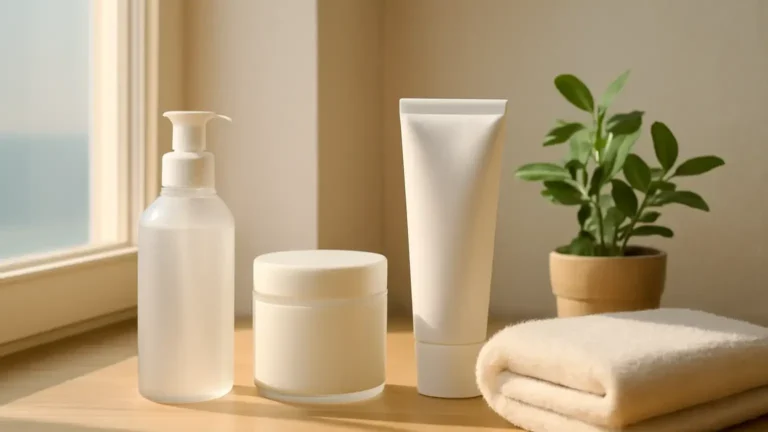
A skin care routine for sensitive skin should make festive preparation calmer, not more complicated. This guide is for anyone whose skin tends to sting, redden, feel tight or react when several new products are introduced. Keep the routine familiar: cleanse gently, moisturise generously, protect with sunscreen in the morning and avoid last-minute exfoliation or fragrance-heavy layering before an event.
What sensitive skin needs before festive events
Sensitive skin is skin that becomes uncomfortable or visibly reactive easily when exposed to products, weather, friction, heat or environmental changes. It can feel tight, sting after cleansing, look flushed or develop dry patches. These signs do not identify a specific medical condition, but they do suggest that your festive routine should focus on comfort and consistency rather than rapid transformation.
The most useful principle is to protect the sensitive skin barrier. This outer layer helps reduce water loss and gives skin some protection from irritants. Repeated scrubbing, hot water, over-cleansing, strong acids and too much product layering can make skin feel more unsettled. Before a wedding, Diwali gathering, family celebration or party, resist the urge to overhaul every step at once.
- Choose familiar products: A product you already tolerate is usually a safer choice than a fashionable new launch.
- Keep the formula list practical: Fragrance-free skincare can be a useful starting point, especially if scented products often cause discomfort.
- Introduce only one change: This makes it easier to identify what does and does not suit you.
- Reduce friction: Pat skin dry with a soft towel instead of rubbing it.
A simple morning skin care routine for sensitive skin
A morning routine does not need many steps. The aim is clean, comfortable, hydrated skin with reliable daytime protection.
- Cleanse lightly. If your skin is dry or comfortable when you wake up, rinsing with lukewarm water may be enough. Otherwise, use a low-foam gentle cleanser without scrubbing particles. Massage with clean fingertips for around 20 to 30 seconds and rinse thoroughly.
- Add hydration if needed. A simple, alcohol-free hydrating layer can help skin that feels tight. Look for familiar soothing ingredients such as glycerin, panthenol or colloidal oatmeal, provided you already know your skin tolerates them.
- Apply moisturiser. Use a barrier repair moisturiser suited to your skin’s texture. A cream may feel more comfortable for dry skin, while a lighter lotion can work better for combination skin. Ingredients such as ceramides can support a moisturising routine, but no single ingredient is essential for everyone.
- Finish with sunscreen. Apply broad-spectrum sunscreen in the morning, including on event-preparation days. A mineral sunscreen containing zinc oxide or titanium dioxide may suit people who find some chemical sunscreen formulas sting, although individual tolerance matters more than the category name.
Give each layer a short moment to settle. If sunscreen pills under makeup, use smaller amounts of moisturiser, allow it to absorb and avoid repeatedly rubbing the surface.
Evening routine: remove the day without stripping skin
Evening care should remove sunscreen, makeup, sweat and city pollution while leaving the skin barrier as undisturbed as possible.
Step 1: Remove makeup gently
For light makeup, a gentle cleanser may be sufficient. For long-wear base products or waterproof eye makeup, use a suitable remover or micellar water first. Press the soaked cotton pad against the area briefly, then wipe softly rather than pulling repeatedly. Rinse if the product’s directions recommend it or if a residue remains.
Step 2: Cleanse once more only when necessary
A second cleanse can be useful after heavy makeup, sunscreen or outdoor exposure, but it is not automatically better every night. Use lukewarm water, a gentle cleanser and minimal pressure. Hot water can worsen dryness and temporary redness.
Step 3: Moisturise while skin is slightly damp
Apply your usual moisturiser after cleansing. If your skin is particularly dry, a slightly richer product can be used on dry areas. Avoid adding several new serums, facial oils and masks together; excessive product layering makes reactions harder to trace and can leave skin feeling congested or sticky.
Pre-event skin care: what to do and what to skip
The safest festive makeup prep is usually a quieter version of your normal routine. Ideally, test any new skincare well before the event rather than on the same morning. On the day, cleanse gently, moisturise with a product you know works for you and allow it to settle before applying makeup.
Avoid facial scrubs, extraction tools, strong peels, intense masks and unfamiliar actives immediately before an important occasion. Chemical exfoliation can be appropriate for some people, but an event is not the time to discover that an acid or retinoid causes stinging, flaking or visible redness. If you already use an exfoliating product comfortably, do not increase its frequency or strength just because a celebration is approaching.
Keep makeup tools clean and avoid sharing them. Choose a base that feels comfortable rather than applying multiple complexion products to cover every natural variation in tone. If a product starts stinging, remove it gently and return to familiar basics instead of adding another product to counteract the sensation.
How to patch test new skincare products
Patch testing skincare at home can lower the chance of an unpleasant surprise, although it cannot guarantee that a product will suit your whole face. Apply a small amount to a limited area, such as the jawline or inner forearm, following the product instructions. Observe the area over the next day or two and pay attention to burning, itching, swelling, persistent redness or a rash.
Do not test several new products at the same time. If you react, stop using the new product and keep the rest of your routine simple. Avoid applying a product to broken or already irritated skin unless a qualified healthcare professional has advised you to do so. A new foundation, primer, cleanser and serum should not all debut on the morning of a celebration.
Common mistakes in a sensitive skin care routine
- Exfoliating for instant smoothness: Scrubbing can make skin look temporarily polished while increasing discomfort afterwards.
- Using hot water: Lukewarm water is generally a gentler choice for cleansing.
- Assuming natural means non-irritating: Essential oils and botanical fragrance can still bother reactive skin.
- Changing everything before an event: Too many variables make it difficult to identify the cause of a reaction.
- Skipping sunscreen because you are indoors: Daytime sun protection remains useful, especially when travelling to and from celebrations.
- Rubbing during makeup removal: Pressure around the eyes and cheeks can add unnecessary irritation.
How to choose products for a gentler routine
Read the label with your own tolerance in mind rather than chasing a perfect ingredient list. A short, familiar formula may be more useful than a complex product filled with multiple actives. For cleansing, prioritise a comfortable finish without tightness. For moisturising, select a texture you will apply consistently. For sunscreen, choose a formula you can wear generously without stinging or excessive rubbing.
Those with dry or easily irritated skin may prefer creamier products, while combination or humid-weather skin may prefer lighter layers. In India’s heat, sweat and pollution can make heavy layers uncomfortable, but reducing every moisturising step is not always the answer. Use less of each product, allow time between layers and adjust texture rather than adding frequent cleansing.
Who this routine suits—and when to seek advice
This approach suits adults and teenagers who experience occasional tightness, mild dryness or product-related sensitivity and want a low-risk festive routine. It is not a diagnosis or treatment plan. Persistent burning, severe swelling, widespread rash, oozing, painful skin or symptoms that keep returning deserve advice from a dermatologist or doctor. Do not stop prescribed skincare or medicines without discussing changes with the prescribing professional.
Takeaway
The best skin care routine for sensitive skin before a festive event is predictable, gentle and properly timed. Cleanse without scrubbing, moisturise to support comfort, use daytime sunscreen and test changes well in advance. A calm, familiar routine is more dependable than sudden exfoliation, fragrance overload or a crowded shelf of new products.
Products that may help with this routine
Choose only what fits your skin, hair or personal needs. Use the links below to view current options on Amazon India.
Frequently Asked Questions
What is the best skin care routine for sensitive skin?
Use a gentle cleanser or lukewarm-water rinse, a familiar moisturiser and broad-spectrum sunscreen in the morning. In the evening, remove makeup carefully, cleanse only as needed and moisturise. Avoid changing several products at once.
How should I prepare sensitive skin before makeup?
Cleanse gently, apply a moisturiser you already tolerate and let it settle before makeup. Avoid new serums, scrubs, peels and fragrance-heavy products on the event day. Patch test any new makeup or skincare well in advance.
Can sensitive skin use exfoliants?
Some people with sensitive skin can tolerate a mild exfoliant, but it should be introduced cautiously and not increased before an event. Stop if you experience burning, persistent redness, itching or uncomfortable peeling.
What is the best gentle cleanser for sensitive skin?
Choose a cleanser that leaves skin comfortable rather than tight, with no scrub particles and preferably minimal fragrance. A low-foam or cream cleanser may suit dry or reactive skin, while personal tolerance should guide the final choice.
How do I patch test new skincare products?
Apply a small amount to a limited area such as the jawline or inner forearm according to the product directions. Observe it for a day or two and introduce only one new product at a time.