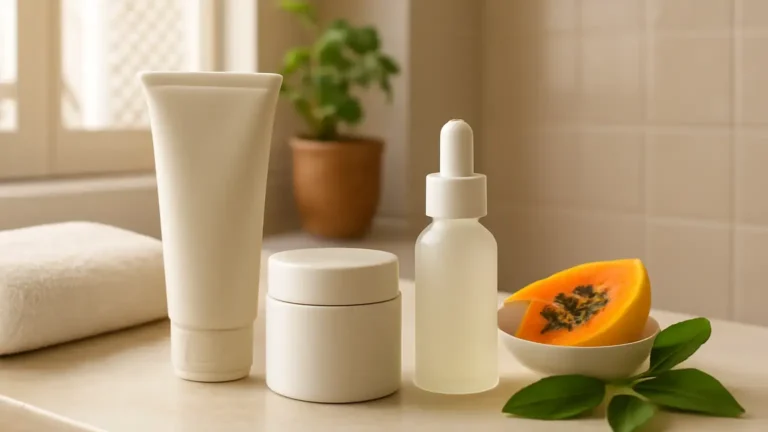
Glowing skin hydration works best when each layer has a clear job: humectants draw in water, emollients smooth rough texture, and barrier-supportive ingredients help reduce moisture loss. This guide is for anyone whose skin feels tight or looks dull, yet whose sunscreen or makeup balls up after skincare. The practical answer is to use fewer compatible layers, apply them to slightly damp skin, allow brief settling time, and match the final moisturiser to your climate and skin type.
What glowing skin hydration actually means
Hydrated skin is not simply skin covered in several products. It has enough water in its outer layers to look fresher and feel more comfortable, while its protective barrier helps slow water loss. That distinction matters because a watery serum can make skin feel briefly plump without supplying the smoothing or protective elements needed to keep that feeling comfortable.
A reliable routine separates moisture into three useful functions:
- Water-binding layers: These attract and hold water near the skin’s surface. Common examples include glycerin, hyaluronic acid and panthenol.
- Emollient layers: These fill the feel of rough, uneven areas and make skin feel softer. Squalane, plant oils, fatty acids and lightweight esters may serve this role.
- Barrier-supportive layers: These help reinforce the outer skin structure and reduce excessive moisture loss. Ceramides, cholesterol and fatty acids are familiar examples.
The goal is not to use all three categories in heavy amounts every morning. It is to choose enough of each to suit your skin, the weather and what you plan to apply next.
Choose the right layer for your skin and climate
Start with how your skin feels rather than how many products you own. Dehydrated skin may feel tight after cleansing, show fine lines more clearly or look dull by midday. It can also be oily on the surface, so adding a rich cream automatically is not always the best answer.
| What you notice | Useful first choice | What to watch for |
|---|---|---|
| Tightness or a papery feel | A glycerin- or panthenol-based serum followed by a simple cream | Do not leave a very watery layer exposed without moisturiser if it increases tightness |
| Oiliness with surface dehydration | A light humectant serum and a gel moisturiser | Too many lightweight layers can still become sticky or roll |
| Flaking or rough patches | A gentle emollient moisturiser with barrier-supportive ingredients | Avoid aggressively scrubbing the area to make it look smoother |
| Comfortable skin but makeup separation | Fewer layers and a thin, fast-settling moisturiser | Product texture and quantity may be the issue, not lack of hydration |
India’s heat and humidity often make a heavy occlusive layer feel uncomfortable, while air conditioning, winter weather and frequent cleansing can make skin need more support. A gel texture may suit the morning in a humid city, with a more cushioning cream reserved for night or drier conditions.
A simple layering order for a hydrated glow
The best layering skincare products order usually moves from the lightest water-based formula to the most protective texture. You do not need a long sequence.
- Cleanse gently, or rinse in the morning. Use lukewarm water and avoid a cleanser that leaves the skin squeaky or tight.
- Apply one water-binding product. Use a small amount on slightly damp skin. A few drops or a thin pump is generally enough for the face.
- Add an emollient or moisturiser. Choose a gel moisturiser for lighter comfort, or a cream with barrier-supportive ingredients when skin feels dry.
- Finish with sunscreen in the daytime. Use a broad-spectrum sunscreen as the final skincare step and follow its label directions for adequate application.
- Apply makeup only after the surface feels settled. The skin should feel comfortable, not wet, tacky or coated.
This structure is also a practical answer to “how to hydrate skin for glow without pilling”: use one hydrating serum, one moisturiser and sunscreen rather than stacking several similar essences, mists and serums.
Where does a facial mist fit?
A facial mist can make skin feel refreshed, but it is not automatically a complete moisturising step. If you enjoy one, use it before a water-binding serum or moisturiser, and do not rely on mist alone when skin feels dry. Repeatedly spraying water and allowing it to evaporate may leave some people feeling tighter, especially in dry indoor air.
How to prevent sunscreen pilling
Sunscreen pilling happens when one or more layers roll into little flakes or balls instead of forming an even film. It can result from incompatible textures, too much product, rubbing, formulas that dry into a film, or applying the next step before the previous one has settled. It is not necessarily a sign that the skincare is harmful, but an uneven sunscreen layer may be less reassuring for protection.
Try this troubleshooting sequence:
- Reduce the number of layers. Pause exfoliating toners, duplicate hydrating serums or rich oils in the morning while testing what causes the rolling.
- Use less of each leave-on product. More product does not always mean more moisture. Apply an even, thin layer and follow sunscreen directions rather than trying to compensate with a thick moisturiser underneath.
- Press instead of vigorously rubbing. Smooth a product gently across the skin, then lightly press with fingertips once it has spread.
- Allow a short settling interval. There is no universal waiting time, but one to several minutes is often enough for a light serum or moisturiser. If the face still feels wet, wait longer.
- Test the combination on one cheek. This identifies whether the problem is a particular pairing, application quantity or the sunscreen itself.
Silicone-rich primers, film-forming sunscreens and some gel serums can be especially sensitive to rubbing or product overload. If a combination keeps rolling despite careful application, replace one product rather than adding another product to disguise the texture.
Build a makeup-friendly skincare routine
A makeup-friendly skincare routine prioritises a smooth, non-slippery surface. In the morning, cleanse only as much as needed, apply one water-binding layer, follow with a thin moisturiser and let the finish settle before sunscreen. If your sunscreen is already moisturising, you may need only a small amount of gel or no separate moisturiser on comfortable, oilier areas.
Makeup can highlight dry patches when the skin is under-moisturised, but a very rich layer can make foundation slide or separate. For a balanced finish:
- Use a lighter layer on the forehead, nose and chin if these areas become shiny.
- Give dry cheeks a little more moisturiser, concentrating on the roughest zones.
- Choose a hydrating or satin-finish base if matte formulas emphasise texture.
- Press foundation on with a clean sponge or brush rather than repeatedly buffing the skincare underneath.
- Do not mix sunscreen into foundation, since this can make the final amount and coverage uneven.
If you use a primer, treat it as a texture step rather than another hydration layer. Test it over your usual sunscreen because the pair may behave differently from either product alone.
Common mistakes that make skin look less fresh
Using too many humectants
Humectants are useful water-binding ingredients, but several overlapping serums can create stickiness without improving comfort. One well-formulated serum is usually easier to layer than three watery products with similar roles.
Applying a thick cream because skin looks dull
Dullness can be linked to dryness, surface buildup, irritation, lighting or makeup texture. A heavy cream may soften the feel but may not solve every reason skin looks tired. Keep the routine gentle and avoid adding multiple strong actives at once.
Exfoliating roughness too often
Scrubs and exfoliating acids can make a temporarily smooth surface look more polished, but overuse may leave skin uncomfortable and more reactive. If roughness persists or stings, simplify your routine rather than escalating exfoliation.
Skipping the moisturiser after a watery serum
A watery product may feel hydrating at first, but it does not always provide enough emollient or barrier support. If your skin feels tight soon after application, add a compatible moisturiser or choose a serum with a more comfortable finish.
When to adjust your routine
Change one variable at a time: product amount, waiting time, texture or number of layers. This makes it easier to identify what improves comfort and what causes pilling. Patch testing a new product on a small area can also be sensible, particularly if your skin is easily irritated.
Stop using a product that causes significant burning, swelling or a worsening reaction and seek professional advice if symptoms are severe or persistent. A dermatologist or doctor can help assess ongoing redness, itching, scaling or painful breakouts; this general routine is not a substitute for care tailored to a skin concern.
Quick takeaway for glowing skin hydration
Effective glowing skin hydration is a balance, not a race to add more products. Use one water-binding layer, follow with the lightest emollient or barrier-supportive moisturiser that keeps your skin comfortable, and finish with sunscreen in the morning. Keep quantities modest, allow layers to settle, and change textures according to humidity, air conditioning, skin feel and makeup plans. Fewer compatible layers usually create a smoother glow than a crowded routine.
Products that may help with this routine
Choose only what fits your skin, hair or personal needs. Use the links below to view current options on Amazon India.
Frequently Asked Questions
How do I hydrate skin for glow without pilling?
Use one water-binding serum on slightly damp skin, apply a thin moisturiser, allow it to settle for a few minutes, and finish with sunscreen. Avoid stacking several similar serums and reduce rubbing between layers.
What is the best layering order for hydrated glowing skin?
A practical order is gentle cleanse or rinse, water-binding serum, moisturiser, sunscreen in the daytime, and makeup after the surface settles. Use only the steps your skin actually needs.
How can I stop sunscreen pilling over moisturiser?
Reduce the amount of moisturiser, press rather than vigorously rub, wait until the moisturiser feels settled, and test the sunscreen with fewer products underneath. If pilling continues, the two formulas may not be compatible.
Can I use a gel moisturiser under makeup?
Yes. A gel moisturiser can work well under makeup when your skin is comfortable with a lighter finish. Apply a thin layer, allow it to settle, and check how it behaves with your sunscreen and base product.
How long should I wait between skincare layers?
There is no fixed universal time. Wait until the previous layer has spread evenly and no longer feels wet or highly tacky; this may take one to several minutes depending on the formula, quantity and climate.