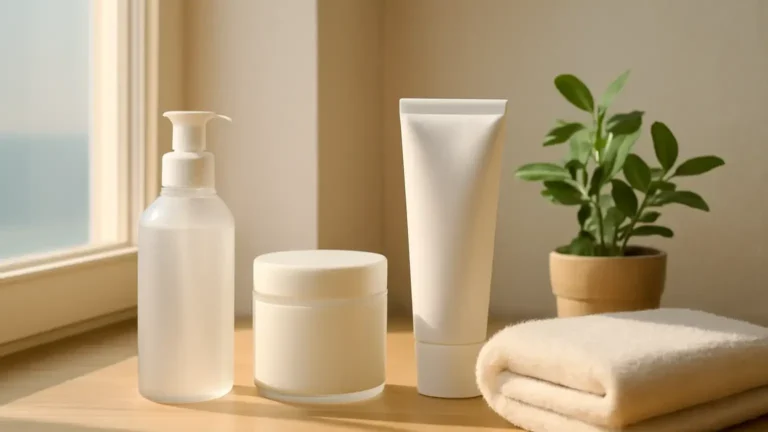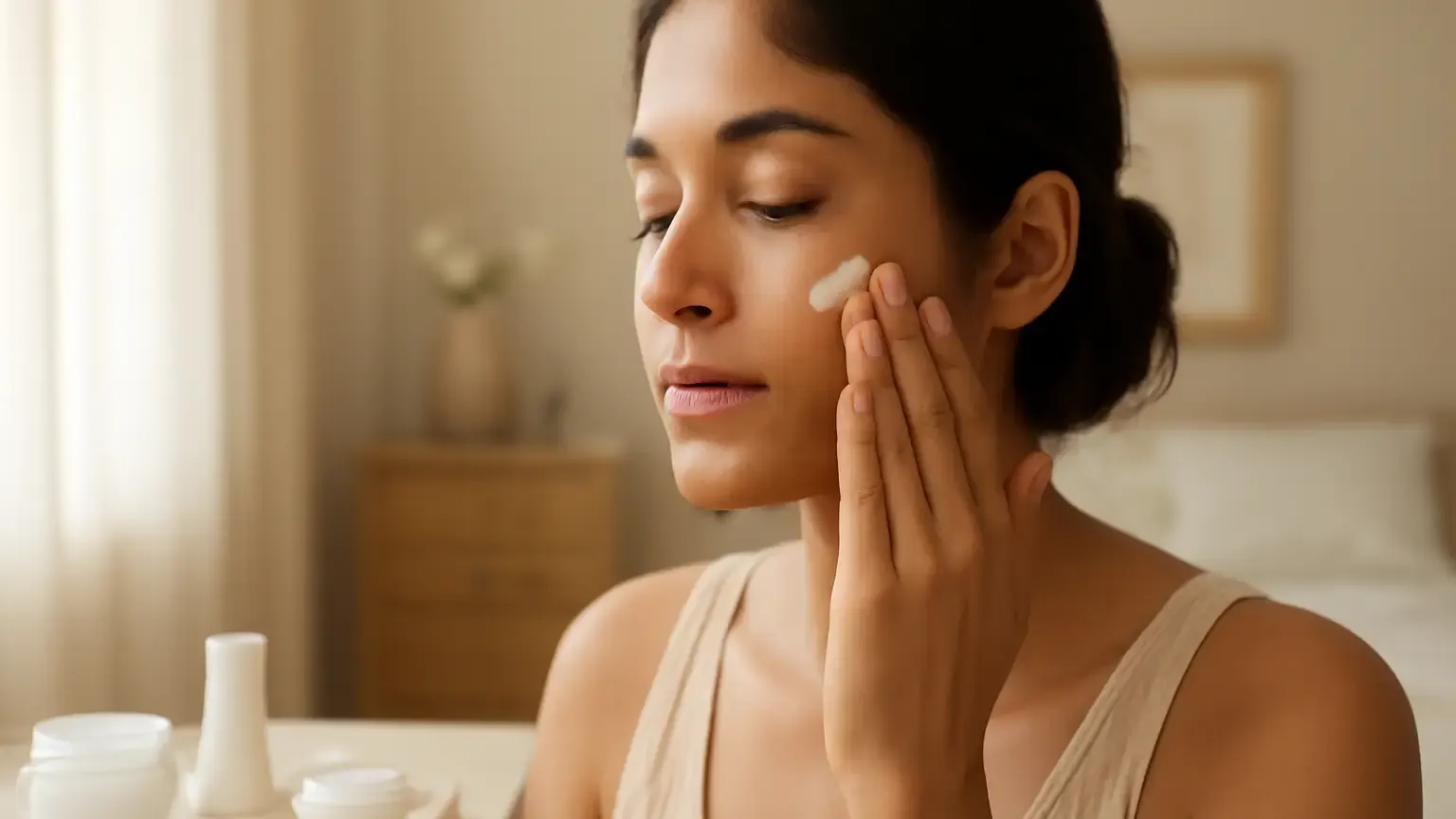
These skin care tips for product pilling are for anyone whose moisturiser, sunscreen or primer rolls into little flakes before foundation. The fastest fixes are to use fewer layers, follow a sensible skincare layering order, allow each product to settle, and pat instead of rubbing. If pilling continues, simplify your pre-makeup routine and check whether your sunscreen and primer have compatible textures. The goal is not more skincare; it is a calmer, thinner, better-spaced base.
What product pilling actually means
Product pilling happens when one or more cosmetic layers gather into tiny rolls, fibres or flakes on the skin instead of forming an even film. It can look like dry skin, but the material is often a mixture of skincare, sunscreen, primer and loose surface cells. Pilling is a surface-compatibility and friction problem, not automatically proof that a product is poor quality.
Several factors can contribute: too much product, overlapping film-forming ingredients, a moisturiser that has not settled, a rich cream under a gripping primer, or repeated rubbing. Humectants such as glycerin can feel tacky when layered heavily, while silicones and certain polymers can create a smooth but fragile film that rolls when disturbed. Hot, humid Indian weather may also increase sweat and surface slip, while air-conditioning can leave skin feeling tight or flaky.
Before changing every product, test one variable at a time. Apply your usual routine to one area of the face and simplify another area. This makes it easier to identify whether the issue is quantity, order, drying time or friction.
Skin care tips for product pilling: five layer fixes
1. Correct the skincare layering order
Start with clean, slightly damp skin if your routine includes a lightweight hydrating product. A practical order is cleanser, watery serum if needed, moisturiser, sunscreen in the daytime, and primer only after sunscreen has settled. This is not an unbreakable rule for every formula, but it gives each layer a sensible job.
Layering a thick cream before a watery serum can force you to rub more and may disturb the cream. Similarly, applying primer before sunscreen usually makes the sunscreen harder to spread evenly. Sunscreen should be the final skincare step because it needs to form a consistent protective film; makeup goes on top.
Keep the routine shorter when pilling is a regular problem. You may not need toner, essence, two serums, face oil, moisturiser and primer every morning. Reducing the number of films on the skin is often more useful than adding another product designed to fix texture.
2. Use less: quantity is a common cause
One of the most effective answers to how to stop skin care pilling is to reduce the amount used in each layer. A generous amount of a serum or moisturiser does not necessarily hydrate better; it may simply leave more material on the surface for the next product to move around.
Use a thin, even layer of serum and enough moisturiser to reduce tightness without leaving a heavy coating. For sunscreen, do not under-apply merely to avoid pilling. Instead, divide the recommended face-and-neck amount into two light passes, allowing the first to settle before applying the second. This can improve evenness without creating one thick, wet layer.
If you are using a face oil, balm or rich cream before makeup, try leaving it out for a few mornings. These products can suit dry or very dry skin, but they may be unnecessary when your moisturiser already leaves a comfortable finish.
3. Respect skincare absorption time
Products do not have to vanish completely before you apply the next one, but they should feel settled rather than wet, slippery or strongly tacky. Give a watery layer roughly 30 to 60 seconds, a moisturiser a little longer, and sunscreen enough time to form a stable surface before primer or foundation. Exact timing varies with humidity, formula and how much you applied.
Instead of following a rigid timer, use a touch test on the jawline. If the skin feels damp and the product shifts under a light tap, wait. If it feels comfortable with only mild tackiness, the next step can usually be applied gently. This simple pause is especially useful when working with multiple layers in humid cities or during monsoon weather.
Good skincare absorption time is also about environment. A fan, air-conditioner or very dry room can make a product feel set faster on the surface while the skin underneath still feels tight. Do not keep adding layers just because the first one no longer looks shiny.
4. Change rubbing into pressing and patting
Rubbing skincare products repeatedly creates heat and surface friction. It can roll up a partly set film, lift sunscreen and make flaky skin under makeup look more obvious. Spread each product lightly with clean fingers, then use flat-palm pressing or gentle tapping to finish. Avoid massaging until the product feels completely absorbed.
When applying sunscreen, place small amounts across the face, spread them in one direction, and leave the skin alone while the film settles. When using primer, press it only where you need it—such as around the nose, forehead or enlarged-looking pores—instead of rubbing it over the entire face several times.
A damp makeup sponge can also disturb skincare if dragged across the face. Use a bouncing motion and keep the sponge clean. If foundation rolls in one particular area, remove the loose bits with a clean cotton bud or fingertip rather than repeatedly sweeping over them.
5. Check texture compatibility between layers
Some formulas simply do not cooperate well. A water-based skincare routine may sit more predictably beneath a lightweight primer, while a rich, film-forming moisturiser may conflict with a gripping or silicone-heavy primer. This does not mean water-based and silicone-based products can never be mixed; the finished texture, quantity and application method matter more than a label alone.
Try a small compatibility test on your hand. Apply the moisturiser, wait for it to settle, then add sunscreen or primer using the same light pressure you use on your face. If it immediately rolls, test another pairing. You can also use sunscreen as your only daytime base layer for a few days to identify whether primer is the trigger.
Do not assume every visible roll is caused by incompatibility. If pilling happens only when you scrub, use a rough towel or apply several pumps of product, technique is likely the bigger factor. If it happens even with a thin routine and gentle pressing, a formula mismatch becomes more plausible.
A simpler makeup-prep routine
A reliable makeup prep for oily skin usually needs cleansing, a lightweight moisturiser only where required, sunscreen and a targeted primer. If the T-zone becomes shiny quickly, avoid stacking an oily face cream, facial oil and illuminating primer. Let sunscreen settle, then apply a small amount of mattifying primer only to the areas that need it. Blotting later is generally less disruptive than adding more powder at the start.
Makeup prep for dry skin needs comfort without a thick pile of products. Cleanse gently, apply a light hydrating layer, and use a moisturiser on dry zones. Wait until the surface feels smooth rather than wet. If you have flaky skin under makeup, do not aggressively scrub immediately before applying foundation. A soft washcloth used gently on another day, consistent moisturising and a flexible, thin base are safer ways to improve the appearance of texture.
For either skin type, keep the pre-makeup routine to three or four purposeful steps: hydrate if needed, moisturise where needed, protect with sunscreen in daytime, and prime selectively. A smooth makeup application depends more on an even surface and low friction than on a long routine.
Common mistakes that make pilling worse
- Adding more product to fix dryness: Extra layers can sit on top instead of solving the underlying tightness.
- Applying foundation immediately: A wet sunscreen or moisturiser can move when a brush or sponge passes over it.
- Rubbing until the product disappears: A product may have settled while still leaving a natural finish; continued friction can create rolls.
- Using a harsh scrub before an event: This may increase redness and make the skin feel more sensitive.
- Changing several products at once: You will not know which layer caused the problem.
- Skipping sunscreen to avoid pilling: Change the application method or product pairing rather than routinely leaving out daytime sun protection.
How to identify the right fix
If pilling begins immediately after you rub, focus on technique and quantity. If it appears after adding a particular primer, compare that primer with a simpler base. If it happens only around the mouth or nose, inspect dryness, facial movement and the amount of product collecting in folds. If it occurs across the entire face despite thin layers, test the routine without one product at a time.
People with oily skin may prefer fewer emollient layers and targeted primer. People with dry skin may need more moisturiser, but should still use a thin layer and allow it to settle. Sensitive-feeling skin benefits from gentle cleansing and minimal experimentation. The best routine is the one that leaves skin comfortable and allows sunscreen and makeup to sit evenly.
Persistent burning, swelling, marked redness, painful cracking or a recurring rash is different from ordinary pilling. Stop experimenting with new cosmetic layers and seek advice from a dermatologist or doctor, particularly if symptoms continue or worsen. Do not discontinue prescribed skincare without professional guidance.
Quick takeaway
The most dependable way to prevent skincare from pilling under makeup is to simplify: use the correct skincare layering order, apply a measured amount, allow each layer to settle, press rather than rub, and match the texture of your primer to the base beneath it. These skin care tips for product pilling help you troubleshoot logically instead of replacing your whole routine.
Products that may help with this routine
Choose only what fits your skin, hair or personal needs. Use the links below to view current options on Amazon India.
Frequently Asked Questions
Why does my skincare pill under makeup?
Common reasons include applying too much product, layering formulas that do not sit well together, rushing between steps and rubbing the skin. Test a thinner routine, wait for each layer to settle and press makeup on gently.
How do I stop skincare from pilling in layers?
Use a simple order—cleanser, needed serum, moisturiser, sunscreen and then primer—while applying thin layers. Allow each product to settle and avoid repeated rubbing. Test one change at a time.
How long should I wait between skincare products?
Wait until the previous layer feels settled rather than wet or slippery. As a general guide, allow about 30 to 60 seconds for a watery layer and longer for moisturiser or sunscreen, depending on the formula and climate.
How can I prevent sunscreen from pilling under makeup?
Apply sunscreen in two thin passes rather than one thick layer, spread it gently, wait for the surface to settle and use primer selectively. Avoid rubbing the sunscreen repeatedly with a brush or sponge.
What skincare should I skip before makeup?
Skip any non-essential layer that leaves a heavy, oily or strongly tacky finish, such as a face oil or rich balm. Keep products that your skin needs, including daytime sun protection, and adjust quantity before removing a useful step.
How do I prep oily skin for makeup without pilling?
Cleanse gently, use a lightweight moisturiser only where needed, apply sunscreen evenly and wait before adding a small amount of primer to the T-zone. Avoid stacking several mattifying or oily products.