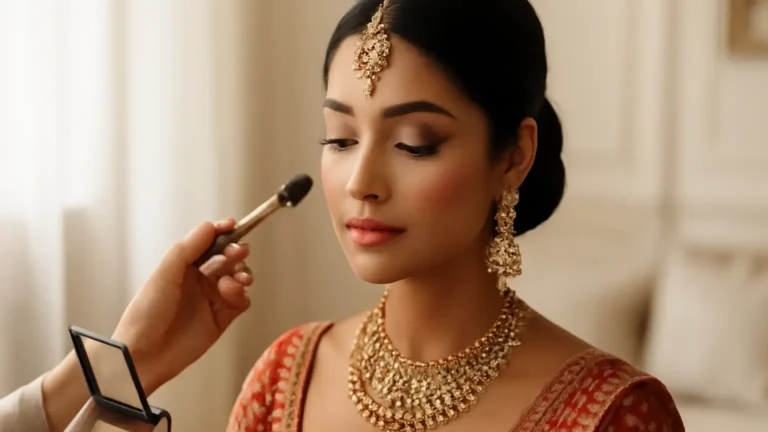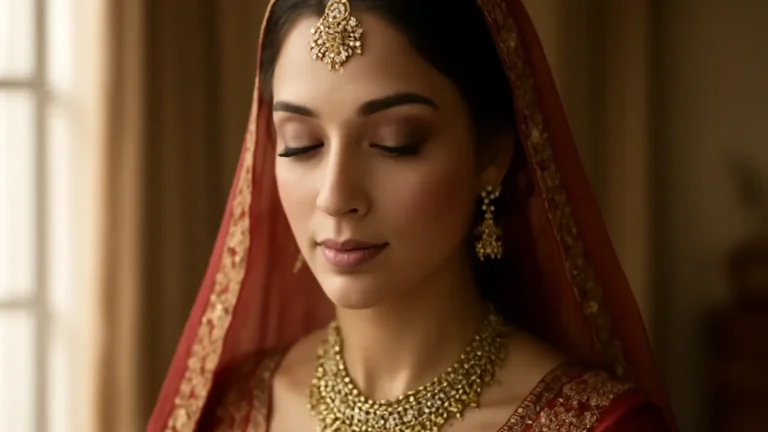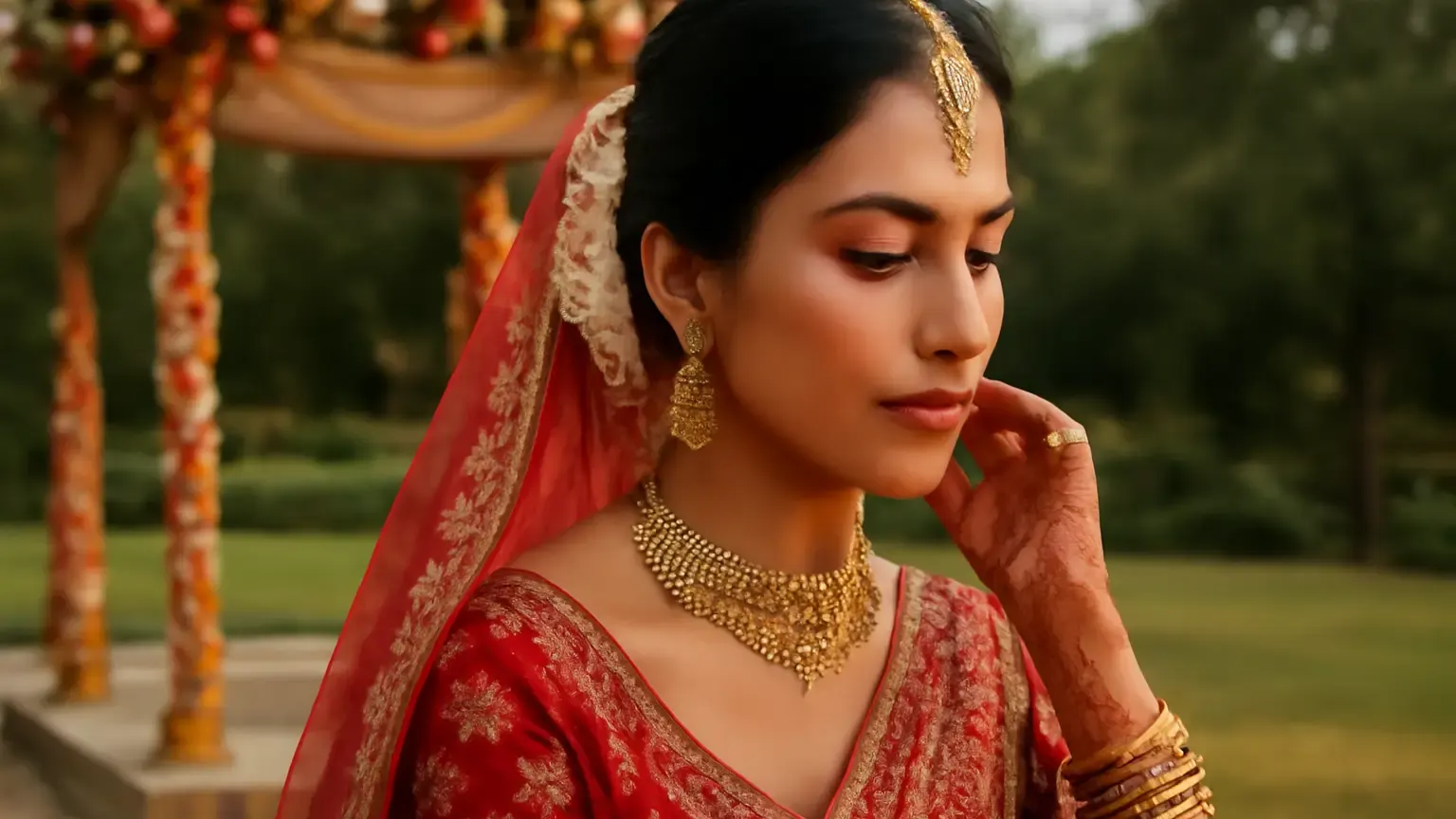
Bridal Makeup for Outdoor Weddings works best when it is built in sheer, controlled layers rather than a heavy full-coverage mask. This guide is for Indian brides marrying in sunlight, heat or humidity who want complexion makeup to stay comfortable, polished and convincingly skin-like. The key decisions are simple: prep without excess slip, choose a flexible base, powder only where needed, and select blush, lip and eye colours that remain balanced in daylight and photographs.
What makes outdoor bridal makeup different?
An outdoor ceremony exposes makeup to more variables than an air-conditioned banquet hall. Heat softens complexion products, humidity encourages shine, perspiration can break down concealer, and direct sunlight reveals texture that softer indoor lighting may disguise. Wind, dust, frequent greetings and the practical movement between the mandap, stage and photographs add further pressure.
The aim is not to make the face completely matte or immovable. A better goal is a breathable, even finish that can be refreshed without becoming thick. For outdoor wedding bridal makeup India, the artist should consider the season, venue surface, ceremony timing, length of exposure and whether the bride will move between shade and strong sun.
Outdoor makeup also needs to work for both the eye and the camera. A base that looks perfect in a shaded trial may appear too pale, too warm or overly shiny in direct daylight. Always assess the trial near a window or outdoors, and take photographs without a beauty filter.
Start with sweat-aware skin preparation
Long-wear makeup begins before foundation, but adding many mattifying products can create its own problems. Over-prepped skin may feel tight, encourage patchiness or cause products to slide when perspiration begins. Keep the routine familiar and give every layer time to settle.
- Cleanse gently: Remove excess oil, sunscreen residue and makeup without scrubbing immediately before application.
- Hydrate selectively: Use a lightweight moisturiser suited to the bride’s usual skin needs. Drier areas may need more comfort than the forehead or nose.
- Apply SPF thoughtfully: SPF and bridal makeup need not conflict, but the sunscreen should be one the bride has already worn comfortably. Allow it to set fully, and avoid introducing a new formula on the wedding morning.
- Use a sweat-resistant primer: Apply it only to areas that genuinely need grip or oil control, such as the sides of the nose, forehead and chin. A thin veil is more effective than a thick layer across the entire face.
- Blot before base makeup: If the skin looks wet or slippery, press gently with tissue rather than adding more powder at this stage.
A patch test and a complete makeup trial are especially sensible when the bride has reactive skin or is trying unfamiliar products. Persistent burning, swelling or a rash calls for medical advice rather than more makeup experimentation.
Build a skin-like complexion in thin layers
The most reliable base for an outdoor wedding is usually a flexible, medium or buildable formula rather than one thick application. The best foundation for outdoor wedding bridal makeup is not determined by coverage alone; it should match the bride’s undertone, sit comfortably in the climate and photograph evenly in daylight.
Use targeted coverage, not a heavy mask
Begin with a small amount of foundation in the centre of the face and blend outward. Keep the edges sheer around the hairline and jaw so the complexion does not look visibly separate from the neck. Add a second light layer only where redness or unevenness remains. This is the principle of thin complexion layers: each layer has a specific job, and none should be asked to conceal everything.
Use concealer precisely under the inner corners of the eyes, around the nose or over individual marks. Avoid covering the whole under-eye area with a thick, bright strip. A little natural movement is preferable to creasing that becomes more noticeable as the day continues.
Match finish to the bride, not the trend
A softly natural satin finish can look more convincing than an aggressively matte base under open sky. Very luminous products may reflect sunlight and appear oily, while a fully matte finish can emphasise dry texture. Combining finishes is often practical: keep the centre controlled, allow a restrained glow on the cheek planes, and preserve the appearance of natural skin.
Place powder strategically for heat and photographs
Powder should support the base, not erase it. Strategic powder placement usually means setting the areas where makeup moves first: the sides of the nose, under-eyes, centre forehead, upper lip and chin. Press a small amount into these zones with a puff or compact brush, then remove excess so the surface remains flexible.
Do not automatically powder the highest points of the cheeks if the bride wants a fresh finish. Those areas can retain a controlled skin-like sheen. The correct answer to how much powder should bridal makeup use outdoors is enough to reduce slipping and shine, not enough to create a visible powder film.
Loose or pressed powder can both work when applied sparingly. The more important factors are shade, texture and placement. A translucent product is not always truly colourless on every complexion, so check it in daylight and in flash photographs. If the bride perspires, blot first and then add a small amount of powder; layering powder directly over wet sweat can turn uneven and cakey.
Choose colours that survive daylight
Sunlight is honest and often cooler or harsher than indoor venue lighting. For bridal makeup for daylight ceremonies, colour choices should complement the bride’s outfit while retaining enough definition to show in photographs.
- Blush: A cream blush can create a naturally fused flush, but set it lightly if the skin is oily or the weather is humid. Rose, peach, terracotta and muted berry tones should be tested against the bride’s undertone and clothing.
- Bronzer and contour: Use restrained warmth rather than a grey or overly deep stripe. Direct sun already creates strong shadows, so sculpt only where the face needs balance.
- Eyes: Browns, bronze, rose, plum and soft gold can remain readable without looking harsh. Waterproof eye makeup is useful for humidity, tears and long ceremonies, but waterproof does not mean rub-proof; avoid excessive rubbing during touch-ups.
- Lips: A lip liner beneath lipstick can improve definition and reduce feathering. Choose a formula the bride can comfortably reapply, particularly if she will be eating, speaking and smiling for hours.
A daylight-friendly colour palette is not necessarily pale or minimal. It is one that remains balanced when viewed under direct sun, shade and camera flash. Very white highlights, extremely bright under-eye concealer and untested highlighter can look stark outdoors.
How to make bridal makeup last in outdoor wedding conditions
Longevity comes from coordination rather than one miracle product. The artist should layer compatible textures, allow creams to settle, and avoid applying more product simply because the ceremony is long.
- Complete skincare and let it settle before primer.
- Apply foundation and concealer in light, targeted passes.
- Set only high-movement and high-shine zones.
- Use cream colour under a restrained powder version when extra endurance is needed.
- Finish with a fine mist of setting spray, held at the distance recommended on its label.
- Let the face dry before placing a veil, jewellery or dupatta close to the cheeks and forehead.
This approach is suitable for humidity-proof bridal makeup in a practical sense: it helps makeup cope better with moisture, but no routine can prevent all perspiration in extreme heat. If possible, schedule the main ceremony photographs during a cooler period, provide shade between rituals, and keep a clean fan or hand fan available without directing strong air at wet makeup.
Plan the bride’s touch-up strategy
A good touch-up kit is small and purposeful. Include tissues or blotting papers, the lip product, a cotton bud, a small concealer or foundation compact, a clean sponge or puff, and a little powder. A miniature makeup touch-up kit is more useful than carrying every product used at the trial.
Give the bride and a trusted attendant simple instructions: press away moisture, inspect the nose and upper lip first, repair only visible areas, and refresh the lips after food or drinks. Do not rub the cheeks or repeatedly sweep powder over the entire face. If a base has lifted, soften the edge with a clean sponge before adding a tiny amount of complexion product.
For oil control, blotting is usually the first step. Powder is the second. A setting spray is not a substitute for removing surface sweat, and facial mist should not be sprayed indiscriminately over makeup unless its use has been tested beforehand.
Common mistakes to avoid
- Trying a new skincare or foundation on the wedding morning: Familiarity matters more than novelty.
- Using an overly pale base for flash: Test the shade in daylight and with flash photography; do not rely on indoor venue lighting.
- Applying thick concealer everywhere: Coverage belongs where it is needed, especially around expressive areas.
- Powdering until the face looks flat: Controlled shine can make skin appear healthier and more dimensional.
- Choosing a colour only because it is trending: The outfit, undertone, ceremony light and photography style should guide the final decision.
- Ignoring the neck, ears or hairline: Blend transitions naturally, particularly when the bride wears an open neckline or pulled-back hairstyle.
A practical final checklist
Before approving the bridal look, check it in direct and indirect daylight, after at least 20 to 30 minutes of wear, and in photographs from several distances. Confirm that the foundation matches the neck, the under-eye area still moves comfortably, the blush is visible without looking painted, and the T-zone is controlled without obvious powder.
Also consider the bride’s comfort. If she dislikes a dry matte finish, do not force one in the name of longevity. If she expects tears, hugs and several hours outdoors, reinforce the eye and lip areas while keeping the complexion light. A professional artist can adapt the plan to the venue and the bride’s tested products.
Takeaway: Bridal Makeup for Outdoor Weddings should look like healthy, even skin in changing light. Use sweat-aware preparation, thin complexion layers, targeted powder, durable but comfortable colour, and a simple refresh plan. This gives the bride structure and staying power without sacrificing the natural texture that makes the finish believable.
Products that may help with this routine
Choose only what fits your skin, hair or personal needs. Use the links below to view current options on Amazon India.
Frequently Asked Questions
How to make bridal makeup last in outdoor wedding conditions?
Prepare with familiar, lightweight skincare, use a sweat-resistant primer only where needed, apply foundation in thin layers, set high-movement zones and carry a small touch-up kit. Blot perspiration before adding powder, and test the full routine outdoors before the wedding.
What is the best foundation for outdoor wedding bridal makeup?
The best foundation is one that matches the bride’s neck and undertone, feels comfortable in the venue climate, photographs evenly and offers buildable coverage. A flexible medium-coverage formula is often easier to manage than a thick full-coverage base.
How can I stop bridal makeup melting in heat?
Use less skincare and primer rather than more, allow each layer to settle, keep coverage targeted, and powder only the areas prone to movement or shine. Blot sweat before touch-ups, and use shade and cooling breaks whenever the venue allows.
What makeup is best for a daylight wedding ceremony?
A natural satin or softly balanced finish, thin base layers and a daylight-friendly colour palette usually work well. Test blush, lipstick, concealer and highlighter in real daylight so colours do not appear too pale, orange or stark in photographs.
How much powder should bridal makeup use outdoors?
Use enough to set the nose, forehead, under-eyes, upper lip and chin, while leaving the cheekbones more natural if desired. Start with a small amount, press it in, remove excess and reapply only after blotting perspiration.
Is outdoor bridal makeup suitable for humid weather in India?
Yes, when the routine is adapted to the climate with breathable layers, selective oil control, waterproof eye makeup and planned touch-ups. No makeup can prevent all perspiration in extreme heat, so shade, timing and comfort should be part of the plan.