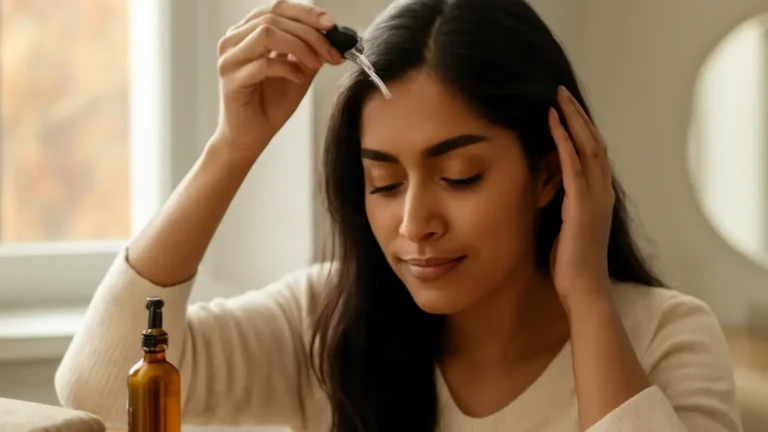
Autumn hair care India is about making small changes as late-September humidity drops: wash according to your scalp, switch to lighter conditioning, add static control and reduce rough handling. This guide is for Indian hair types dealing with monsoon residue, frizz, flyaways or a suddenly tight scalp. The key decision is not whether to use more products, but whether your hair needs more cleansing, more moisture, or simply gentler styling.
Why your hair routine needs a post-monsoon reset
Across India, the shift from late monsoon weather to drier autumn air is gradual and uneven. Coastal cities may remain humid, while inland areas can feel noticeably drier by October. Air-conditioning, pollution, hard water and frequent rain can complicate the transition further. That is why a useful seasonal hair routine should respond to your scalp and lengths rather than follow a fixed calendar.
During the humid months, sweat, sebum, dust and styling residue can sit on the scalp. When the air dries, the same routine may leave the lengths rough, create more flyaways or make the scalp feel tight. Hair can also become more electrically charged when it is dry and repeatedly rubs against synthetic clothing, pillows or scarves. The five adjustments below are designed to address those changes without overloading Indian hair with products.
1. Reassess hair wash frequency instead of washing by habit
There is no universal number of washes for October. Your ideal hair wash frequency depends on scalp oiliness, sweat, exercise, pollution exposure, hair texture and whether you use oils or styling products. A sweaty or oily scalp may still need frequent cleansing, while a dry, curly or colour-treated length may need a gentler approach.
Use your scalp as the decision point
- If the roots feel greasy, heavy or visibly coated, wash rather than extending the gap because the calendar says the weather is cooler.
- If the scalp feels comfortable but the ends are dry, keep the cleansing interval and improve conditioning on the lengths.
- If there is persistent flaking, soreness, marked redness or intense itching, avoid repeatedly scrubbing or adding essential oils. Seek advice from a dermatologist.
Choose a mild shampoo for routine washing and concentrate it on the scalp, allowing the lather to travel through the lengths as you rinse. A clarifying shampoo can be useful occasionally when there is noticeable buildup from oil, silicone-rich styling products or mineral-heavy water, but it is not automatically better for every wash. Overuse can make dry lengths feel rougher and may encourage more frizz.
2. Condition strategically to avoid both buildup and dryness
Conditioner is still useful when the weather is humid; it helps reduce friction between strands and makes detangling less damaging. The goal is to choose a lightweight conditioner and apply it from the mid-lengths to the ends, not directly over an oily scalp. Leave it on for the time stated on the label, then rinse thoroughly.
If your hair is fine, straight or easily weighed down, use a smaller amount and keep richer masks to occasional use. If your hair is thick, curly, coily, bleached or frequently heat-styled, a more cushioning formula may be appropriate, especially on the ends. Product texture matters more than a label such as “autumn” or “monsoon”.
When to use a leave-in product
A leave-in conditioner can help if the lengths become rough after washing, but apply a small amount to damp hair and avoid layering it with several oils, serums and creams. Start with one leave-in product for two or three washes. If the hair looks limp or the roots become greasy faster, reduce the amount or keep it only on the bottom third of the hair.
For the best humidity hair care, balance moisture with a clean scalp. Adding more cream to hair that is already coated will not necessarily make it smoother; it can make strands separate into stringy sections and attract dust.
3. Build a simple plan for frizz when humidity changes
Frizz is not always caused by too little moisture. Uneven cuticles, new growth, breakage, friction and changing humidity can all make hair look expanded or fuzzy. The most useful anti-frizz hair products are those that match your texture and are used sparingly on damp or dry lengths.
- After washing, squeeze out water with your hands rather than twisting the hair tightly.
- Blot with a soft microfibre towel or smooth cotton T-shirt. Rough towel rubbing increases friction.
- Detangle from the ends upwards with a wide-tooth comb, particularly when the hair is wet and fragile.
- Apply a small amount of leave-in conditioner or smoothing serum to the mid-lengths and ends.
- Allow hair to dry with minimal handling. Repeatedly touching it while it dries can disrupt the strand pattern.
For wavy, curly or coily hair, scrunching with a compatible styling cream or gel may preserve definition better than brushing after it dries. For straight hair, a light serum on the ends may be enough. Neither approach needs to make hair stiff or glossy; the correct amount leaves the hair mobile and comfortable.
4. Add hair static control without making roots oily
Static tends to become more noticeable as air gets drier and hair loses surface moisture. It is also increased by friction from plastic combs, synthetic scarves, sweaters and dry towel fibres. Effective hair static control starts with reducing friction rather than spraying a heavy product over the whole head.
- Use a wide-tooth comb or a smooth, well-finished brush suited to your hair texture.
- Do not over-dry the hair with high heat; leave it slightly cool and dry before covering it.
- Use a tiny amount of serum or leave-in conditioner on the palms, then smooth only the flyaways and ends.
- Choose smoother pillowcases or tie long hair loosely at night to reduce rubbing.
- Limit repeated brushing on dry lengths, particularly if your hair is curly or porous.
Do not apply oil directly to the scalp merely because the hair is static. That may make the roots look greasy while leaving the ends rough. If static is concentrated at the crown, check whether a tight synthetic cap, scarf or frequent brushing is the real trigger.
5. Keep the scalp comfortable and change styling habits
Good scalp care India advice has to account for heat, pollution, sweat, water quality and personal hair practices. Even when the air feels cooler, a scalp can still sweat under a helmet, dupatta, cap or thick hairstyle. Let the scalp dry properly after washing and avoid sleeping with soaking-wet hair.
For dry scalp prevention, use lukewarm rather than very hot water, rinse shampoo thoroughly and avoid aggressive scratching. If your scalp feels tight after every wash, review water temperature, shampoo strength and how much cleanser reaches the hair lengths. A small amount of pre-wash oil may suit some people, but it is not essential and should not be left on for long periods if it causes heaviness or discomfort.
Choose lower-friction styling
Autumn is a useful time to reduce tight ponytails, repeated slicking and frequent high-heat touch-ups. These habits can increase breakage and make frizz more visible around the hairline. When using a dryer, straightener or curler, heat styling protection is important: apply a product labelled for thermal protection, follow its directions and use the lowest practical temperature. A heat protectant reduces exposure-related damage but does not make unlimited heat safe.
Loose braids, low ponytails with fabric-covered ties and gentle clips can keep hair manageable on busy days. Avoid tying hair tightly while it is wet. If you wear a helmet, allow sweat to dry when practical and keep any removable liner clean according to its care instructions.
A simple October routine for different hair needs
Oily or fine hair: wash when the scalp feels oily, use a small amount of lightweight conditioner on the ends and skip heavy layering. Clarify only when buildup is obvious.
Dry, curly or coily hair: avoid extending washes solely to prevent frizz. Clean the scalp as needed, condition generously on the lengths, detangle gently and use a small amount of leave-in product while damp.
Coloured, bleached or heat-styled hair: prioritise gentle cleansing, consistent conditioning and heat protection. Trim or professional advice may be useful if breakage is increasing, but do not assume every rough feeling requires a stronger mask.
Mixed scalp and dry ends: shampoo the scalp carefully, keep conditioner below the roots and use a tiny amount of smoothing product only where needed. This is often the best alternative to applying one heavy product everywhere.
Common mistakes during the seasonal transition
- Changing every product at once, making it impossible to identify what caused heaviness or irritation.
- Using a strong clarifying shampoo repeatedly to control frizz.
- Applying oil, mask, leave-in cream and serum together before the hair has shown it needs all four.
- Brushing dry curly or wavy hair aggressively to remove flyaways.
- Using very hot water or high heat because the weather feels less humid.
- Ignoring a persistently uncomfortable scalp and treating it only with cosmetic products.
Make one change at a time and observe the scalp, roots and ends separately. Hair can look smoother while the scalp becomes uncomfortable, or feel clean while the lengths become brittle. Both signals matter.
Takeaway: make autumn hair care India responsive, not complicated
Effective autumn hair care India does not require a completely new shelf of products. Adjust wash frequency to the scalp, use a lightweight conditioner on the lengths, add controlled moisture for frizz and static, dry gently, and reduce tight or high-heat styling. Reassess after two or three weeks as your local weather changes. If itching, scaling, pain, sudden shedding or scalp irritation persists or worsens, consult a qualified dermatologist rather than repeatedly changing home-care products.
Products that may help with this routine
Choose only what fits your skin, hair or personal needs. Use the links below to view current options on Amazon India.
Frequently Asked Questions
How often should I wash hair in October India?
Wash according to your scalp rather than a fixed October schedule. Oily, sweaty or pollution-exposed scalps may need more frequent washing, while dry or curly hair may need a gentler interval. Keep shampoo mainly on the scalp and condition the lengths.
What is the best hair care routine for changing weather in India?
Use a mild shampoo as needed, a lightweight conditioner from mid-lengths to ends, gentle towel-drying, limited heat and a small amount of leave-in or serum for rough ends. Adjust the routine for local humidity and your scalp’s comfort.
How can I reduce static in Indian hair?
Reduce friction with a smooth towel, suitable comb and gentler hairstyles. Apply a very small amount of leave-in conditioner or serum to dry flyaways and ends, and avoid putting heavy oil on the scalp just to control static.
How can I prevent frizz after the monsoon?
Clean the scalp when it feels coated, condition the lengths, detangle from the ends upwards and avoid rough towel rubbing. Let hair dry with minimal touching and use a texture-appropriate anti-frizz product sparingly.
Should I use conditioner in humid weather?
Yes, most hair types can benefit from conditioner because it reduces friction and improves manageability. Choose a lighter formula if your hair is fine or easily weighed down, and keep it away from an oily scalp.
What should I do for an itchy, dry scalp in autumn?
Use lukewarm water, rinse shampoo thoroughly and avoid scratching or repeatedly adding oils and strong cleansers. Persistent, severe or painful itching, scaling or redness should be assessed by a dermatologist.