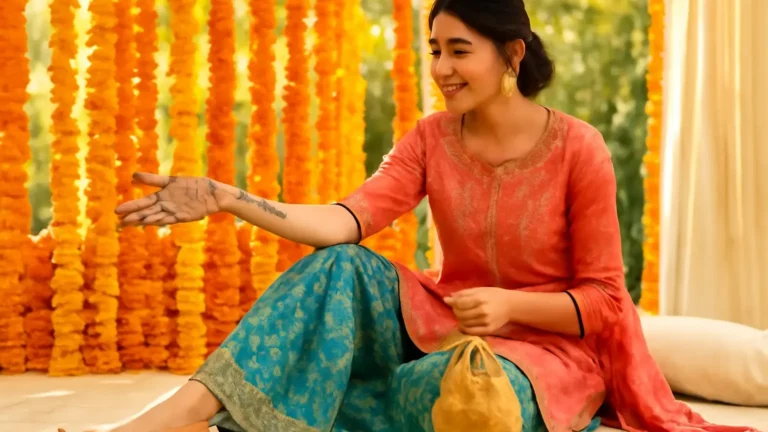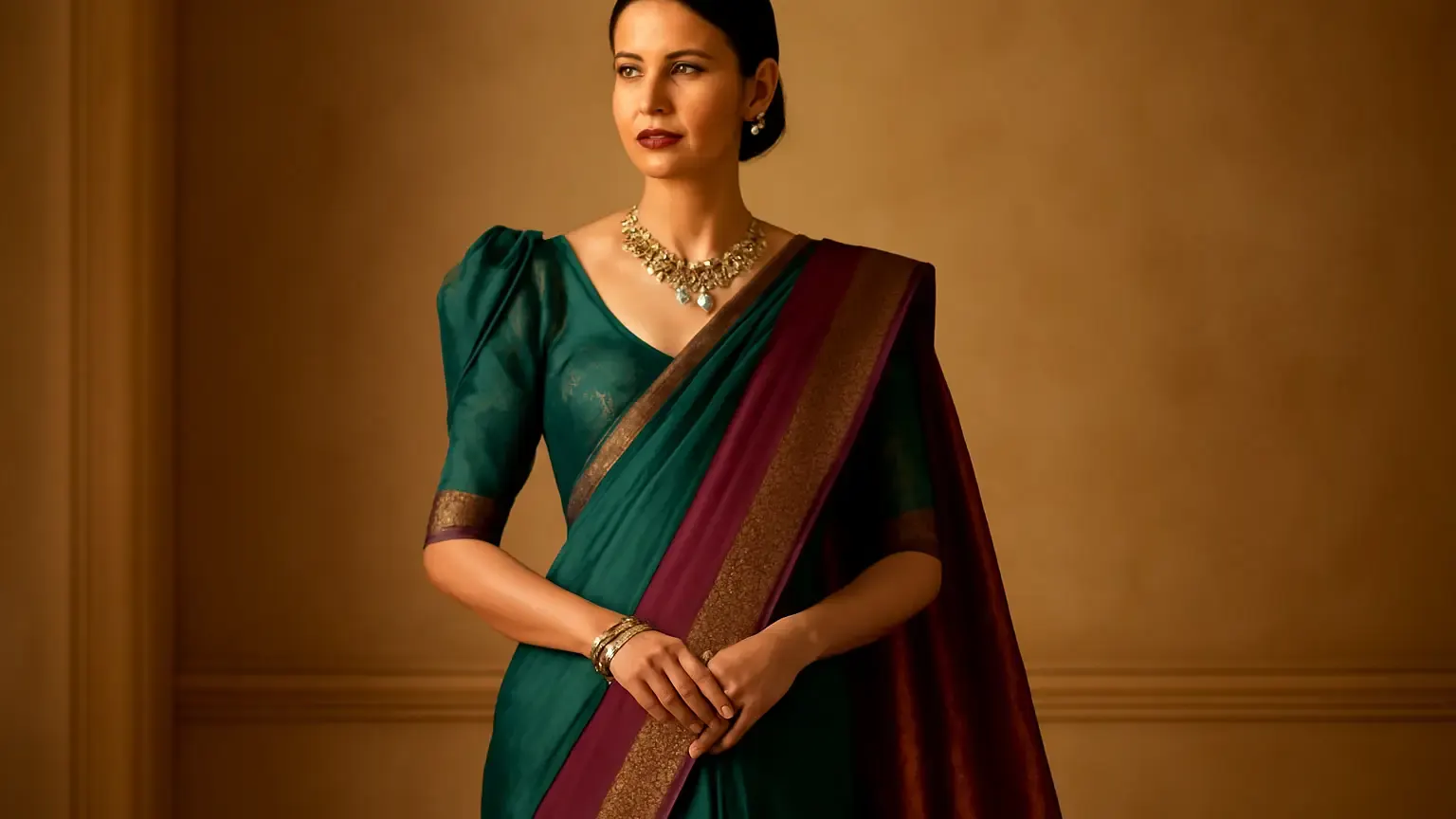
Festive fashion for pear shaped women works best when the outfit brings intentional detail towards the shoulders and keeps the lower half fluid rather than bulky. This guide is for women with comparatively narrower shoulders and fuller hips or thighs who want Indian festive wear to feel balanced, comfortable and polished. Choose the right neckline, sleeve, drape, hemline and colour placement first; then add jewellery and embellishment to support the silhouette.
Indian festive clothing offers plenty of ways to create balance without hiding your natural shape. A pear-shaped figure generally has shoulders that are narrower than the hips, with definition at the waist and more volume through the lower body. The aim is not to make the body look uniform. It is to create visual proportion so that the outfit follows your shape while distributing interest thoughtfully.
Start with proportion, not a clothing rulebook
Good pear body styling begins with three questions: Where does the eye land first? Does the waist have enough definition? Is the lower half moving freely rather than carrying unnecessary stiffness or bulk? These answers help you choose an outfit more effectively than relying on a single “flattering” cut.
For festive dressing, a useful formula is a little more visual interest on top, a clean waist area and a smooth, elongated lower line. This can come from a wider neckline, textured sleeves, a brighter dupatta, a fitted waistband or a skirt that falls away from the hips instead of clinging to them.
- For a balanced look: combine shoulder detail with a relatively simple lower half.
- For a taller-looking line: use a long open layer, uninterrupted kurta length or a neatly arranged saree pallu.
- For comfort: allow ease around the hips and thighs; tight fabric often draws more attention to that area.
Choose necklines and sleeves that frame the upper body
Necklines and sleeves are efficient styling tools because they influence the first visual impression of an outfit. Medium-wide boat necks, square necks, sweetheart shapes and gently rounded necklines can add width across the upper frame. A V-neck can also work when it is not excessively deep, as it creates a vertical line without making the shoulders appear narrower.
Blouse and kurta details to consider
When comparing blouse necklines, look for a shape that complements your jewellery and the saree’s drape. A boat-neck blouse with a shorter necklace can create an elegant horizontal emphasis. A square neck suits structured festive fabrics and works well with a pendant. If you prefer a V-neck, balance it with sleeves or shoulder detailing.
Statement sleeves can add proportion without adding bulk to the waist or hips. Try elbow-length puff sleeves, gathered sleeves, structured cap sleeves, layered bell sleeves or subtle shoulder gathers. The finish should match the outfit’s scale: a heavily embroidered saree may need controlled sleeve volume, while a plain silk saree can support more decorative sleeves.
Avoid automatically choosing very narrow straps or tiny sleeves if your intention is to balance the frame. They are not forbidden, but they may make a broad lower half appear more dominant unless the neckline, jewellery or pallu provides enough upper-body interest.
Festive saree styling: use the drape as a balancing tool
A saree can be especially versatile for a pear-shaped figure because the blouse, pallu and pleats can be adjusted independently. The most reliable saree draping techniques create a neat waist and let the pallu add width or movement near the shoulders.
- Pin a soft, moderately broad pallu over one shoulder so it frames the upper torso without overwhelming it.
- Try a slightly open pallu for light fabrics when you want more shoulder coverage and visual width.
- Keep the front pleats vertical and tidy; excessive fabric gathered at the hip can add avoidable bulk.
- Place the saree’s strongest border where it supports the line of the garment rather than stopping abruptly at the fullest part of the hip.
For a formal event, a blouse with embroidery concentrated around the neckline and sleeves can make a plain or lightly bordered saree feel balanced. If the saree is heavily embellished, choose a blouse with controlled detail and let the drape do the proportion work. A pre-stitched saree can also be useful, provided its pleats sit comfortably and do not pull across the hips.
Find the right ethnic silhouettes for your lower half
The best ethnic wear for pear shape usually skims the hips and opens gradually below the waist. This gives the outfit movement while preserving a defined shape. Avoid confusing volume with proportion: a very gathered skirt or stiff flare can add width exactly where you may prefer a cleaner line.
Kurtas and suits
An A-line kurta is a dependable option because it follows the upper body and widens gently towards the hem. Choose a length that ends either above the widest part of the calf or closer to the ankle, depending on your height and footwear. A hem that stops at the broadest part of the calf can visually interrupt the leg line.
An Anarkali suit can work beautifully when the flare begins around the natural waist or just below the bust, rather than gathering heavily over the hips. Look for fluid fabrics, an inner lining that does not grip and enough flare to move comfortably. A contrasting dupatta worn across the shoulders can bring further balance.
Straight kurtas are also suitable when paired with a well-cut bottom and an eye-catching dupatta. The key is fit: the kurta should skim rather than cling, with side slits that allow movement without opening awkwardly across the hips.
Bottoms, skirts and lehengas
When choosing palazzo pants, select a fluid pair with a flat or softly structured waistband. Very stiff pleats, bulky pockets and excess gathers at the hip can make the lower half look wider. A long kurta or short, structured jacket can create a continuous vertical line over them.
For lehengas, A-line, panelled and softly flared lehenga silhouettes are generally easier to balance than extremely gathered circular styles. A high-waisted skirt with a smooth waistband can define the middle, while a blouse with shoulder detail brings attention upwards. If you love a fuller skirt, keep the volume even and use a blouse or dupatta with enough presence to match it.
Use colour placement and embellishment strategically
Colour blocking for body shape is about placement rather than avoiding certain colours. A brighter blouse, shoulder border or dupatta can draw the eye upwards, while a deeper or quieter tone through the skirt, saree lower half or salwar creates a calm base. Monochromatic dressing can also elongate the body when the fabric tones are close together.
Consider these combinations for Indian festive outfits:
- A jewel-toned blouse with a slightly deeper saree and a bright pallu border.
- A lighter dupatta over a tonal Anarkali, arranged across the shoulders.
- A detailed cropped jacket over a simple lehenga in one continuous colour family.
- A contrast border placed along the neckline and sleeve edge instead of concentrated at the hip.
Embellishment should have a visual hierarchy. Sequins, zari, mirror work and embroidery near the neckline, sleeves or shoulder can balance a more restrained lower half. If the skirt or saree already has a broad, heavy border, keep the blouse detail deliberate rather than adding competing decoration everywhere.
Place jewellery and accessories where they help
Jewellery placement can complete the proportion of an outfit. Chokers, short necklaces, layered chains, jhumkas and earrings naturally bring attention towards the face and upper body. If you choose a long necklace, pair it with an interesting neckline or earrings so the whole look does not become one narrow vertical line.
Brooches, shoulder pins and embellished dupatta arrangements can add structure near the collarbone. A potli or small handbag held close to the upper body can support this effect. For footwear, a pointed or almond-toe shape and a modest heel can extend the lower line, but comfort should remain the deciding factor for long festive events.
Common festive styling mistakes to avoid
Many outfit problems come from fit and placement rather than from the silhouette itself. Watch for these issues:
- Too much detail at the hip: large appliqué, horizontal stripes or a stiff pocket can interrupt the smoothest line.
- A tight waistband: it can create pulling and make the garment sit unevenly. Choose a secure but comfortable fit.
- An unbalanced dupatta: a narrow, limp drape may leave the upper body visually bare, while too much fabric can overwhelm a petite frame.
- Wrong hem placement: test the garment with the footwear you will actually wear.
- Ignoring fabric behaviour: rigid brocade, clingy satin and very thin jersey each sit differently around the hips. Movement and lining matter.
Before an event, sit, walk, raise your arms and turn sideways in the complete outfit. A garment that looks balanced while standing still may pull, bunch or shift during a celebration.
A simple outfit decision guide
Choose a saree when you want flexible control over the pallu, pleats and blouse detail. Choose an A-line kurta or Anarkali when you want easy movement and a forgiving lower line. Choose a lehenga when you want a defined waist, but pay close attention to skirt volume and waistband comfort. Choose a palazzo set when you prefer trousers, and keep the top long enough to create a smooth transition over the hips.
For a daytime puja, lighter fabrics and smaller motifs usually feel practical. For an evening wedding or reception, richer colour, a more sculpted blouse and controlled embellishment can create impact. In every case, prioritise the garment’s construction, the placement of detail and how confidently you can move.
Takeaway
The most effective festive fashion for pear shaped women is based on intentional proportion: add interest around the neckline and shoulders, define the waist without constricting it, and choose fluid lower silhouettes that fall cleanly over the hips. With thoughtful draping, colour placement, sleeves and jewellery, your festive Indian wardrobe can feel expressive, comfortable and completely your own.
Products that may help with this routine
Choose only what fits your skin, hair or personal needs. Use the links below to view current options on Amazon India.
Frequently Asked Questions
What are the best festive outfits for pear shape women?
A-line kurtas, softly flared Anarkali suits, well-draped sarees and A-line or panelled lehengas are strong choices. Look for upper-body detail, a comfortable defined waist and a lower half that skims rather than clings.
How do you style a saree for a pear shaped body?
Use a blouse with a boat, square or moderate V-neck, add interest through sleeves or neckline embroidery, and keep the front pleats neat. A moderately broad pallu arranged over the shoulder can add balance.
Which blouse necklines suit pear shaped women?
Boat, square, sweetheart and gently rounded necklines can add visual width to the upper body. A moderate V-neck also works when balanced with sleeves, earrings or shoulder detail.
What ethnic wear suits a pear shaped body?
A-line kurtas, softly flared Anarkalis, fluid palazzo sets, sarees with structured blouses and panelled lehengas usually work well. The best choice depends on fabric, fit, waist placement and where embellishment is concentrated.
How can you balance a pear shaped silhouette in Indian wear?
Place brighter colour, embroidery, jewellery or sleeve volume near the shoulders, keep the waist defined but comfortable, and choose a smooth, fluid lower silhouette. Avoid unnecessary stiffness or heavy detail at the fullest hip area.
What are the best lehenga silhouettes for pear shaped women?
A-line, panelled and softly flared lehengas are generally easy to balance. Select a smooth waistband, avoid excessive hip gathers and pair the skirt with a blouse or dupatta that has enough shoulder presence.