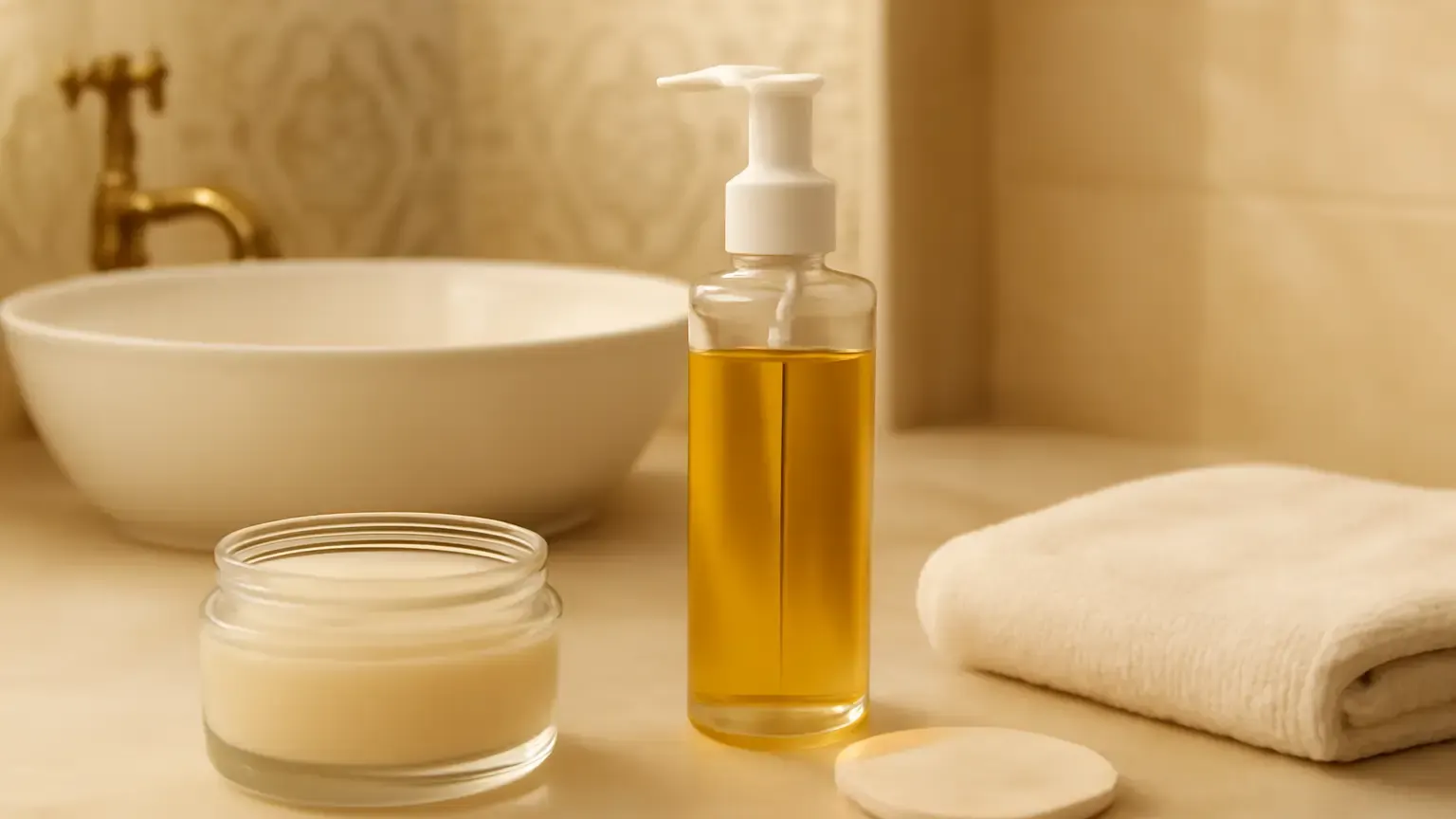
These skin care tips for double cleansing are for anyone in India who wears sunscreen, makeup or water-resistant products and wants a clean—but not tight—finish. Use an oil, balm or micellar first cleanse when there is a removable layer to break down; follow with a gentle water-based cleanser only when residue remains. On light, makeup-free days, one careful cleanse is usually enough and may better protect your skin barrier.
Double cleansing means using two different cleansing steps: first, a product that loosens oil-soluble residue such as sunscreen, makeup and sebum; second, a water-based cleanser that removes sweat, dust and remaining product. It is a technique, not a rule that every face needs every night.
When should you double cleanse your face?
The best decision depends on what is sitting on your skin, not on a fixed calendar. Consider a double cleanse after a full day of wearing water-resistant sunscreen, foundation, long-wear makeup or a rich, tenacious product. It can also be useful after outdoor travel in an Indian humid climate, when sweat and city dust combine with sunscreen and skin oils.
One cleanse is generally enough when you have worn no makeup and used a light, non-water-resistant sunscreen, or when you are cleansing in the morning. A gentle, thorough wash can also be the better choice for dry sensitive skin, especially if a second round leaves your face tight, warm or uncomfortable.
- Choose two steps: visible makeup, water-resistant sunscreen or a persistent greasy film is present.
- Choose one step: your skin has only light daily residue and a suitable cleanser removes it comfortably.
- Adjust the routine: use less product, less rubbing or fewer cleansing days if your skin feels stripped.
Choosing your first cleanser: oil, balm or micellar water
The first cleanser should dissolve or lift the products you want to remove without requiring vigorous rubbing. Oils, balms and micellar water can all work, but they differ in texture, removal and convenience.
Oil cleanser for sunscreen removal
An oil cleanser spreads easily over dry skin and breaks up many sunscreen and makeup formulas. Massage it with dry hands for around 30–60 seconds, paying attention to the hairline, sides of the nose and jaw. Add a little water to emulsify it if the formula is designed to turn milky, then rinse. This reduces the need to drag a cotton pad across the face.
Cleansing balm for makeup removal
A balm has a thicker, scoopable texture that can feel useful for heavy makeup removal or when you prefer less dripping. Warm a small amount between clean fingers before applying. Keep rubbing gentle around the eyes; waterproof mascara may need a short pause rather than repeated friction. Rinse according to the product directions before moving to the second cleanser.
Micellar water as a first cleanse
Micellar water contains cleansing agents suspended in water and is convenient for quick makeup removal or travel. Saturate a soft cotton pad rather than using a nearly dry one, hold it over eye makeup for a few seconds, and wipe lightly. If the product label recommends rinsing, rinse it. Even when rinsing is not required, a second gentle cleanser can be sensible after heavy sunscreen or makeup.
Micellar water is not automatically better for sensitive skin. Friction, repeated wiping and leaving a large amount of cleansing solution on the skin may cause discomfort. A rinse-off oil or balm can be more comfortable for some people, while others prefer micellar water because it feels lighter.
How to double cleanse Indian skin without over-washing
- Start with dry hands and the right first cleanser. Apply an oil or balm to dry skin unless its instructions say otherwise. Use micellar water on a well-saturated pad if that is your chosen method.
- Loosen, do not scrub. Massage with light fingertips for about half a minute. Spend extra time where sunscreen, makeup or sweat collects, but do not use nails, rough cloths or force.
- Emulsify or rinse. Add lukewarm water to an emulsifying oil or balm and rinse until the surface no longer feels coated. Do not use very hot water.
- Use a gentle water-based cleanser. Apply a small amount to damp skin and massage briefly. A low-foam or creamy formula may suit dry sensitive skin; a light gel can feel comfortable for many people in humid weather.
- Rinse and pat dry. Check that the skin feels clean and comfortable rather than squeaky. Follow with your usual moisturiser while the skin is still slightly damp.
Good cleansing technique matters more than making each step long. If a first cleanser removes everything easily and the second step leaves no benefit, shorten or skip the second step rather than increasing pressure.
How the second cleanser helps—and when it does not
The second cleanser is meant to remove leftover oil, emulsified product, sweat and loose particles from the first step. It is not designed to “deep clean” through aggressive foaming. A gentle water-based cleanser should leave the skin fresh without a persistent tight or squeaky sensation.
For acne-prone skin cleansing, the key is consistent, non-irritating removal of sunscreen and makeup—not repeated washing or harsh scrubbing. Congestion can have several causes, so cleansing alone should not be treated as a cure. If a product repeatedly stings or causes a rash, stop using that product and seek professional advice if the reaction persists.
Skin barrier care is especially important when using active skincare, shaving, exfoliating products or drying weather. Double cleansing every night may be unnecessary if your first cleanser already rinses clean and your skin has little residue. The goal is a comfortable clean, not the most stripped feeling possible.
Common double-cleansing mistakes
- Doing it automatically: A routine copied from someone else may be too much for a makeup-free day.
- Using a harsh second cleanser: Strong fragrance, very hot water or intense foaming can undermine comfort.
- Rubbing the eye area: Let the first cleanser dissolve makeup before wiping gently.
- Skipping emulsification: An oil or balm that is not rinsed properly may leave unwanted residue.
- Using too much product: More cleanser does not necessarily mean better sunscreen removal.
- Ignoring changing conditions: Your routine may need to differ after a sweaty commute, a dry winter day or a mostly indoor day.
A simple decision guide for your evening routine
| What you wore | Practical option | Why |
|---|---|---|
| No makeup and light daily products | One gentle cleanse | There may be little oil-soluble residue to remove. |
| Non-water-resistant sunscreen only | One thorough cleanse or a light first cleanse plus second cleanse | Choose based on whether your cleanser removes the product comfortably. |
| Water-resistant sunscreen | Oil or balm first, then a gentle cleanser | The first step helps loosen a persistent film. |
| Full or long-wear makeup | Oil, balm or micellar first cleanse, then a gentle cleanser | Two steps can reduce rubbing and leftover pigment. |
| Dry, tight or reactive-feeling skin | Use the fewest effective steps | Over-cleansing may worsen discomfort. |
Takeaway: let the residue decide
The most useful skin care tips for double cleansing are simple: match the first cleanser to sunscreen or makeup, keep the second cleanser gentle, and skip the extra step when one thorough cleanse is enough. Oil, balm and micellar water are options rather than compulsory layers. If persistent redness, swelling, burning or a concerning rash develops, consult a dermatologist or doctor instead of adding more cleansing.
Products that may help with this routine
Choose only what fits your skin, hair or personal needs. Use the links below to view current options on Amazon India.
Frequently Asked Questions
How do you double cleanse Indian skin?
Start with an oil cleanser, cleansing balm or micellar water to loosen sunscreen and makeup. Massage gently, emulsify or rinse as directed, then use a gentle water-based cleanser and pat dry. You may need only one cleanse on light, makeup-free days.
When should you double cleanse your face?
Double cleanse at night after water-resistant sunscreen, long-wear makeup or a noticeable layer of sweat and product. One thorough cleanse is usually enough after light daily products if your skin feels clean and comfortable.
Is micellar water enough to remove sunscreen?
It may be enough for some light, non-water-resistant sunscreen products when used generously and gently, but water-resistant sunscreen may need an oil or balm cleanser followed by a gentle water-based cleanser.
Can I double cleanse every day?
You can if your skin tolerates both products without tightness, stinging or persistent dryness, but daily double cleansing is not necessary for everyone. Let your sunscreen, makeup and skin comfort guide the routine.
What cleanser should I use after cleansing oil?
Use a gentle water-based cleanser, such as a mild gel, lotion or low-foam formula suited to your skin. It should remove remaining residue without leaving a squeaky, tight finish.



