Acne prone skin and makeup brushes need a routine built around less residue, less sharing and complete drying—not expensive tools. This guide is for anyone who wears makeup while managing frequent spots, congestion or sensitivity. You will learn how often to wash brushes, why synthetic fibres are often practical, when fingers or disposable applicators make more sense, and how to reduce product contamination without irritating your skin or disrupting prescribed care.
Makeup tools touch the skin repeatedly, collect cosmetic residue and are often stored in warm, humid bags. That does not mean every blemish is caused by a brush, but a neglected tool can add oil, old foundation and environmental debris to your routine. Good hygiene is a risk-reduction habit, not a treatment or a guarantee against breakouts.
Why brush hygiene matters for acne-prone routines
A brush can hold leftover foundation, concealer, sebum, sunscreen and powder. If it is used wet or stored before it dries, the damp fibres may also become an easier place for unwanted microbial growth. Each application can then move residue back to the face or into a product pan.
This is especially relevant when you apply makeup over areas that are already irritated, scratched or healing. Rubbing with a stiff, dirty brush may increase friction and contribute to facial redness and irritation. However, hygiene is only one part of the picture. Formula ingredients, cleansing habits, hormones, stress and individual skin sensitivity can also affect the appearance of spots.
A sensible goal is simple: use clean tools, avoid unnecessary friction, keep products closed and do not share anything that touches the face. Choose non-comedogenic makeup when that suits your skin, but remember that this label is not a promise that a product will suit everyone.
How often should you clean makeup brushes for acne prone skin?
Your makeup brush cleaning frequency should match the type of product and how often the tool touches your face. A practical schedule is:
- Liquid or cream foundation and concealer brushes: wash after every one to three uses, and sooner if the brush looks coated, smells unusual or feels tacky.
- Blush, contour and cream highlighter brushes: wash about once a week when used regularly; clean more often if they touch active or irritated areas.
- Powder brushes: wash weekly or at least every two weeks, depending on use, storage and how much product builds up.
- Eye brushes: clean after each use if shared, used with cream products or used near irritated eyes. Otherwise, wash them frequently and never use a visibly dirty brush around the eyes.
For someone who wears a full face daily, a weekly deep-clean day plus quick spot cleaning between uses is easier to maintain than waiting until every brush is heavily coated. Keep a small rotation of tools so one set can dry fully while another is in use. This is usually more reliable than repeatedly using a damp brush.
Choosing makeup brushes for acne prone skin
Synthetic versus natural bristles
Synthetic makeup brushes made from nylon or similar fibres are often a practical choice because they are generally smooth, easy to wash and suitable for liquid or cream formulas. They also avoid animal hair, which some people prefer for ethical or allergy-related reasons. Natural hair is not automatically unsuitable, but its texture, porosity and care requirements can vary. The most useful test is whether the brush cleans completely, dries quickly and feels soft rather than scratchy.
Look for a securely attached head, evenly cut bristles and a handle that can be cleaned without water entering the ferrule. Very dense brushes may give good coverage but can trap more product, so they need more thorough washing. A softer, moderately dense brush may be easier to rinse and less likely to create pressure on sensitive areas.
Material is only one decision
Even the best brush becomes a poor choice if it is shared, stored damp or used with old makeup. Replace a brush when the fibres remain stained and sticky after washing, shed into your makeup, develop a persistent odour or become rough. Keep clean and used tools in separate compartments rather than loose together in a handbag.
A gentle brush-washing routine
You do not need a harsh chemical cleaner to maintain most tools. A mild brush cleanser or a small amount of a fragrance-free, gentle cleanser can be sufficient, provided it rinses away fully. Avoid repeatedly using strong household detergents, bleach or heavily perfumed products, as residue may irritate the face and damage fibres.
- Wash your hands and remove as much loose powder or cream as possible with a clean tissue.
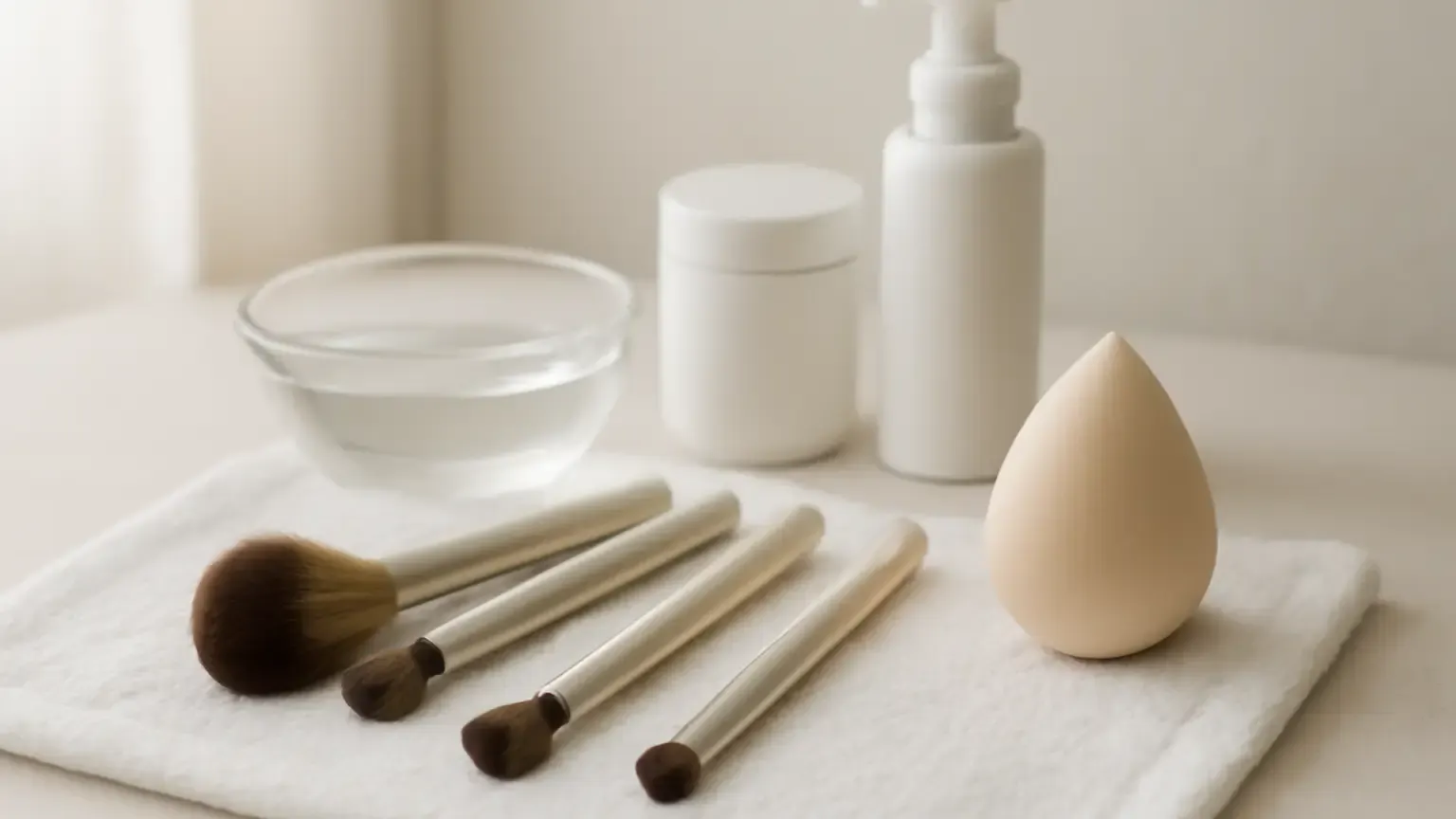
- Wet the bristles with lukewarm water, keeping the handle and ferrule angled upward where possible. Avoid soaking the whole brush.
- Place a small amount of cleanser in your palm or on a clean textured mat. Massage only the bristles, using light circular movements.
- Rinse until the water runs clear and no slippery cleanser remains.
- Press the brush gently in a clean towel. Do not twist, pull or crush the fibres.
- Reshape the head and lay the tool flat with the bristles extending beyond the edge of a clean surface.
This routine supports makeup application hygiene without turning cleaning into aggressive scrubbing. A clean tissue or a purpose-made quick-dry spray may help between washes, but it should not replace regular rinsing when product is visibly built up.
Drying, storage and product contamination
A good brush drying technique is as important as washing. Do not dry brushes upright with water running towards the ferrule; moisture can loosen the adhesive inside the brush head. Do not put wet tools into a closed pouch or drawer. Instead, dry them flat in a well-ventilated area, away from bathroom splashes and direct high heat. In humid Indian weather, allow extra drying time and use an open rack if needed.
Clean the surface where brushes dry and wash the storage pouch periodically. Powder residue can be removed from a compact with a clean tissue, while cream products should be kept tightly closed. Do not add water or cleanser directly into a makeup pan unless the product instructions specifically allow it. Changing a product’s moisture level may affect its formula and preservation.
Product contamination can also happen when a brush is dipped into a product after touching the face. Use a clean spatula for jar products, avoid double-dipping where possible and keep applicators from touching unclean surfaces. If a product changes smell, colour or texture, stop using it rather than trying to rescue it.
Sharing brushes, sponges and other tools
Can sharing makeup brushes cause breakouts? It can transfer oil, cosmetic residue and microorganisms between people, and the risk is not limited to acne. Shared eye tools are particularly poor hygiene practice because the eye area is delicate. Do not share mascara wands, eyeliner brushes, lip applicators or damp sponges.
If a professional makeup artist is working with you, ask how tools are sanitised and whether disposable applicators are used for creams, lips and eyes. A brush that has been wiped at the surface is not necessarily fully clean. Personal tools should also not be lent to family members, even if everyone appears to have healthy skin.
Wash a makeup sponge after each use when practical. Squeeze it gently rather than twisting, rinse until clear, and leave it uncovered until fully dry. Replace it when it tears, stays stained, smells musty or cannot be cleaned properly. Good makeup sponge hygiene is difficult if the sponge is kept wet in a sealed pouch.
When clean fingers or disposable applicators are better
Clean fingers can be the simplest option for a small amount of moisturiser, skin tint or cream blush. They create less equipment to maintain and let you feel whether the product is dragging across the skin. Wash hands first, keep nails short and use light tapping rather than rubbing. Fingers are not appropriate when hands are visibly dirty, when there are open cuts, or when the product packaging requires a different method.
Disposable makeup applicators are useful for one-off events, professional work, travel or products that are difficult to clean. Choose single-use cotton swabs, disposable lip wands or clean cosmetic wedges according to the task, and discard them immediately after use. They reduce cross-contact but create waste and may not provide the same finish as a reusable brush.
Use fingers when the product is simple, the area is limited and hand hygiene is easy. Choose a reusable brush when you need controlled blending or a more even powder finish. Choose a disposable tool when cross-contamination is the bigger concern. The best option is the one you can keep clean without adding friction or repeated touching.
A realistic weekly routine
- Before makeup: start with clean hands, a clean face and tools that are completely dry.
- During application: use the smallest amount needed, avoid dragging over sore areas and do not return a used brush to a shared product repeatedly.
- After makeup: wipe excess cream product from the brush, close all containers and place used tools in a separate washable cup or pouch.
- Weekly: wash brushes according to their product type, clean the sponge and wipe storage surfaces.
- Monthly check: inspect bristles, ferrules, handles and products for odour, cracking, residue or changes in texture.
Do not compensate for a harsh or irritating makeup formula by washing your tools more aggressively. If a product repeatedly causes discomfort, stop using that product and consider professional advice, especially if symptoms persist or become severe.
Concise takeaway
The safest approach to acne prone skin and makeup brushes is consistent rather than complicated: wash cream-product tools frequently, clean powder brushes at least weekly or fortnightly, dry everything fully and never share face or eye tools. Synthetic fibres are often easy to maintain, while clean fingers or disposable applicators may be more practical for small applications or high-contamination situations. Persistent, painful or worsening skin concerns deserve a dermatologist’s guidance rather than more aggressive brush cleaning.
Products that may help with this routine
Choose only what fits your skin, hair or personal needs. Use the links below to view current options on Amazon India.
Frequently Asked Questions
How often should you clean makeup brushes for acne prone skin?
Wash foundation, concealer and other cream-product brushes after one to three uses, or sooner if they look coated. Wash powder brushes weekly to fortnightly, depending on use, storage and residue.
Are synthetic brushes better for acne prone skin?
Synthetic brushes are often practical because they are smooth, easy to wash and suitable for liquid products. They are not automatically better for everyone; softness, cleanability, drying and low friction matter more than the label alone.
How should you dry makeup brushes after washing?
Press out excess water with a clean towel, reshape the bristles and lay the brush flat in a well-ventilated area. Avoid drying it upright, using high heat or storing it in a closed pouch while damp.
Can sharing makeup brushes cause breakouts?
Sharing can transfer oil, cosmetic residue and microorganisms between people. Avoid sharing brushes, sponges, mascara wands, eyeliner tools and lip applicators, especially when they are damp or used around the eyes.
When should you use fingers instead of makeup brushes?
Clean fingers can suit small amounts of moisturiser, skin tint or cream blush when your hands and nails are clean. Use a brush for controlled blending, and choose a disposable applicator when reducing cross-contact is the priority.