Makeup basics for foundation shade matching start with three checks: undertone, skin depth and how the formula changes after it sets. This guide is for Indian shoppers choosing foundation in-store or online, especially when face and neck tones do not look identical. You will learn where to swatch, how long to wait, how to judge a close shade in daylight and when mixing two colours is more practical than forcing one imperfect match.
A foundation match should visually disappear between the face and neck rather than look noticeably lighter, darker, pinker or yellower. Finding that match is not only about identifying whether your skin is fair, medium or deep. You also need to assess undertone, estimate depth, observe oxidation and account for the product’s finish and coverage.
Start with undertone, not the shade name
Undertone is the subtle colour beneath your skin’s surface tone. It usually stays relatively consistent even when your skin becomes tanned, dull or flushed. The common categories are warm, cool, neutral and olive.
- Warm: skin tends to read golden, yellow or peach.
- Cool: skin may appear rosy, pink, red or bluish.
- Neutral: warm and cool qualities appear fairly balanced.
- Olive: skin can look muted, greenish or slightly grey alongside very pink or orange shades.
Vein colour and jewellery preference can offer clues, but neither is a reliable verdict on its own. A better foundation undertone test is to compare a few visibly different shades along the jawline. If yellow-based shades look too orange and pink-based shades look too rosy, a neutral or olive option may sit more naturally.
How to match foundation shade: separate depth from undertone
Depth describes how light or deep your skin appears within a brand’s shade range. Two foundations can both be labelled medium but have different undertones, and two golden shades can differ significantly in depth. This is why a shade label such as beige, honey or sand should be treated as a starting clue, not a universal colour reference.
For skin depth matching, first narrow the options to a light, medium, tan or deep group. Then compare undertone. If the colour looks correct but the foundation seems too pale, choose a deeper shade with the same undertone rather than an unrelated orange shade. If it looks too dark, try a lighter shade with a similar undertone.
Indian complexions often include golden, neutral, olive and deep undertones, sometimes with more surface pigmentation around the mouth or forehead. A foundation that matches the centre of the cheek may not balance the neck. The goal is harmony across the visible face and neck, not a perfect match to one isolated patch.
Swatch in the right place and use the right method
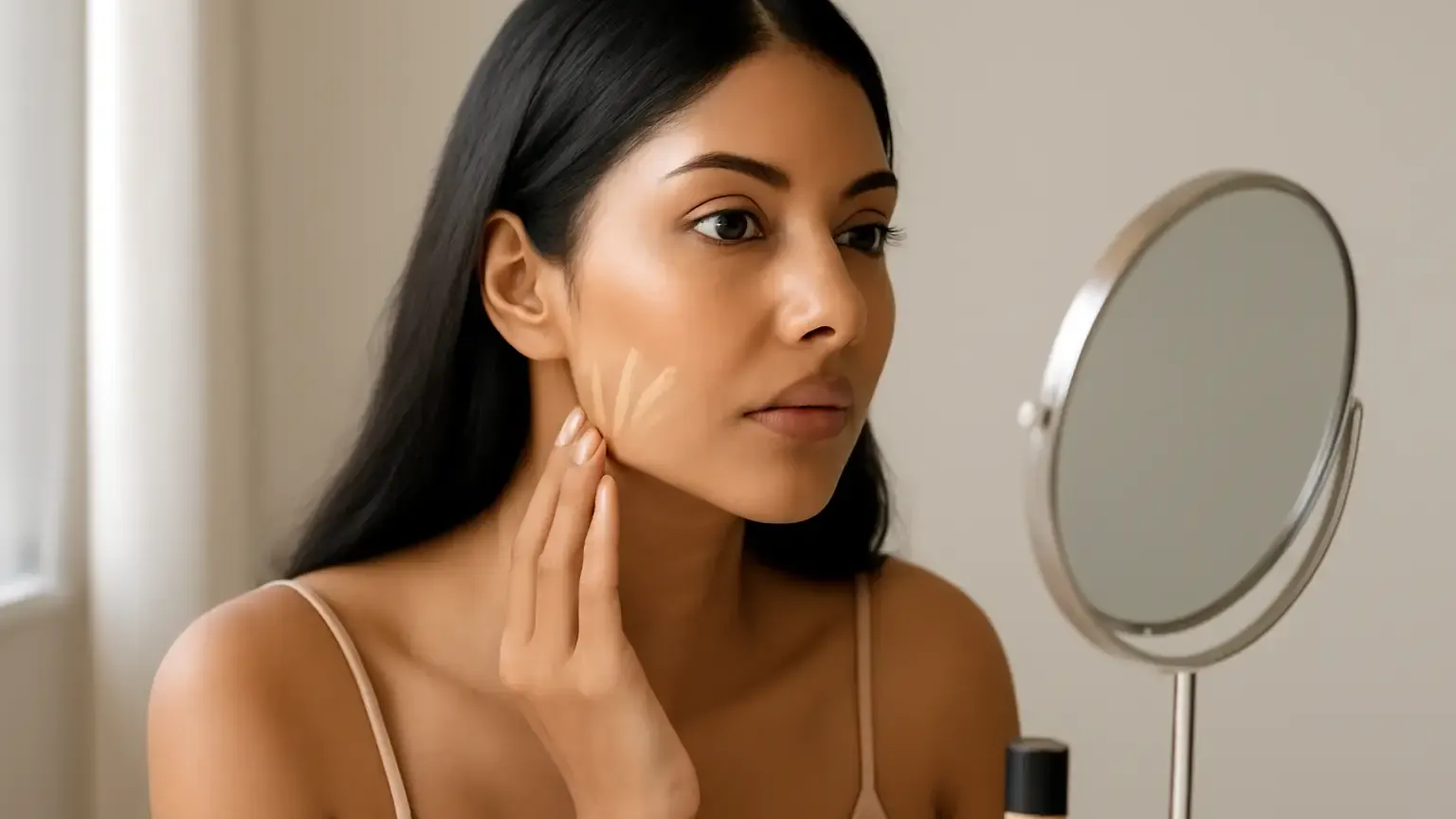
The most useful jawline foundation swatch starts at the lower cheek and extends slightly onto the jaw or upper neck. Apply two or three close shades in narrow stripes, leaving space between them. Blend the edges lightly, but do not rub them until every shade becomes indistinguishable.
- Arrive with clean skin, or remove a small area of existing base before testing.
- Apply each shade in a similar amount and width.
- Check whether the shade disappears into both the jaw and neck.
- Leave the swatches undisturbed for around 10 to 15 minutes, unless the product instructions suggest otherwise.
- Compare them in natural light makeup check conditions before deciding.
The wrist and hand are convenient but usually less accurate because they receive different sun exposure and may have a different undertone from the face. The jawline is more useful for all-over foundation. If you primarily match foundation to the neck, check that the chosen shade still gives the face a healthy, even appearance.
Check oxidation before buying
Foundation oxidation means the product appears to deepen or shift in colour after it interacts with air, skin oils, skincare or sunscreen. It is not always dramatic, and not every formula changes in the same way. A shade that looks ideal immediately may look warmer or darker after it sets.
To assess it, take a photo of the fresh swatches and another after the product has dried. Observe the colour in daylight and under indoor lighting. If the shade becomes distinctly deeper, consider testing the next lighter option with the same undertone. Do not automatically choose a very pale shade to compensate, because the final result can still look ashy or mismatched.
Oxidation can vary with skin preparation, humidity and how much product you apply. This makes a small sample or in-store trial more informative than relying only on an online shade description.
Choosing foundation online in India
Online foundation shopping needs a more systematic comparison because screen colours, photography and brand naming are inconsistent. Begin by identifying a foundation you already own that is close to your skin. Record its shade name, undertone description, depth and whether it becomes darker after setting. Use that information to compare official shade charts and swatches rather than selecting by name alone.
Look for several kinds of swatches: indoor, daylight and swatches on skin tones close to yours. Search for the shade in user-generated photos, but treat those images as reference rather than proof because camera settings and lighting alter colour. A shade-matching tool can narrow the options, yet it cannot fully account for your neck tone, oxidation or the finish you prefer.
When two shades seem possible, assess the risk of each mismatch. A slightly imperfect depth can sometimes be adjusted with concealer or bronzer, but a strongly incorrect undertone may remain visible across the entire face. Check the retailer’s current return or exchange conditions before purchasing, since opened cosmetics may not always be eligible.
Compare swatches by colour, coverage and finish
Foundation shade comparison should not be based on colour alone. A sheer, dewy formula may look more transparent and forgiving, while a full-coverage matte product can make a near-match appear more obvious. Skincare underneath can also change how the shade reflects light.
Compare products after they settle and ask three questions:
- Does the colour merge with the jaw and neck?
- Does the undertone look natural rather than visibly pink, yellow, orange or grey?
- Does the texture suit your skin and the result you want?
Foundation finish selection matters for the final appearance. Dewy formulas may look deeper or more reflective, while matte formulas can appear flatter and occasionally lighter. Choose the closest colour first, then consider whether the finish is suitable for your skin preferences, climate and routine.
When mixing foundation shades makes sense
Mixing foundation shades can solve a close-but-not-exact match, especially when your skin depth changes seasonally or your face and neck differ slightly. Choose two compatible formulas where possible: for example, similar coverage and finish. Put a small amount of each on a clean palette or the back of your hand, mix thoroughly and test the blend on the jawline.
A practical starting point is one part of the lighter shade to one part of the deeper shade, then adjust in small amounts. If the colour is right but too warm, add a compatible neutral or cooler shade; if it is too pale, add a little of the deeper colour. Do not mix formulas that separate, pill or irritate your skin during testing. Make only enough for one application, and do not dilute a foundation with random skincare or water unless the manufacturer specifically supports that use.
Mixing is useful, but it should not become a substitute for checking the original match. If you need a large correction every time, a different shade or formula may be a better long-term choice.
Common mistakes that create a wrong match
- Testing only on the wrist: hand and face colour are often different.
- Choosing the lightest shade: a pale base can look grey or stark, especially if the undertone is wrong.
- Ignoring the neck: matching only the centre of the face can create a visible line.
- Deciding immediately: fresh colour does not always show the settled result.
- Trusting the shade name: “natural,” “beige” and “honey” vary widely between brands.
- Testing over sunscreen or heavy skincare: the formula may slip, reflect light or change how the colour appears.
- Comparing under coloured shop lights: warm lighting can make a shade look more yellow than it is.
A simple decision checklist
Before purchasing, identify your likely undertone, narrow down your depth and apply two or three close shades to the jawline. Let them set, then view them in daylight from a short distance and in a photograph. Choose the shade that blends into the neck with the least visible edge, not necessarily the one that looks most attractive as a stripe.
If no shade disappears completely, prioritise a compatible undertone and a slightly adjustable depth. You can fine-tune the result with a lighter or deeper concealer, a controlled amount of bronzer, or a custom mix. For many Indian shoppers, this approach is more reliable than expecting one universal “medium” or “tan” label to work across brands.
Takeaway
The most dependable makeup basics for foundation shade matching are simple: identify undertone, match depth at the jawline, wait for oxidation, check in natural light and judge the set finish. Online tools and shade names can help narrow the search, but a settled swatch and a neck-level comparison should make the final decision.
Products that may help with this routine
Choose only what fits your skin, hair or personal needs. Use the links below to view current options on Amazon India.
Frequently Asked Questions
How do I match foundation shade to skin tone?
Identify your undertone, narrow down your skin depth, then test two or three close shades along the jawline and slightly onto the neck. Let them set and choose the shade that blends without a visible edge in daylight.
How do I test foundation undertone at home?
Apply warm, cool and neutral or olive-leaning shades in narrow stripes along a clean jawline. After they settle, compare them in daylight. The correct undertone should look balanced rather than noticeably pink, yellow, orange or grey.
What is the best way to swatch foundation in natural light?
Swatch close shades from the lower cheek across the jaw, allow them to dry for about 10 to 15 minutes and inspect them near a window or outdoors in indirect daylight. Compare both the face and neck.
How do I choose foundation online in India?
Use an existing close-match shade as a reference, compare the brand’s undertone and depth descriptions, view swatches in several types of lighting and check the retailer’s return policy before ordering.
Why does foundation oxidise on my skin?
A formula may deepen or shift after setting because of air exposure, skin oils, skincare, sunscreen, humidity or the product’s ingredients. Test a swatch after it dries instead of judging only its fresh colour.
Can you mix two foundation shades?
Yes, compatible formulas can usually be mixed in small amounts on a clean palette to adjust depth. Start with equal parts, test the blend on the jawline and adjust gradually rather than mixing a large batch.