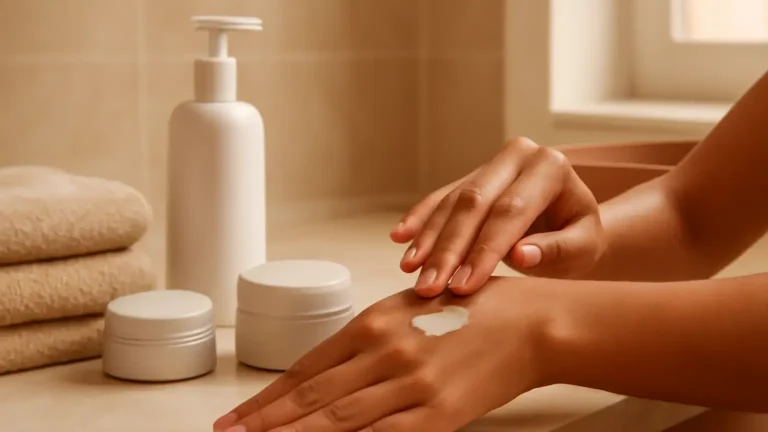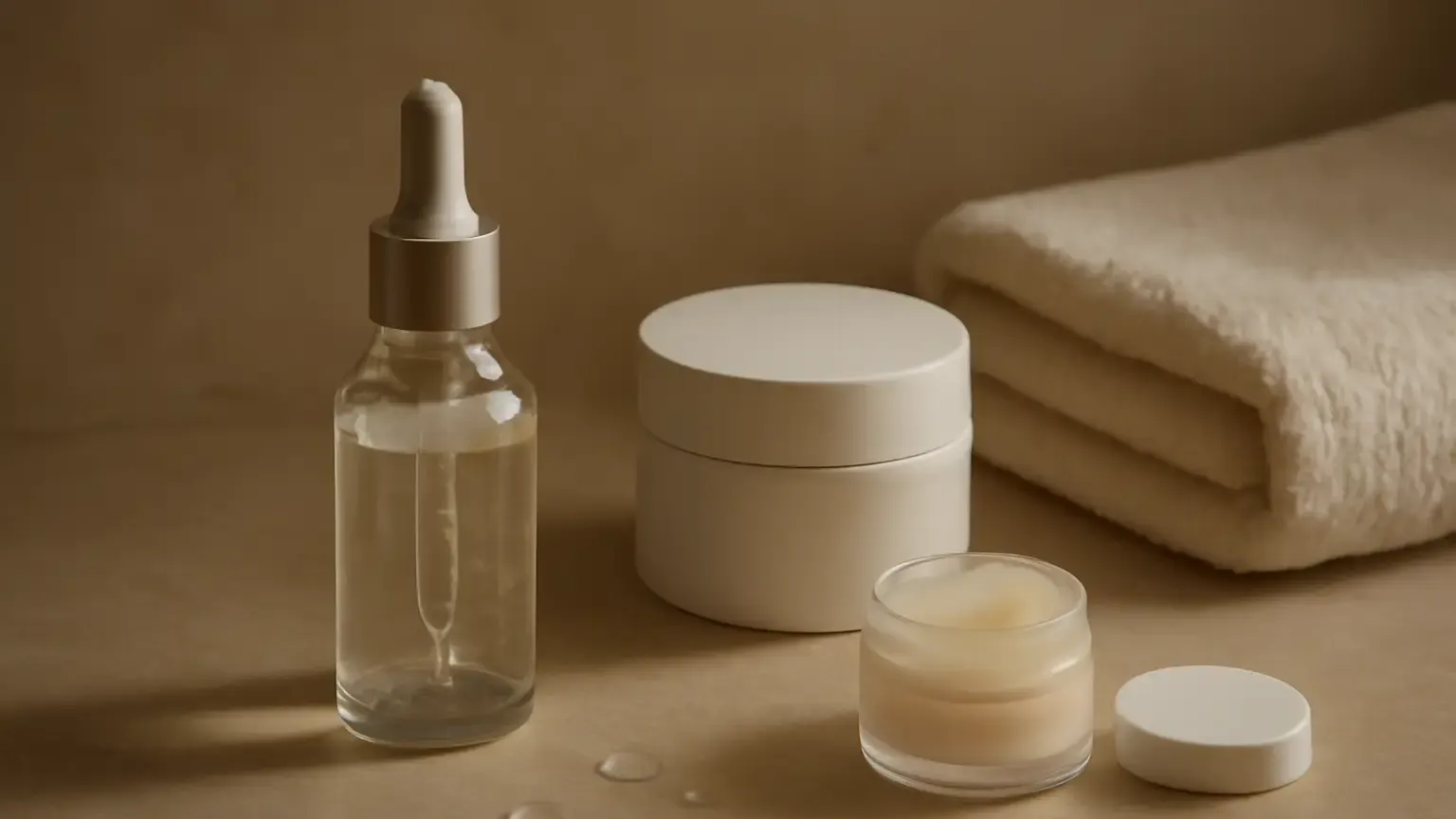
Dry skin moisturiser layering works best when each layer has one job: a humectant draws in water, an emollient smooths, and an occlusive helps reduce moisture loss. This guide is for anyone whose skin feels tight after cleansing but dislikes a heavy, sticky finish. Use thinner layers in humid Indian afternoons, richer layers on dry October nights, and skip unnecessary steps when one well-formulated moisturiser already leaves skin comfortable.
Layering moisturiser is not about applying as many products as possible. It is about matching texture and function to what your skin needs at a particular time of day, season and environment. A watery product may add hydration, while a cream or balm improves softness and helps that hydration last.
What each moisturising layer actually does
The three useful categories are humectants, emollients and occlusives. They often appear together in a single formula, so you do not always need three separate products.
Humectants attract water
A humectant moisturiser contains ingredients such as glycerin, hyaluronic acid, panthenol or urea. These ingredients help hold water at the skin’s surface and can make dehydrated skin feel more comfortable. Glycerin skincare is especially practical because glycerin is common, generally easy to layer and suitable for many routines.
A hyaluronic acid serum can be used as a lightweight hydration step, but apply it to slightly damp skin and follow with a moisturiser. Used alone in a very dry environment, a watery serum may not provide enough lasting comfort.
Emollients smooth rough-feeling skin
An emollient moisturiser fills and softens the spaces between surface skin cells, improving slip and flexibility. Look for ingredients such as squalane, plant oils, fatty acids, shea butter or ceramides. A ceramide cream may be a useful choice when your routine is focused on skin barrier care and reducing the feeling of tightness.
Occlusives help slow moisture loss
Occlusive skincare uses a protective layer to reduce water escaping from the skin’s surface. Petrolatum, dimethicone, waxes and some balms are examples. Occlusives can be valuable at night or on particularly dry areas, but a thick layer over every product is not automatically better. It may feel uncomfortable in heat and humidity, especially if you are prone to congestion.
Dry skin moisturiser layering: the basic order
- Cleanse gently. Use lukewarm water and avoid scrubbing or cleansing repeatedly.
- Apply a humectant step. On slightly damp skin, use a serum, essence or light lotion if your face feels dehydrated.
- Add an emollient. Apply a cream or lotion to smooth and soften the skin.
- Seal selectively. Use an occlusive balm only where you need extra protection, often on dry patches or as the final night step.
- Finish with sunscreen in the morning. Sunscreen is the final skincare layer before makeup and should be chosen according to its labelled directions.
Allow each layer a short moment to settle rather than waiting for a perfectly dry finish. If pilling occurs, reduce the amount, press instead of rubbing, or remove one layer.
Routine 1: a humid afternoon in India
Hot, humid weather changes the decision. Sweat and humidity can make several rich layers feel heavy, so a lightweight moisturiser is often more comfortable than a thick cream.
- Cleanse lightly, or rinse with water if your skin does not need a full cleanse.
- Apply a small amount of humectant serum to damp skin if you feel tightness.
- Follow with a gel-cream or fluid non-greasy moisturiser.
- Apply broad-spectrum sunscreen in the morning.
For humid weather skincare, stop when the skin feels soft rather than shiny or coated. If your moisturiser already contains glycerin, ceramides and a smoothing emollient, adding separate serum and balm steps may provide little extra benefit.
Routine 2: a dry October night
October can feel warm during the day but noticeably drier at night, particularly in air-conditioned rooms or areas with low humidity. A more substantial evening routine can help reduce overnight tightness without requiring a very heavy product every day.
- Cleanse gently and pat, leaving the skin slightly damp.
- Apply a hydrating lotion or humectant serum if your skin feels thirsty.
- Use a ceramide cream or other emollient-rich moisturiser over the face and neck.
- Press a rice-grain-sized amount of balm or petrolatum over the driest areas, such as around the mouth, if needed.
This is a practical night skincare routine, not a rule that every dry-skin type needs an occlusive every night. If your face feels hot, sticky or congested the next morning, use less balm or leave it out.
When fewer layers are the better choice
More steps are unnecessary when one well-formulated product covers several functions. Choose a single richer cream when your skin feels comfortable after cleansing but becomes dry later. Choose a light lotion when the weather is humid and your skin does not feel tight. Use a targeted balm only on areas that still need it.
Fewer layers are also sensible when introducing a new product, after shaving or waxing, or when your skin is unusually reactive. A short routine makes it easier to identify what feels helpful and what causes stinging, redness or congestion. Patch-testing new products according to their instructions is a sensible precaution.
How to choose the right texture
| What you notice | Useful approach |
|---|---|
| Tightness immediately after cleansing | Use a gentle cleanser, then a humectant and emollient moisturiser. |
| Rough or flaky-feeling surface | Prioritise an emollient-rich cream; avoid aggressive scrubbing. |
| Dry patches but a comfortable T-zone | Apply your regular cream all over and an occlusive only to dry areas. |
| Heavy, sticky feeling in humid weather | Reduce layers and switch to a lightweight moisturiser. |
| Dryness after sleeping in air conditioning | Use a richer night cream or selective balm, while keeping the amount modest. |
Common layering mistakes to avoid
- Applying every product generously: More product can increase pilling and discomfort without improving hydration.
- Using a serum without a finishing moisturiser: A humectant step usually works better when followed by an emollient or suitable cream.
- Sealing in irritation: Do not cover stinging or visibly irritated skin with a thick occlusive and assume it will solve the problem. Simplify the routine.
- Ignoring the climate: A rich winter-style routine can feel excessive during a humid afternoon.
- Changing several products at once: Introduce one new layer at a time so you can assess comfort and tolerance.
A simple decision rule
Start with the lightest layer that solves the problem. If skin still feels tight, add an emollient. If one area continues to lose moisture overnight, add a small amount of occlusive there. This approach keeps your dry skin hydration routine adaptable rather than fixed.
In short, effective dry skin moisturiser layering combines water-binding hydration, smoothing lipids and selective sealing. Let comfort, climate and the condition of your skin decide how many layers you use. Persistent, painful, intensely itchy, cracked or inflamed dryness should be discussed with a dermatologist or doctor, especially if it does not improve with a gentle routine.
Products that may help with this routine
Choose only what fits your skin, hair or personal needs. Use the links below to view current options on Amazon India.
Frequently Asked Questions
How do you layer moisturiser for dry skin?
Apply products from lightest to richest: a humectant serum or lotion on slightly damp skin, an emollient moisturiser, and an occlusive only where extra sealing is needed. Finish with sunscreen in the morning.
What is a good dry skin hydration layering routine?
Use a gentle cleanse, a light hydrating step if needed, a cream containing emollients or ceramides, and a small amount of balm on dry patches at night. In humid weather, leave out unnecessary layers.
What goes first, a humectant or moisturiser?
A separate humectant serum generally goes first on slightly damp skin, followed by moisturiser. However, if your moisturiser already contains humectants, you may not need a separate serum.
What is the best moisturiser layering routine for humid weather?
Keep it light: use a humectant only if needed, follow with a gel-cream or fluid moisturiser, and apply sunscreen in the morning. Skip a heavy occlusive unless a specific dry patch needs it.
Can you use an emollient and occlusive together?
Yes. Apply the emollient-rich cream first, then a thin layer of occlusive over particularly dry areas. Using both all over may feel too heavy in warm or humid conditions.
How many moisturiser layers does dry skin need?
There is no fixed number. Many people need one well-formulated moisturiser; others benefit from a humectant plus cream, with an occlusive added selectively at night.