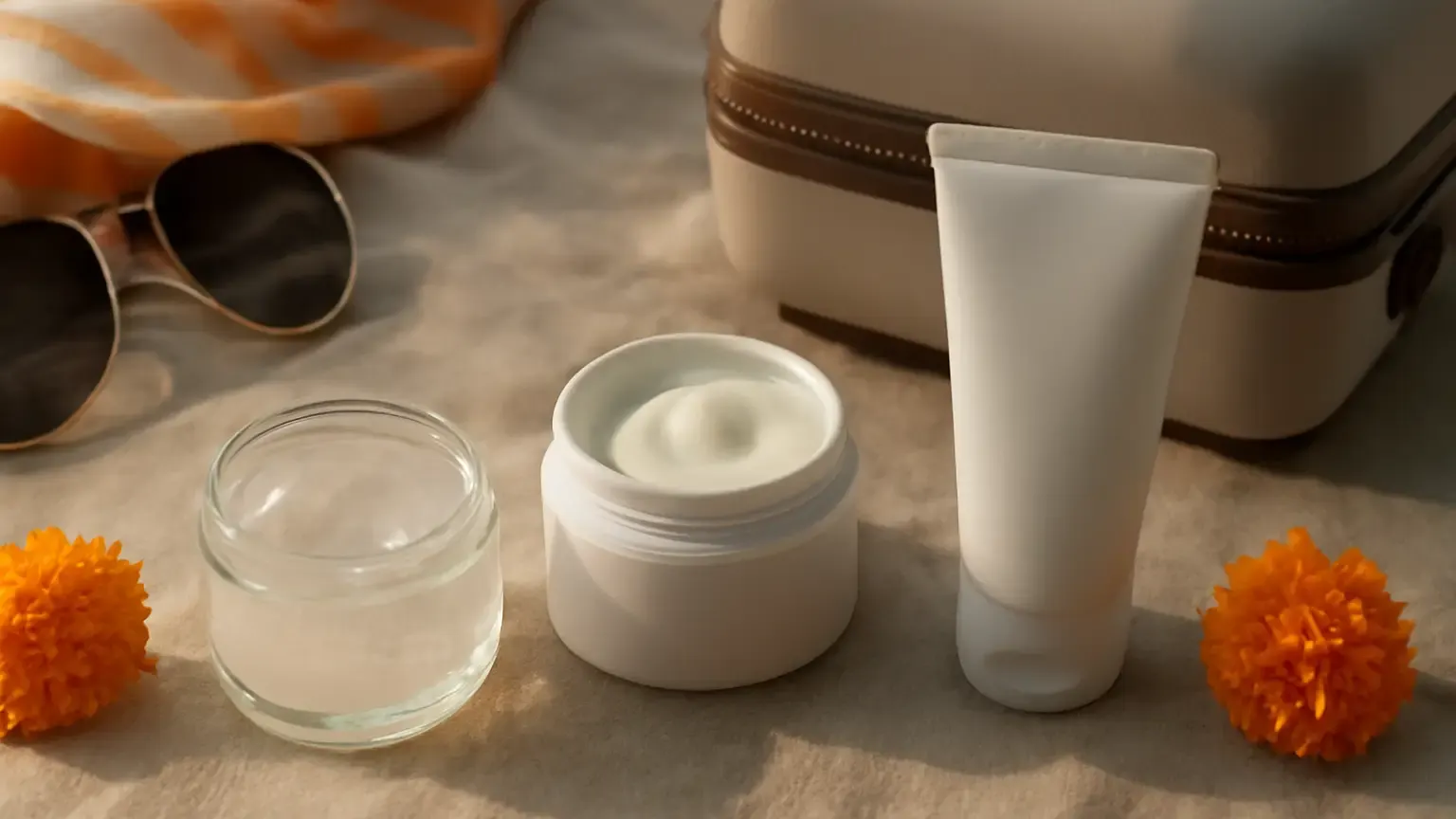
Seasonal skin care for festive travel is easiest when you pack one gentle cleanser, two moisturiser textures and a reliable sunscreen. This guide is for anyone travelling across India—from humid coastal celebrations to dry, cool hill-town events—and helps you adjust the same routine without carrying a full shelf of products. The key outcome is comfort: cleanse according to sweat and makeup, change texture according to climate, and treat sunscreen as a non-negotiable daytime step.
Festive trips can move your skin through several conditions in a single day: heat outside, air-conditioning in transit, dust on the road, makeup at night and dry hotel-room air. A useful routine does not need a separate product for every possibility. It needs a few dependable formulas and clear rules for when to use them.
Start with a small, adaptable kit
A practical festive travel skincare kit has four core categories: a mild cleanser, a moisturiser, a broad-spectrum sunscreen and one soothing backup. If you wear long-wear makeup, add a cleansing balm or micellar water that you already know suits you. Keep everything in leak-resistant, travel-size containers, but do not decant a product into an unlabelled bottle if you may confuse it with another formula.
Choose familiar products rather than introducing a strong exfoliant, retinoid or active serum just before a wedding or festival. Travel already changes sleep, food, water exposure and climate. A simple routine makes it easier to identify what is irritating your skin if something goes wrong.
The one routine: morning, daytime and night
Morning
- Cleanse lightly. If your skin feels comfortable after waking, rinse with lukewarm water. Use a hydrating cleanser when you feel greasy, sweaty or coated with overnight product.
- Moisturise selectively. Apply a thin layer to the face and a little more to dry areas. The right amount should leave skin comfortable, not slippery.
- Apply sunscreen. Use a broad-spectrum sunscreen labelled SPF 30 or higher, following the product directions. Cover the face, ears, neck and exposed hands. Allow it to settle before makeup.
During the day
For outdoor processions, sightseeing or venue arrivals, plan SPF reapplication rather than relying on the morning layer. Reapply according to the label and sooner after heavy sweating, wiping the face or swimming. A hat, sunglasses, shade and lightweight clothing add useful physical protection; they do not replace sunscreen on exposed skin.
Night
Remove makeup and sunscreen thoroughly, then cleanse without scrubbing. Finish with moisturiser while the skin is still slightly comfortable after cleansing. If the face feels tight, warm or prickly, skip exfoliation and fragranced extras that evening. This is the most useful form of post-flight skincare too: remove the day’s residue, restore comfort and sleep.
Adjust the texture, not the whole routine
The central idea behind travel skincare routine for changing climates is to keep the steps stable while changing the finish. Carry one lighter and one richer moisturiser if your itinerary includes contrasting weather.
| Travel condition | What to choose | How to adjust |
|---|---|---|
| Hot, humid city or coastal destination | Light cleanser and gel moisturiser | Use a thin layer, avoid piling on heavy products and cleanse after significant sweating. |
| Cool, dry or high-altitude destination | Gentle cleanser and cream moisturiser | Apply more generously to cheeks and around the mouth; protect lips and exposed dry patches. |
| Air-conditioned flight or hotel | Your usual moisturiser plus a bland soothing layer | Do not keep washing the face. Reapply moisturiser to clean, dry hands and press it gently over dry areas. |
Gel does not automatically mean better for oily skin, and cream does not automatically mean unsuitable for it. Look at how your skin feels after an hour. If a formula leaves persistent shine or congestion, use less or reserve it for dry zones. If it leaves tightness, flaking or discomfort, move to a richer texture.
Humidity and dry air need different decisions
For humid weather
Good humidity-proof skincare is not necessarily a collection of mattifying products. It means using fewer layers, allowing each one to settle, and removing sweat and sunscreen at night. A lightweight moisturiser can support comfort without creating a heavy finish. Blotting excess sweat is gentler than repeatedly washing your face during the day.
If you are prone to feeling greasy under makeup, apply moisturiser mainly to areas that feel dry and choose a sunscreen finish that you find comfortable. Do not skip moisturiser solely because the weather is humid; dehydration and surface oil can occur together.
For cool or dry weather
Dry climate skincare benefits from fewer hot-water showers, shorter cleansing and a more protective moisturiser. Apply cream to slightly damp skin after cleansing. Pay attention to the lips, sides of the nose, cheeks and hands, which often feel the effects of wind and low humidity first.
Air-conditioning can make a warm destination feel dry indoors. In that case, follow the drier-weather adjustment at night rather than changing every morning product. A scarf or mask can also reduce direct wind exposure during travel, provided it is clean and comfortable.
Emergency soothing options for travel days
Pack one familiar, fragrance-free product that supports barrier repair skincare, such as a plain moisturiser with ingredients designed to reduce dryness and support the skin barrier. A soothing face mist can feel refreshing, but it is not a substitute for moisturiser: if water evaporates from the surface and is not followed by a suitable cream or lotion, tightness may return.
For a small dry patch, apply a little more of your usual moisturiser and, if it suits you, a very thin layer of an occlusive balm over that area at night. Avoid spreading a heavy occlusive over sweaty skin if it feels uncomfortable. Do not use a new “rescue” acid, peel or essential-oil blend on irritated-looking skin.
Persistent burning, swelling, a spreading rash, painful cracking or symptoms that do not settle should be assessed by a dermatologist or doctor. Beauty routines are appropriate for everyday dryness and comfort, not for diagnosing or treating a concerning skin problem.
Sun protection during festive events
Outdoor celebrations often involve more UV exposure than expected because people spend time waiting, travelling between venues and taking photographs. Choose a sunscreen you can apply generously and reapply without resenting the texture. If makeup is involved, plan reapplication before touch-ups where possible; a thin, even layer is more dependable than relying only on a powder with SPF.
Remember often-missed areas: ears, hairline, neck, upper chest and the backs of hands. Water, sweat, face wiping and long outdoor hours reduce the practical durability of sunscreen, so build reapplication into the day’s schedule.
Common festive travel skincare mistakes
- Trying several new products together: pack formulas you have used before and patch test any new item well before departure.
- Over-cleansing after every outdoor activity: cleanse properly at night and use a water rinse when a full cleanse is unnecessary.
- Using the same moisturiser everywhere: a lighter layer may suit the forehead, while cheeks need more in dry weather.
- Forgetting the neck and hands: sunscreen and moisturiser should extend beyond the centre of the face.
- Assuming a face mist fixes dehydration: mist for refreshment, then moisturise when skin needs lasting comfort.
- Carrying too much: more bottles create more chances for leaks, duplication and irritation.
Who this compact routine suits
This approach suits most adults who want straightforward skin care for festive travel India, especially when a trip crosses from a humid plain to a cooler destination or includes flights and several outdoor events. It can be adapted for dry, combination or oilier-feeling skin by changing the quantity and texture of moisturiser.
If you already follow prescribed skincare, keep that plan in mind and check with your clinician before changing active products. Anyone with a history of significant reactions should pack established products and avoid experimenting during the trip.
Takeaway
Effective seasonal skin care for festive travel is a flexible system, not a long packing list: cleanse based on sweat and residue, choose gel or cream according to the climate, moisturise dry areas, and reapply broad-spectrum sunscreen during outdoor events. Carry one familiar soothing product, make small adjustments and keep new experiments for after the celebrations.
Products that may help with this routine
Choose only what fits your skin, hair or personal needs. Use the links below to view current options on Amazon India.
Frequently Asked Questions
What skincare should I pack for festive travel in India?
Pack a familiar gentle cleanser, a lightweight moisturiser, a richer moisturiser if you expect dry weather, broad-spectrum sunscreen, lip care and one fragrance-free soothing product. Add makeup remover only if your cleanser does not remove your usual makeup and sunscreen comfortably.
How do I change my skincare routine for humid and dry climates?
Keep cleansing, moisturising and sunscreen as the basic steps. In humidity, use fewer layers and a gel moisturiser; in dry or cool weather, cleanse less aggressively and switch to a cream moisturiser, especially on the cheeks and around the mouth.
What is the best sunscreen routine for travel during festivals?
Apply a broad-spectrum SPF 30 or higher sunscreen as directed in the morning to exposed skin, including the ears, neck and hands. Reapply according to the label and after heavy sweating, wiping the face or water exposure, while using shade, hats and sunglasses outdoors.
Should I use a gel or cream moisturiser while travelling?
Choose a gel moisturiser when heat and humidity make richer products feel uncomfortable. Choose a cream moisturiser when the climate is cool, dry or windy, or when air-conditioning leaves your skin feeling tight. You can use different textures on different parts of the face.
How can I soothe dry skin after a flight?
Cleanse gently at night, apply your familiar moisturiser to comfortable, clean skin and add a thin protective layer to particularly dry areas if that product already suits you. Avoid scrubs, peels and unfamiliar fragranced products. Seek professional advice for persistent burning, swelling or a spreading rash.