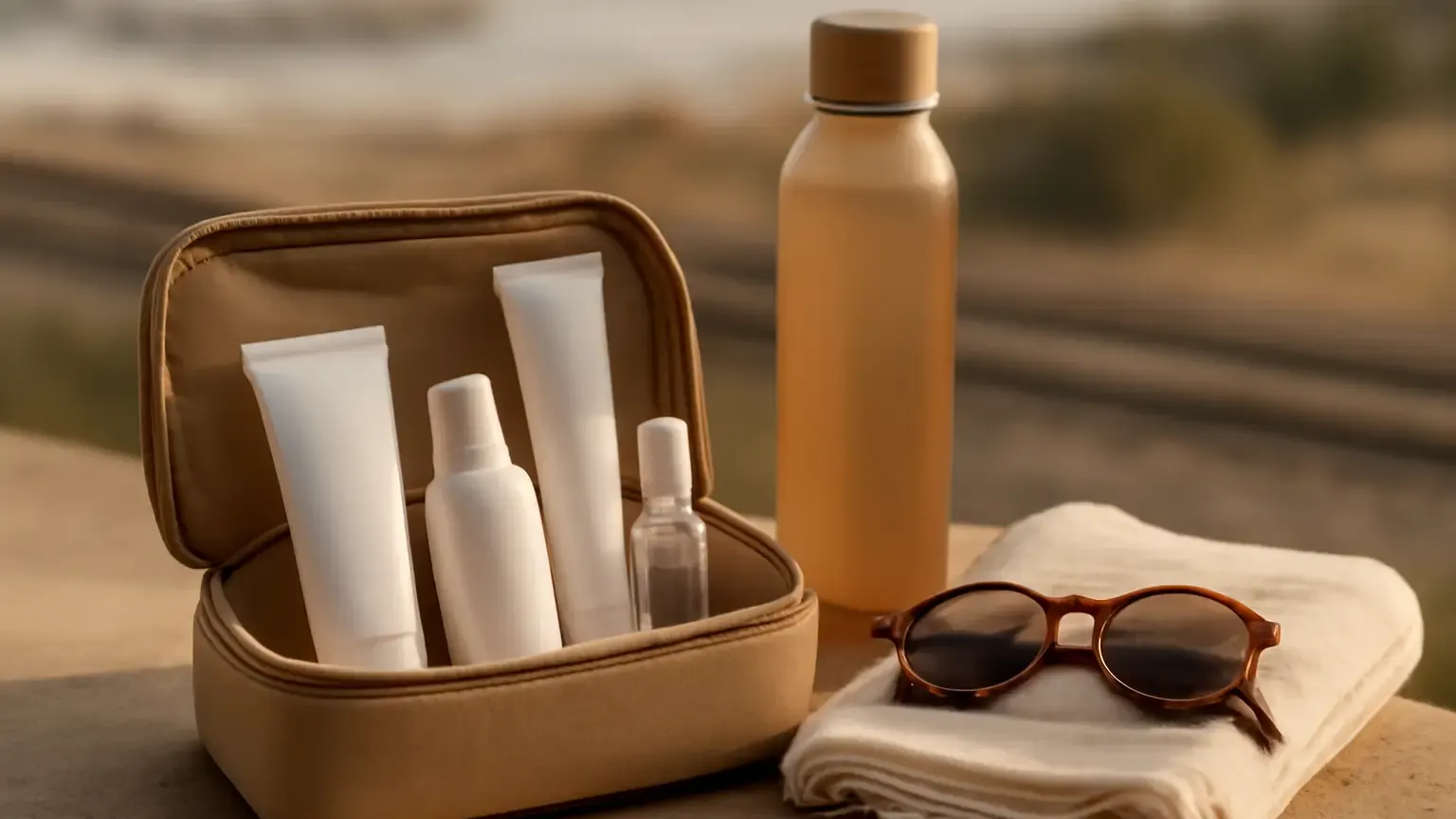
Skin care for travel in India works best when it is small, adaptable and boring in the best way: pack a gentle cleanser, moisturiser, sunscreen, breakout-prevention step and one compact treatment. This guide is for anyone moving between humid coasts, dry interiors, dusty roads or heavily air-conditioned rooms. The key decision is not how many products to carry, but which textures to use, what to decant and when to simplify so your skin stays comfortable without overloading your luggage.
Why a travel routine needs to change across India
India’s climate can shift dramatically within one trip. A coastal stop may bring heat, sweat and humidity, while a mountain destination can feel cold and dry. Road journeys and city travel add dust, pollution, sunscreen reapplication and long periods in air-conditioned rooms. These conditions can make a familiar home routine feel too heavy, too drying or simply impractical.
A good travel routine has three principles: protect the skin during the day, cleanse without stripping at night and take only treatments you already know your skin tolerates. The goal is not to introduce a full new regimen on holiday. It is to keep your skin barrier comfortable while making sensible adjustments to texture and frequency.
For most travellers, these are the five core travel skincare essentials:
- A gentle cleanser
- A moisturiser suited to the climate
- A broad-spectrum sunscreen
- A simple breakout-prevention option
- One compact treatment for a specific, familiar concern
1. Pack a cleanser that removes the day without tightness
Your cleanser is the foundation of a practical travel skin care routine India travellers can follow consistently. Choose a gentle, low-fragrance or fragrance-free formula that removes sweat, sunscreen and surface grime without leaving the face squeaky or uncomfortable. A small gel or cream cleanser is usually more versatile than a very rich cleansing balm, especially if you are travelling through humid areas.
A good face wash for travel should suit your normal skin needs rather than promise an aggressive “deep clean”. Foaming formulas may feel useful after a dusty day, but excessive cleansing can increase dryness and sensitivity. Use lukewarm water, massage briefly and pat dry with a clean towel.
When micellar water helps
Micellar water can be useful on flights, trains or nights when a sink is inconvenient. It is a practical first step for removing sunscreen and light makeup, but it should not automatically replace rinsing or a proper cleanser. If you use it, follow with water or cleanse properly when you reach your accommodation. Avoid repeatedly rubbing the eye area or face with cotton pads.
2. Choose a moisturiser by texture, not by the label alone
A lightweight moisturiser is often the most useful all-round choice for Indian travel, but “light” does not mean inadequate. Look for a formula that leaves the skin comfortable without a greasy film. Gel-creams can suit humid destinations, while a lotion or cream may be more useful in dry weather, at higher elevations or in rooms with constant air conditioning.
Think of moisturiser as skin barrier care. Ingredients such as glycerin, squalane, panthenol or ceramides can support a comfortable feel, but the formula should still be one you have used before. Apply a thin layer after cleansing, and add a second small layer only where the skin feels dry.
Match the texture to the destination
- Humid coast or monsoon conditions: use a light lotion or gel-cream and reduce the amount if the face feels sticky.
- Dry interiors or hill stations: use a richer lotion or cream, especially at night.
- Air-conditioned hotels and flights: keep the same moisturiser, but apply it soon after cleansing while the skin is slightly damp.
A hydrating face mist can feel refreshing during a long journey, but it is optional. Mist alone does not reliably replace moisturiser; water that evaporates from the surface may leave the skin feeling drier. If you use one, follow it with moisturiser when possible.
3. Make sunscreen the non-negotiable daytime step
Sun exposure can be significant during sightseeing, beach visits, hill travel and even long drives. Choose a broad-spectrum, water-resistant sunscreen with an SPF level appropriate for regular outdoor exposure, and select a finish you will actually reapply. A broad-spectrum sunscreen helps protect against both UVA and UVB radiation; no sunscreen can block all exposure.
Apply it as the final morning skincare step, after moisturiser if you need one. Cover the face, ears, neck and other exposed areas. Reapply after heavy sweating, swimming, wiping the face or spending extended time outdoors. Hats, sunglasses, shade and lightweight covering clothing add useful protection.
What sunscreen is practical for travel?
For humid travel, many people prefer a fluid or gel texture that feels less heavy. For dry climates, a more moisturising lotion can reduce the need for several layers. If your eyes sting easily, avoid applying too close to the lash line and test the product at home first. Sunscreen should not be a holiday experiment, particularly if your skin is reactive.
4. Prevent breakouts by reducing friction and product overload
Acne-prone skin travel does not need a complicated emergency kit. Breakouts may be encouraged by sweat, touching the face, occlusive layers, unwashed pillowcases, helmet straps, masks or leaving sunscreen and grime on overnight. The simplest prevention strategy is consistent cleansing, clean hands and a routine that does not pile on unfamiliar products.
For a gentle anti-pollution skincare approach, cleanse at night after a day outdoors, keep hair products away from the face and avoid scrubbing to remove dust. If you use a familiar blemish-support product, pack the smallest amount needed and follow its existing directions. Do not apply several strong spot products together just because the climate has changed.
- Change or wash your face towel regularly.
- Wipe down sunglasses, phone screens and helmet straps.
- Do not pick at spots during transit or sightseeing.
- Use a clean pillowcase if accommodation hygiene is uncertain.
- Remove sunscreen before sleep rather than relying on a morning rinse.
Persistent, painful or rapidly worsening breakouts deserve advice from a dermatologist. Travel is not the right time to self-prescribe a strong treatment or stop prescribed care.
5. Carry one compact treatment, not a full shelf
The fifth essential is a treatment chosen for a known need: perhaps a familiar blemish product, a soothing cream for occasional irritation or a hydrating layer for dry patches. It should be something you have already tested at home. A trip is a poor setting for starting multiple exfoliating acids, retinoids or strong actives at once.
Use the treatment at night and keep the rest of the routine simple. If the skin becomes stinging, unusually red, very tight or uncomfortable, pause optional actives and return to gentle cleansing, moisturiser and daytime sunscreen. This is a general self-care approach, not a substitute for medical guidance when symptoms are severe or persistent.
What to decant for a short trip
Decanting skincare products saves space, but it should be done carefully. For a two- to five-day trip, estimate how much you use per application, multiply by the number of applications and add a small margin. Sunscreen usually needs more volume than people expect because it must be applied generously and reapplied outdoors.
- Use clean, leak-resistant, travel-sized containers made for cosmetic liquids.
- Label each container with the product name and, if useful, the date it was filled.
- Do not mix products in one container.
- Keep formulas away from heat and direct sunlight inside your luggage.
- Leave products in their original packaging when their expiry, ingredients or instructions are important.
For a short trip, a useful packing list is a small cleanser, moisturiser, sunscreen, one breakout-prevention product and one treatment. Add lip balm with sun protection, a clean face towel and any prescribed skincare in its original labelled packaging. A separate pouch prevents leaks from reaching clothing.
Adjust the routine for humid, dry and dusty destinations
Humid and hot locations
Humidity can make the face feel oily even when it is dehydrated. Use a smaller amount of moisturiser, avoid stacking several rich layers and cleanse after heavy sweating rather than repeatedly washing throughout the day. This is the basis of humidity-proof skincare: lighter textures, fewer layers and reliable sunscreen reapplication. Do not skip moisturiser entirely if the skin feels tight.
Dry, cool or high-altitude locations
Dry air and wind can increase tightness. Switch to a richer moisturiser at night, keep showers short and avoid very hot water. If your usual cleanser feels drying, use less of it in the morning or simply rinse with water, provided your skin remains comfortable. Continue sunscreen use even when the air feels cool or cloudy.
Dusty roads and busy cities
For dusty destination skincare, focus on gentle removal rather than harsh scrubbing. Cleanse at night, wash hands before touching your face and cover exposed skin when practical. Sunscreen and moisturiser can still be worn; the answer to dust is a proper evening cleanse, not repeated abrasive washing.
Common travel skincare mistakes to avoid
- Trying new actives just before departure: irritation can be difficult to manage away from home.
- Using hotel soap on the face: it may be more drying or fragranced than your regular cleanser.
- Skipping sunscreen because the day is cloudy: visible heat is not a reliable measure of UV exposure.
- Over-cleansing after every outdoor stop: this can leave the skin dry and sensitised.
- Carrying too many products: a smaller routine is easier to follow and troubleshoot.
A simple morning and evening plan
Morning: rinse or cleanse gently, apply moisturiser if needed, then apply broad-spectrum sunscreen. Add a hat or sunglasses for long outdoor periods.
During the day: blot sweat rather than rubbing aggressively, reapply sunscreen when outdoors and use a clean tissue or towel. A face mist is optional, not a replacement for protection or moisturiser.
Evening: remove sunscreen and makeup, cleanse once, apply your familiar treatment if needed and finish with moisturiser. If the skin feels irritated, skip the treatment and focus on comfort.
Takeaway: the best skin care for travel in India is a flexible five-step kit: gentle cleansing, climate-appropriate moisturising, dependable sun protection, restrained breakout prevention and one familiar treatment. Pack less, adjust texture rather than constantly changing ingredients and give your skin time to settle after each change.
Products that may help with this routine
Choose only what fits your skin, hair or personal needs. Use the links below to view current options on Amazon India.
Frequently Asked Questions
What skincare should I pack for a trip to India?
Pack a gentle cleanser, a climate-appropriate moisturiser, broad-spectrum sunscreen, one familiar breakout-prevention product and one compact treatment. Add lip balm with sun protection, clean travel containers and prescribed products in their original packaging.
How do I change my skincare routine for humid weather travel?
Use lighter layers, reduce the amount of moisturiser, cleanse after heavy sweating and avoid stacking rich products. Continue sunscreen and do not remove moisturiser completely if your skin feels tight.
How can I prevent breakouts while travelling in India?
Cleanse at night, keep hands and frequently touched items clean, avoid picking, use familiar non-heavy products and do not introduce several new actives at once. Seek professional advice for persistent or painful breakouts.
Can I decant skincare products for short trips?
Yes. Use clean, leak-resistant cosmetic containers, label them, keep products separate and estimate enough sunscreen for generous application and reapplication. Keep important prescription or expiry information in the original packaging.
What sunscreen is best for travel in India?
Choose a broad-spectrum sunscreen with a texture you can apply generously and reapply. A lighter fluid or gel may feel comfortable in humid weather, while a moisturising lotion can suit dry conditions. Test it before travel.
What is a useful travel skincare routine for dry climates?
Cleanse gently, use a richer moisturiser at night, avoid very hot water and continue daytime sunscreen. Apply moisturiser soon after cleansing and reduce optional active treatments if the skin becomes tight or irritated.



