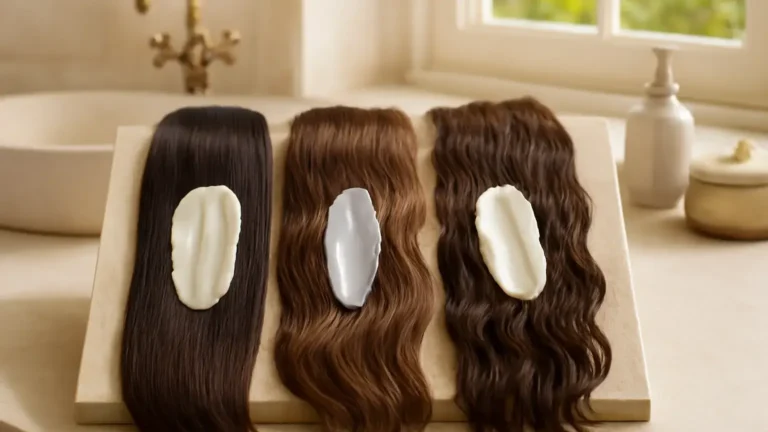
hair care for Indian hair works best when washing is adjusted to the scalp, not a fixed calendar. Fine, straight hair may need frequent cleansing, while thick, wavy or textured hair can often stretch wash days with careful conditioning. The useful middle ground is simple: cleanse the scalp when it feels oily or coated, condition mid-lengths and ends every wash, and use occasional buildup removal for hard water, oils and styling residue without stripping the lengths.
What “washing less” actually means
Washing less does not mean ignoring an uncomfortable, oily or coated scalp. It means avoiding unnecessary shampooing of the lengths when the scalp does not need it. Hair fibre and scalp have different needs: the scalp collects sebum, sweat, pollution and product residue, while the mid-lengths and ends are older, more fragile and more likely to become dry.
For many people, a sensible starting point is two or three washes a week. That is not a rule. Daily exercise, humid weather, a naturally oily scalp, helmet use, heavy styling products and swimming may call for more frequent cleansing. Conversely, dense, dry, wavy or textured hair may look and feel better when wash days are spaced out.
The goal of an Indian hair care routine is a comfortable scalp and flexible, manageable lengths—not the fewest possible washes.
Choose scalp cleansing frequency by hair type
| Hair type or concern | Useful starting point | What to prioritise |
|---|---|---|
| Fine, straight hair | Every one to three days | Thorough scalp cleansing and a lightweight conditioner |
| Thick, straight hair | Two to four times weekly | Sectioned shampooing and consistent mid-length conditioning |
| Wavy hair | Two to four times weekly | Gentle detangling, frizz control and avoiding over-brushing |
| Dry, textured or curly hair | About once or twice weekly, adjusted to comfort | Moisture, careful handling and thorough rinsing |
| Very oily or active scalp | As often as needed, sometimes daily | Scalp comfort rather than forcing longer gaps |
Fine hair can lose volume quickly when oil accumulates, so stretching wash days may make it look limp rather than healthier. Thick or textured hair has more length that can become dry, and its structure may make natural oils travel down the shaft more slowly. These are useful tendencies, not fixed categories: your scalp’s oiliness and your local climate matter just as much.
A practical hair care routine for Indian hair
1. Prepare only when it helps
Pre-shampoo oiling can reduce the rough feeling that some people notice after cleansing, especially on thick or dry lengths. Apply a small amount to the mid-lengths and ends rather than soaking the scalp. Leave it for a short, comfortable period, then shampoo thoroughly. If oil makes your scalp itchy, greasy or difficult to cleanse, skip this step. More oil is not automatically more nourishment.
2. Cleanse the scalp, not the entire length
Use lukewarm water and place shampoo mainly at the roots. Massage with the fingertips, not the nails, for enough time to loosen sweat and residue. Let the foam move through the lengths during rinsing instead of scrubbing them. A second shampoo may be useful after heavy oiling, swimming or several days of product use; it is not essential every wash.
3. Condition from the ears downward
Mid-length conditioning is a key difference between a scalp-focused wash and a drying one. Apply conditioner to the mid-lengths and ends, leave it briefly according to the product directions, and rinse well. A lightweight conditioner usually suits fine or straight hair, while a richer formula may suit thick, wavy or textured lengths. Keep conditioner away from the scalp if it leaves roots flat or greasy.
4. Dry without rough handling
Press water out with a soft towel or cotton T-shirt rather than rubbing. Detangle from the ends upwards with a wide-tooth comb, ideally while the hair has some conditioner or leave-in slip. Allowing hair to stay tightly tied while wet can increase pulling and breakage. If using heat, add heat protection and choose a moderate setting.
Hard-water hair care: when less washing is not enough
Hard water contains minerals such as calcium and magnesium that can leave hair feeling waxy, dull, stiff or unusually tangled. In some Indian homes, this residue combines with oil, dry shampoo, silicone-rich styling products or dust. The result can feel like dryness even when the hair has been conditioned.
When the scalp feels clean but the lengths remain coated, an anti-residue shampoo or clarifying shampoo can help occasionally. Follow it with conditioner on the lengths. Frequency depends on water quality and product use; for some people, once every two to four weeks is enough, while others need it less often. Clarifying too frequently can make dry lengths rough, so use the minimum that restores a clean, flexible feel.
A shower filter may reduce some sediment, but its effect depends on the water and the filter design; it should not be treated as a guaranteed solution for all hardness. Rinsing thoroughly and keeping shampoo focused on the scalp are still useful. If residue is persistent, local water testing or advice from a qualified hair professional can clarify the cause.
Dry-weather hair care for roughness and frizz
Cooler, drier weather can increase static, roughness and visible frizz, particularly when hair is frequently washed with hot water. Dry-weather hair care should focus on reducing moisture loss rather than simply adding heavy oils.
- Use lukewarm water and avoid prolonged hot showers.
- Keep conditioner on the lengths at every wash.
- Add a small amount of leave-in conditioner to damp ends if they feel rough.
- Sleep with hair loosely tied or braided if friction causes tangling.
- Use heat protection before blow-drying or straightening.
In humid monsoon conditions, the same hair may need lighter products because sweat and atmospheric moisture can make roots greasy and lengths puffy. Product weight should follow the season and the hair’s response, not a permanent routine.
When co-wash helps—and when it does not
Co-wash means cleansing with a conditioner-like product instead of a traditional shampoo. It may suit some dry, curly or textured hair when the scalp is not oily and the product rinses cleanly. It is less reliable for very oily scalps, frequent workouts, heavy oiling or substantial styling residue.
Is co-washing suitable for Indian hair? It can be, but hair nationality does not determine the answer. Scalp oiliness, curl pattern, water quality and product buildup do. If co-washing leaves the scalp coated, itchy or flat, return to a gentle shampoo on the next wash and use co-wash only between cleansing days, if at all.
Common mistakes when trying to wash less
- Forcing a once-weekly schedule: This can backfire for oily scalps, active lifestyles and hot weather. Can you wash Indian hair once a week? Yes, some people can; others need more frequent cleansing for comfort.
- Applying dry shampoo repeatedly: It absorbs oil temporarily but does not replace scalp cleansing.
- Using oil to hide dryness: Oil can improve slip and reduce a rough feel, but it does not remove mineral or styling buildup.
- Skipping conditioner to avoid flat roots: Keep conditioner off the roots instead of abandoning it on fragile ends.
- Scrubbing the lengths: This increases friction and can worsen tangling and frizz.
- Changing everything at once: Introduce one product or timing change at a time so you can identify what helps.
How to adjust the routine over four weeks
Start by recording when your scalp becomes oily, uncomfortable or visibly coated. Note exercise, weather, oiling, styling products and whether the lengths feel dry. In week one, keep the current wash schedule but improve technique: scalp-only shampoo, thorough rinsing and mid-length conditioning.
In week two, add or remove one wash day based on scalp comfort, not a target number. In week three, consider occasional clarifying if hair remains coated despite proper washing. In week four, review manageability, volume, scalp comfort and breakage. Fine hair may need a lighter conditioner or more frequent washes; thick or textured hair may benefit from a richer conditioner and longer gaps.
Hair porosity can influence how quickly lengths absorb and lose moisture, but simple observation is more useful than treating a porosity label as a diagnosis. If persistent itching, scaling, pain, sudden shedding or significant breakage continues, consult a dermatologist or doctor rather than repeatedly changing cosmetic products.
Takeaway
The most adaptable hair care for Indian hair cleanses according to scalp need and protects the lengths from unnecessary friction and stripping. Fine, straight hair may need frequent light washing; thick, wavy or textured hair may stretch wash days with conditioning and careful detangling. Adjust for hard water, season, sweat and product residue, and let comfort—not an internet rule—decide when to wash.
Products that may help with this routine
Choose only what fits your skin, hair or personal needs. Use the links below to view current options on Amazon India.
Frequently Asked Questions
How often should Indian hair be washed?
Wash when the scalp becomes oily, sweaty, uncomfortable or coated. Fine or oily hair may need washing every one to three days, while thick, dry, wavy or textured hair may suit one to three washes weekly.
What is the best hair care routine for Indian hair?
Focus shampoo on the scalp, condition the mid-lengths and ends, rinse thoroughly, detangle gently and adjust washing for sweat, weather, oiling and hard-water residue.
How can you remove hard water buildup from hair?
Use an anti-residue or clarifying shampoo occasionally, follow with conditioner, and avoid overusing clarifiers because they can make dry lengths feel rough. Water quality and product use determine the ideal frequency.
Can you wash Indian hair once a week?
Some people with dry, thick, wavy or textured hair can wash once weekly if the scalp remains comfortable and clean. Oily scalps, frequent exercise, hot weather or heavy product use may require more frequent washing.
Is co-washing suitable for Indian hair?
Co-washing can suit some dry, curly or textured hair, but it may not remove sweat, oil or heavy buildup well. Stop or reduce it if the scalp feels coated, itchy or greasy.
How can you care for fine Indian hair without weighing it down?
Use a small amount of lightweight conditioner from the ears downward, keep oils and rich products away from the roots, rinse thoroughly and wash often enough to prevent oil-related flatness.